Watering hanging fern baskets can feel awkward at first because the plant is above eye level, the pot may drip from several places, and the floor below is usually not where you want extra water. The good news is that you do not need a complicated setup. A calm routine, a tray, and a few minutes of drain time can make the job much cleaner.
The goal is not to keep a fern soaked all day. Most indoor ferns prefer steady moisture with good drainage, which means the potting mix should be watered thoroughly and then allowed to drain instead of sitting in a puddle. The Clemson Cooperative Extension indoor ferns guide notes that indoor ferns generally do best with bright indirect light, humidity, and consistently moist but not waterlogged conditions. That simple idea is the heart of this guide.
If your basket always leaves spots on the floor, think of watering as a small station rather than a quick pour from above. You are giving the fern enough water, catching the extra, and returning the basket only after the messy part is finished.
Why Hanging Ferns Make Watering Feel Messy
A hanging fern has three things working against a neat routine. First, the basket is often hard to see into, so it is easy to pour too much. Second, many hanging pots have drainage holes that release water in uneven streams. Third, fern fronds can hide the saucer, chain, or hook, so drips may continue after you think the job is done.
That does not mean the basket is a bad choice. Hanging ferns can look beautiful in a bright kitchen, sunroom, bathroom, or sheltered entry. They simply need a watering method that respects gravity. If you want a broader reminder of fern watering habits, the guide on using rainwater for indoor ferns pairs well with this cleanup routine.
Set Up a Small Watering Station First
Choose a catch area before you lift the basket
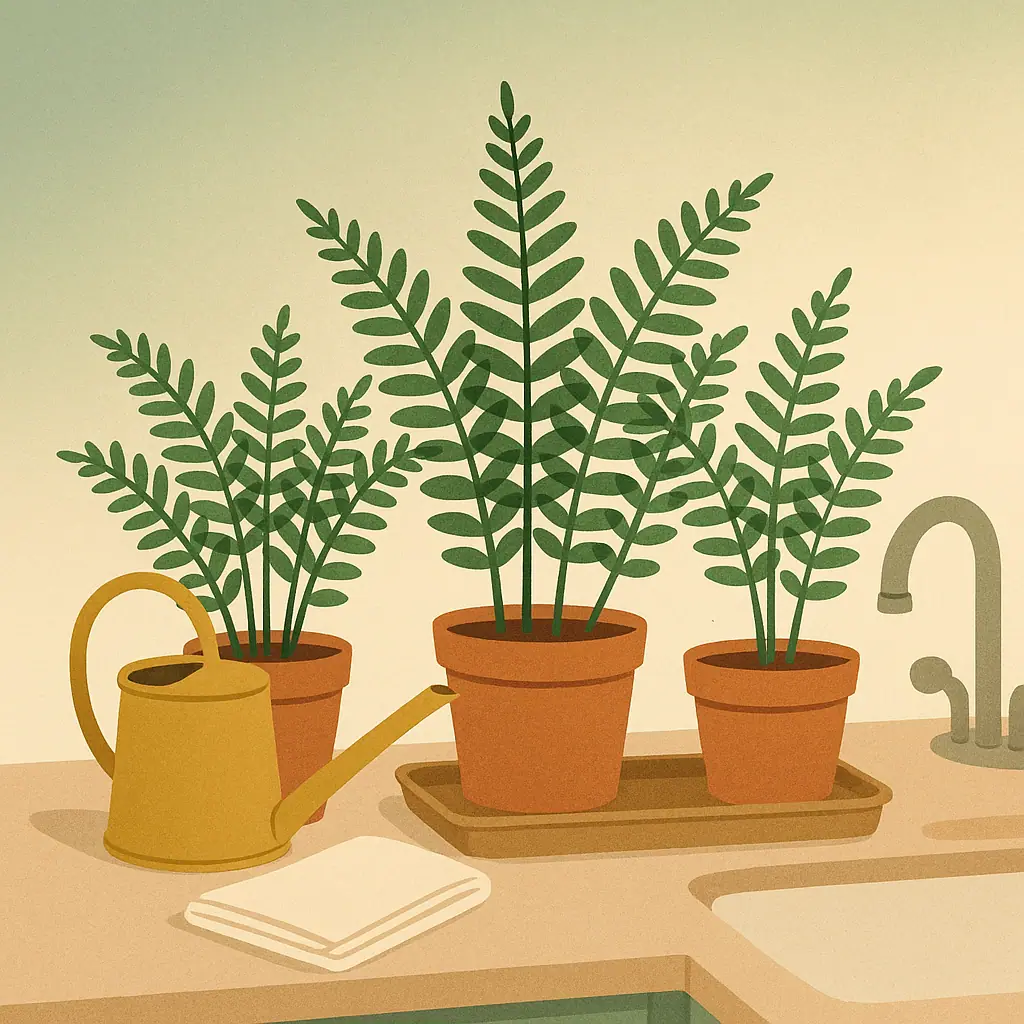
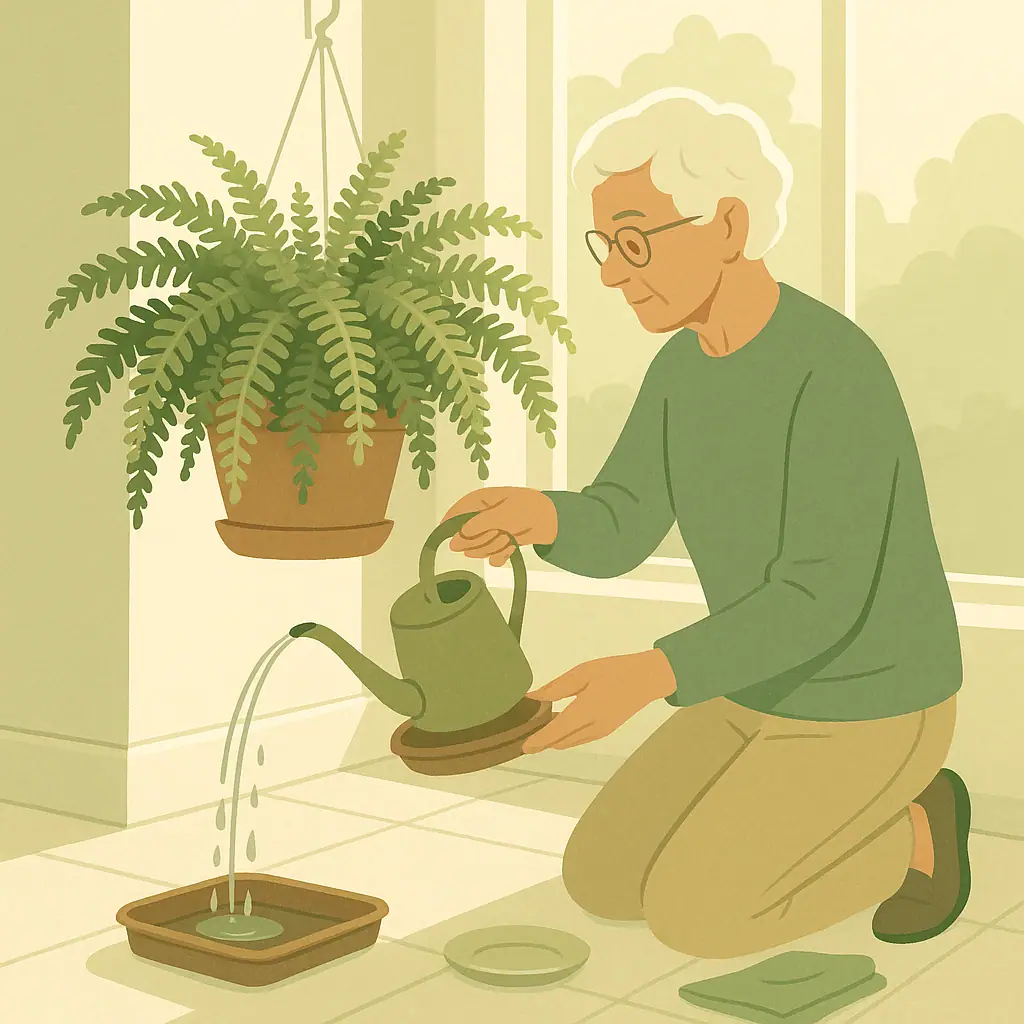
The cleanest method is to move the basket to a controlled spot before watering. This can be a sink, bathtub, plastic storage bin, large plant saucer, or a shallow tray lined with an old towel. The station should be wide enough to catch water from the entire basket, not just the center of the pot.
If the basket is heavy, do not force yourself to lift it every time. Keep a tray or waterproof mat directly underneath and use a watering can with a narrow spout. For very high baskets, a small step stool is safer than stretching overhead with a full can.
- Use a removable tray: It catches overflow and can be emptied after drainage slows.
- Keep a towel nearby: Wipe the basket bottom, hook, and outer pot before rehanging.
- Water at eye level when possible: Seeing the soil surface prevents guesswork.
- Protect wood and painted surfaces: Put a waterproof layer below any routine watering area.
Check Moisture Before You Pour
Use weight and touch together
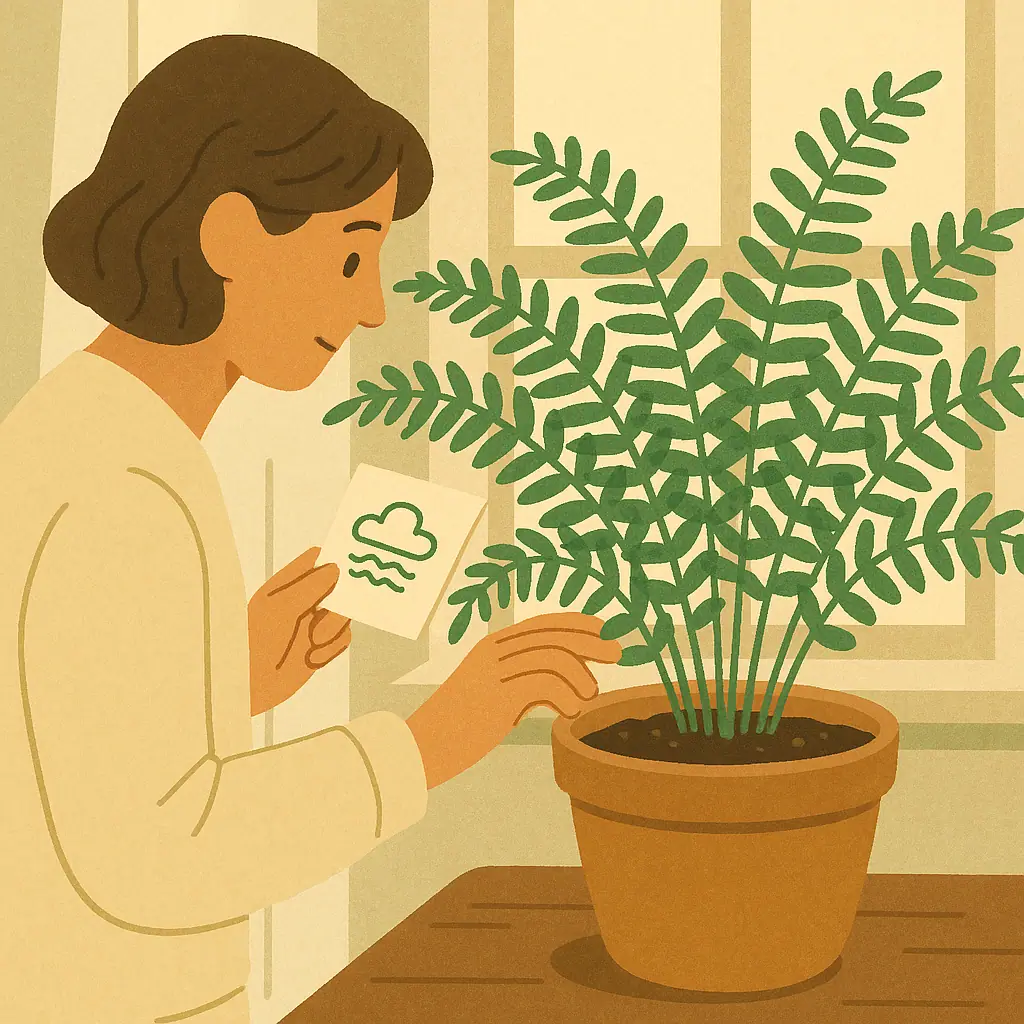
Before watering, touch the top of the potting mix. If the surface is still evenly damp, wait another day and check again. If the top feels dry but the basket still feels heavy, the center may still have moisture. If the basket feels noticeably light and the surface is dry, it is usually time to water.
This quick check matters because a hanging basket can dry unevenly. Warm air near the ceiling, a sunny window, or a heater vent may dry one side faster than the other. If you are still building a simple care kit, see simple tools for indoor fern care for a few low-stress basics.
How to Water a Hanging Fern Without Making a Mess
Use a slow, repeatable process instead of one large pour. The steps below work for most indoor hanging ferns in pots with drainage holes.
- Move the basket to the station: Use both hands and support the bottom, not just the hanger.
- Pour slowly around the soil: Aim under the fronds and circle the pot so one side does not get all the water.
- Pause when water begins to drain: Let the first runoff finish before adding more.
- Check for dry pockets: If water ran straight through one edge, add a smaller second pour there.
- Let it drain for 10 to 20 minutes: The basket should stop active dripping before it returns to its hook.
- Empty the saucer or tray: Do not leave the pot sitting in collected water.
Cleaner floors
A tray or sink catches runoff before it reaches wood, tile grout, or rugs.
More even moisture
Slow watering gives the potting mix time to absorb water instead of sending it straight through one channel.
Less guessing
Moving the basket down lets you see soil, fronds, drainage, and saucer water clearly.
Takes a few extra minutes
The drain time matters, so this is not the fastest method on a busy morning.
Heavy baskets need care
Large hanging baskets may be safer to water in place with a wide tray underneath.
Common Mistakes to Avoid
The most common mistake is watering from above while the basket is still hanging over furniture or flooring. The second is leaving collected water in a decorative outer pot. That standing water can keep the roots too wet even if the top of the soil looks normal.
Another mistake is mistaking dry frond tips for proof that the whole plant needs a heavy soak. Dry indoor air, heat vents, or a draft can cause tip browning even when the soil is not bone dry. Look at the whole plant before changing the routine.
A Simple Checklist
- Soil checked: The top feels dry enough to justify watering.
- Catch area ready: Sink, tray, tub, or towel is in place.
- Slow pour used: Water went around the soil surface, not in one quick spot.
- Drain time finished: Active dripping stopped before rehanging.
- Saucer emptied: No standing water remains under the pot.
When to Adjust the Routine
Adjust when the room changes. A fern near an air conditioner, heater, sunny window, or open door may dry faster than the same fern in a quiet corner. During travel, you may need a slightly different plan; the guide on fern care while traveling can help you think through short absences.
If leaves yellow, the basket smells sour, or the potting mix stays wet for many days, reduce watering and check drainage. If fronds crisp quickly and the basket feels light every day, the plant may need more humidity, a bigger pot, or a calmer location.
Frequently Asked Questions
Should I water a hanging fern in the sink?
Yes, if the basket is not too heavy. A sink or tub gives runoff a safe place to drain and makes cleanup much easier.
How long should I let it drain?
Wait until active dripping slows or stops, often 10 to 20 minutes. Very full baskets may need a little longer.
Can I leave water in the saucer?
It is better to empty it. Ferns like moisture, but roots sitting in standing water can struggle.
What if the basket is too heavy to move?
Water it in place with a wide tray underneath, use a narrow-spout can, and check the tray after drainage finishes.
Final Thoughts
Watering a hanging fern without making a mess is mostly about slowing down and catching the extra water before it becomes a problem. Once you have a tray, towel, and drain habit, the routine feels much less fussy.
Start with one basket this week. Check the soil, water slowly, let it drain, and empty the tray. That small rhythm is often enough to keep both the fern and the floor in better shape.