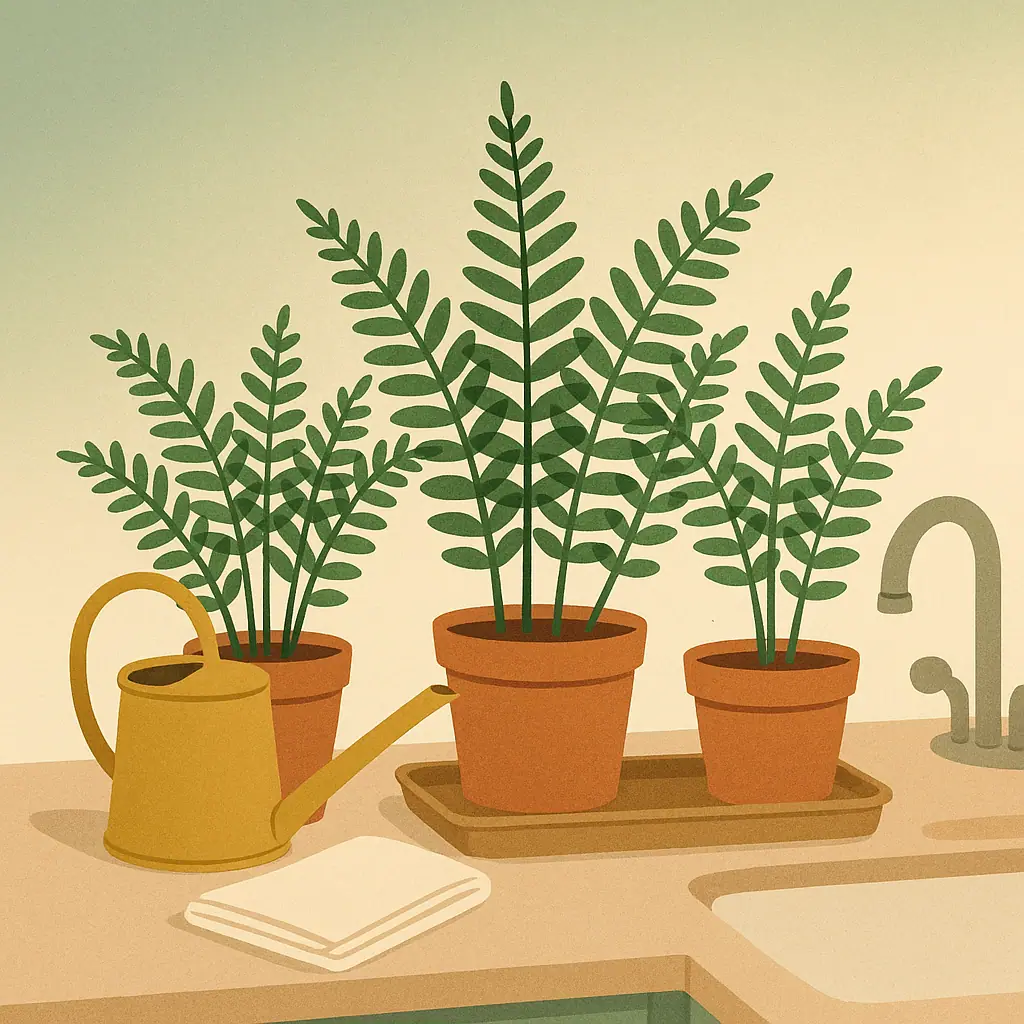
Fern care tools do not need to be fancy, expensive, or lined up like a professional greenhouse shelf. For most indoor fern owners, the best tools are quiet helpers: a watering can you can control, a saucer you remember to empty, a small pair of clean pruners, and a simple way to check whether the soil is actually ready for water.
Good tools make fern care slower in the best way. They give you a moment to look, feel, and decide before you react. That matters because many fern problems begin when a caring owner does too much too quickly.
Think of your fern care kit like a small kitchen drawer. You do not need every gadget in the store. You need a few reliable items that fit your hand, your home, and the way your plants live from week to week.
Why Fern Care Tools Matter
Fern care tools matter because ferns often respond to small changes. A pot that stays wet, a dry edge on a frond, or a saucer full of standing water can all tell you something useful. The right tool helps you notice the clue without turning it into an emergency.
The University of Minnesota Extension guide to growing tropical ferns indoors explains that ferns should be kept evenly moist, but that this does not mean the soil should always stay wet. That one idea shapes the whole tool kit: choose tools that help you keep steady moisture while still protecting drainage and root air.
A simple kit also saves money. Instead of buying several devices that promise perfect care, you can use a few practical items and learn your fern's normal rhythm. Observation is still the most important tool.
Start With Basic Fern Care
Basic fern care starts with moisture, light, air, and patience. Tools should support those basics, not replace them. A moisture meter cannot tell you everything. A pretty watering can cannot fix poor drainage. Pruners cannot solve dry air.
Start by watching how your fern behaves in its real spot. Does the pot dry in three days or seven? Does water run through quickly or sit in the saucer? Are older fronds aging naturally while new growth looks healthy? Those answers tell you which tools will actually help.
Keep the kit small
A small kit is easier to use than a crowded one. If the tools live together in one basket, tray, or cabinet shelf, you are more likely to check the fern calmly instead of running around for a towel, scissors, or saucer.
Match tools to your hands
Comfort matters, especially if you have stiff fingers or limited grip strength. Choose a watering can with a handle you can hold steadily, pruners that open easily, and a lightweight tray you can lift without strain.
What to Check First Before Buying Fern Care Tools
Before buying anything new, look at your current routine. The best tool is the one that removes a real point of friction.
- If you spill water often: choose a small watering can with a narrow spout instead of a large decorative pitcher.
- If pots sit in water: use visible saucers or a tray you can easily empty after watering.
- If you forget when you watered: keep a simple plant calendar or small notebook near the plants.
- If leaves stay dusty: keep a soft cloth or small clean brush with your kit.
- If old fronds linger too long: use clean, sharp snips made for small stems.
- If you overcheck soil: use a wooden skewer or moisture meter gently, then wait rather than poking every day.
If watering is the main issue, FernLog's guide to creating a simple fern watering station pairs well with this post. A small setup can make watering feel orderly without turning it into a complicated project.
The Best Simple Tools for Indoor Fern Care
These tools cover most everyday fern care. You may already own several of them.
1. A small watering can with a narrow spout
A narrow spout lets you water the soil instead of splashing the fronds, table, or floor. For most homes, a smaller can is better than a large one because it is easier to carry and less tempting to pour too much at once.
2. A saucer or tray you can actually empty
A saucer protects furniture, but it should not become a hidden puddle. Choose one that is easy to see and lift. After watering, give the pot time to drain, then empty leftover water so the roots are not sitting wet.
3. A wooden skewer or simple moisture meter
A wooden skewer is inexpensive and useful. Insert it gently near the edge of the pot, wait a moment, and pull it out. If it comes out damp and dark, the lower mix may still hold moisture. A moisture meter can also help, but treat it as a guide, not a command.
4. Clean small pruners or plant snips
Sharp snips make cleaner cuts than tearing fronds by hand. Use them to remove fully brown or damaged fronds near the base. Wipe the blades before and after use, especially if you are trimming more than one plant.
5. A soft cloth or gentle brush
Dust can collect on broad fern leaflets and nearby surfaces. A soft cloth, small artist brush, or clean makeup brush can help you tidy leaves and inspect for pests without rough handling.
6. A small notebook or care calendar
Notes are underrated. Write down watering days, room changes, repotting dates, and anything unusual. If your fern improves or declines, those notes help you see patterns instead of relying on memory.
For a repeatable record-keeping habit, FernLog's guide to making a fern care calendar you will actually use offers a gentle way to track care without making the hobby feel like homework.
How to Use Fern Care Tools Step by Step
Use the tools in a steady order. This keeps you from watering, trimming, or moving the fern before you understand what it needs.
- Look first: Check the fronds, color, posture, and soil surface before touching anything.
- Lift the pot if safe: Notice whether it feels light, medium, or still heavy from the last watering.
- Check below the surface: Use a finger, skewer, or moisture meter near the edge of the pot.
- Water only if needed: Use room-temperature water and pour slowly until the mix is evenly moist.
- Let it drain: Wait a short while, then empty the saucer or outer pot.
- Trim only clear damage: Remove fronds that are fully brown, broken, or clearly declining, but leave healthy green growth alone.
- Write one note: Record the date and one observation, such as "pot still heavy" or "new growth looks firm."
Pros and Cons of Keeping a Fern Tool Kit
Makes care more consistent
Keeping the same simple tools nearby helps you water, drain, prune, and observe in a repeatable order.
Reduces overwatering guesses
A skewer, pot-lift habit, or moisture meter can remind you to check the soil before adding more water.
Keeps small tasks pleasant
Clean snips, a soft cloth, and a tidy tray make routine maintenance feel calm instead of messy.
Tools can become clutter
Buying too many items makes care feel complicated and can hide the few tools you actually use.
Gadgets can replace judgment
A meter reading or calendar reminder should support observation, not override what the plant and soil are showing you.
Common Basic Fern Care Mistakes to Avoid
The first mistake is buying tools before understanding the problem. If a fern is struggling because it sits in harsh afternoon sun, a new watering can will not fix the light. If the pot has no drainage, a moisture meter may simply confirm what the container already tells you.
The second mistake is using sharp tools without cleaning them. A quick wipe with rubbing alcohol or warm soapy water helps keep pruning simple and sensible, especially if you trim several plants in one session.
The third mistake is treating the calendar as more important than the plant. A note that says you watered last Saturday is useful, but the fern still decides whether it needs water today.
- Do not water because the tool is nearby: check the soil first.
- Do not trim green fronds for neatness: healthy fronds help feed the plant.
- Do not leave water hidden in a cachepot: lift the inner pot and check after watering.
- Do not trust one reading alone: compare the soil check with pot weight, leaf condition, and recent weather indoors.
A Simple Fern Care Tools Checklist
Use this checklist to build a practical kit without clutter.
- Watering can: Is it small enough to control and easy for you to hold?
- Saucer or tray: Can you see and empty standing water without moving furniture?
- Soil checker: Do you have a skewer, finger-check habit, or simple meter for below-surface moisture?
- Pruners: Are they sharp, clean, and comfortable for small fronds?
- Cleaning cloth: Do you have something soft for dust and gentle inspections?
- Notebook or calendar: Can you record watering and changes in one easy place?
- Storage spot: Do the tools live together where you will actually use them?
If you tend to fuss over plants too often, the article on how to tell if your fern needs less attention may help you decide when to step back. Sometimes the best tool is a little more patience between checks.
When to Get Extra Help
Ask for extra help if a fern keeps declining even after you have checked water, drainage, light, humidity, and pests. A local nursery, cooperative extension office, or experienced houseplant grower can help you sort the symptoms without guessing.
Bring simple notes instead of a long story: where the fern sits, when you watered, how the pot drains, what tool readings showed, and what changed recently. Clear observations make advice much easier to trust.
Frequently Asked Questions
What fern care tool should I buy first?
Start with a small watering can you can control and a saucer you can empty easily. Those two tools support the most common fern care routine.
Do I need a moisture meter for indoor ferns?
No, but it can be helpful if you use it gently and compare it with pot weight, soil feel, and leaf condition. A wooden skewer can also work well.
How often should I clean or trim my fern?
Review the plant once a week. Remove fully brown fronds when needed, but do not trim healthy green growth just to make the plant look perfectly even.
Can I replace tools later if they do not fit my routine?
Yes. Fern care tools should make care easier. If a tool is uncomfortable, messy, or ignored, replace it with something simpler that you will actually use.
Final Thoughts
The best fern care tools are simple, steady, and easy to keep nearby. They help you check moisture, water carefully, drain the pot, remove old fronds, clean gently, and remember what happened last week.
Start with the basics instead of a shopping list. Choose one tool that solves a real problem in your routine, use it for a few weeks, and let your fern's response guide the next small improvement.