Rainwater for ferns can sound like a special plant-care trick, but it is really a simple way to offer softer water when you can collect it cleanly and use it with common sense. Many indoor fern owners hear that rainwater is better than tap water, then wonder if they need test strips, complicated storage, or a full outdoor setup.
You do not need to turn watering into a chemistry project. The goal is gentle: collect clean rainwater when it is practical, bring it to room temperature, use it on the soil instead of splashing the fronds, and keep watching how your fern responds over time.
Why Rainwater for Ferns Matters
Ferns often react to their care routine in small, visible ways. Crispy tips, pale new growth, or a fern that seems a little tired can have many causes, including dry air, light, old fronds, fertilizer, watering rhythm, or mineral buildup. Water quality is only one part of the picture, but it can be worth checking when other basics seem steady.
The University of Minnesota Extension guide to rain barrels in the home landscape notes that rain barrel water can be a good option for houseplants, especially for some indoor plants sensitive to softened tap water or additives. That does not mean every fern problem is a tap-water problem. It simply gives you a reasonable, verified reason to try rainwater carefully.
Start With Basic Fern Care First
Before changing the water source, make sure the fern has the basic pieces it needs. A fern sitting in harsh direct sun, a pot without drainage, or a room with very dry air may still struggle even if you switch to rainwater.
Start with the potting mix. It should feel evenly moist after watering but not swampy for days. Check that water can drain through the bottom of the pot, and empty the saucer after the mix has had a chance to absorb what it needs.
Look at the plant before the bucket
If your fern has one old brown frond, that may be normal aging. If many fronds are crisping at once, look at humidity, watering rhythm, and light. FernLog's guide to reading your fern like a daily weather report can help you notice patterns without overreacting to one leaf.
After that observation, rainwater becomes a small test instead of a desperate rescue. Give the fern a few waterings with clean rainwater, keep the rest of the care routine steady, and watch the newest growth rather than expecting old damaged tips to turn green again.
What to Check Before Using Rainwater Indoors
The best rainwater for indoor ferns is simple, clean, and fresh. You do not need a fancy barrel if you are caring for one or two plants. A clean container placed where it can catch rain for a short period may be enough, as long as you handle the water thoughtfully.
Use a clean collection container
Choose a container that has not held cleaners, paint, fuel, pesticides, or strong chemicals. Rinse it well before use. If the water has leaves, dirt, insects, or a stale smell, skip it. Indoor plants do not need perfect-looking water, but they do deserve water that seems clean and fresh.
Let cold water warm up
Cold water can stress indoor plant roots. Penn State Extension's houseplant watering guidance recommends room-temperature water to avoid shocking the root system. For rainwater, that means bringing it inside and letting it sit until it no longer feels cold to the touch.
That room-temperature habit matters more than speed. While the water warms, you can check the soil with your finger and decide whether the fern actually needs watering today.
How to Use Rainwater for Ferns Step by Step
Use rainwater in a way that keeps the routine calm and repeatable. The safest approach is not dramatic. It is a small change you can observe.
- Collect clean rainwater: Use a clean bucket, pitcher, or covered rain barrel. Avoid water that looks dirty, smells bad, or has been sitting open for a long time.
- Bring it indoors: Let the water reach room temperature before using it on your fern.
- Check the soil first: Water only when the potting mix needs moisture. Rainwater is still water, and too much can still lead to soggy roots.
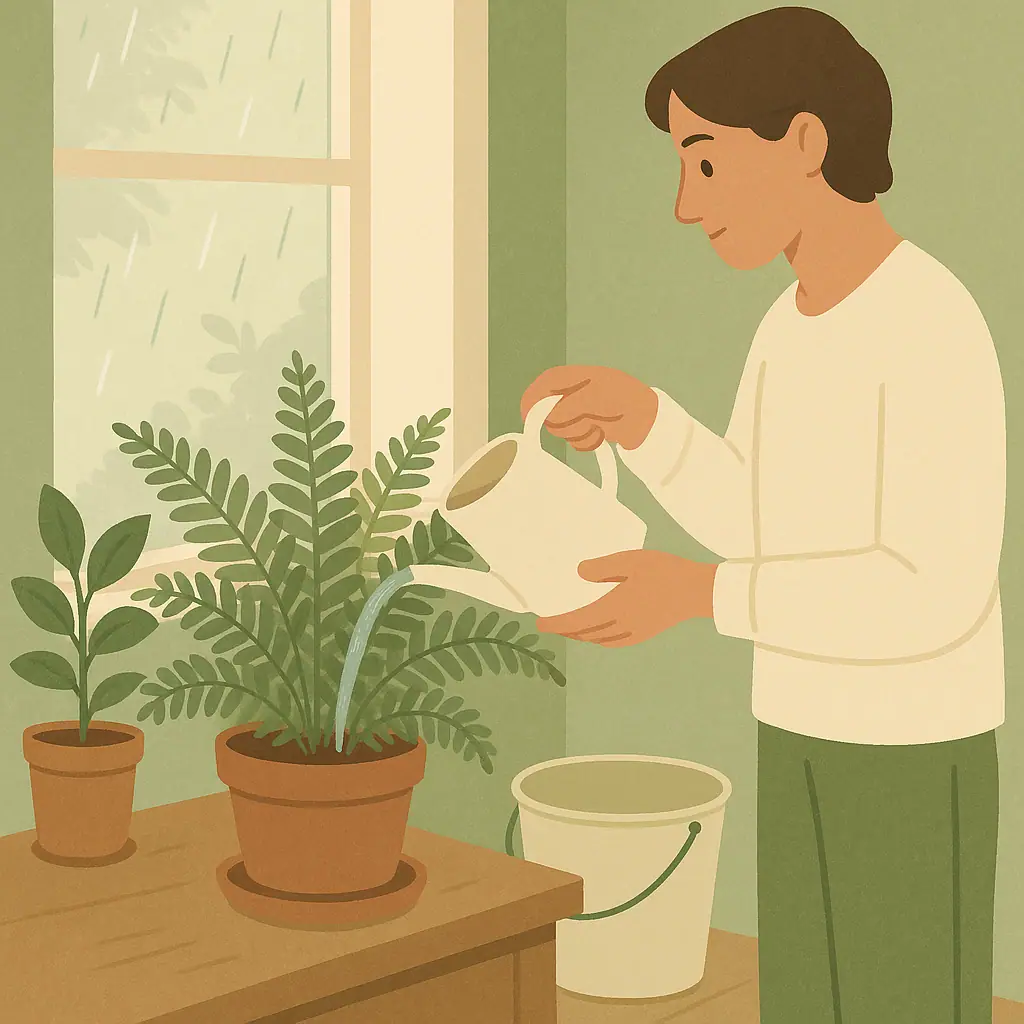
- Water the soil surface: Pour slowly around the base of the plant until the mix is evenly moist and a little water drains out the bottom.
- Empty the saucer: Do not let the pot sit in standing water for hours.
- Keep notes for two to four weeks: Watch new growth, soil drying time, and frond tips before deciding whether rainwater is helping.
If you want to make this easier, FernLog's guide to creating a simple fern watering station pairs well with a rainwater routine. Keep a small indoor pitcher, a towel, and a reminder note together so watering does not become a scattered chore.
Common Basic Fern Care Mistakes to Avoid
The first mistake is using rainwater as a cure-all. If a fern is struggling because the room is too sunny, too dark, too dry, or too cold, rainwater alone will not solve the problem. Keep the whole care picture in view.
The second mistake is storing rainwater carelessly. A covered container is better than an open one, especially if you plan to keep the water for more than a short time. If the water grows algae, smells unpleasant, or collects debris, use fresh water instead.
The third mistake is watering on a calendar without checking the pot. Ferns appreciate consistency, but consistency does not mean watering every Tuesday no matter what. Soil dries faster in warm bright rooms and slower in cool dim rooms.
If you suspect your fern is getting too much water, pause and compare symptoms with FernLog's guide to indoor fern watering without overwatering. A better rhythm usually matters more than the source of the water.
Pros and Cons of Rainwater for Ferns
Often gentler than problem tap water
Rainwater may be useful when softened water or tap-water additives seem to bother sensitive indoor plants.
Simple to test on a small scale
You can try it for a few waterings without buying special equipment or changing the whole care routine.
Encourages closer observation
Trying rainwater gently often helps owners watch soil moisture, new growth, and frond tips more carefully.
Clean storage matters
Rainwater that sits uncovered or collects debris can become less appealing for indoor use.
It does not fix every problem
Light, humidity, drainage, pot size, and watering frequency can still be the real reason a fern struggles.
A Simple Rainwater Checklist
Use this quick checklist before pouring rainwater on an indoor fern.
- Clean container: Was the water collected in a container that has not held chemicals?
- Fresh appearance: Does the water look and smell clean?
- Room temperature: Has cold rainwater warmed indoors before use?
- Soil check: Does the fern actually need watering today?
- Good drainage: Can extra water leave the pot freely?
- No standing saucer: Will you empty collected water after the pot drains?
- Slow observation: Are you watching new growth over several weeks instead of judging after one watering?
When to Get Extra Help
Ask for local help if your fern keeps declining after you have checked light, watering, humidity, drainage, and pests. A local nursery, master gardener program, or extension office can often help you think through the whole plant instead of focusing on one detail.
Also get help if your water situation is unusual. If rainwater comes from a roof with heavy debris, recent chemical treatment, or questionable storage, do not guess. Use a safer water source until you can verify what is appropriate for indoor ornamental plants.
For broader troubleshooting, FernLog's guide to common fern care mistakes is a helpful place to slow down and compare the usual causes. One careful review can save you from making several changes at once.
Frequently Asked Questions
What should I check first before using rainwater for ferns?
Check the soil moisture and drainage first. Rainwater is helpful only when the fern actually needs water and the pot can drain properly.
How often should I use rainwater?
You can use it whenever the fern needs watering and the rainwater is clean and room temperature. Do not water more often just because you collected it.
What should I do if I am not sure the rainwater is clean?
Skip it. Use room-temperature tap water, filtered water, or another reliable source until you can collect fresher water in a cleaner container.
Can I go back to tap water later?
Yes. Most care routines can be adjusted. If your fern looks steady, switch gradually and keep watching the newest growth and soil drying pattern.
Final Thoughts
Rainwater for ferns is best treated as a gentle option, not a complicated rule. Clean rainwater at room temperature can be a nice choice for indoor ferns, especially when your tap water seems to leave mineral concerns or your fern is sensitive.
Start small, keep the rest of the care routine steady, and watch what the plant does next. A calm fern owner who checks soil, light, humidity, and drainage will make better decisions than someone chasing a perfect water source.