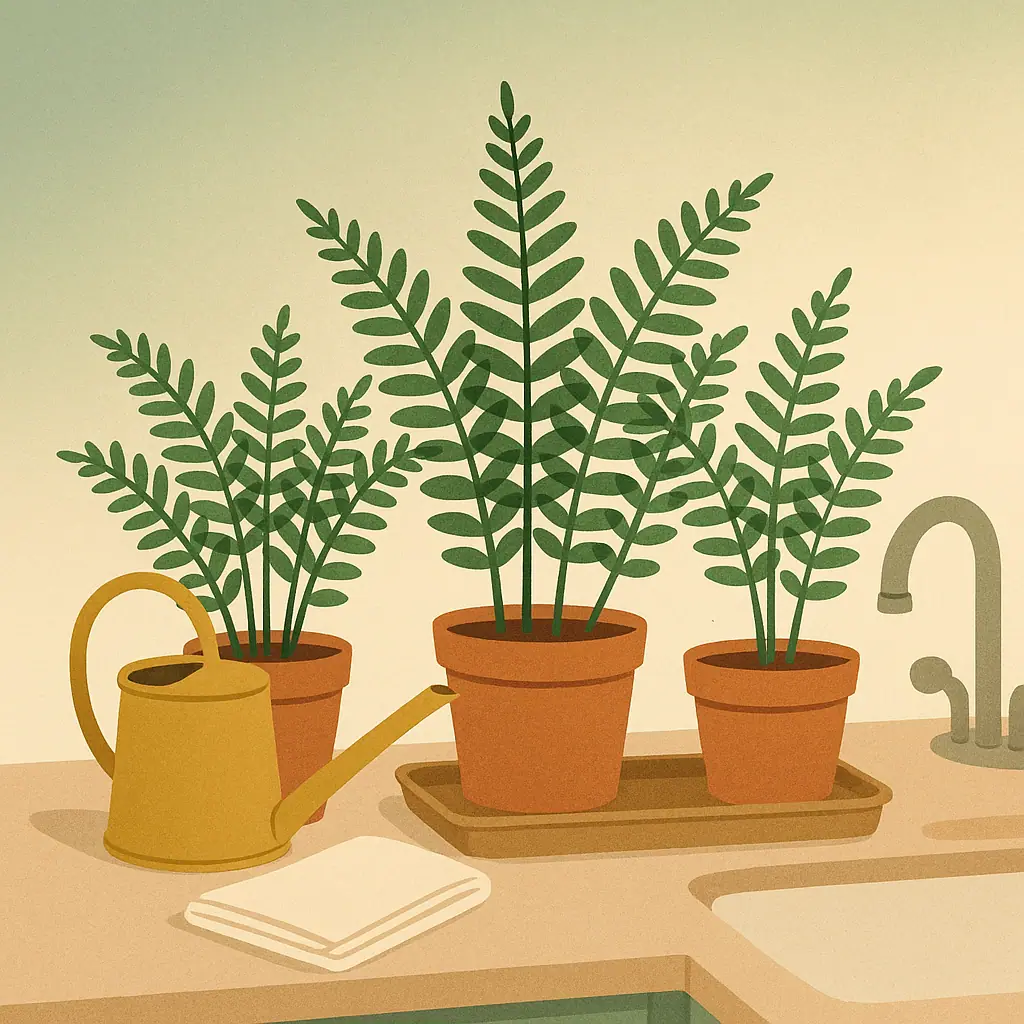
Learning fern care signs is a little like learning the weather in your own kitchen. At first, everything looks simply green. Then, after a few quiet mornings, you start noticing the small things: one frond leaning, a pale tip, soil that feels lighter than yesterday, or new growth that suddenly looks cheerful.
That daily reading matters because most fern problems begin softly. A fern rarely goes from happy to hopeless overnight. It usually whispers first. The goal is not to become a botanist or inspect every leaflet with worry. The goal is to build a gentle habit: look, touch the soil, notice the light, and make one calm adjustment if needed.
This guide turns your fern into a simple daily weather report, so you can catch dryness, soggy soil, low humidity, and light stress before they become bigger problems.
Fern Care Signs Start With Posture
The easiest fern care signs to notice are often about posture. A healthy fern usually looks lifted, springy, and open. The fronds may arch naturally, but they should not look collapsed or limp. Think of it like a person sitting in a favorite chair: relaxed is fine, slumped is a message.
If your fern looks slightly droopy at the end of a warm afternoon but recovers by morning, it may only be responding to a dry room or a sunny day. If it stays limp for more than a day, check the soil before adding water. Drooping can mean dryness, but it can also mean roots are sitting in soggy soil and struggling to breathe.
- Open and lifted fronds: the plant is likely comfortable with its current light and moisture.
- Soft, limp fronds with wet soil: slow down watering and check drainage.
- Droopy fronds with dry, light soil: water thoroughly and let extra water drain away.
- One older frond declining: this may be normal aging, especially if the rest of the plant looks strong.
Read the Soil Before You Reach for the Watering Can
Many fern owners water because the leaves look unhappy, but the soil tells the clearer story. Extension guidance from the University of Minnesota Extension explains that ferns should be watered thoroughly, then watered again when the soil surface begins to feel dry. That means evenly moist, not constantly soaked.
Use your finger as the simplest moisture meter. Press the top half inch of soil. If it feels lightly damp and cool, wait. If it feels dry and the pot feels lighter than usual, it is time to water. If it feels wet several days after watering, the pot may be too large, the mix may be too heavy, or the saucer may be holding water.
What Dry Soil Usually Says
Dry soil often shows up as crisp tips, dull color, or fronds that feel papery. Some ferns forgive one dry spell, but delicate types may brown quickly. When this happens, water slowly until moisture runs from the drainage holes, then empty the saucer after a few minutes.
What Soggy Soil Usually Says
Soggy soil is quieter but more dangerous. Yellowing, wilting, and a sour smell can mean the roots are staying too wet. Clemson Extension notes that root rot often comes from soil that does not drain quickly or from overly frequent watering. If the pot has no drainage hole, treat that as a warning sign, not a decorative detail.
Color Changes Are the Fern's Forecast
Color gives useful clues when you read it with the soil and light together. A few tan tips can simply mean dry indoor air, especially in winter. Pale green growth may mean low light or that the fern is actively growing and could use light feeding during the growing season. Yellow fronds can point to overwatering, underwatering, old age, or too much direct sun.
Instead of asking, “Why is this leaf yellow?” ask three smaller questions: What does the soil feel like? Has the light changed? Is the yellowing on old fronds only, or spreading through the plant? That simple sequence prevents panic and helps you make the right adjustment.
- Brown crispy tips: often dry air, skipped watering, or hot placement near vents.
- Bleached patches: possible direct sun damage, especially near south or west windows.
- General yellowing with wet soil: possible overwatering or poor drainage.
- Pale, stretched growth: the fern may need brighter indirect light.
Check the Room Like a Weather Map
Your fern is not only responding to your watering routine. It is responding to the room. A heating vent, a drafty window, a hot ceiling corner, or a sunny afternoon beam can change the plant's comfort faster than you expect. Ferns generally prefer bright indirect light, steady moisture, and higher humidity than many homes naturally provide.
Walk around the fern's spot at different times of day. Morning light may be gentle, while afternoon light may be harsh. A windowsill may feel pleasant in spring but too hot in summer or too cold in winter. If you would not want to sit there for an hour, your fern may not enjoy living there every day.
Light Signs to Notice
Direct sun can mark fronds with pale, dry, or scorched areas. Too little light can make growth slow, stretched, and weaker. A north or east window is often easier for beginners, while a brighter window may need a sheer curtain.
Humidity Signs to Notice
Low humidity often appears at the edges first. Fine, thin fronds may brown more quickly than leathery ferns. Grouping plants, using a pebble tray, or placing the fern in a bright bathroom can help, but avoid letting the pot sit directly in water.
A Simple 60-Second Fern Weather Report
You do not need a complicated plant journal. A short daily check is enough. Do it with your morning coffee, while opening curtains, or when you water other houseplants. The routine should feel easy, not like homework.
- Look at posture: are the fronds lifted, drooping, curling, or leaning toward the window?
- Touch the soil: is the surface dry, lightly damp, or still wet from the last watering?
- Scan the color: are changes on one old frond or across the whole plant?
- Check the room: is there direct sun, hot air, cold draft, or very dry air nearby?
- Make one note: water today, wait today, rotate slightly, or simply leave it alone.
This little rhythm helps you trust yourself. Over time, you will know your fern's normal shape, normal weight, and normal color. That is when care becomes calmer and more intuitive.
Pros and Cons of Reading Fern Care Signs Daily
Problems Stay Small
Early signs like dry tips, drooping, or wet soil can be corrected before the whole fern declines.
Watering Gets Easier
You stop watering by the calendar alone and begin responding to what the plant and soil actually need.
Confidence Builds Slowly
Daily observation teaches you the difference between normal aging and true stress.
Easy to Overreact
Beginners may want to fix every small mark, even when the fern only needs patience.
Signs Can Overlap
Yellowing, drooping, and browning can have more than one cause, so soil and light must be checked together.
Frequently Asked Questions
What is the most important fern care sign to check first?
Check the soil first. Many fern symptoms look similar on the leaves, but dry soil and soggy soil call for opposite responses.
Should I remove every brown fern frond right away?
Remove fully brown, dry fronds with clean scissors, but do not rush to cut every frond with a small brown tip. Minor tip browning is common indoors.
Can a fern look droopy even when it has enough water?
Yes. Drooping can happen with soggy soil, heat stress, low humidity, or adjustment after moving. Always check the soil before watering again.
How often should I do a fern weather report?
A quick daily look is helpful, but you only need to act when something has clearly changed. Many days, the best care decision is simply to wait.
Final Thoughts
Reading your fern like a daily weather report is not about worry. It is about friendship with the plant. You notice its posture, feel the soil, watch the color, and learn the room it lives in. Small observations lead to small corrections, and small corrections are usually what keep ferns healthy.
If you are new to ferns, start with one promise: do not guess before checking the soil. That single habit will prevent many common mistakes and help your fern care feel calmer week by week.