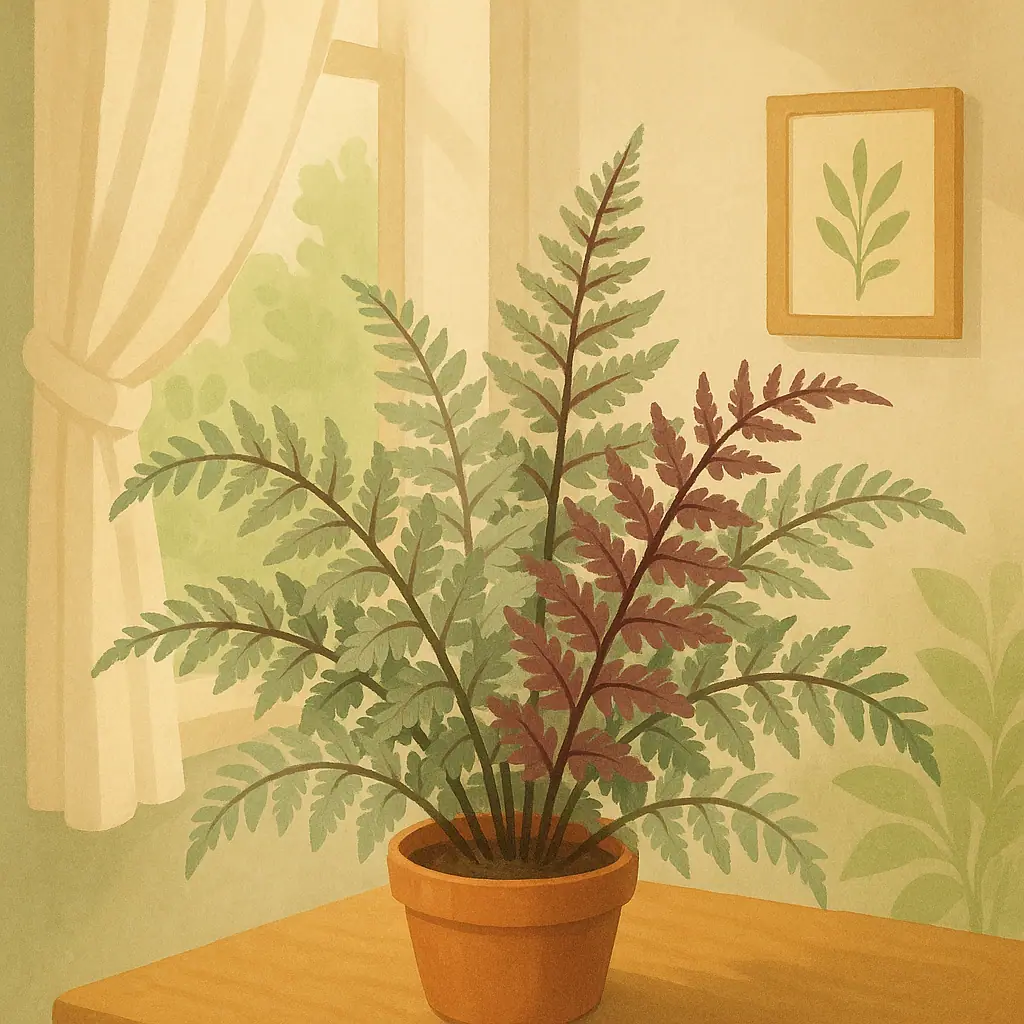
Japanese painted fern indoors can work for some homes, but it asks for a little honesty about light, moisture, and expectations. This is a beautiful fern with silver, green, and burgundy coloring, yet it is often more at home in a shaded outdoor bed than on a dry indoor shelf.
That does not mean you should avoid it completely. It means you should treat it as a thoughtful experiment, not a guaranteed beginner houseplant. With bright indirect light, steady moisture, and a cool, calm spot, a Japanese painted fern may settle indoors for a season or longer.
Why Japanese Painted Fern Indoors Needs Realistic Expectations
Japanese painted fern is loved for its soft metallic coloring. Indoors, that color can fade or growth can slow if the room is too dark, too dry, or too warm. The plant may also rest or look quieter at certain times because it is a herbaceous perennial rather than a tropical fern that keeps the same full look all year.
The NC State Extension Gardener Plant Toolbox describes Japanese painted fern as a woodland plant that prefers partial to full shade and moist, rich soil with good organic content. That outdoor guidance gives indoor growers a useful clue: the closer your room feels to gentle woodland shade, the better your chances.
Start With the Right Fern Species Guide Mindset
A good fern species guide does more than say whether a plant is pretty. It helps you match the fern to your real room. Japanese painted fern is not the same kind of indoor choice as a Boston fern or bird's nest fern. It is more like bringing a quiet woodland plant into the house and asking whether the room can meet it halfway.
If your main challenge is low natural light, compare this plant with FernLog's guide to the best ferns for a north-facing window. That article focuses on forgiving choices for gentle light, which may be a better starting point if you are new to ferns.
Good signs before you buy
- You have bright indirect light: A room near an east or north window often works better than a hot south window.
- You can check soil often: This fern dislikes drying out completely but should not sit in soggy soil.
- The room stays mild: Avoid heat blasts, cold drafts, and sharp temperature swings.
- You accept slower growth: Indoors, the plant may stay modest rather than lush and fast-growing.
- You have a backup plan: A shaded porch, protected patio, or garden bed may be better if the indoor trial fails.
What to Check First for Japanese Painted Fern Indoors
Before bringing one home, study the room for a day. Notice where light lands, where heat collects, and whether the air feels dry. Japanese painted fern can look delicate, but the decision should be practical. The plant needs a place where its fronds will not be scorched by sun or dried by vents.
Also think about the pot. A small nursery pot in a decorative cachepot can be easier than planting directly into a heavy container. You can lift the inner pot, feel the weight, check drainage, and adjust care without disturbing the fern.
Room checks that matter
- Light: Choose filtered light, not direct afternoon sun on the fronds.
- Moisture: Use a pot with drainage and check the top inch of soil regularly.
- Airflow: Keep it away from heating vents, air conditioners, and drafty doors.
- Temperature: Pick a room that feels steady and comfortable rather than hot and dry.
- Access: Place it where you can inspect fronds without moving furniture.
How to Handle Japanese Painted Fern Indoors Step by Step
The safest approach is a small trial. Do not rearrange your whole plant area around one new fern right away. Give the plant a stable spot, observe it closely, and adjust only one thing at a time.
A calm first-month routine
- Quarantine briefly: Keep the new fern separate for a week so you can look for pests or hidden stress.
- Set it in indirect light: Start a few feet from a bright window or behind a sheer curtain.
- Water by feel: Keep the mix lightly moist, but empty any standing water from the saucer.
- Watch frond color: Fading or crisping may point to too much sun or dry air.
- Move slowly: If it struggles, change light or moisture first, then wait several days before making another change.
If you enjoy delicate-looking ferns, you may also like comparing this plant with Maidenhair fern care. Maidenhair has different needs, but both plants teach the same lesson: gentle, consistent care usually works better than sudden rescue efforts.
Common Fern Species Guide Mistakes to Avoid
The first mistake is assuming that any fern sold near houseplants is equally suited for indoor life. Japanese painted fern is often sold as an outdoor shade perennial. It may tolerate indoor conditions for some people, but it is not automatically a low-care houseplant.
The second mistake is giving it strong sun to brighten the colors. Light shade often brings out attractive coloring outdoors, but harsh indoor sun through glass can be too intense. If the fronds look washed out, crispy, or tired, more sun is not always the answer.
The third mistake is keeping the pot constantly wet because the plant likes moisture. Moist and soggy are not the same. Good drainage matters indoors because water leaves the pot more slowly than it would in a garden bed.
Pros and Cons of Growing Japanese Painted Fern Indoors
Beautiful foliage color
The silver, green, and burgundy tones add quiet interest to a plant shelf or shaded room.
Good for careful observers
It rewards people who enjoy checking light, moisture, and small plant signals.
Works as a seasonal experiment
You can try it indoors and move it to a protected shaded outdoor spot if needed.
Not the easiest indoor fern
Dry rooms, hot windows, and inconsistent watering can make it decline.
May not stay showy all year
Growth can be slower or quieter indoors than readers expect from photos.
A Simple Checklist Before You Decide
Use this checklist before buying, and again after the first few weeks. It keeps the decision practical instead of emotional.
- Light: Do I have bright indirect light without harsh afternoon sun?
- Moisture: Can I keep soil lightly moist without leaving the pot wet for days?
- Humidity: Is the plant away from dry heat and direct air blasts?
- Patience: Am I comfortable with slow growth and seasonal changes?
- Backup: Do I have a shaded outdoor option if indoors does not work?
If you want a more cheerful compact fern for shelves, FernLog's Lemon Button fern care guide may offer a gentler comparison. It is useful to compare options before choosing the prettiest plant at the store.
When to Move It Outdoors Instead
Sometimes the kindest indoor care choice is admitting the plant wants a different setting. If your Japanese painted fern repeatedly crisps, fades, or stalls despite careful watering and indirect light, a shaded outdoor container or garden bed may suit it better.
Move gradually. Do not place an indoor-stressed fern straight into wind, direct sun, or heavy rain. A protected shaded porch or sheltered patio is a better transition spot while you watch how the plant responds.
Frequently Asked Questions
Can Japanese painted fern really grow indoors?
It can in the right home, especially with bright indirect light, steady moisture, and mild temperatures. It is best treated as a careful trial rather than a guaranteed easy houseplant.
How often should I review its care?
Check it two or three times a week at first. Once you know how quickly the pot dries, a steady weekly rhythm with quick midweek checks may be enough.
What should I do if I am not sure whether the room is right?
Start with the brightest indirect spot you have and observe for a few weeks. If the fern keeps declining, compare its needs with trusted horticulture sources or ask a local extension office.
Can I undo a bad placement choice later?
Often, yes. Move the plant gradually, trim only fully damaged fronds, and give it time. Severe drying, heat stress, or root problems may take longer to recover.
Final Thoughts
Japanese painted fern indoors can work, but it asks for a thoughtful match between plant and room. Give it filtered light, gentle moisture, good drainage, and enough patience to show you whether it is comfortable.
If it settles in, you get a soft, colorful fern with woodland charm. If it does not, that is useful information rather than failure. Some ferns are simply happier outside, and choosing the right home for the plant is part of good care.