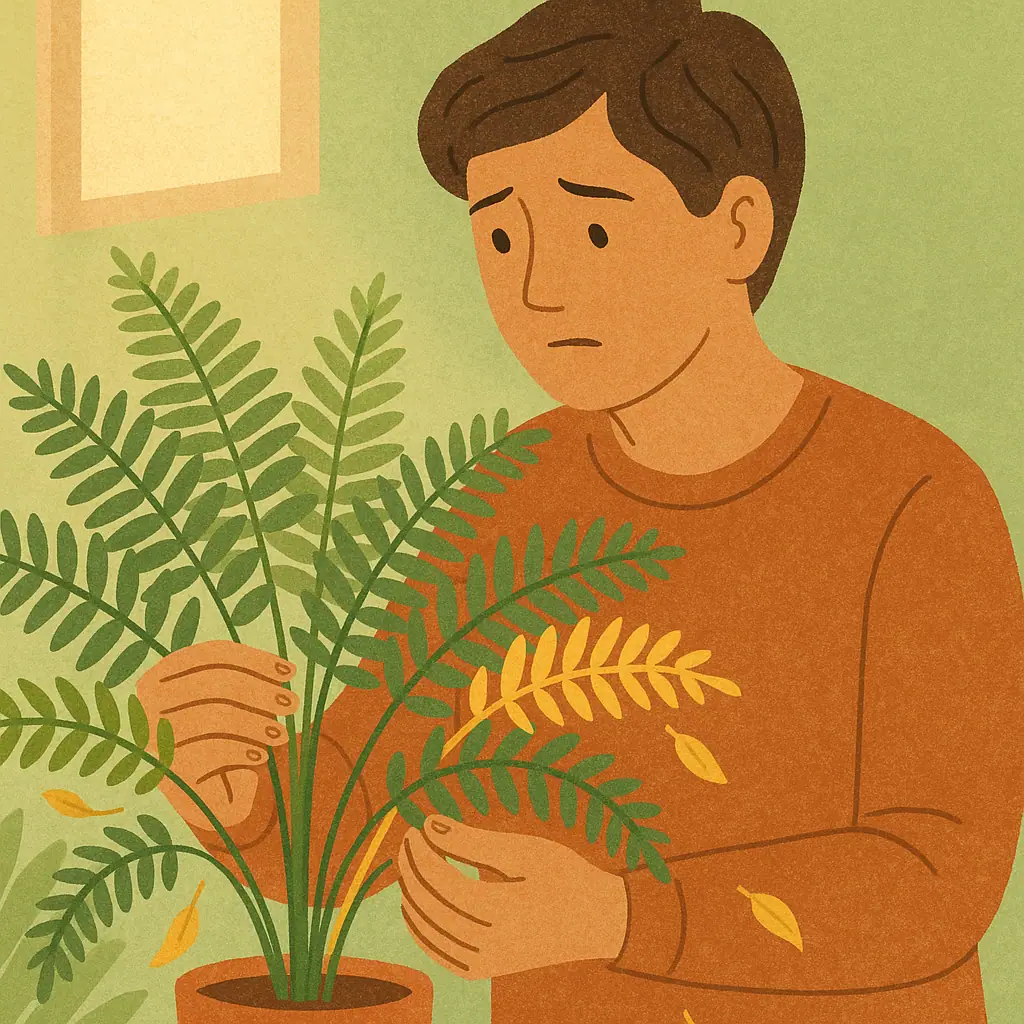
Fern leaves turning black can feel alarming because black usually looks more serious than a dry brown tip or one yellow older frond. Sometimes it is only old damage finally showing itself, but black, soft, spreading, or cold-damaged tissue deserves a closer look.
The helpful response is not panic. It is a careful little investigation. Look at where the black area is, how fast it appeared, whether the soil smells sour, and whether the pot has been staying wet for days. Those clues tell you whether the fern needs a small adjustment or faster action.
Think of black fern leaves as a stronger signal from the plant. It may be saying the roots are too wet, the fronds were chilled, a stem is damaged, or a disease issue is developing. Your first job is to slow down, separate the likely causes, and avoid making several changes at once.
Why Fern Leaves Turning Black Matters
Black leaf tissue matters because it often points to stress that has moved beyond ordinary cosmetic browning. A crispy brown edge may come from dry air or a missed watering. Black, mushy, water-soaked, or spreading patches can suggest moisture trouble, cold injury, damaged crowns, or decay.
For watering-related problems, drainage is one of the first checks. The University of Minnesota Extension guidance on indoor plants reminds growers to use pots that drain well and avoid letting plants stand in water, because over-watering and poor drainage can encourage root rot and other issues.
Start With Troubleshooting and Plant Health
Troubleshooting and Plant Health begins with observation before treatment. A fern can look worse after too much help, especially if it is already stressed by wet roots, cold air, or a recent move.
Start by asking one quiet question: is the black part dry and old, or soft and spreading? Dry, papery black edges after a cold window night are different from black, limp fronds emerging from soggy soil.
Check the pattern
If only one older frond has blackened near the base and the rest of the fern looks firm, trim that frond and keep watching. If several fronds are darkening at the same time, or the black starts near the crown, inspect the soil and roots more carefully.
Check the timeline
Black spots that appeared after a cold draft, a winter window night, or a move outdoors may be temperature injury. Blackening that appears after repeated watering or a heavy pot that never dries usually points toward moisture and drainage.
What to Check First for Fern Leaves Turning Black
Begin with the easiest clues. You do not need to unpot the fern immediately unless the plant is collapsing, the soil smells rotten, or the pot has stayed wet for a long time.
- Soil moisture: Feel the top inch and lift the pot. A heavy pot that stays wet for days is a warning sign.
- Drainage: Make sure the container has holes and the saucer is not holding water under the pot.
- Texture of the black area: Dry and brittle damage is less urgent than soft, wet, or collapsing tissue.
- Cold exposure: Check whether the fern touched cold glass, sat near an exterior door, or spent time in chilly outdoor air.
- Crown condition: Look near the center of the plant. Black mushy growth near the crown needs faster attention.
- Spread: Mark or photograph the affected frond today and compare it tomorrow.
If your fern also has ordinary brown edges or dry tips, FernLog's guide to brown fern leaves and quick solutions can help you separate dryness clues from more serious blackening.
How to Handle Fern Leaves Turning Black Step by Step
Use this calm sequence before you decide the plant is lost. Many ferns can recover if the main stress is corrected early.
- Move the fern away from extremes. Place it in bright indirect light, away from hot vents, cold glass, exterior doors, and direct afternoon sun.
- Pause watering until you check the soil. If the mix is already wet, do not add more water. Let the pot breathe and empty the saucer.
- Trim only the dead black fronds. Use clean scissors and remove tissue that is fully black, mushy, or dried beyond recovery.
- Improve drainage gently. If water sits in the saucer, remove it. If the pot has no drainage hole, plan to move the fern into a draining container.
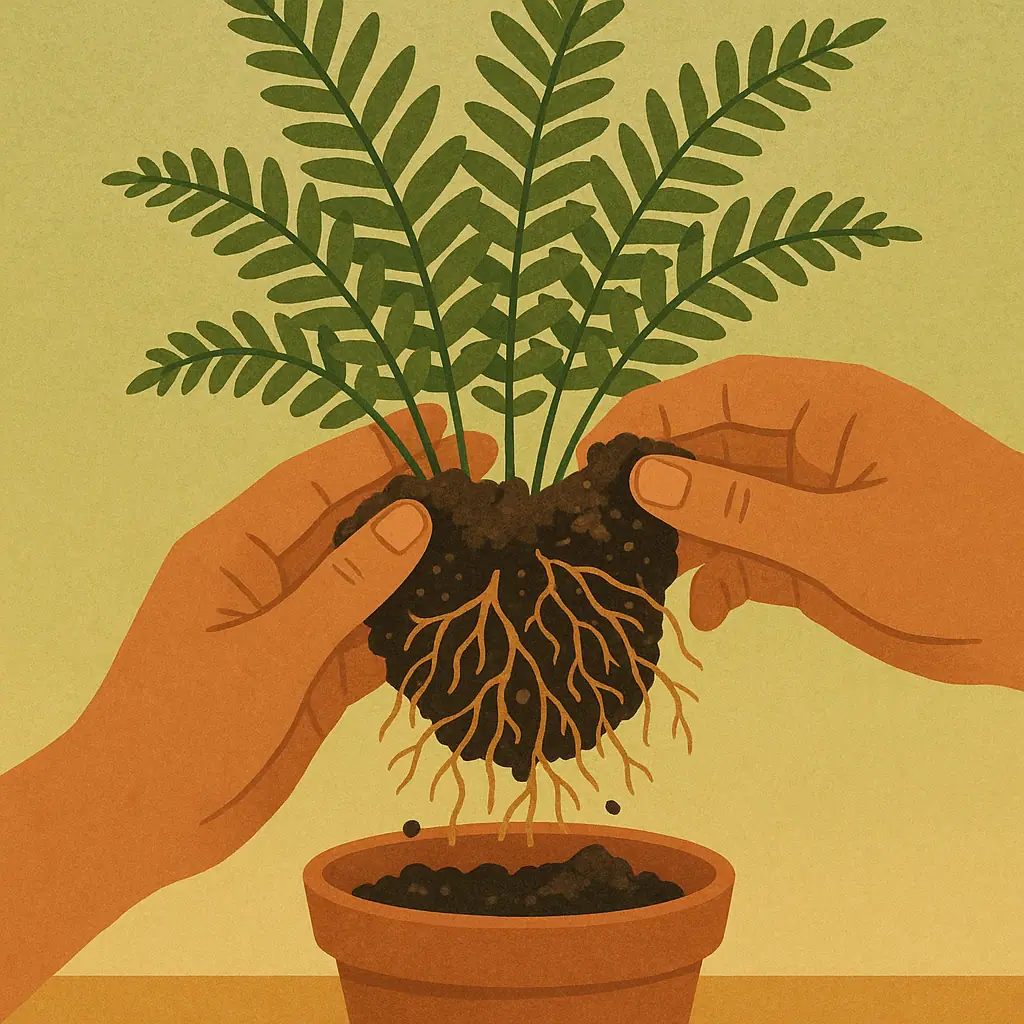
- Inspect roots if the warning signs are strong. Sour smell, blackening near the crown, or a pot that stays soaked may mean you need to slide the plant out and check for dark, soft roots.
- Repot only when the root zone is clearly in trouble. If roots are mushy, trim damaged roots with clean tools and repot into fresh, lightly moist, well-draining mix.
- Watch new growth. Old black tissue will not turn green again. Recovery shows in firmer fronds and healthier new growth over time.
Common Troubleshooting Mistakes to Avoid
The biggest mistake is treating every black frond the same way. Some black tissue is cold damage. Some is rot-related. Some is an old frond that should simply be removed. The pattern matters.
Check moisture before watering
This prevents the common cycle of adding water to a pot that is already too wet.
Separate dry damage from soft damage
Texture tells you whether the issue looks old and dry or active and possibly spreading.
Keep the fern in steady conditions
Stable light, temperature, and drainage make it easier to see whether the plant is recovering.
Watering because the plant looks sad
A droopy fern with black areas may already be too wet, so more water can deepen the problem.
Heavy pruning all at once
Removing every imperfect frond can stress the plant further and make recovery harder to judge.
A Simple Black-Leaf Checklist
Use this checklist when you are standing beside the plant. It keeps the decision practical instead of emotional.
- Is the black area soft or mushy? If yes, inspect moisture and drainage right away.
- Does the soil smell sour? If yes, suspect root trouble and consider checking the roots.
- Did the fern get cold? If yes, move it to a steadier spot and trim dead tissue after the damage is clear.
- Is only one old frond affected? If yes, trim it and observe before taking bigger steps.
- Are several fronds changing quickly? If yes, act sooner and document the pattern with photos.
- Is the pot heavy for days? If yes, review drainage, pot size, and watering rhythm.
If your main clue is a pot that refuses to dry, the article on why a fern pot feels heavy for days gives a deeper look at water retention, soil mix, and when to intervene.
When to Get Extra Help
Get help from a local nursery, cooperative extension office, or experienced plant grower if the blackening spreads over several days, the crown feels soft, the soil smells rotten, or you see insects along with declining fronds.
Bring clear photos of the whole fern, the affected fronds, the soil surface, the pot drainage, and the room placement. Those details help someone tell whether you are seeing cold damage, wet roots, a pest issue, or normal older frond decline.
If the plant has only one blackened older frond and everything else is firm, you may not need emergency action. Trim the frond, improve the obvious care issue, and watch new growth. For comparison with another leaf symptom, FernLog's guide to normal versus concerning fern leaf drop can help you judge the overall pattern.
Frequently Asked Questions
Should I cut off black fern leaves?
Yes, remove fronds that are fully black, mushy, or dried beyond recovery. Use clean scissors and avoid cutting healthy green growth just because the plant looks uneven.
Can black fern leaves turn green again?
No. Once tissue has turned black, it will not return to green. Recovery shows through stable remaining fronds and healthier new growth.
Does black always mean root rot?
No. Black areas can come from cold damage, wet roots, damaged stems, disease issues, or old tissue. Root rot becomes more likely when the soil is wet for days, smells sour, or roots feel dark and soft.
How quickly should I act?
Act the same day if the blackening is soft, spreading, near the crown, or paired with soggy soil. If it is one dry older frond, trim it and observe the plant for new changes.
Final Thoughts
Fern leaves turning black deserve attention, but they do not automatically mean the fern is finished. The best response is calm and specific: check moisture, drainage, cold exposure, texture, and spread.
Trim what is clearly dead, correct the obvious stress, and give the fern steady conditions. If new growth stays firm and green, the plant may simply be moving past a rough patch. If blackening spreads or the root zone looks unhealthy, act sooner and ask for local help.