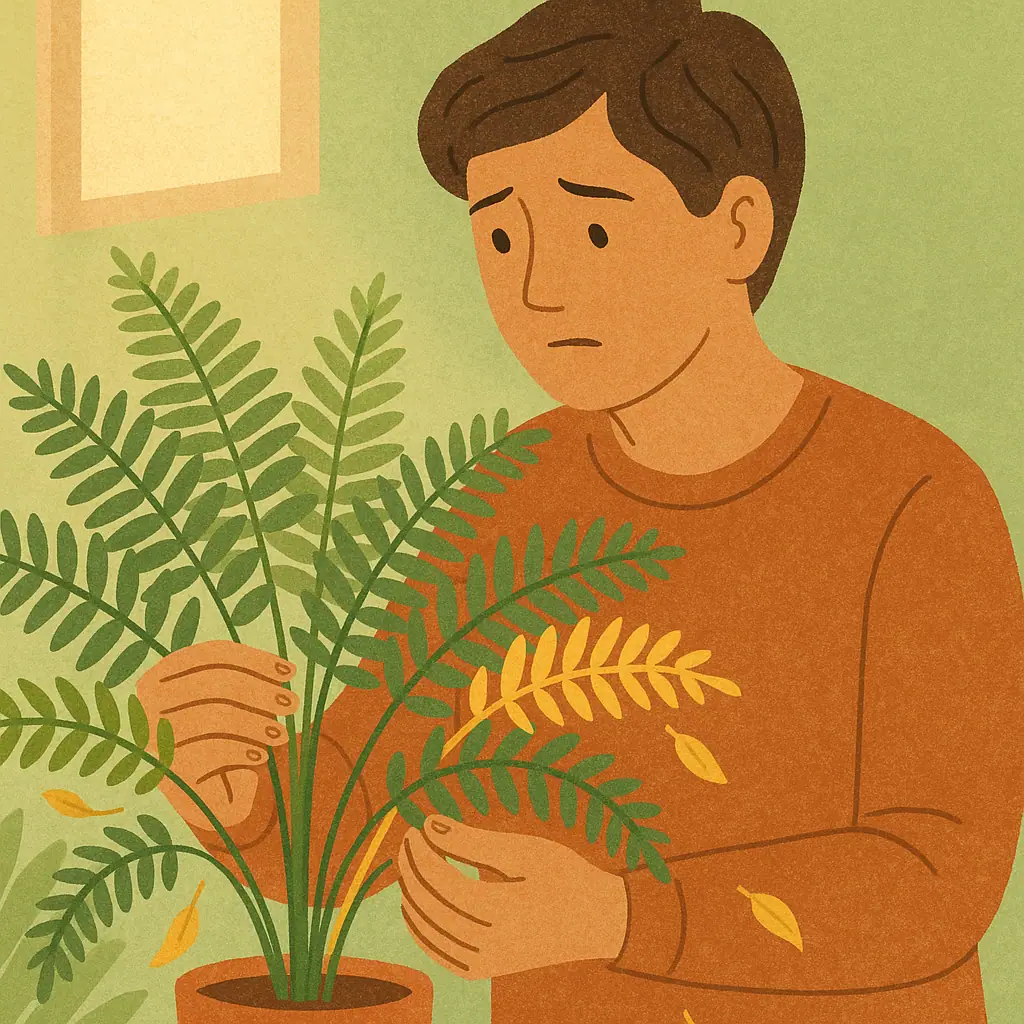
Fern fronds curling can make a healthy-looking plant suddenly seem fragile. One day the leaves are open and soft, and the next they look tucked inward, tight, or tired around the edges. The good news is that curled fronds are often a signal, not an emergency.
Most indoor ferns respond to changes in moisture, light, air movement, and room conditions. Your job is not to guess quickly. It is to read the plant, check the simple things, and make one steady correction at a time.
Why This Matters
Curling fronds matter because they help you notice stress before the plant declines further. A fern may curl when the root ball gets too dry, when light is too strong, when air is dry, or after it has been moved to a new place. The same symptom can have several causes, so the safest response is a calm inspection.
Clemson Extension's guide to indoor ferns notes that different ferns vary in moisture needs, but many indoor types appreciate filtered bright light and higher humidity. That is a useful reminder: curling is rarely solved by one universal rule.
Start With Troubleshooting & Plant Health
Begin with the plant's recent history. Did you move it to a new room, open a nearby vent, forget a watering, or place it closer to a sunny window? Small household changes can feel large to a fern.
If the plant was recently moved, compare your notes with FernLog's guide on why a fern looks tired after moving. Curling, drooping, and dull fronds can all appear while the plant adjusts to a new spot.
A quick first look
- Soil feel: Is the top dry, lightly moist, or soggy?
- Frond texture: Are the curled fronds soft, crisp, yellowing, or brown at the tips?
- Light exposure: Has direct sun touched the plant during the hottest part of the day?
- Air movement: Is the fern near a heater, air conditioner, fan, or drafty door?
- Recent change: Did you repot, relocate, divide, or rotate the plant recently?
Why Ferns Curl After a Move
A move changes more than location. It can change light intensity, watering speed, humidity, temperature, and how often the plant is bumped. A fern that was comfortable in one corner may need a little time to settle somewhere else.
This kind of adjustment does not mean the plant is failing. If the soil is draining well and the newest growth still looks firm, give the fern a recovery window before making big changes. Repeated moves can keep the plant from settling.
Signs of adjustment shock
- Fronds curl or droop shortly after the move: Watch before changing everything.
- Soil dries faster than before: The new spot may be warmer, brighter, or drier.
- Tips turn crisp: Check for dry air or direct light before adding fertilizer.
- New growth pauses: A short pause can be normal while the plant adapts.
Read Drooping Fronds Before You Change Care
Curling and drooping often appear together, but they do not always mean the same thing. Soft, limp fronds with dry soil may point toward thirst. Curling with damp soil may point toward root stress, poor drainage, or a room condition such as dry air or harsh light.
Use a finger check before watering. If the top layer is dry and the pot feels light, water thoroughly and let extra water drain. If the soil is already wet, wait. More water in wet soil can make the root ball less comfortable.
Light and Humidity Changes to Check First
Ferns usually prefer bright indirect light indoors. A window that feels pleasant to you may still send hot direct sun onto delicate fronds for part of the day. That can cause edges to curl, crisp, or fade.
If you suspect light stress, review FernLog's advice on telling whether a fern is too close to a window. Move the plant back a little rather than sending it into a dark corner.
Gentle humidity support
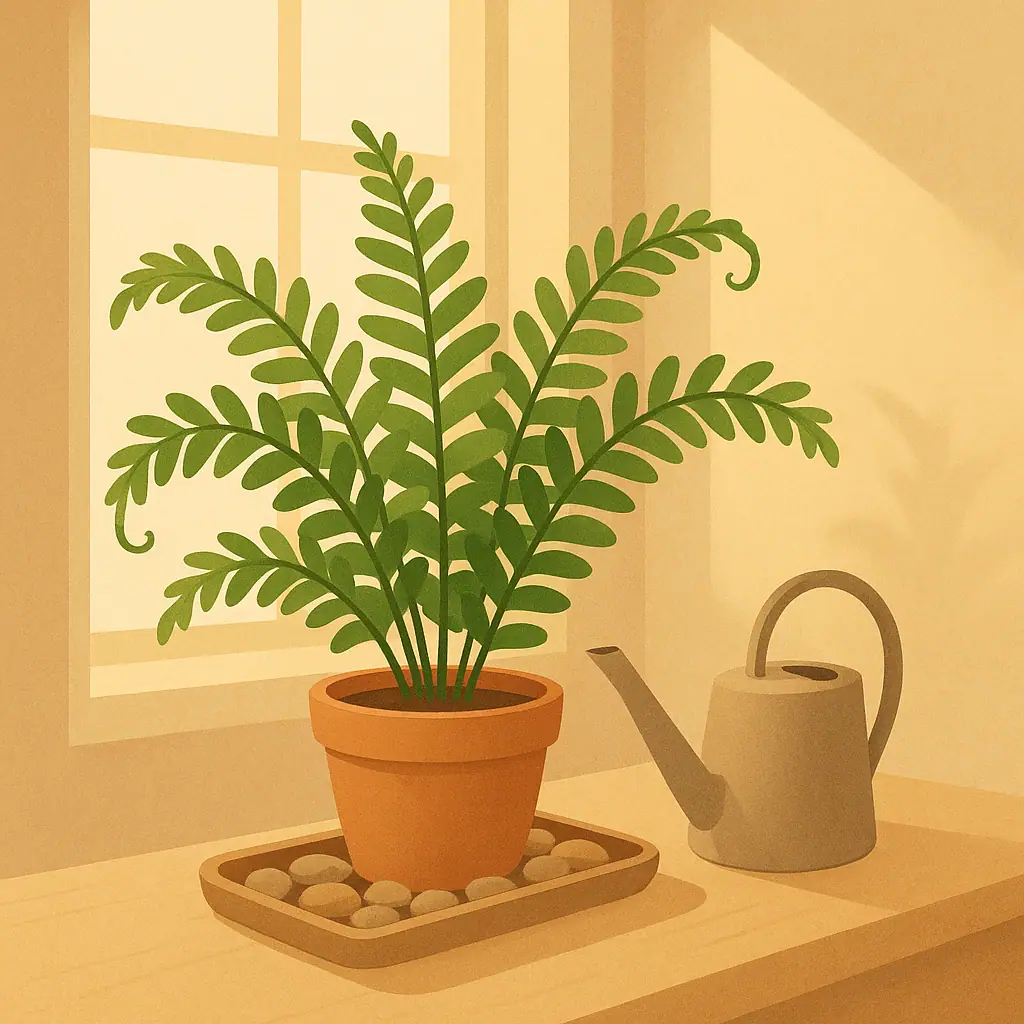
Dry indoor air can also make fronds curl at the edges. You do not need to turn your room into a greenhouse. Try grouping ferns with other houseplants, using a pebble tray that keeps the pot above standing water, or placing the fern in a room that naturally stays a little more humid.
Give the Fern a Recovery Window
After one careful correction, give the fern time. A one to three week recovery window is reasonable for many mild stress situations. During that time, keep the routine steady and avoid repotting unless there is a clear drainage, root rot, or pot problem.
Look for gradual signs. New fronds should open normally, existing soft fronds may relax, and the plant should stop getting worse. Damaged crispy tips will not turn green again, but new growth can tell you whether care is improving.
A Simple Checklist
Use this checklist when you notice fern fronds curling. It helps you avoid overreacting and gives you a repeatable way to inspect the plant.
- Is the soil dry below the surface? Water thoroughly, then drain the pot well.
- Is the soil wet and heavy? Pause watering and check drainage.
- Is direct sun touching the fronds? Move the fern to bright indirect light.
- Is air blowing across the plant? Shift it away from vents and drafty doors.
- Did the plant move recently? Give it a stable recovery window.
- Are pests or rot present? Isolate the plant and seek a trusted plant-care source.
Pros and Cons of Common Responses
Check soil before watering
This keeps you from adding water to a pot that is already too wet.
Move away from harsh sun
A small shift can protect delicate fronds while keeping the plant in useful light.
Improve the room gently
Grouping plants or using a pebble tray can support humidity without dramatic changes.
Watering on panic
Extra water can make a wet root ball worse if dryness is not the true problem.
Moving the fern every day
Constant relocation makes it harder to see whether one correction helped.
When to Get Extra Help
Ask for more specific help if curling comes with a sour soil smell, blackened roots, sticky residue, visible insects, or fast decline. In those cases, the issue may be more than normal adjustment.
Photos help. Take one picture of the whole plant, one of the soil surface, and one close-up of the curled fronds. Also write down where the fern sits, how often you water, and whether the pot has drainage.
Frequently Asked Questions
How long can a fern look tired after moving?
A mild adjustment period can last one to three weeks. The plant should gradually stop declining and show steadier new growth.
Should I water more if the fronds droop?
Only if the soil is actually dry. Drooping and curling can also happen when soil is too wet, light is too strong, or air is too dry.
Is repotting a stressed fern a good idea?
Usually wait unless drainage is poor, roots are rotting, or the pot is clearly causing the problem. Repotting adds another stress.
Where should I place the fern after a move?
Choose stable bright indirect light, away from vents, heaters, cold drafts, and harsh direct sun.
Final Thoughts
Fern fronds curling is a request for attention, not a reason to panic. Check moisture, drainage, light, humidity, and recent changes before choosing a response.
Make one small correction, then watch the plant for a short recovery window. Calm observation is often the care move that helps most.