Homemade fern potting mix does not need to feel like a chemistry project. For most indoor fern keepers, the goal is simple: create a blend that holds steady moisture, drains freely, and feels light enough for fine fern roots to breathe.
A gentle mix is helpful when a fern is ready for repotting, when old soil has collapsed into a dense sponge, or when you want more control than a heavy all-purpose potting soil gives you. The key is not using every ingredient on the shelf. The key is understanding what each ingredient does.
Think of the mix like a soft, wrung-out kitchen sponge with tiny air pockets. It should stay evenly damp after watering, but it should not sit wet, sour, or compacted around the roots.
Why Homemade Fern Potting Mix Matters
Homemade fern potting mix matters because ferns are often bothered by two opposite problems at the same time. They dislike drying out completely, but they also dislike soil that stays soggy and airless. A good blend sits between those extremes.
For propagation and repotting, clean media and drainage matter. The University of Illinois Extension houseplant propagation guide explains that a suitable rooting medium should provide support along with enough water and oxygen, and it lists clean materials such as coarse sand, peat moss, perlite, and vermiculite as useful options.
Start With Propagation and Repotting Basics
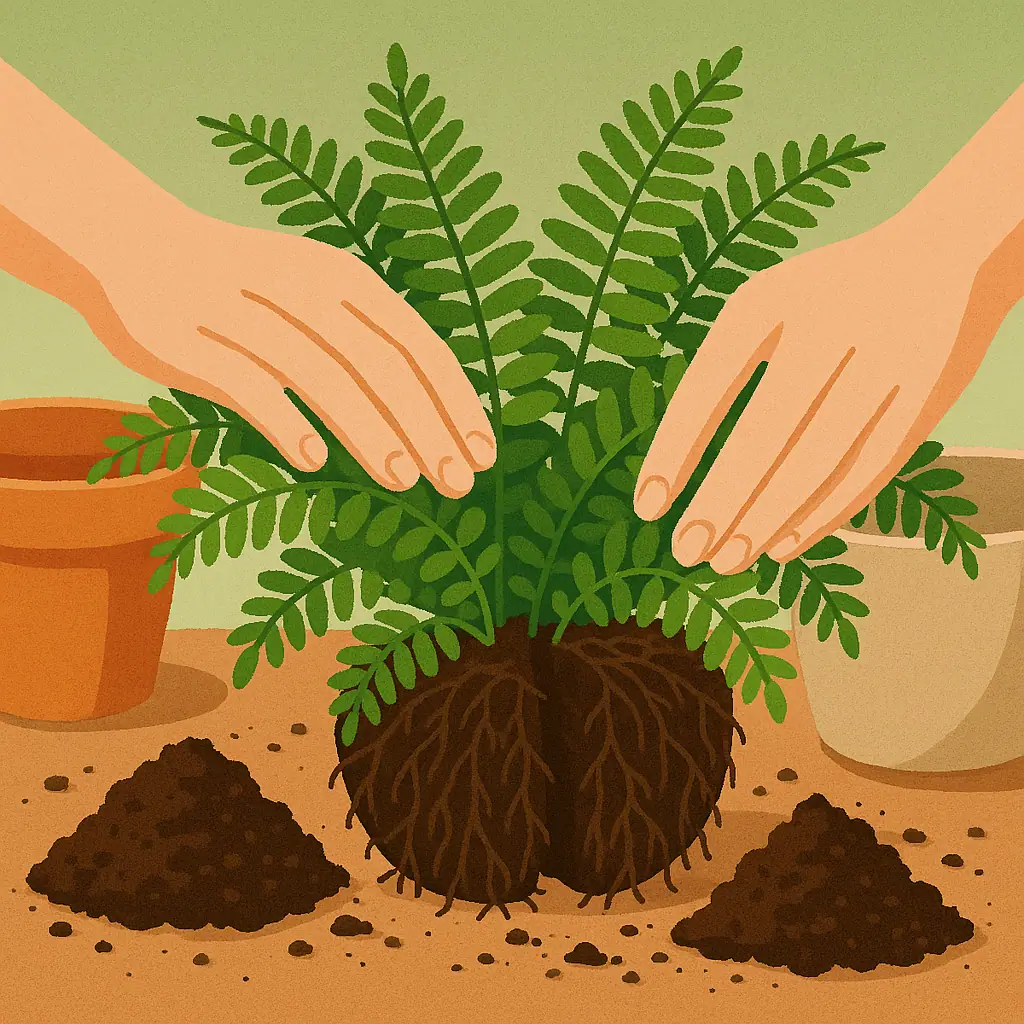
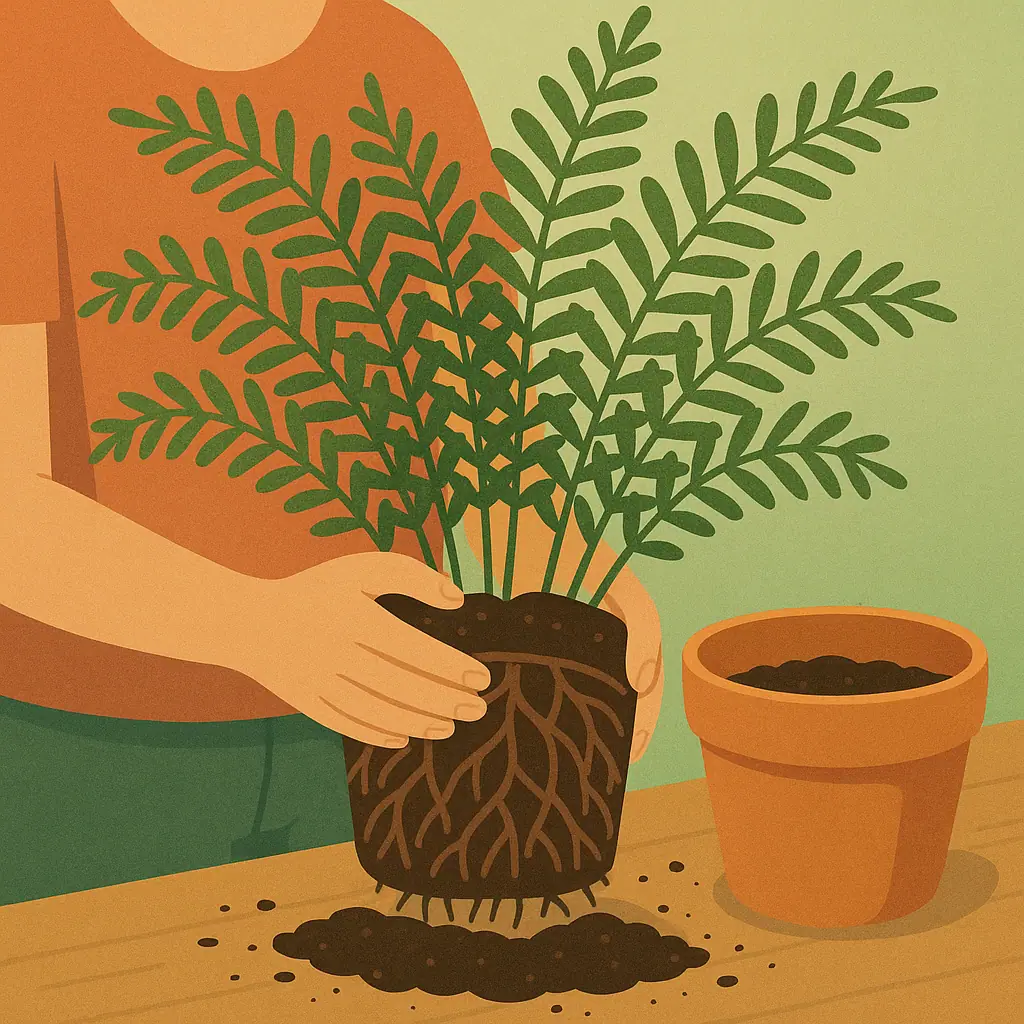
Propagation and Repotting works best when the plant is not already in crisis. If your fern is collapsing, smells sour, or has black mushy roots, the mix matters, but the root problem needs attention too.
If you are repotting because the plant is outgrowing its container, FernLog's guide to when to repot ferns can help you confirm the timing before you disturb the roots. A fern that only needs a small refresh may not require a full pot change.
Use a clean container
Start with a pot that has drainage holes. Wash reused pots before planting, especially if the previous plant had pests or root trouble. A clean pot and fresh mix reduce the chance of carrying old problems forward.
Moisten before you plant
Dry peat-based or coir-based ingredients can be stubborn at first. Add water slowly and stir until the mix feels evenly damp, not dripping. This helps the fern settle into a medium that is already comfortable.
What to Put in a Gentle Fern Mix
A beginner-friendly fern mix usually needs three jobs covered: moisture holding, drainage, and a little structure. You can adjust the exact ingredients based on what is available locally.
- Moisture base: Use a fine indoor potting mix, peat moss, or coco coir as the part that holds steady moisture.
- Air and drainage: Add perlite, pumice, or coarse sand so water can move through and roots are not packed tightly.
- Soft organic structure: A small amount of fine orchid bark, leaf mold, or composted bark can keep the blend from feeling flat.
- Avoid heavy garden soil: Outdoor soil can compact in pots and may bring pests, weed seeds, or drainage problems indoors.
- Skip kitchen cures: Eggshells, coffee grounds, and random leftovers are not a reliable way to build a balanced fern mix.
If the existing pot has only a tired top layer, you may not need to start over. The article on refreshing the top layer of fern soil explains a smaller approach for plants that are otherwise stable.
How to Make Homemade Fern Potting Mix Step by Step
This simple recipe is a framework, not a rigid formula. Use it for common indoor ferns that prefer consistent moisture and good drainage, then adjust slightly after you see how it behaves in your room.
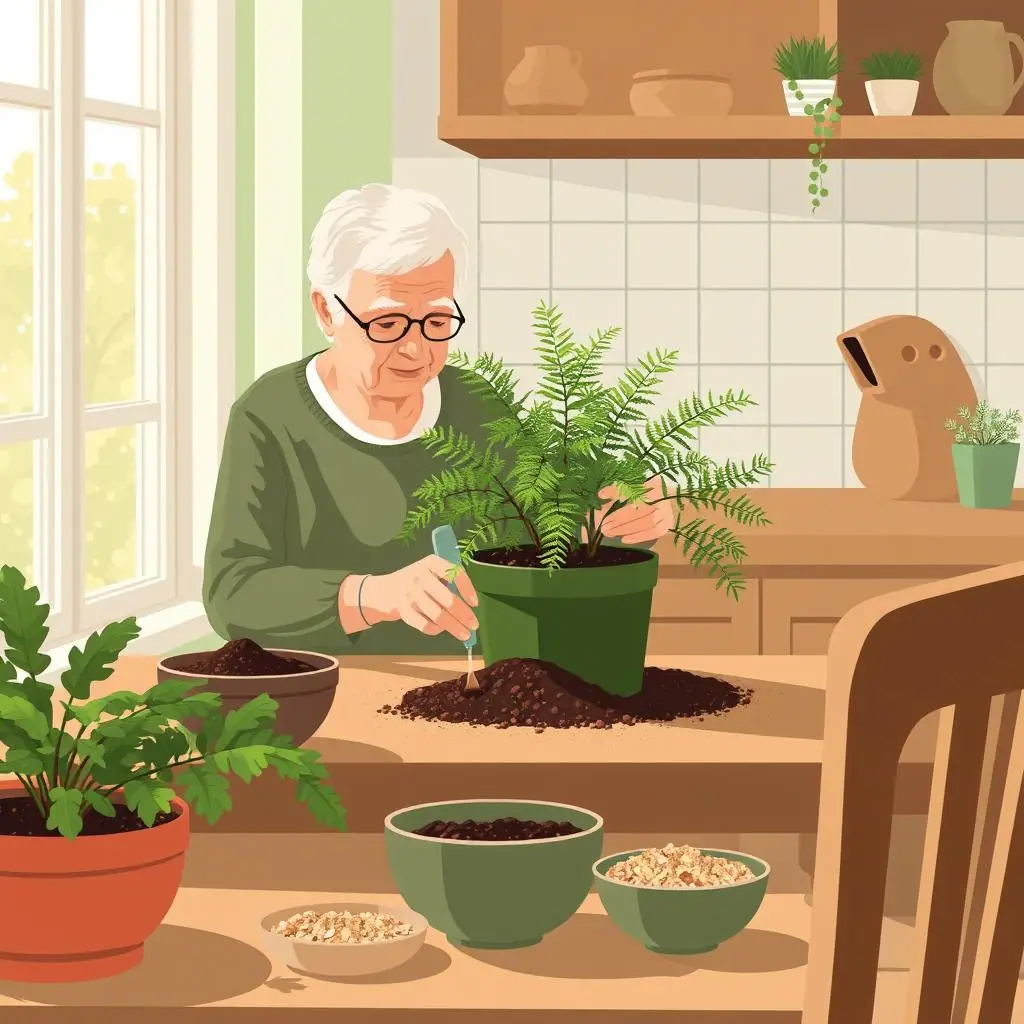
- Choose your measuring scoop. A cup, small bowl, or old nursery pot works fine. The ratio matters more than the exact size.
- Add two parts moisture base. Use fresh indoor potting mix, peat moss, coco coir, or a combination. Break up clumps with your fingers.
- Add one part drainage material. Mix in perlite, pumice, or coarse sand. This helps the blend avoid becoming a wet block.
- Add one small part bark if available. Fine orchid bark or composted bark can add gentle texture. Do not make the blend chunky for small-rooted ferns.
- Moisten slowly. Sprinkle water in stages and stir. Stop when the mix holds together lightly but does not drip when squeezed.
- Test the feel. The mix should feel springy and loose. If it feels heavy, add a little more perlite. If it dries instantly, add a little more moisture base.
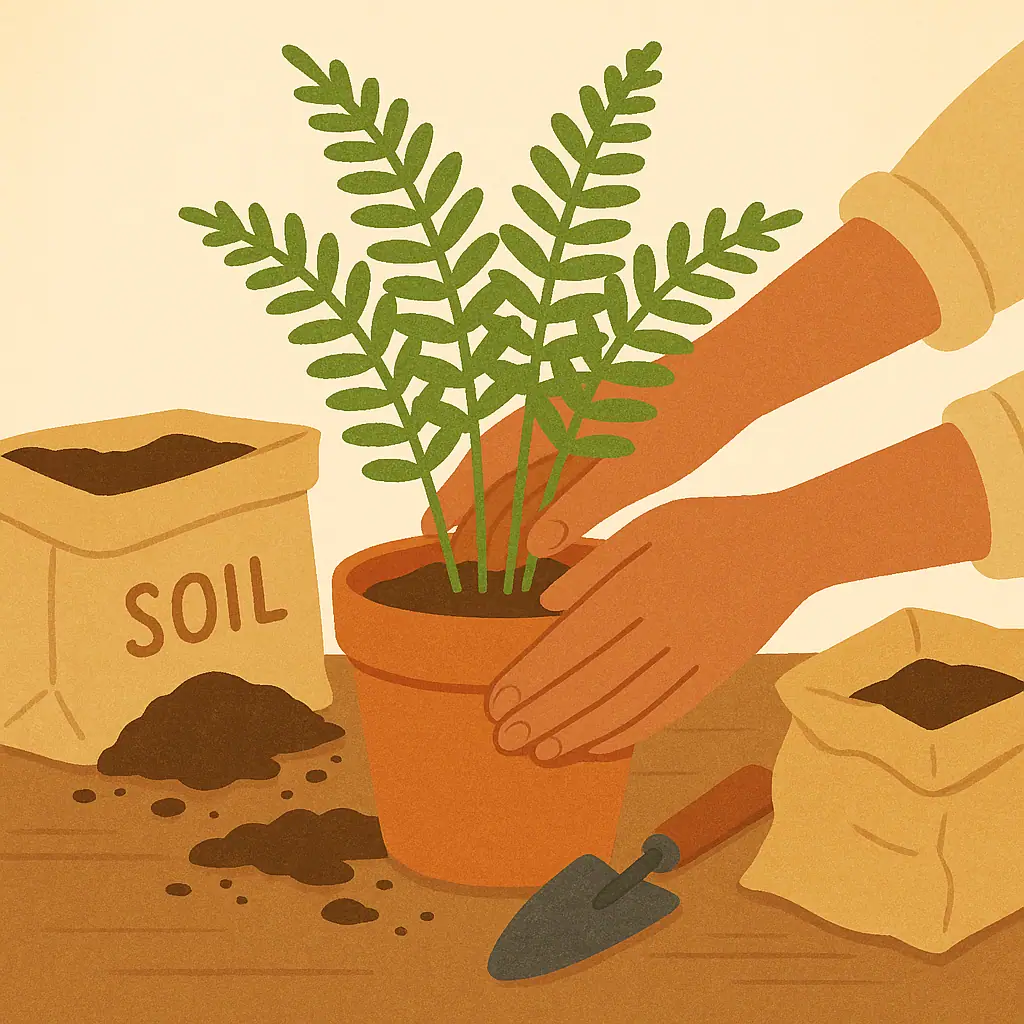
- Pot gently. Place the fern at the same depth it was growing before, firm the mix lightly, and water until excess drains from the bottom.
Common Fern Mix Mistakes to Avoid
The most common mistake is trying to make the mix do everything at once. Ferns need comfort and consistency more than a complicated blend with too many amendments.
Light texture
A loose blend gives fine fern roots room for both moisture and oxygen.
Steady dampness
A moisture-holding base keeps the plant from swinging too quickly from wet to bone dry.
Good drainage
Perlite, pumice, or coarse sand helps extra water leave the pot instead of pooling around roots.
Too much garden soil
Outdoor soil often becomes dense in containers and can make indoor watering harder to control.
Too many experiments
Adding coffee grounds, eggshells, or strong fertilizers can create new problems before you know how the fern responds.
A Simple Checklist Before You Repot
Use this checklist before you move the fern into its new mix. It keeps the job calm and prevents last-minute guessing.
- Timing: Is the fern actually ready for repotting, or does it only need a top refresh?
- Pot: Does the container have drainage holes and enough room without being oversized?
- Mix feel: Does the blend feel damp, loose, and springy rather than muddy?
- Root check: Are the roots mostly firm, not sour-smelling or mushy?
- Water plan: Will you water after repotting and let the extra drain away?
- Recovery spot: Can the fern rest in bright indirect light away from heat, cold drafts, and direct sun?
If you are dividing a fern at the same time, read how to divide a fern for the first time before you begin. Division adds root disturbance, so it helps to know the steps before the plant is out of the pot.
When to Get Extra Help
Ask a local nursery, cooperative extension office, or experienced plant grower for help if your fern has root rot symptoms, a strong sour smell, spreading black tissue, or repeated decline after repotting. Soil mix can support recovery, but it cannot fix every root problem by itself.
Bring photos of the whole fern, the old pot, the roots, and the mix you used. If possible, note how often you water and where the plant sits. Those details help someone tell whether the issue is mix density, pot size, water timing, light, or plant health.
Frequently Asked Questions
Can I use regular potting soil for ferns?
Sometimes, but many regular mixes are too dense on their own. For ferns, it often helps to lighten the mix with perlite, pumice, or another drainage material.
Should fern potting mix stay wet all the time?
No. It should stay evenly moist, not soggy. The pot should drain after watering, and the mix should not smell sour or feel muddy for days.
Is coco coir okay in a homemade fern potting mix?
Yes, coco coir can work as a moisture-holding base when it is blended with drainage material. Use it gently and watch how quickly it dries in your home.
Do I need fertilizer in the mix?
Not immediately. After repotting, let the fern settle first. If you fertilize later, use a gentle routine for an actively growing, stable plant.
Final Thoughts
A homemade fern potting mix should make watering easier, not more mysterious. Start with a moisture-holding base, add drainage, keep the texture light, and avoid heavy outdoor soil or untested home remedies.
Once the fern is potted, watch how the mix behaves for the next week. If it dries too quickly, adjust gently next time. If it stays wet too long, add more air and drainage. Small observations are what turn a simple blend into a reliable fern-care habit.