Plants can't tell us what they need in words, but they communicate clearly enough if you know what to look for. A fern that needs repotting sends out several unmistakable signals — and once you've learned to read them, you'll never second-guess the timing again.
Repotting a fern at the right moment keeps it growing vigorously, prevents root rot, and gives the plant the space it needs to stay lush and full. Wait too long and the plant stagnates; repot too soon and you stress a plant that wasn't ready. This guide will help you find that sweet spot.
What Does Rootbound Mean for a Fern?
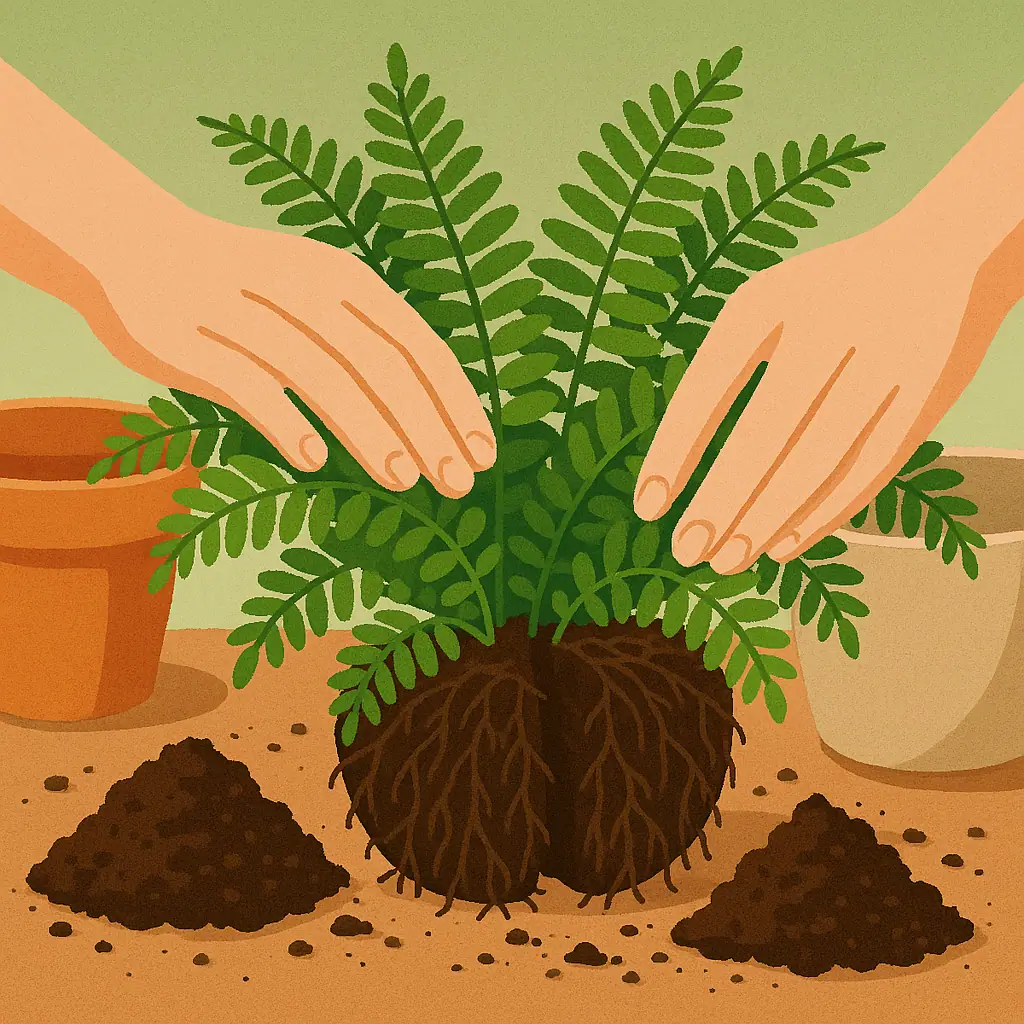
A rootbound plant is one whose roots have completely filled the available space in a pot. The root ball becomes a dense, tangled mass that leaves little room for soil, water, or air. When this happens, the fern can no longer absorb nutrients efficiently, water drains too quickly (or pools around the surface), and growth slows dramatically.
Think of it like wearing shoes two sizes too small. You can still walk, but everything is cramped and uncomfortable — and eventually you stop moving altogether. Repotting gives the fern room to breathe and grow again.
How Quickly Do Ferns Outgrow Their Pots?
Most indoor ferns need repotting every 1-2 years when young and every 2-3 years once mature. Fast-growing varieties like Boston ferns may outgrow a pot in a single growing season. Slower-growing species like bird's nest ferns can stay comfortable in the same pot for 2-3 years before showing rootbound signs.
Signs Your Fern Needs Repotting

Your fern will give you clear cues when it's time for a bigger home. Watch for any of these signals:
- Roots growing through drainage holes: When roots escape through the bottom of the pot, the plant has clearly run out of space inside.
- Roots visible on top of the soil: A dense tangle of roots appearing at the soil surface is another reliable indicator of a crowded root system.
- Soil drying out much faster than before: More roots than soil means less water-retention capacity. If you're watering twice as often as you used to, check the roots.
- Stunted growth despite good care: A fern that has stopped producing new fronds despite proper light, water, and fertilizer is likely rootbound.
- Yellowing or drooping lower fronds: Nutrient uptake suffers in a rootbound plant. Lower fronds often show the strain first.
- Pot looks or feels distorted: Severe root pressure can actually crack plastic nursery pots or push out the sides — a sure sign it's past time to repot.
The Tip-Out Test
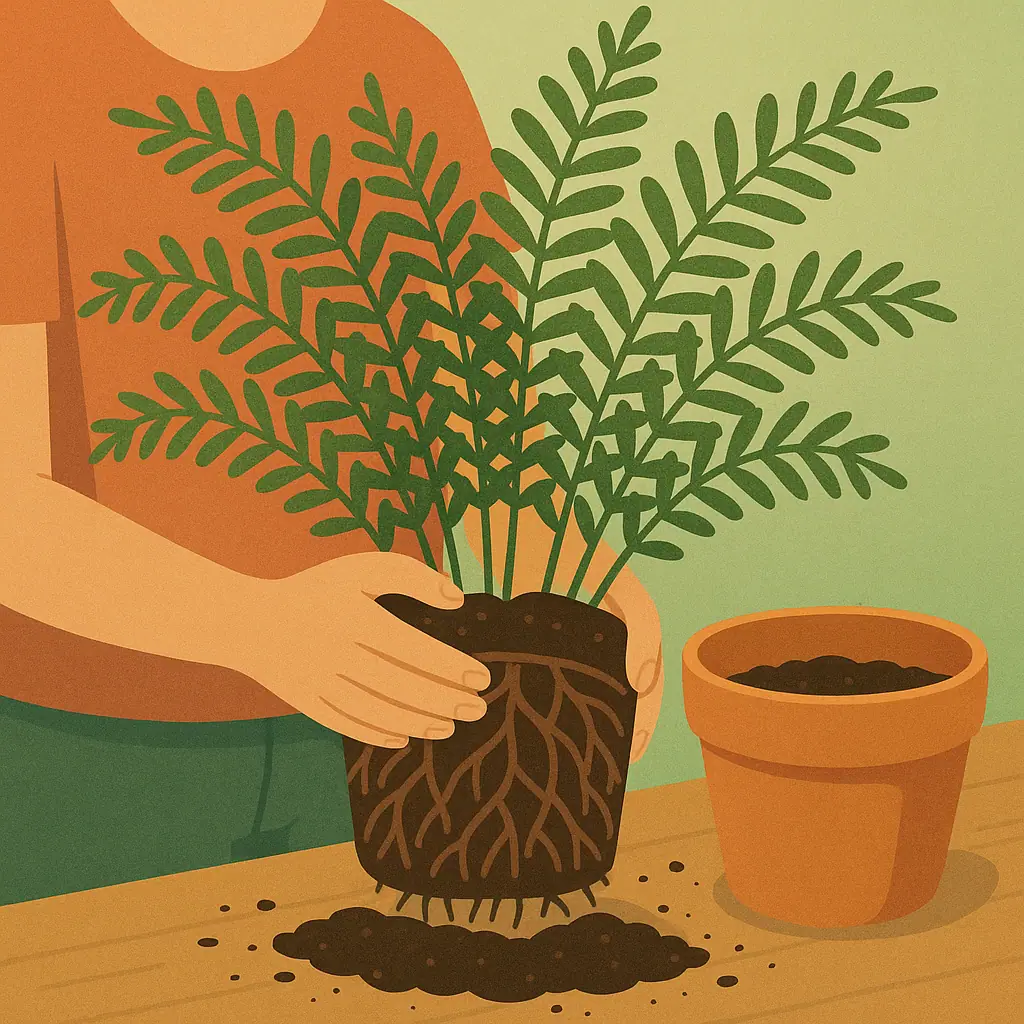
If you're unsure, do the tip-out test. Lay the pot on its side, support the base of the fern, and gently slide the plant out. A healthy, not-yet-rootbound fern will come out easily with a soil ball that holds its shape loosely. A rootbound fern will come out as a tight, solid mass of roots with very little visible soil. If that's what you see, it's time.
Choosing the Right New Pot Size
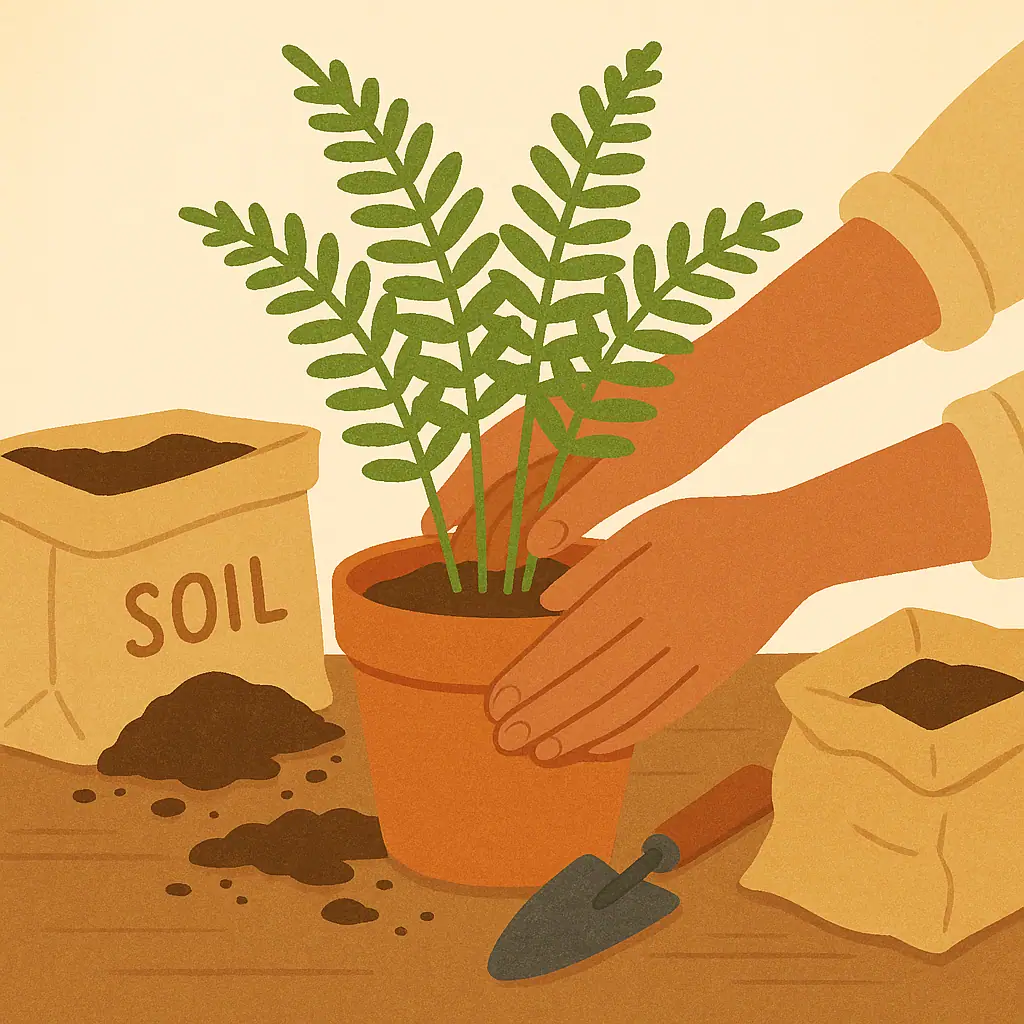
One of the most common repotting mistakes is choosing a pot that's too large. More space seems better — but extra soil around the roots holds more moisture than the plant can use, dramatically increasing the risk of root rot. The goal is modest, gradual upsizing.
- Go up only 1-2 inches in diameter: If your fern is in a 6-inch pot, move it to an 8-inch pot — not a 12-inch.
- Check for drainage holes: Non-negotiable. Ferns cannot survive in a pot without them.
- Consider the material: Terracotta breathes well and dries faster (good for fern varieties prone to overwatering). Plastic retains moisture longer (better for varieties that like consistently damp soil).
- Match depth to root structure: Most ferns have shallow, spreading roots. A wide, shallow pot often suits them better than a deep, narrow one.
When Not to Repot
Repotting at the wrong time can set a fern back for months. Avoid these situations:
- Winter or late fall: Ferns are resting. Disturbing the roots when growth is minimal makes recovery slow and difficult.
- When the plant is already stressed: A fern dealing with pest damage, disease, or severe dehydration needs to stabilize before repotting. Address the problem first.
- Immediately after bringing a new plant home: Give newly purchased ferns 3-4 weeks to adjust to your home's environment before repotting, even if you can see roots through the drainage holes.
- During or right after flowering: Less common for ferns, but if your variety is in an unusual reproductive stage, wait until it has settled.
Pros and Cons of Repotting
Fresh nutrients from new soil
Old potting mix gets depleted over time. New soil replenishes the nutrients your fern needs for healthy growth.
Improved water retention and drainage
Fresh, loose soil absorbs and drains water more evenly than compacted old mix, supporting consistent moisture levels.
Room for new root and frond growth
More root space directly translates to more frond growth — a repotted fern typically rebounds with a flush of new leaves.
Temporary transplant shock
Almost all ferns experience 1-2 weeks of wilting or slowed growth after repotting while roots re-establish.
Risk of overwatering in new pot
More soil volume retains more water. Be more conservative with watering for the first few weeks after repotting.
Frequently Asked Questions
Can I keep my fern in the same pot forever if I fertilize regularly?
Fertilizing helps, but it can't replace the need for repotting. Over time, roots become so dense that soil structure breaks down, drainage worsens, and the physical constraints on root growth limit the plant's ability to thrive. Eventually, even well-fed plants in rootbound conditions decline.
My fern has roots coming out of the top of the soil but seems healthy. Should I repot now?
Surface roots are a strong signal that repotting is needed soon, even if the plant still looks healthy. Healthy-looking plants can decline quickly once they hit a hard limit on root space. Spring is the ideal time to act — don't wait until you see other stress signs too.
What potting mix is best when repotting a fern?
Use a light, well-draining mix designed for houseplants. Adding perlite (about 20-30% of the mix) improves drainage and aeration. Many gardeners also add a small amount of peat moss or coco coir to retain just enough moisture. Avoid heavy garden soil — it compacts too easily and suffocates fern roots.
How do I know if I repotted successfully?
After 2-3 weeks, look for new fronds emerging from the crown of the plant. New growth is the clearest confirmation that roots have re-established and the fern is comfortable in its new home. Some light wilting in the first week is normal and doesn't indicate failure.
Final Thoughts
Repotting is one of those tasks that feels more intimidating than it really is. Once you've learned to read the signals — roots through the drainage holes, soil that dries out faster, stunted growth — you'll know exactly when your fern is asking for more room.
Think of it as a kindness, not a chore. You're giving your plant the space it needs to keep doing what it does best: filling your home with soft, beautiful green fronds that bring a little bit of the forest indoors.