Learning how to divide a fern for the first time can feel like a big moment. You may have a healthy plant that is filling its pot, but the idea of pulling it apart makes you worry that one wrong move will ruin years of growth.
The reassuring truth is that division is a normal way to make more plants from many clumping houseplants. It does not need to be rushed, and it does not need to be dramatic. A careful first division is mostly about choosing the right plant, using clean tools, keeping roots moist, and giving each new piece a calm recovery period.
Think of it less like surgery and more like helping a crowded family move into two comfortable rooms. You are not trying to make perfect little plants. You are giving healthy sections enough roots, fronds, soil, water, and patience to settle into their own pots.
Why Dividing a Fern for the First Time Matters
Division matters because an older fern can become crowded in its pot. When the root ball is packed tightly, watering gets harder to judge, new growth may slow, and the center of the plant may look tired even when you are caring for it well.
The University of Illinois Extension explains that division works for houseplants that grow in clumps or have more than one stem from the soil, and that each separated piece should keep a fair amount of roots before it is repotted. Its guide to houseplant division is a useful outside source for confirming the basic method before you begin.
Start With Propagation and Repotting Basics
Fern division works best when the plant naturally has more than one crown, clump, or growing point. Boston ferns, many older clumping ferns, and some dense basket ferns may divide more easily than a single-crown fern that has no obvious separate sections.
Before you tip the plant from its pot, decide why you are dividing it. Good reasons include a fern that is crowded, a plant you want to share, or a mature clump that can clearly become two or three plants. Poor reasons include boredom, panic, or trying to fix a care problem that has not been diagnosed.
Signs your fern may be ready
- The pot is crowded: Roots circle the pot or the plant dries much faster than it used to.
- There are clear sections: You can see natural clumps or crowns that could become separate plants.
- The fern is actively growing: New fronds are appearing, and the plant is not in a stressed pause.
- The plant is healthy overall: Most fronds are green, and the soil does not smell sour or rotten.
If you are unsure whether the plant simply needs a larger pot instead, FernLog's guide to When to Repot Ferns: Signs It's Time to Upsize can help you compare repotting with division. Sometimes the kinder choice is one larger pot, not several smaller ones.
What to Check First Before You Divide
Set the fern on a washable surface and look slowly before you act. You want to know whether the plant has enough strength to handle being separated.
Check the soil first. It should be lightly moist, not dry and crisp, and not dripping wet. A lightly moist root ball usually comes apart more gently. If the fern is bone dry, water it a day before division. If it is muddy, heavy, or sour-smelling, address the drainage problem before making new plants.
Then check the base of the plant. Look for natural places where the clump already seems to separate. Your first division does not need to create many pieces. Two healthy divisions are better than five weak ones.
Gather simple supplies
- Clean pots: Use containers with drainage holes, sized for each division.
- Fresh potting mix: Choose a light, moisture-holding mix that still drains well.
- Clean scissors or knife: Use a sharp tool only if roots cannot be teased apart by hand.
- Newspaper or tray: Keep soil contained and make cleanup easier.
- Watering can: Water gently after potting so mix settles around the roots.
For readers who want a fuller background on this method, Fern Propagation: Division Method for Beginners explains the broader propagation idea. This first-time guide stays focused on the calm, practical steps of doing one safe division.
How to Divide a Fern for the First Time Step by Step
Work slowly and keep the goal modest. A first division is successful when each new pot has roots, fronds, moisture, and a quiet place to recover.
- Water lightly the day before if needed. If the mix is dry, give the fern a small drink and let excess water drain. Do not divide a plant sitting in soggy soil.
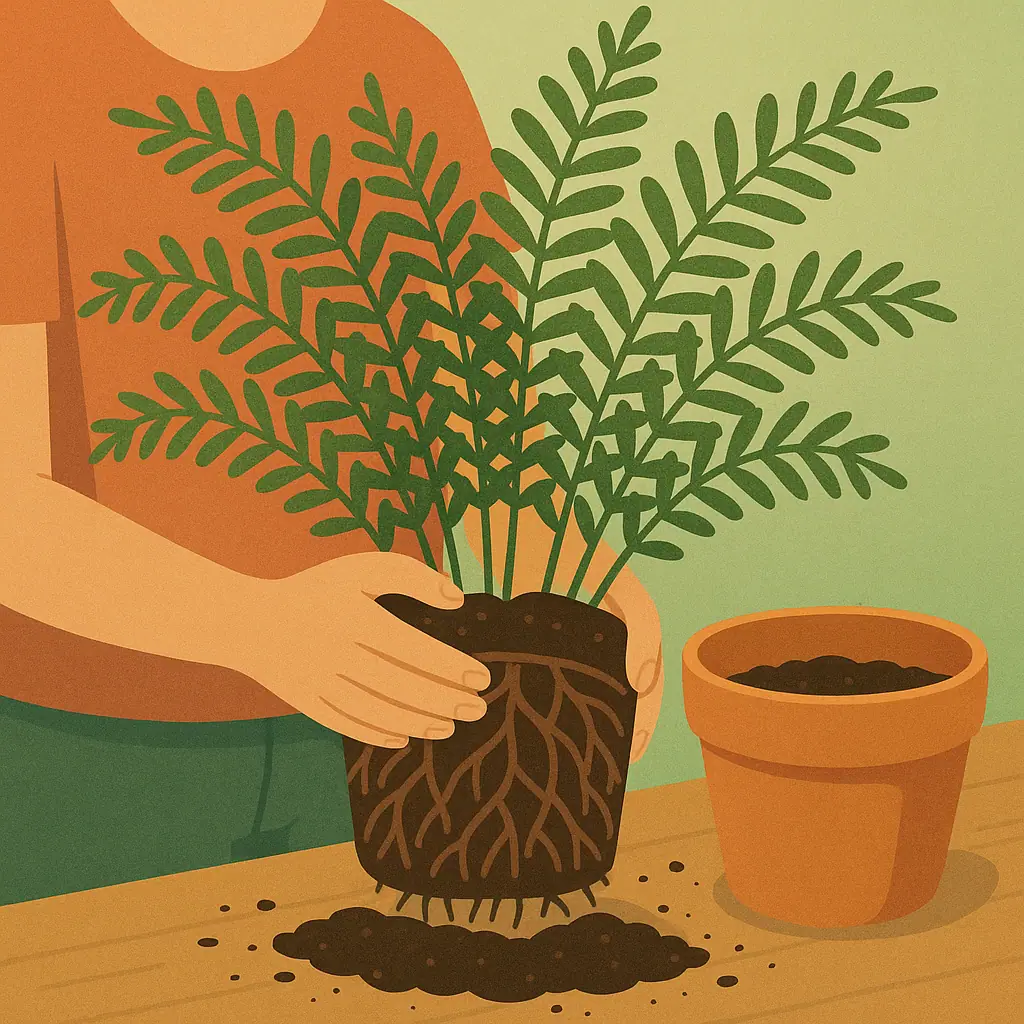
- Slide the fern from the pot. Support the base with one hand, turn the pot gently, and loosen the root ball without yanking the fronds.
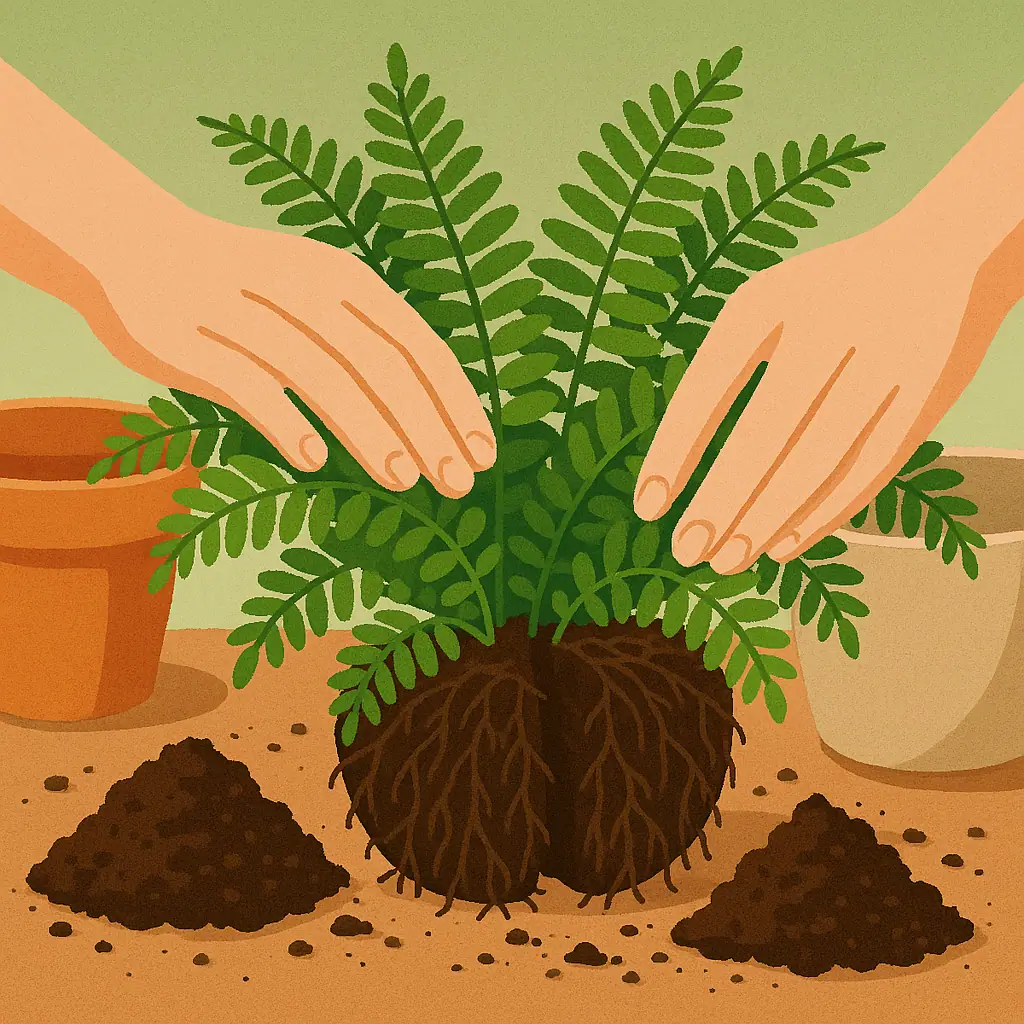
- Look for natural separation lines. Find clumps that already seem to have their own roots and fronds.
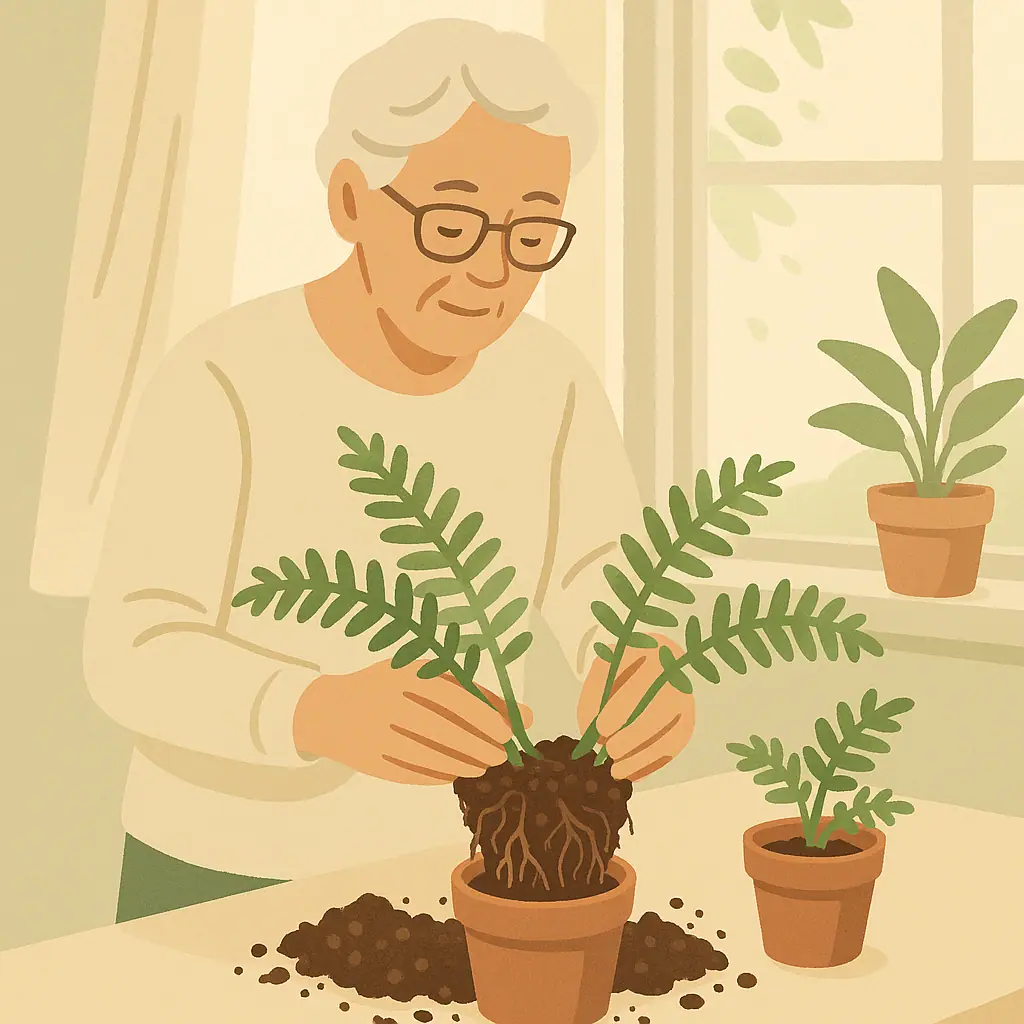
- Tease roots apart first. Use your fingers to loosen soil and separate sections. If the root ball is too firm, make one clean cut with a sharp tool.
- Keep each division generous. Each piece should have a healthy amount of roots and several fronds or growing points.
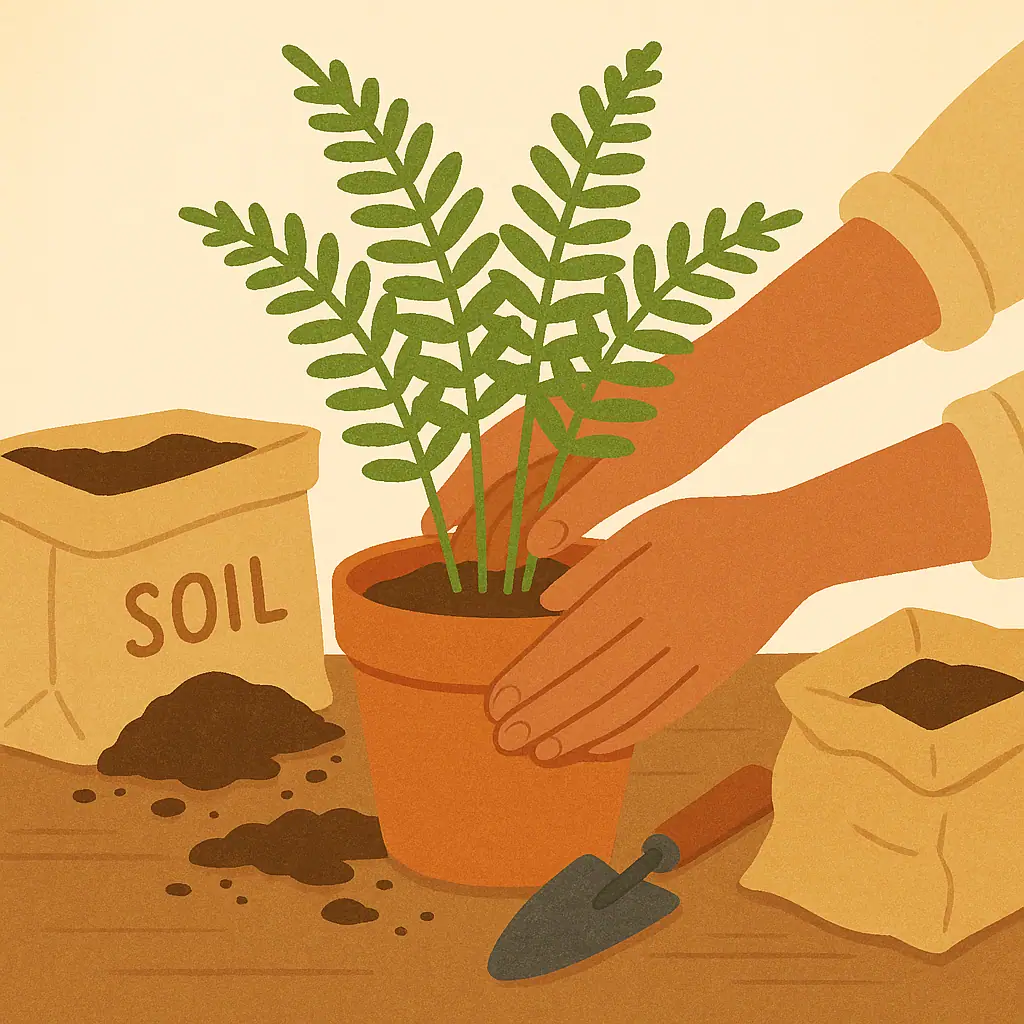
- Pot each section right away. Add fresh mix, set the division at the same depth it grew before, and firm the soil gently.
- Water and drain. Water until the mix settles, then let extra water leave the pot. Empty any saucer after draining.
- Give recovery conditions. Place divisions in bright indirect light, away from harsh sun, heat vents, and cold drafts.
Common Propagation and Repotting Mistakes to Avoid
The first mistake is dividing a struggling fern because you hope it will solve everything. Division is stressful, even when done well. If the fern is battling pests, root rot, severe dryness, or recent moving stress, give it a steadier routine before dividing.
The second mistake is making the pieces too small. A tiny section with only a few roots may survive, but it has less stored strength. For a first attempt, choose fewer, fuller divisions.
The third mistake is putting new divisions in strong sun to help them grow faster. Freshly divided ferns need gentle recovery. Bright indirect light is safer than direct afternoon sun.
After division, the new plants may pause before showing fresh growth. That is normal. If you want help with the recovery stage, FernLog's guide to Propagation Success: Caring for New Fern Divisions covers the settling-in period in more detail.
Pros and Cons of Dividing a Fern
Creates more plants from one favorite fern
A healthy division can become a second plant for another room, a porch season, or a thoughtful gift.
Relieves a crowded pot
When a fern has outgrown its container, division can give roots more room and make watering easier to manage.
Builds plant confidence
A calm first division teaches you how roots, crowns, soil, and aftercare work together.
Can stress the plant temporarily
Even healthy divisions may droop, pause growth, or lose a few older fronds while roots settle.
Not every fern divides neatly
Some ferns have a single crown or a structure that is better repotted whole instead of pulled apart.
A Simple Fern Division Checklist
Use this checklist before you begin and again after the new pots are finished.
- Reason: Is the fern crowded or clearly large enough to share?
- Health: Are most fronds green and steady?
- Moisture: Is the root ball lightly moist rather than dry or soggy?
- Sections: Can you see natural clumps or crowns?
- Roots: Does each division keep a healthy supply of roots?
- Pots: Do all new containers have drainage holes?
- Aftercare: Can you provide bright indirect light and calm humidity while divisions recover?
If your fern is older and sentimental, pause before making the cut. The guide to Repotting an Old Fern Without Losing Its Character may help you decide whether preserving the original shape matters more than multiplying the plant.
When to Get Extra Help
Get extra help if the root ball smells sour, if the base is mushy, if you cannot find any natural divisions, or if the fern has been declining for several weeks. A local nursery, plant clinic, or cooperative extension office can help you decide whether division, repotting, or a care correction is the better next step.
It is also wise to ask for help with a rare, expensive, or inherited fern. There is no shame in waiting. A confident delay is better than a rushed division that leaves both new pots weak.
Frequently Asked Questions
What should I check first before dividing a fern?
Check whether the fern is healthy, crowded, and naturally clumping. If the plant is weak or has no clear sections, wait and focus on care first.
How often should I divide an indoor fern?
Only divide when the plant needs it. Many indoor ferns can go a long time without division, especially if they are growing well and the pot is still comfortable.
What should I do if I am not sure where to cut?
Do not guess quickly. Look for natural clumps, ask a nursery or extension resource, or repot the fern whole until the divisions are easier to see.
Can I undo a fern division later?
You cannot truly undo a division, but you can care for the new plants and let them fill in over time. If you are uncertain, make fewer, larger divisions or wait.
Final Thoughts
Dividing a fern for the first time is less frightening when you slow the process down. Choose a healthy, crowded plant, look for natural sections, keep each piece generous, and pot the divisions right away.
Your next best step is simple: inspect the base of the fern without removing anything yet. If you see clear clumps and the plant is healthy, you can plan a calm division day. If not, waiting is still good plant care.