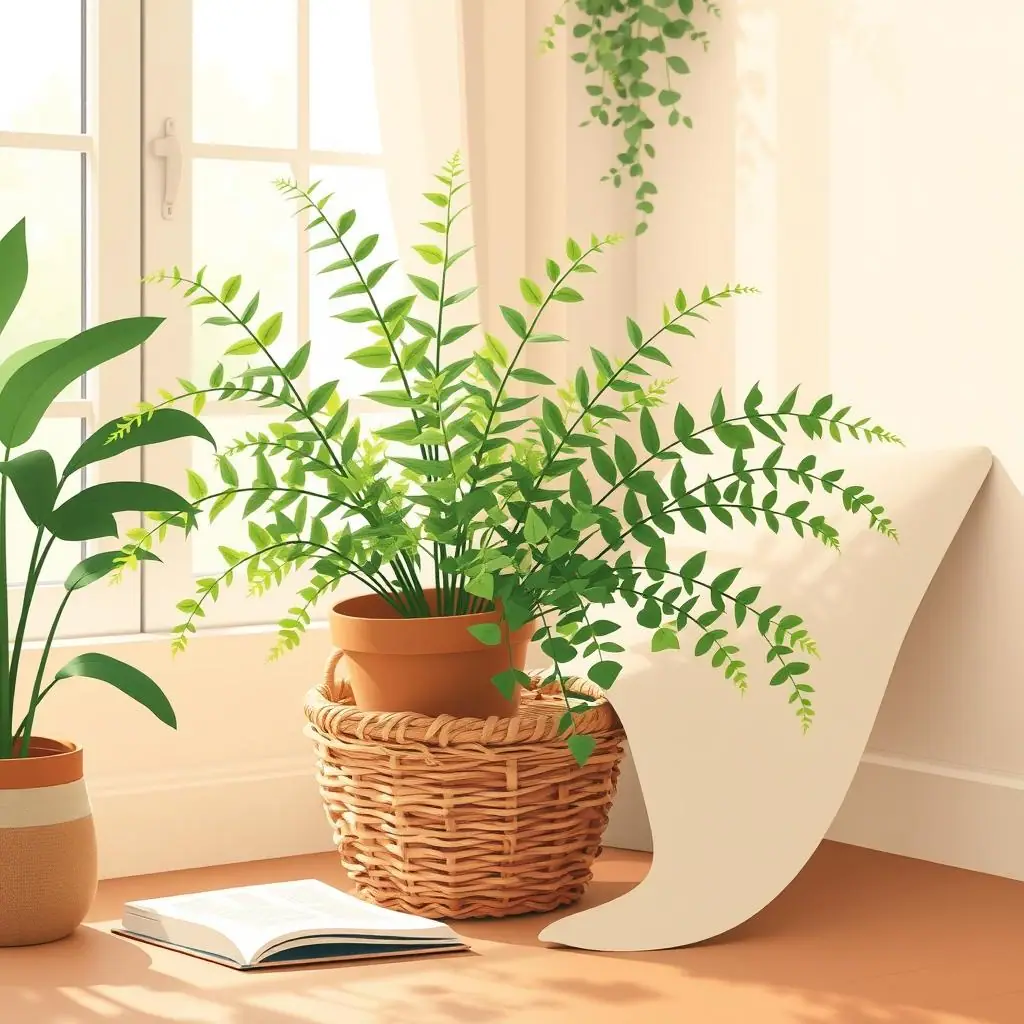
Ferns in baskets can make a room feel soft, settled, and lived-in. A woven basket hides a plain nursery pot, adds warmth to a corner, and makes a fern look as if it belongs with the furniture instead of sitting there temporarily.
The tricky part is water. Ferns appreciate steady moisture, but baskets are not plant pots. They can trap drips, hide standing water, and make it harder to notice when the inner pot is still wet. The goal is not to avoid baskets. The goal is to use them in a way that keeps the fern, the floor, and the furniture safe.
Think of the basket as a decorative outer jacket. The real work should still happen in a pot with drainage holes, a liner or saucer you can check, and a simple habit for lifting things out after watering.
Why Ferns in Baskets Need a Drainage Plan
Ferns in baskets need a drainage plan because the prettiest part of the setup is usually the least practical part. Wicker, seagrass, rattan, fabric, and lined decorative baskets are meant to look cozy. They are not designed to manage wet soil on their own.
The University of Illinois Extension guide to container drainage explains that drainage holes help excess water leave the soil so roots still have air. It also notes that double potting, where a plant in a liner sits inside a larger decorative container, can work well when you check that the inner pot is not standing in water.
That is the heart of basket styling. Keep the fern in a practical inner pot, then let the basket do the visual work. When those jobs stay separate, the setup is easier to maintain.
Start With Indoor Garden Design That Still Feels Practical
Indoor garden design is most successful when the plant is easy to care for after the room is arranged. A basket that looks lovely but makes watering awkward will eventually become frustrating.
Start with the room. Notice where people walk, where sunlight enters, and where you can comfortably lift the plant. A fern tucked tightly behind a chair may look charming for a day, but if you cannot reach it without bumping furniture, you may avoid checking it.
Choose a spot before choosing the basket
Pick the fern's home first. Look for bright, indirect light, a stable surface, and enough space to remove the inner pot for watering. Then choose a basket that fits that spot instead of choosing the basket first and forcing the fern to adapt.
Keep access part of the design
Leave a little room around the basket so you can lift the inner pot straight up. This matters more as the fern grows wider. If the basket opening is too narrow, delicate fronds can catch and tear whenever you move the plant.
If you enjoy arranging plant corners, FernLog's guide to creating beautiful indoor fern arrangements can help you think about height, texture, and grouping. For basket setups, the same design ideas work best when watering access stays easy.
What to Check Before Putting a Fern in a Basket
Before you place a fern in a basket, check the pieces separately. A few minutes now can prevent damp floors, stained furniture, or a fern that quietly sits in water for days.
- Inner pot: Does it have drainage holes and enough room for the fern's roots?
- Basket opening: Can the inner pot slide in and out without catching fronds?
- Protective liner: Is there a removable plastic liner, tray, or saucer that catches drips?
- Air gap: Is there a little space between the inner pot and basket so moisture does not stay pressed against the sides?
- Surface protection: Is the basket sitting on a plant mat, tray, or surface that can handle an occasional drip?
- Weight: Can you lift the plant safely after watering, when the pot is heavier?
If the basket feels flimsy when empty, it will not become easier when the fern is watered. Choose something sturdy enough to hold its shape, especially for floor plants and larger Boston-style ferns.
How to Style Ferns in Baskets Step by Step
Use this simple order to keep the setup attractive and manageable.
- Keep the fern in a nursery pot or drainage pot: Do not plant directly into an unsealed basket. Soil and water can damage the basket and make drainage hard to control.
- Add a removable saucer or liner: Place a waterproof tray, shallow saucer, or fitted liner inside the basket. It should be easy to remove and dry.
- Raise the inner pot slightly if needed: A small inverted saucer or plant riser can lift the pot so it does not sit in collected water. Make sure the setup stays stable.
- Test the height: The fern should sit high enough to look full, but not so high that the pot wobbles above the basket rim.
- Water outside the basket when practical: Carry the inner pot to a sink, tub, or watering station, water thoroughly, let it drain, then return it to the basket.
- Check for hidden water: After watering, lift the inner pot and look inside the basket. Empty any collected water instead of assuming it evaporated.
- Rotate gently: Turn the basket or inner pot a little every week or two so the fern grows evenly toward the light.
For readers who like a dedicated care setup, the guide to creating a simple fern watering station at home pairs naturally with basket styling. Watering away from the basket is often the cleanest way to protect floors and woven materials.
Choosing the Right Basket Material
Different basket materials behave differently around houseplants. You do not need a perfect material, but you do need to understand what it will do when moisture is nearby.
Wicker, rattan, and seagrass
These natural materials look warm and classic, but they can absorb moisture and lose shape if they stay damp. Use them as decorative covers only. Keep a waterproof liner inside and inspect the bottom often.
Fabric baskets
Fabric baskets can soften a bedroom, reading nook, or guest room, but they are the least forgiving around water. Use them only with a very reliable inner tray and never water directly inside the basket.
Plastic or resin baskets
Plastic and resin baskets are often easier to wipe clean. They may not have the same natural texture, but they can be practical for ferns that need more frequent watering.
If your fern sits in a bathroom or kitchen, the surrounding room conditions matter too. FernLog's article on ferns for bright bathrooms can help you think about humidity, ventilation, and placement before choosing a basket that might stay damp.
Pros and Cons of Ferns in Baskets
Softens the look of plain pots
A basket can turn a simple nursery pot into a warmer, more finished part of the room without repotting the fern.
Easy to change with the room
You can switch baskets as your decor changes while keeping the fern in the same practical inner pot.
Works well for cozy corners
Baskets add texture beside chairs, shelves, plant stands, and low tables where a bare plastic pot might look unfinished.
Can hide standing water
A deep basket may conceal water in the bottom, especially if the inner pot drains after you return it to place.
Natural materials can stay damp
Woven baskets may stain, soften, or hold musty smells if liners leak or wet saucers are left inside too long.
Common Indoor Garden Design Mistakes to Avoid
The most common mistake is planting directly into the basket. It may look neat at first, but soil, water, and roots need a real container. A basket alone rarely gives you enough control over drainage.
The second mistake is trusting a hidden saucer too much. A saucer is helpful only when you can see it, remove it, and empty it. If it disappears under the fronds and basket rim, it can become a quiet puddle.
The third mistake is using a basket that is too snug. Ferns have delicate fronds, and many spread wider than the pot. If you have to squeeze the plant in or out, the setup will be hard to maintain.
- Do not water and walk away: check the liner or saucer after the pot finishes draining.
- Do not ignore smell: a musty basket may mean moisture is lingering where you cannot see it.
- Do not hide damage: if fronds are browning on one side, check light, airflow, and whether the basket blocks your care routine.
- Do not overfill the basket bottom: decorative moss, cloth, or filler can hold moisture against the pot.
A Simple Basket Setup Checklist
Use this quick checklist before you call the arrangement finished.
- Drainage pot: The fern remains in a pot with real drainage holes.
- Removable liner: The basket has a waterproof tray or liner you can lift out.
- No standing water: The inner pot is not sitting in collected water after watering.
- Easy access: You can remove the plant without bending or breaking fronds.
- Surface safety: The floor, shelf, or table has a layer of protection.
- Light check: The basket location gives the fern bright, indirect light without harsh sun.
- Weekly review: You check the basket bottom, liner, and pot weight once a week.
If the fern will sit on a stand, the balance and height matter even more. The guide to ferns on plant stands can help you keep the arrangement stable and reachable while still giving the room some lift.
When to Get Extra Help
Ask a local nursery, extension office, or experienced houseplant grower for help if the fern keeps wilting, yellowing, or smelling sour even after you improve drainage. Bring simple details: the basket material, whether the inner pot drains, how often you water, and whether water collects underneath.
You should also get help if the basket setup is too heavy or awkward to lift safely. A smaller fern, lighter basket, plant caddy, or more accessible stand may protect both the plant and your back.
Frequently Asked Questions
Can I plant a fern directly into a basket?
It is better not to. Keep the fern in a pot with drainage holes, then place that pot inside the basket with a removable liner or saucer.
How often should I check the basket for water?
Check after every thorough watering and again during your weekly plant review. Hidden water is easier to prevent than to notice after the basket smells damp.
What should I do if I am not sure the basket is safe?
Start with a waterproof liner and water the inner pot outside the basket. If the basket still stays damp or feels unstable, choose a different outer container.
Can I change the basket later?
Yes. That is one advantage of double potting. As long as the fern stays in its drainage pot, you can change the decorative basket without disturbing the roots.
Final Thoughts
Ferns in baskets work best when beauty and care stay in balance. Let the basket bring warmth and texture, but let a proper inner pot handle the drainage.
Start with one fern, one sturdy basket, and one habit: check for hidden water after you water. That small step protects the plant, the room, and the calm feeling you wanted from the basket in the first place.