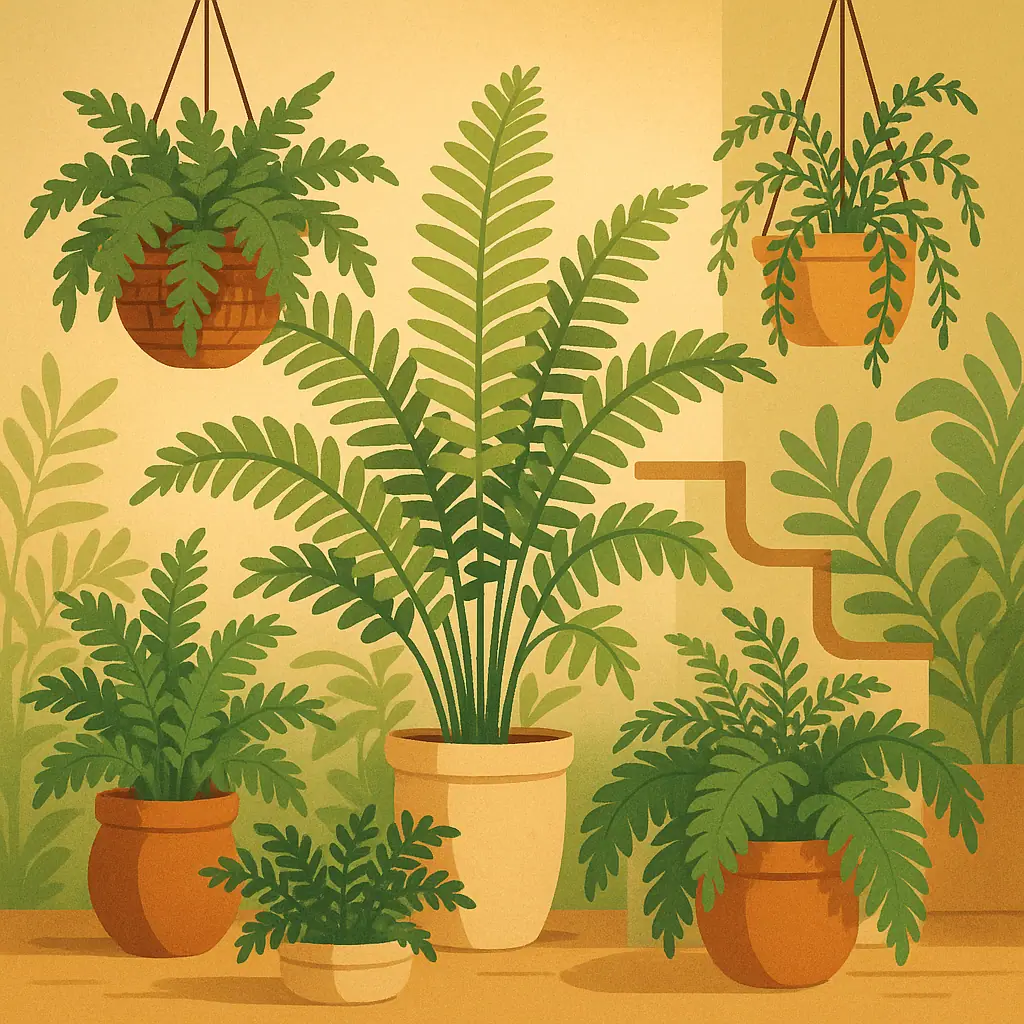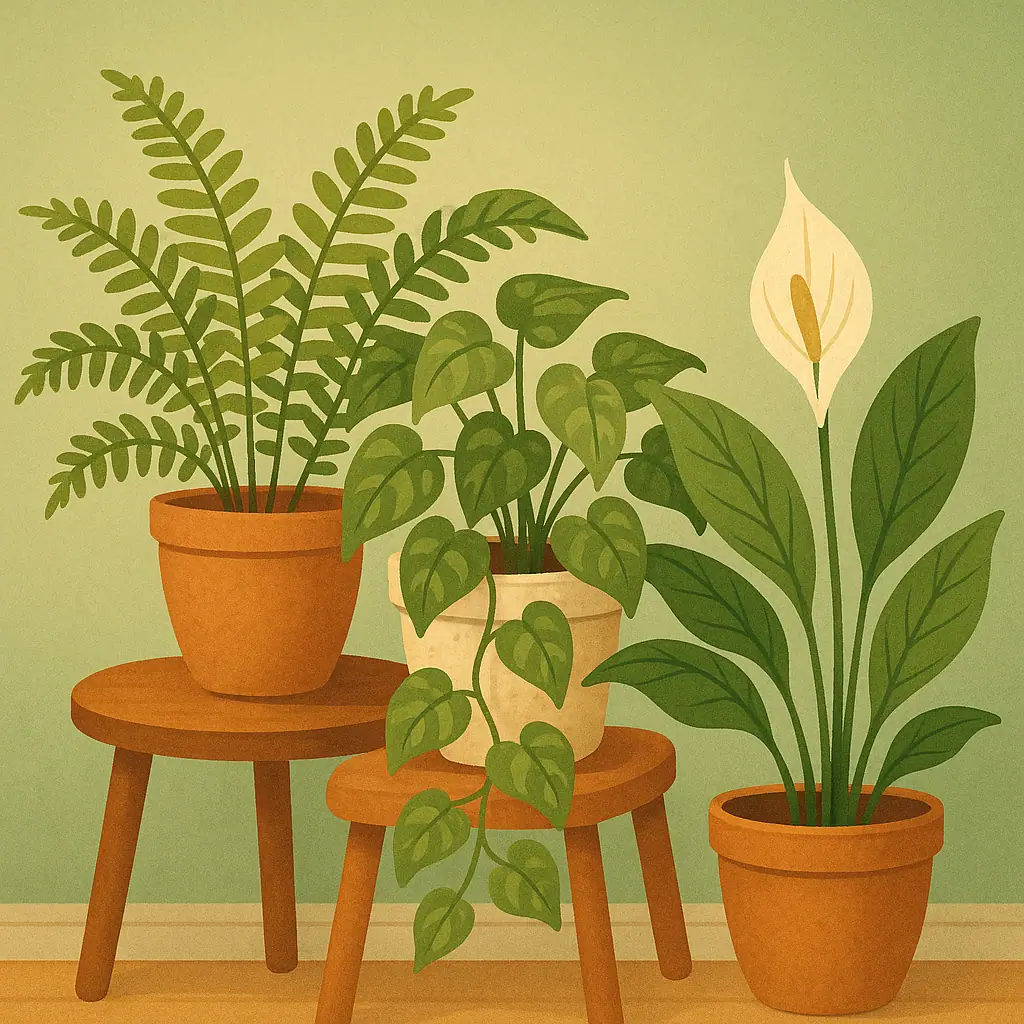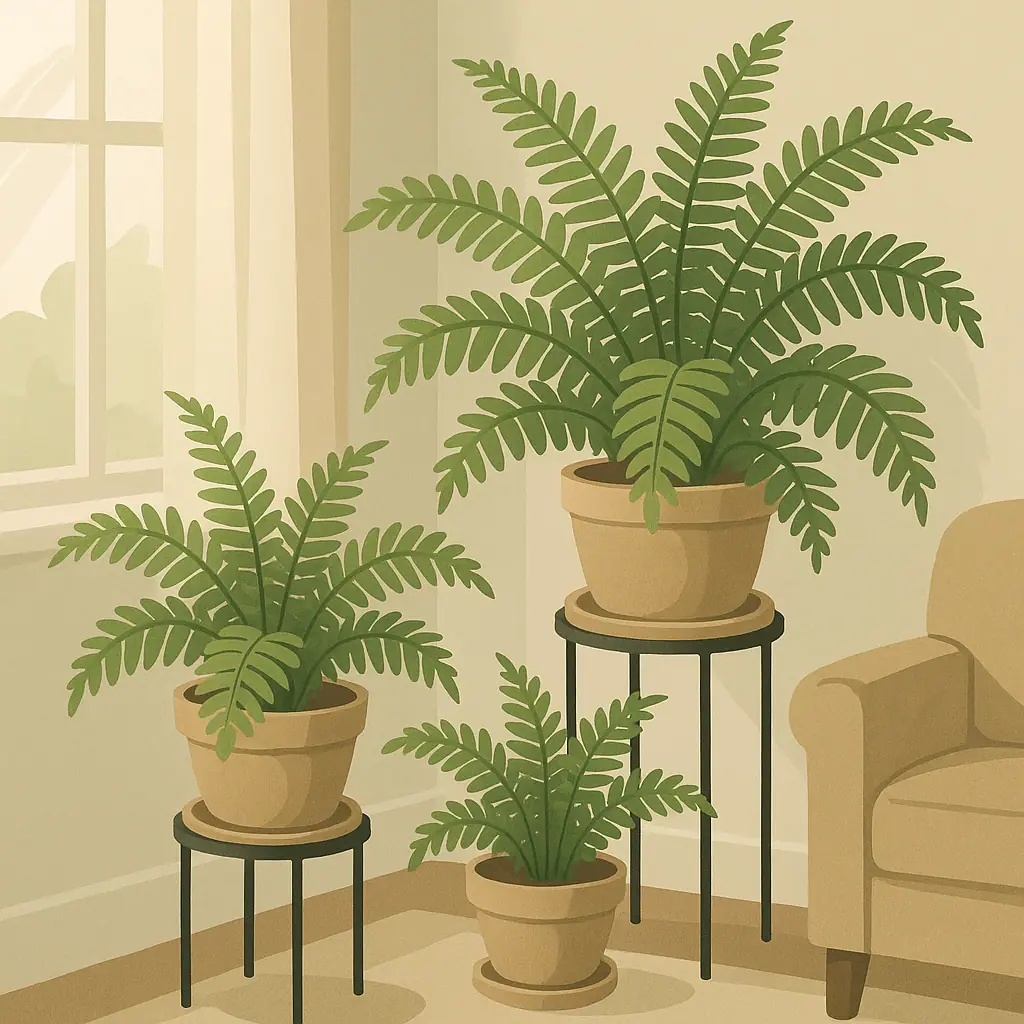
Fern plant stand ideas are not only about making a room look prettier. The right stand can help a fern get better light, keep its pot easier to check, and make watering less awkward for your back, hands, and floor.
If you have ever tucked a fern into a dark corner, lifted a heavy pot from a saucer, or wondered why one side of the plant keeps leaning, a simple stand may solve more than one small problem. It raises the plant into view so you can notice dry soil, yellowing fronds, water pooling, or uneven growth before those details become frustrating.
Think of a plant stand as a small piece of furniture with a gardening job. It should hold the fern safely, suit the room, and make care easier. A beautiful stand that wobbles, blocks a walkway, or makes watering harder is not the right stand for that fern.
Why Fern Plant Stand Ideas Matter
Plant stands matter because ferns often live in the middle ground between furniture, windows, pets, foot traffic, and daily routines. A fern on the floor may be too low to inspect comfortably. A fern on a high shelf may be too hard to water. A fern squeezed onto a narrow table may drip onto wood or lean toward the light.
The best stand gives the plant a steady place while giving you better access. It can raise a fern closer to gentle window light, keep the pot away from cold flooring, and make the plant feel intentional in the room instead of like something temporarily set down.
The University of Minnesota Extension reminds indoor plant owners to use pots that drain well and avoid letting plants stand in water, because poor drainage and overwatering can encourage root problems and pests. That guidance is useful when choosing a stand, because the stand should make drainage easier to see and manage, not hide it. You can review its houseplant care advice in this guide to managing insects on indoor plants.
Start With Indoor Garden Design
Before buying or moving anything, look at the room from the fern's point of view. Where is the softest natural light? Where can water drain safely? Where can you reach the pot without stretching? Where will the fern look calm instead of crowded?
For many ferns, bright indirect light is more useful than a dramatic sunny window. A stand can help you place the plant near light without pushing it into harsh direct sun. It can also let fronds arch naturally instead of being pressed against a wall, curtain, or neighboring plant.
If you enjoy arranging plants as part of the room, FernLog's guide to Fern Display Ideas: Creating Beautiful Indoor Arrangements offers broader styling thoughts. This article focuses on the stand itself: height, balance, access, and everyday care.
Good places to consider first
- Near an east-facing window: Morning light is often gentler than hot afternoon sun.
- Beside a reading chair: A medium stand can make a fern feel like part of a calm corner.
- In a bathroom with real light: Humidity can help, but the stand still needs stable footing.
- Near a plant group: Different stand heights can keep the display from looking flat or crowded.
Do not start with the prettiest stand in the store. Start with the fern's size, the pot's weight, the light in the room, and how easily you can care for the plant.
What to Check First for Height, Balance, and Easy Access
Height is the first practical choice. A low stand may lift the fern just enough to improve air flow and make vacuuming easier. A medium stand can bring a plant into the visual line of a table or chair. A tall stand can make a fern feel elegant, but only if the pot is light enough and the base is broad enough to stay steady.
Balance matters just as much as height. Fern fronds can grow wide, soft, and uneven. A narrow stand under a wide Boston fern may look graceful for a week and then feel nervous every time someone walks by. The pot should sit flat, the stand should not rock, and the whole arrangement should feel secure when the soil is freshly watered.
Penn State Extension notes that light and humidity are two of the most important indoor conditions for houseplants. A stand cannot create perfect care by itself, but it can help you place the fern where those conditions are easier to manage. Its article on the value and needs of houseplants is a helpful reminder to match design choices with plant needs.
Measure before you move
- Pot width: The stand top should support the full base of the pot, not just the center.
- Pot weight: Remember that wet soil is heavier than dry soil.
- Frond spread: Leave room for fronds to arch without rubbing walls or furniture.
- Watering reach: You should be able to touch the soil and lift the pot or saucer safely.
- Walkway clearance: Keep stands away from narrow paths, door swings, and chair legs.
How to Use Ferns on Plant Stands Step by Step
Use a slow, practical approach. You are not decorating a showroom. You are finding a home for a living plant and a care routine you can repeat comfortably.
- Choose the fern first. Decide which fern needs a stand. A trailing, arching fern may need more side space than a compact upright fern.
- Check the pot and saucer. Make sure the pot has drainage holes and the saucer is easy to remove or empty.
- Pick a stable stand height. For beginners, knee height to side-table height is often easier than a very tall pedestal.
- Test the location empty. Put the stand in place without the plant. Walk around it, sit nearby, and make sure it does not block daily movement.
- Add the fern and check wobble. Set the pot on the stand and gently press near the rim. If it rocks, change the setup.
- Watch the light for a day. Notice whether direct sun hits the fronds. Move the stand back if the fern gets harsh afternoon rays.
- Water once and observe drainage. Make sure you can empty the saucer and wipe spills without moving furniture.
- Review after one week. Turn the fern if it leans, adjust the stand if care feels awkward, and keep only what feels steady.
Common Indoor Garden Design Mistakes to Avoid
The most common mistake is choosing a stand that is too tall and too narrow. It may look graceful in a photo, but a fern with wet soil and wide fronds needs real support. A low, sturdy stand is usually better than a dramatic one that makes you nervous.
Another mistake is hiding the saucer. If you cannot see water collecting after you water, you may leave the pot sitting wet. Ferns like steady moisture, but they do not benefit from stagnant water around the roots.
A third mistake is using plant stands to cram too many plants into one corner. A layered plant display can be lovely, but every pot still needs light, air, and room for you to reach it. For ideas on balancing plants with real rooms, see FernLog's guide to Ferns for a Guest Room: Calm Plants With Easy Care. Give each fern enough space to look relaxed, not trapped.
Pros and Cons of Plant Stands for Ferns
Improves access for everyday care
A well-chosen stand can make soil checks, turning, pruning, and saucer emptying easier than keeping the fern on the floor.
Helps with room balance
Different heights let ferns soften corners, frame furniture, and join other plants without making one flat green line.
Can improve light placement
Raising a fern slightly may help it reach gentle indirect light while keeping it away from harsh window glass.
Unstable stands can be risky
A narrow or lightweight stand may tip if the pot is heavy, the fronds are wide, or the room has busy foot traffic.
Some designs make watering harder
Decorative stands that trap saucers or block access can hide standing water and make routine care more awkward.
A Simple Fern Plant Stand Checklist
Use this checklist before you commit to a new stand or a new location.
- Stable base: Does the stand sit flat without rocking?
- Full pot support: Does the pot base fit completely on the top surface?
- Safe height: Can you water and inspect the fern without reaching uncomfortably?
- Drainage access: Can you see and empty the saucer after watering?
- Frond room: Can the fern arch naturally without rubbing walls, curtains, or lamps?
- Gentle light: Does the position provide bright indirect light rather than harsh sun?
- Clear path: Can people move through the room without brushing the plant or stand?
If your stand is part of a larger plant corner, also think about how the fern looks next to other leaves and textures. FernLog's guide to Mixing Ferns with Other Plants can help you arrange companions without making care complicated.
When to Get Extra Help
Ask for help if the fern is very large, the pot is heavy, or the stand needs to sit near stairs, pets, children, or a busy hallway. A second person can steady the plant while you test the height and balance.
It is also wise to ask a local nursery or garden center if you are unsure whether a particular fern needs more light, more humidity, or a different pot before you focus on display. A stand can improve access and placement, but it cannot fix poor drainage, a stressed plant, or a room that is much too dark.
Frequently Asked Questions
What should I check first when choosing a fern plant stand?
Check stability first. The stand should hold the full pot base, stay steady when the soil is wet, and allow you to reach the saucer easily.
How often should I review a fern on a plant stand?
Review it after the first watering, then check weekly. Look for leaning, dripping, blocked light, crowded fronds, or a saucer that is hard to empty.
What should I do if I am not sure the stand is safe?
Choose a lower, wider stand or ask someone to help test it. If the setup feels wobbly when the pot is dry, it will be worse after watering.
Can I move the fern again later?
Yes. Make one change at a time, then watch the fern for a week or two. If light, access, or balance feels wrong, adjust the stand or location.
Final Thoughts
Ferns on plant stands can make a room feel softer and make plant care easier, but the practical details matter most. Choose a stand that supports the pot, gives the fronds room, improves access, and keeps drainage visible.
Your next step is simple: pick one fern and test its current spot. Can you reach the soil, turn the pot, empty the saucer, and see the fronds clearly? If not, a modest, sturdy stand may be just the quiet improvement your fern corner needs.