Ferns for bright bathroom spaces can be a wonderful idea, but the word bright deserves a little attention. A bathroom may feel plant-friendly because it gets steam from showers, yet the same room may also have harsh sun, poor airflow, cold glass, or a window that only looks bright for part of the day.
The best bathroom fern is not chosen from a basic list alone. It is chosen by matching the fern to the light, the humidity pattern, the ventilation, and your real routine. When those pieces work together, a bright bathroom can become one of the calmest places in the home for soft green fronds.
Why Ferns for Bright Bathroom Spaces Need a Careful Look
Bathrooms can offer two things many ferns enjoy: moisture in the air and a room where the plant can feel tucked away from busy household traffic. But bathrooms also change quickly. A steamy shower may raise humidity for a short time, then an exhaust fan or open window may dry the room again.
The University of Minnesota Extension guide to growing tropical ferns indoors notes that many tropical ferns grow best indoors in medium light, such as an east-facing window or a few feet from a brighter west or south-facing window, and that ferns need high humidity. That is a useful starting point for a bright bathroom: bright is helpful only when it is filtered, steady, and not scorching.
Start With Indoor Garden Design, Not a Plant List
Before you buy or move a fern, stand in the bathroom at the time of day when the room is brightest. Notice whether sunlight lands directly on the counter, floor, or windowsill. Direct sun through glass can be stronger than a fern beginner expects, especially near a south or west window.
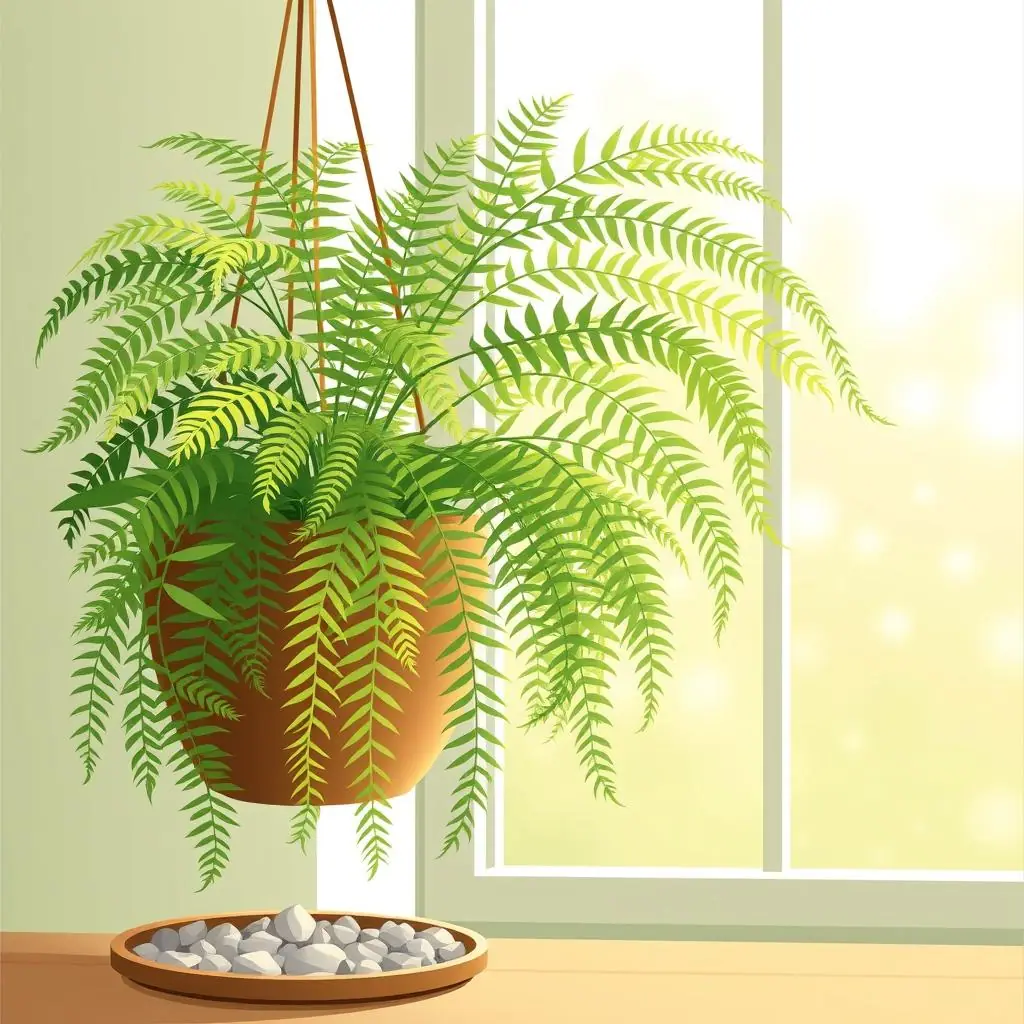
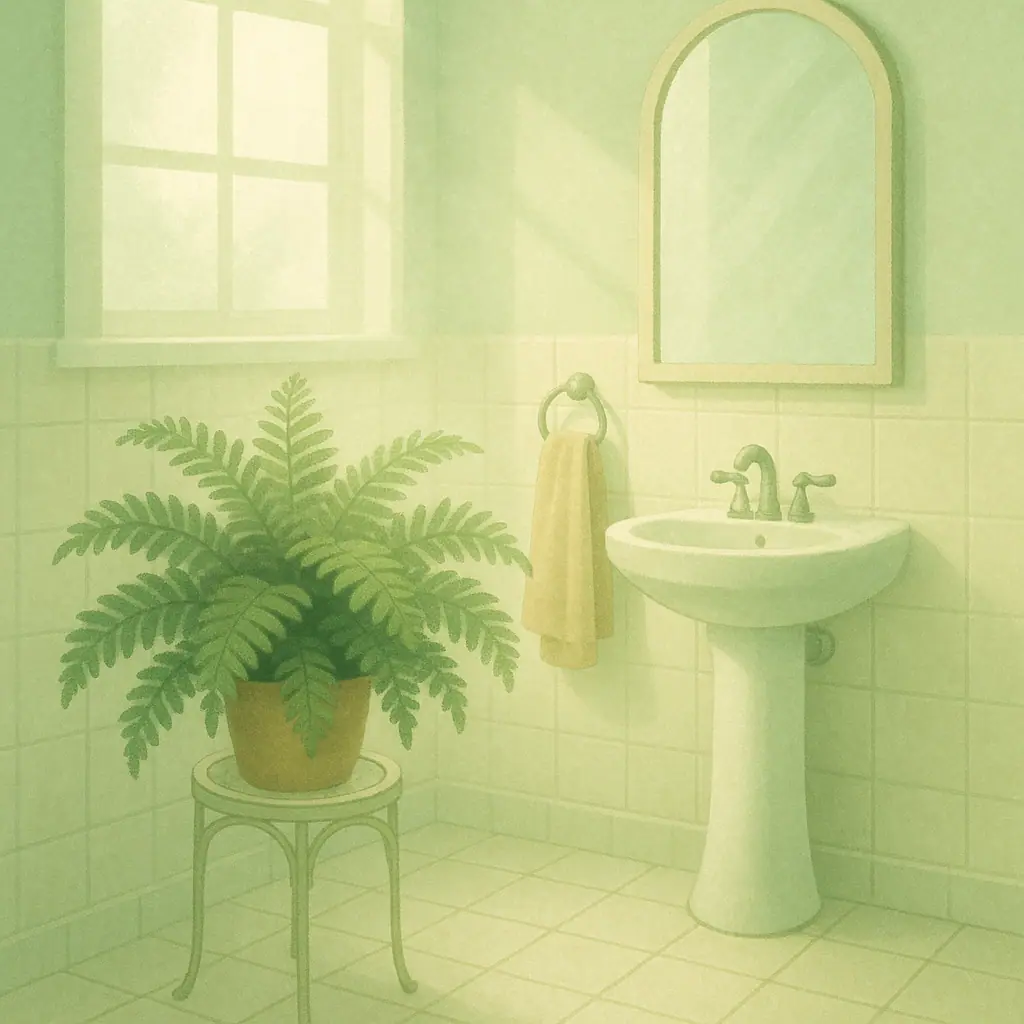
Think about the bathroom as a small indoor garden zone. A fern on a stool several feet from a bright window may do better than a fern pressed against the glass. A hanging fern may look beautiful, but it still needs easy watering access and enough room for air to move around the fronds.
Use the room before choosing the fern
If the bathroom is mostly used in the morning, humidity may rise early and fade by afternoon. If it has a strong exhaust fan, moisture may leave quickly. If it has no window that opens, ventilation may depend entirely on the fan. These details matter as much as the fern variety.
FernLog has a related guide on kitchen ferns and practical placement, and the same lesson applies here: a pretty spot still needs to be a workable care spot. Between links, take a moment to picture the exact counter, shelf, sill, or stand where the fern would live.
What to Check First in a Bright Bathroom
A simple check can prevent most bathroom fern disappointments. You do not need special equipment. You only need to observe light, heat, water, and access for a few normal days.
Check the light quality
Hold your hand where the fern would sit. If the shadow is sharp for several hours, the light may be too direct for many ferns. If the shadow is soft and the room feels bright without hot sun touching the leaves, you may have a better fern position.
Check the drying pattern
After a shower, notice whether mirrors and windows stay damp for a long time. Lingering moisture can help with humidity, but it can also signal poor air movement. Fern fronds like humidity; roots still need oxygen, drainage, and a potting mix that does not remain soggy.
For bathroom humidity expectations, Penn State Extension's article on humidity and houseplants is helpful because it explains that bathrooms can help some plants, but they still need an appropriate light source. That reminder keeps the decision balanced instead of assuming steam solves everything.
Best Fern Choices for Bright Bathrooms
For a bright bathroom, start with ferns that handle indoor conditions with a little more patience. Avoid choosing the most delicate fern first unless you already know the room stays evenly humid and the light is gentle.
- Boston fern: A classic choice for hanging baskets or plant stands when the room is bright but not hot.
- Bird's nest fern: A sturdy-looking fern with broad fronds that can suit counters, shelves, or a simple pot near filtered light.
- Blue star fern: A soft, blue-green option that often feels calmer and less fussy than very fine-leaved ferns.
- Button fern: A smaller choice for a shelf or windowsill area that avoids harsh direct sun.
- Rabbit foot fern: A charming fern for a bright shelf where its fuzzy rhizomes can trail over the pot edge.
If you want the bathroom to feel like part of a larger home plant story, FernLog's guide to decorating a reading nook with ferns can help you keep the style calm and uncluttered. Let the bathroom fern be one quiet accent, not a crowded collection that becomes hard to water.
How to Place Bathroom Ferns Step by Step
Once you have a likely fern and a likely spot, set it up gradually. Bright bathrooms can change with the season, so the first two weeks are an observation period.
- Choose indirect brightness: Place the fern where the room is bright but the fronds are not sitting in long, hot direct sun.
- Protect the surface: Use a saucer, tray, or waterproof plant stand so regular watering does not mark wood, paint, or tile grout.
- Keep air moving: Run the bathroom fan after showers if the room stays wet for a long time, but avoid blasting the fern with cold or hot drafts.
- Water by soil, not by room mood: A bathroom may feel humid while the potting mix is still dry, or the opposite. Check the soil before watering.
- Rotate gently: Turn the pot a quarter turn every week or two so the fern grows evenly toward the light.
- Watch new growth: Healthy new fronds are a better sign than one old frond that naturally browns or drops.
If the fern begins leaning toward the window or growing more strongly on one side, review FernLog's guide to rotating indoor ferns for even growth. Rotation is especially useful in a bathroom where light comes from one small window.
Common Bathroom Fern Mistakes to Avoid
The most common mistake is placing a fern directly on a hot windowsill because the bathroom is called bright. Many ferns prefer bright indirect light, not hours of direct sun through glass. If fronds look pale, scorched, or crispy on the window side, move the plant back.
Another mistake is assuming bathroom humidity replaces watering. Humid air helps fronds, but roots still rely on a steady, well-drained potting mix. Check the soil with a finger before watering, and empty any saucer that collects water.
A third mistake is crowding too many plants into a small bathroom. It may look lush for a photo, but tight spacing can make watering harder and reduce airflow. Start with one fern, learn the room, then decide whether a second plant makes sense.
Pros and Cons of Bathroom Ferns
Natural humidity boost
Showers may give the room brief periods of higher humidity, which can support many fern fronds when light is also suitable.
Softens hard surfaces
Fern texture can make tile, glass, mirrors, and counters feel calmer and more welcoming.
Easy daily observation
A bathroom fern is often seen every morning, making it easier to notice dry soil, leaning growth, or crispy tips early.
Light can be misleading
A room may feel bright to people but still offer too little usable light, or it may deliver harsh direct sun for a short period.
Ventilation varies
Some bathrooms stay damp too long, while others dry quickly from fans, open windows, or heating vents.
A Simple Bright Bathroom Checklist
Use this checklist before moving a fern into the bathroom, then repeat it after two weeks.
- Light: Is the fern in bright indirect light instead of long direct sun?
- Humidity: Does the room get gentle moisture without staying wet all day?
- Airflow: Can the fan or open door clear heavy moisture after showers?
- Drainage: Does the pot have drainage and an emptied saucer?
- Access: Can you water, turn, and inspect the fern without stretching or climbing?
- Surface safety: Is the plant sitting on a tray, saucer, or stand that protects the bathroom surface?
When to Move the Fern Somewhere Else
Move the fern if fronds scorch near the window, soil stays wet for too many days, new growth stalls, or the plant becomes awkward to water safely. A plant that looks good in a room but is hard to care for usually becomes stressful over time.
You can still keep the bathroom style. Try a fern print, a smaller plant that tolerates the room better, or a fern just outside the bathroom door where light and care are easier. FernLog's guide to ferns for a guest room offers another calm placement idea if the bathroom proves too variable.
Frequently Asked Questions
What should I check first before putting a fern in a bright bathroom?
Check whether the light is indirect or direct. A bright bathroom is best when the fern gets soft brightness, not several hours of hot sun through the window.
How often should I review the bathroom setup?
Review it after the first two weeks, then whenever the season changes. Light angle, shower habits, heating, and ventilation can all shift during the year.
What should I do if I am not sure the room is bright enough?
Try the fern near the bathroom for a short observation period, or ask a local nursery or extension resource. Weak, stretched, or stalled new growth may mean the spot needs more usable light.
Can I undo the change if the fern struggles?
Yes. Move it back to a steadier room, trim only fully damaged fronds, and give it time. Avoid changing water, light, pot, and fertilizer all at once.
Final Thoughts
Ferns for bright bathroom spaces work best when you look beyond the basic list and study the room itself. Light, steam, airflow, drainage, and safe access all matter more than the label on the plant tag.
Start with one forgiving fern, place it in bright indirect light, and watch it calmly for two weeks. If the newest growth stays healthy and the care routine feels easy, your bright bathroom may become a peaceful little fern corner.