Entryway ferns can make the first step into a home feel softer, greener, and more welcoming. But an entryway is also a tricky place for a fern. Doors open and close, shoes brush past leaves, winter air slips in, and some halls are much darker than they look.
The good news is that you do not need a perfect foyer or a designer plant stand. You only need to match the fern to the real conditions near the door. A calm five-minute check of light, drafts, traffic, and watering access can prevent most entryway problems before they start.
Think of the entryway as a small weather zone inside your home. It may be cooler, drier, busier, or dimmer than the living room. Once you notice those patterns, choosing and placing a fern becomes much less stressful.
Why Entryway Ferns Need a Little Planning
Entryway ferns need planning because the spot near a door often changes many times a day. A fern might look lovely on a console table in the morning, then get a cold blast every time someone comes home in the evening.
Reliable plant-care guidance matters here. Clemson Cooperative Extension notes that most indoor ferns prefer moderate, indirect light, need moisture without standing water, and have fronds that can be sensitive to rough handling. Their indoor ferns guide also recommends keeping ferns out of high-traffic areas to avoid damage.
Start With Indoor Garden Design Basics
Indoor Garden Design works best when beauty and care routine agree with each other. An entryway fern should not block a walkway, catch on coat sleeves, or sit where you forget to check the soil.
Start by standing in the entryway the way you normally use it. Carry a bag, open the door, take off shoes, and notice where your body naturally moves. A fern belongs just outside that movement path, not in the middle of it.
Look at the light honestly
Many entryways feel bright because the door has glass or because nearby rooms are lit. That does not always mean the plant receives steady natural light. Watch the spot in the morning, midday, and late afternoon if you can.
Respect the doorway draft
Cold winter air, hot summer air, and strong air-conditioning currents can all bother fern fronds. You do not have to measure anything complicated. Simply stand near the plant spot when the door opens. If you feel a rush of air, the fern will feel it too.
What to Check Before Choosing Entryway Ferns
Before buying a new fern or moving one from another room, check the entryway as it really is. This avoids the common mistake of choosing a plant for the photograph instead of the daily routine.
- Light: Choose bright indirect light when possible. Avoid harsh direct sun through door glass and avoid corners that stay gloomy all day.
- Drafts: Keep the fern several feet away from a frequently opened door, especially in winter or during very hot weather.
- Traffic: Leave enough room for bags, coats, walkers, pets, and visitors so fronds are not brushed daily.
- Water access: Put the fern where you can check the soil and carry it to a sink or tray without awkward lifting.
- Surface safety: Use a saucer, cachepot, or waterproof mat so entryway furniture and floors are protected from drips.
If your entry is really part of the kitchen or a side hall, FernLog's guide to kitchen ferns may help you think through heat, grease, and nearby appliances. Doorway plants often share the same practical limits as kitchen plants: they need beauty, but they also need breathing room.
How to Place Ferns for Entryways Step by Step
Use this simple process before you commit to the spot. It is easier to test an entryway for a few days than to rescue a fern after weeks of drafts and bumps.
- Pick the safest side of the entry. Choose the side that is farthest from the door swing, coat hooks, shoe piles, and direct blasts of outside air.
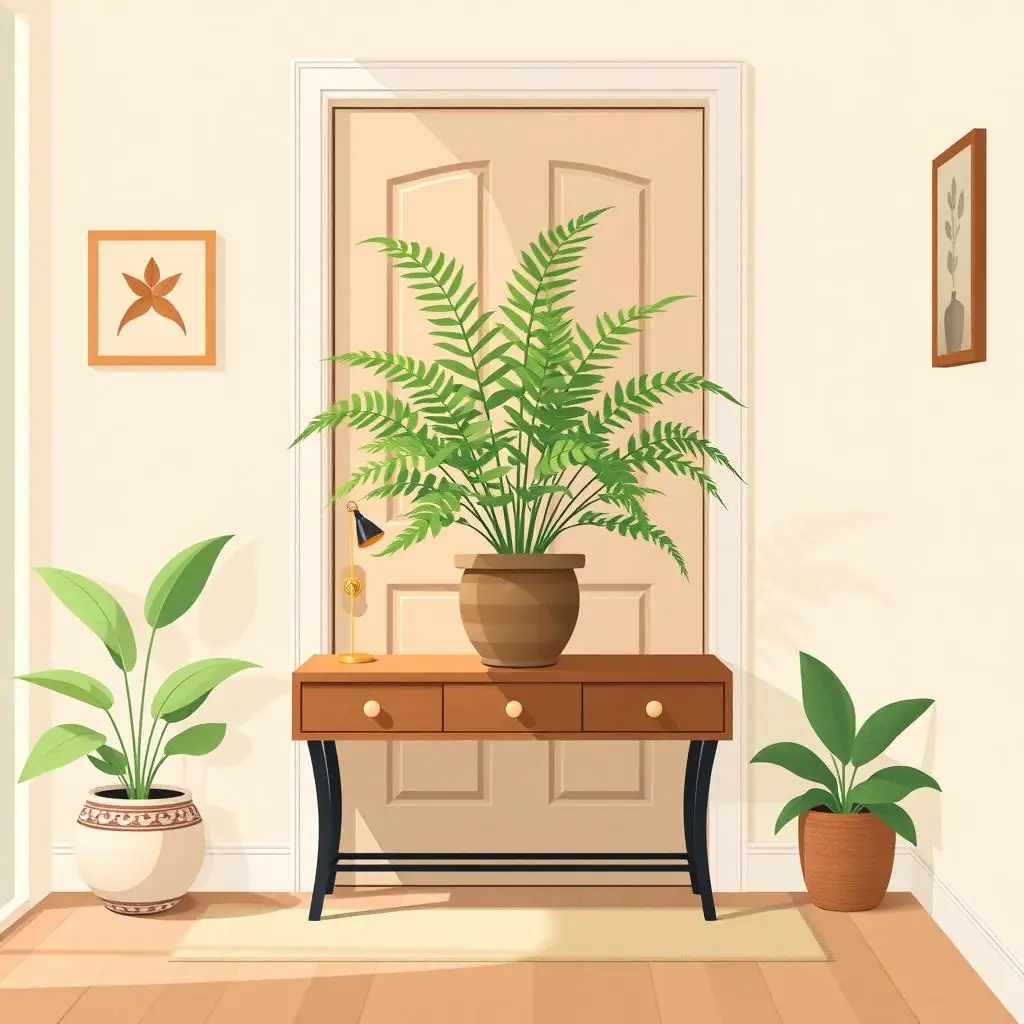
- Set the fern at waist height if possible. A console table, sturdy plant stand, or wide shelf makes checking the soil easier and keeps fronds away from shoes.
- Turn the pot slowly. If light comes from one side, rotate the fern a quarter turn every week or two so growth stays more even.
- Check the soil before watering. Entryways can dry faster from airflow or stay damp if they are cool and dim. Let the soil feel guide you more than the calendar.
- Watch for brushed fronds. If one side keeps breaking, browning, or flattening, the plant is probably too close to traffic.
- Review after one week. Look for curling, pale color, crispy tips, or soil that stays wet too long. Small moves are easier than big rescues.
Best Entryway Fern Setups for Real Homes
The best setup depends on your doorway, light, and furniture. You are looking for a place that feels intentional without making plant care harder.
A wide console table can work well if the fern sits toward the wall rather than the front edge. A low, delicate fern on a narrow table may look charming, but it can be knocked by mail, keys, or visitors setting down a bag.
Baskets can soften the look of an entryway, but they need a waterproof liner or inner pot. If you like that cozy style, the guide to ferns in baskets explains how to enjoy the look without creating hidden watering problems.
Small entryway
Choose one compact fern on a protected shelf or table rather than several plants on the floor. In a tight entry, fewer plants usually look calmer and are easier to protect.
Bright entryway
Use filtered light rather than direct sun. A sheer curtain, side table placement, or a spot a few feet from door glass may protect fronds from scorch while still giving the fern useful brightness.
Dim entryway
If the entryway stays dim all day, do not force a fern to live there permanently. Try a temporary display for visitors, then move the plant back to better light afterward.
Common Indoor Garden Design Mistakes to Avoid
The most common entryway mistake is treating a fern like a decoration first and a living plant second. A fern can absolutely be beautiful, but it still needs a workable care routine.
Protected side placement
Keeping the fern away from the door swing and walking path prevents daily brushing and broken fronds.
Bright indirect light
A softly lit entryway gives the fern a better chance than a dark corner or a sun-scorched glass door.
Easy watering access
A plant you can reach, lift, and drain safely is much easier to maintain over time.
Cold or hot drafts
Air from frequently opened doors can dry, chill, or stress tender fern fronds.
Too much traffic
Coats, bags, shoes, and pets can damage fronds even when the plant's light and water are correct.
A Simple Checklist for Entryway Ferns
Use this checklist before and after you place the fern. It keeps the decision practical and easy to repeat.
- Can I open the door fully without touching the fern? If not, move it.
- Can I walk through with a bag or coat without brushing fronds? If not, choose a higher or more protected spot.
- Does the spot receive natural indirect light during the day? If not, use the entryway only as a short-term display.
- Does the plant sit away from heat vents and cold drafts? If not, test a nearby wall or side table instead.
- Can excess water drain safely? If not, add a saucer, liner, or waterproof surface.
- Can I check the soil without bending awkwardly? If not, raise the plant or simplify the setup.
For another calm room-by-room comparison, the article on ferns for a calm bedroom shows how light, space, and daily attention change from one room to another. That same thinking helps entryway ferns succeed.
When to Get Extra Help
Ask a local nursery, cooperative extension office, or experienced plant grower for help if a fern declines even after you move it away from drafts and traffic. Bring photos of the whole plant, the doorway, the pot, and the closest window. Those details are more useful than a close-up of one brown leaflet.
If your entryway is unusually cold in winter, unusually hot in summer, or mostly dark all day, it may not be the right permanent home for a fern. That is not a failure. It simply means the plant may do better in a brighter room while the entryway gets a different kind of greenery.
Frequently Asked Questions
What should I check first before placing entryway ferns?
Check the door swing and walking path first. If people, bags, or coats will brush the fronds, solve that before worrying about styling.
How often should I review an entryway fern spot?
Review it after the first week, then whenever the season changes. Winter drafts, summer heat, and holiday foot traffic can all change how the spot works.
Can a fern live right beside the front door?
Usually, it is safer to keep it a few feet away from the door. A nearby wall, console table, or protected corner is often better than the direct blast zone.
Can I move the fern later if the spot is not working?
Yes. Move it gradually to a calmer place with better light and less traffic. Then watch new growth and soil moisture for signs that the plant is settling.
Final Thoughts
Entryway ferns work best when they welcome people without standing in the way. Choose bright indirect light, avoid drafts, protect the fronds from traffic, and make watering easy enough that you will actually do it.
Start with one fern in one sensible spot. Watch it for a week, adjust gently, and let the plant tell you whether the entryway feels like home. A calm, green welcome is lovely, but a healthy fern is the real goal.