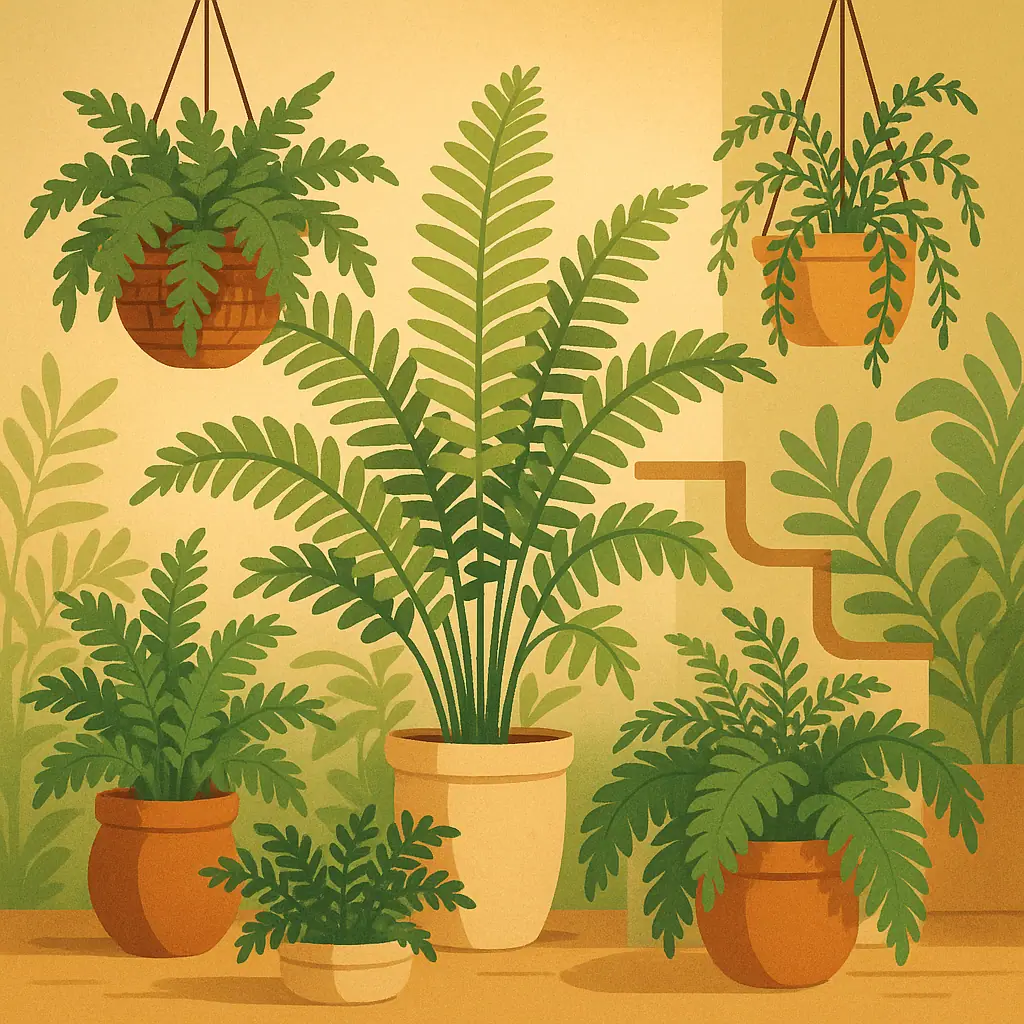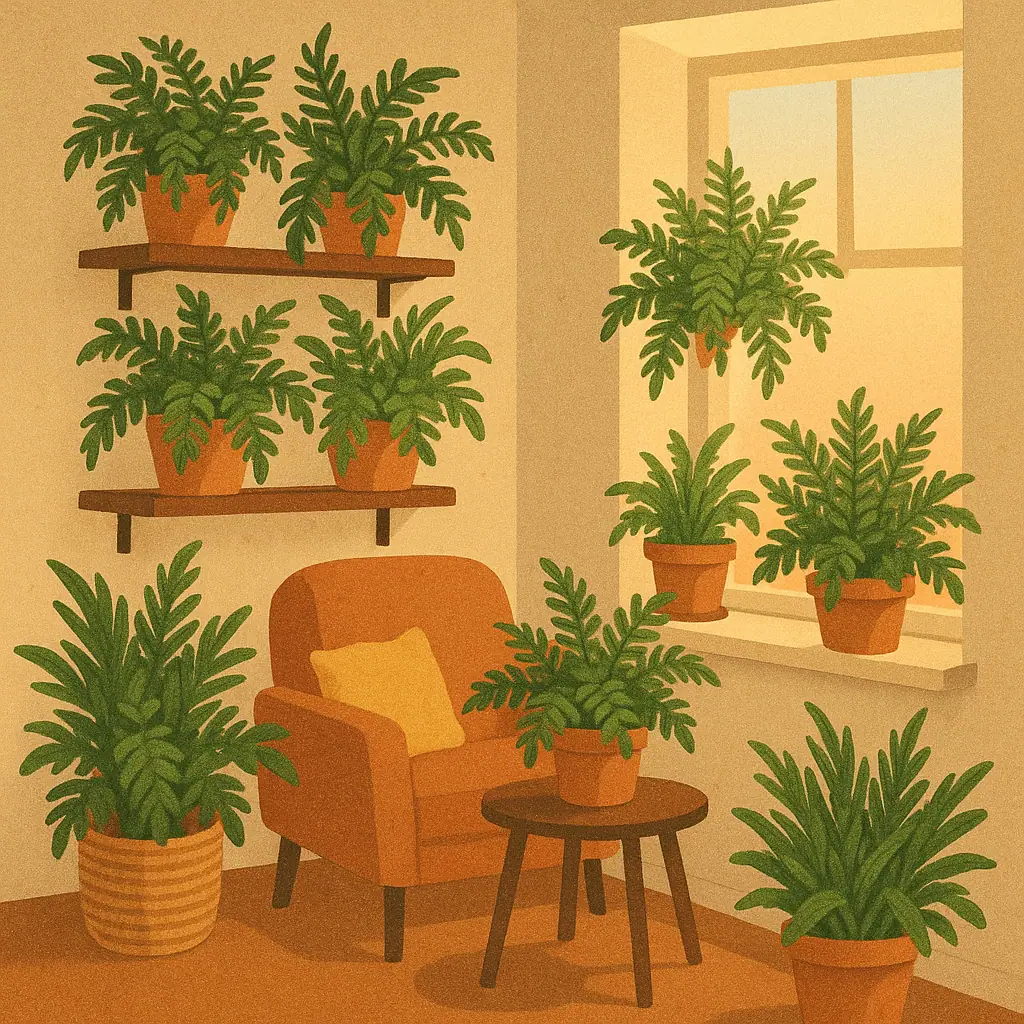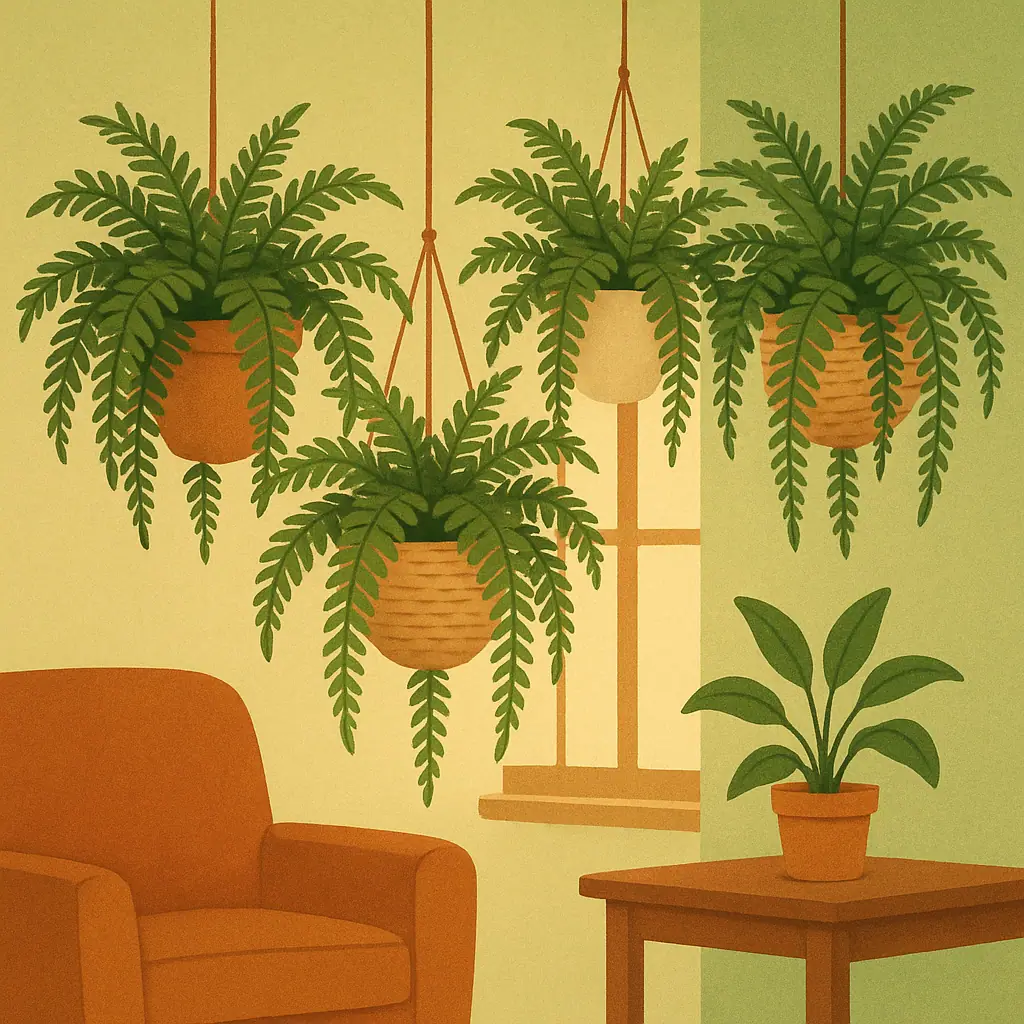
One of the quiet pleasures of growing houseplants is noticing how some plants just seem to like being near each other. Ferns are particularly sociable. Placed alongside the right companions, they thrive and look more beautiful than they ever would alone. The good news is that many popular houseplants make excellent fern neighbors.
Choosing companion plants for ferns is not complicated once you understand what ferns need: indirect light, consistent moisture, and good humidity. Plants that share those preferences tend to coexist happily — both in shared pots and in grouped arrangements nearby.
Why Companion Planting Works for Indoor Ferns
When plants are grouped together, they create a shared microclimate. Each plant releases moisture as it transpires, gently raising the humidity around neighboring plants. For ferns, which prefer humidity levels between 50 and 70 percent, having compatible neighbors can make a real practical difference — especially in heated or air-conditioned homes where air tends to be dry.
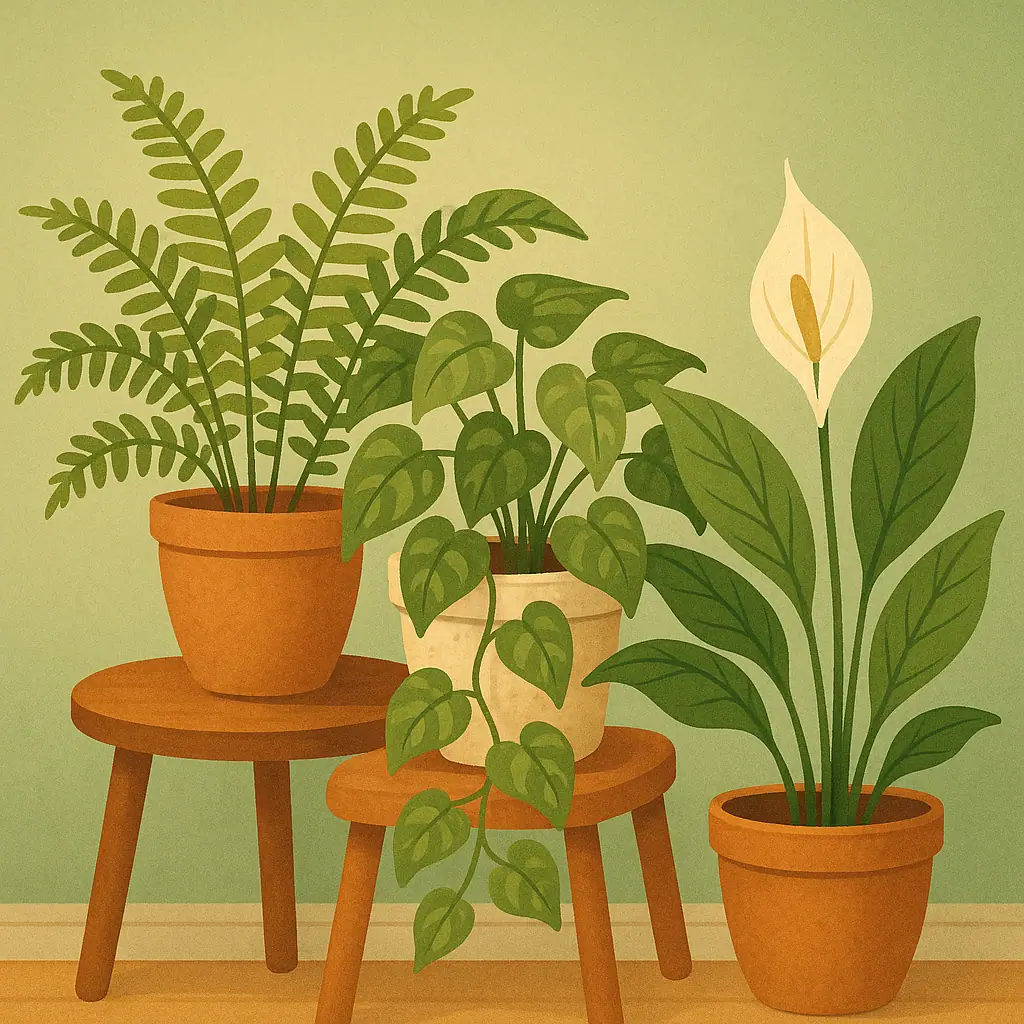
Beyond humidity, thoughtful pairings create visual contrast. Ferns have delicate, textured fronds. Pairing them with plants that have broader, smoother leaves — like a peace lily or a pothos — creates the kind of layered, garden-like look that makes an indoor arrangement feel considered rather than accidental.
The Best Companion Plants for Indoor Ferns
Pothos (Epipremnum aureum)
Pothos is one of the most adaptable houseplants you can grow, and it gets along beautifully with ferns. Both prefer bright, indirect light and consistent moisture without waterlogged soil. In a shared arrangement, pothos can trail over the edge of a pot while the fern fills the center with its upright fronds — a naturally complementary shape. Golden pothos and marble queen pothos both work particularly well, offering bright color contrast against fern green.
Peace Lily (Spathiphyllum)
Peace lilies and Boston ferns are a classic pairing that gardeners and interior designers have relied on for decades. Both thrive in similar low-to-medium light conditions and enjoy staying slightly moist. The peace lily's broad, glossy leaves contrast elegantly with the fine fronds of a fern, and as a bonus, peace lilies are known to help raise indoor humidity — something your fern will appreciate enormously. This pairing works well in bathrooms, living rooms, or anywhere that gets soft, filtered light.
Calathea and Maranta
These beautifully patterned plants share the fern's love of humidity and indirect light. Calatheas in particular are known for their dramatic foliar patterns — deep greens, purples, and silver stripes — that create a striking visual contrast when grouped with the soft texture of a fern. The care requirements align well: both prefer evenly moist soil and dislike direct sun. A grouping of calathea, maranta, and a Bird's Nest or Boston fern makes a lush, layered display.
Spider Plant (Chlorophytum comosum)
Spider plants are among the most forgiving houseplants available, and they do very well alongside ferns. They tolerate the same moderate light and humidity conditions, and their arching, variegated leaves add a lighter, airier element to a fern grouping. Spider plants produce small offshoots that can be propagated easily, so over time you will have plenty of plants to fill in around your ferns.
Chinese Evergreen (Aglaonema)
Chinese evergreens are reliable performers that tolerate a wide range of indoor conditions. In lower light settings where some ferns struggle, pairing a Bird's Nest fern with a Chinese evergreen gives you greenery that actually thrives rather than just survives. The evergreen's solid, often variegated leaves provide visual structure that complements the more delicate texture of fern fronds.
What to Avoid Planting Near Ferns
Not every plant makes a good fern neighbor. Here are a few pairings that are better avoided:
- Succulents and cacti: These prefer dry soil and infrequent watering — the opposite of fern needs. Placing them together will lead to one plant being over or underwatered.
- Direct-sun lovers like basil or lavender: Ferns grow best away from direct sun. Companions that need a sunny windowsill will always be in conflict.
- Snake plants in shared pots: While snake plants and ferns can sit near each other in separate containers, sharing a pot is tricky because snake plants prefer to dry out between waterings.
Pros and Cons of Growing Ferns with Companions
Natural humidity boost
Grouped plants transpire together, raising ambient moisture and reducing the need for daily misting.
More visually dynamic arrangements
Mixed textures and leaf shapes create lush, garden-like displays that single plants cannot achieve alone.
Simplified care when preferences match
Compatible companions can be watered on the same schedule, making plant care more efficient and consistent.
Pests can spread between neighbors
When plants are grouped closely, a pest infestation on one can quickly reach others. Regular inspection is important.
Root competition in shared pots
Over time, aggressive rooters can crowd out a fern in a shared container. Monitor root health when repotting.
Frequently Asked Questions
Can I plant a fern and pothos together in the same pot?
Yes, and it works well as long as the pot is large enough for both root systems. Use a well-draining mix, keep both plants moist but not soggy, and be prepared to divide them if either plant outgrows the arrangement.
Will a peace lily take over if I plant it near my fern?
In separate pots grouped closely, they will not interfere. In a shared pot, peace lilies can become dominant as they grow. Starting in separate containers and grouping them on a tray gives you the visual benefit without the root competition.
How close together should I group companion plants?
Close enough that their leaves slightly overlap — about six to twelve inches apart. This creates a shared humidity zone while still allowing air circulation to prevent fungal issues.
Can I mix ferns with orchids?
Orchids and ferns both enjoy humidity and indirect light, making them compatible neighbors in separate pots. However, orchids require a very specific, fast-draining bark mix that would not suit a fern, so they should never share a container.
Final Thoughts
The best indoor gardens are never single-plant affairs. Ferns surrounded by thoughtful companions grow better, look more beautiful, and require less effort to maintain than isolated plants do. Start with one good pairing — a Boston fern with a trailing pothos, or a Bird's Nest fern beside a peace lily — and build from there.
Pay attention to how your plants respond over the first few weeks. When the combination is right, you will notice brighter color, steadier growth, and a display that seems to get more beautiful with every passing month.