Living in a small home does not mean living without plants. Some of the most beautiful indoor fern gardens I have ever seen were in apartments with just one north-facing window and a few square feet of shelf space. The key is choosing the right ferns and the right approach to displaying them.
Ferns are genuinely well-suited to small spaces. Many compact varieties stay under 12 inches tall, they prefer indirect light rather than demanding a sunny south-facing window, and they grow contentedly in smaller pots. With a little planning, even the most modest apartment can feel lush and green.
Why Ferns Work Well in Small Spaces
Most houseplants grown for foliage do best with moderate, indirect light — and ferns are among the most forgiving. Unlike citrus trees or herbs that need hours of direct sun, ferns are woodland plants by nature. They evolved under the canopy of larger trees, which means a north or east-facing window, or a spot set back from a bright window, suits them perfectly.
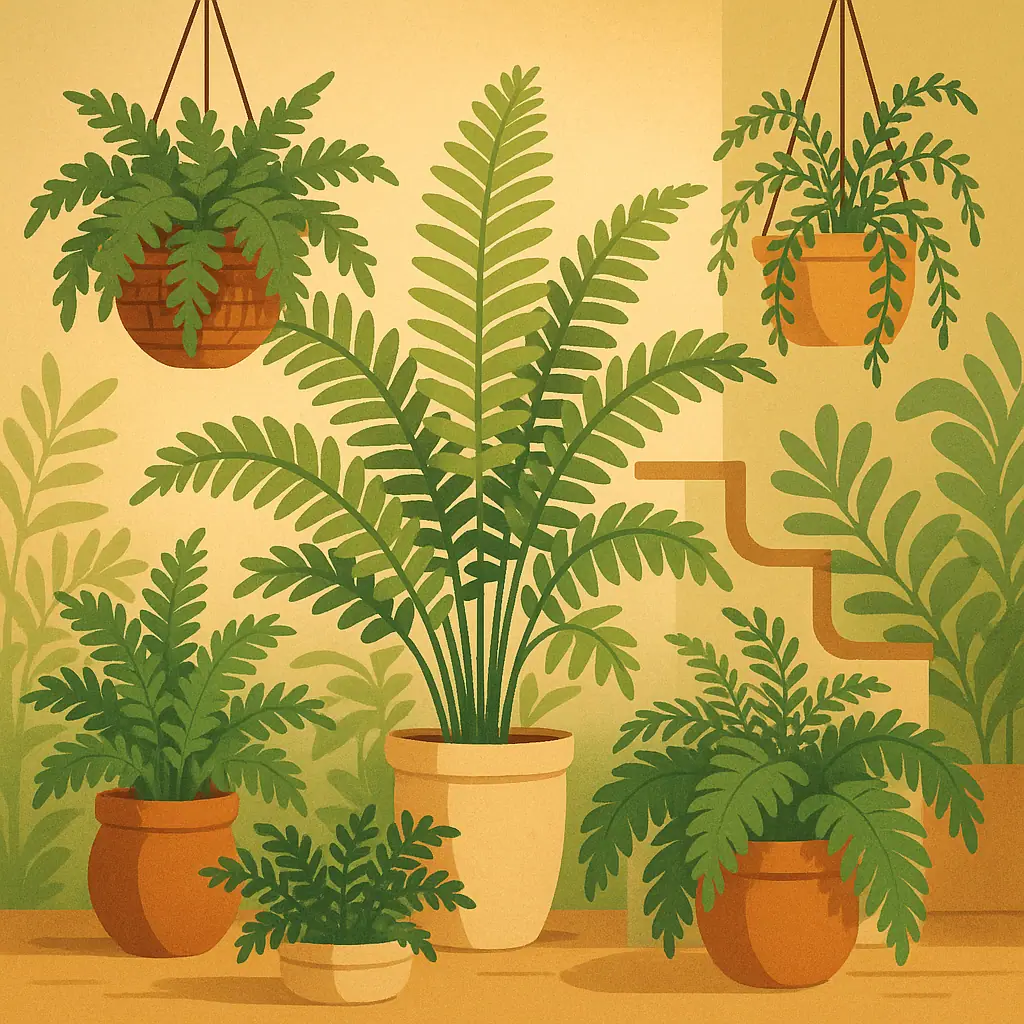
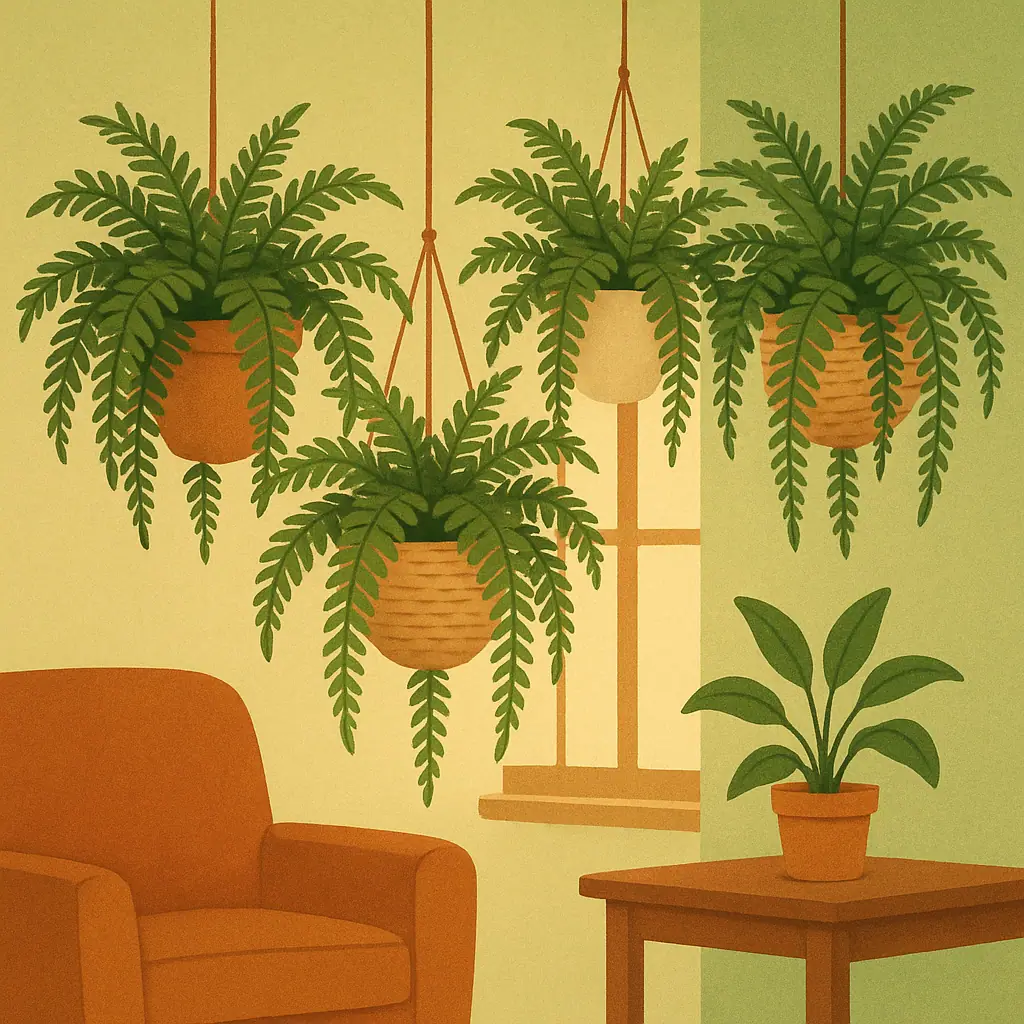
Their natural growth habit also works in your favor. Ferns grow outward rather than straight up, filling space horizontally. A single Boston fern on a shelf creates the impression of abundance without taking up floor space. Placed in a hanging basket, it fills vertical space that would otherwise be empty.
Best Compact Fern Varieties for Small Spaces
Not all ferns stay manageable in tight quarters. The following varieties are ideal for small apartments and limited shelf space:
- Lemon Button Fern (Nephrolepis cordifolia 'Duffii'): Rarely grows taller than 12 inches. Button-shaped leaflets give it a delicate, almost jewel-like quality. Very forgiving and one of the best choices for beginners working with limited space.
- Bird's Nest Fern (Asplenium nidus): Grows in a compact rosette shape rather than arching outward. Does not produce the cascading fronds that can overwhelm a shelf. Excellent tolerance for lower light and average humidity.
- Button Fern (Pellaea rotundifolia): A small, low-growing fern that stays tidy and compact. Notably more drought-tolerant than many ferns, which gives you a little more flexibility with watering in a busy household.
- Blue Star Fern (Phlebodium aureum): Grows slowly and stays a manageable size. Its distinctive blue-green color makes it a visually striking addition even as a single plant on a small table.
- Austral Gem Bird's Nest Fern: A smaller, more durable version of the standard Bird's Nest. Tolerates lower humidity than most ferns — helpful in apartments with central heating.
Creative Display Strategies for Small Homes
Use Vertical Space Aggressively
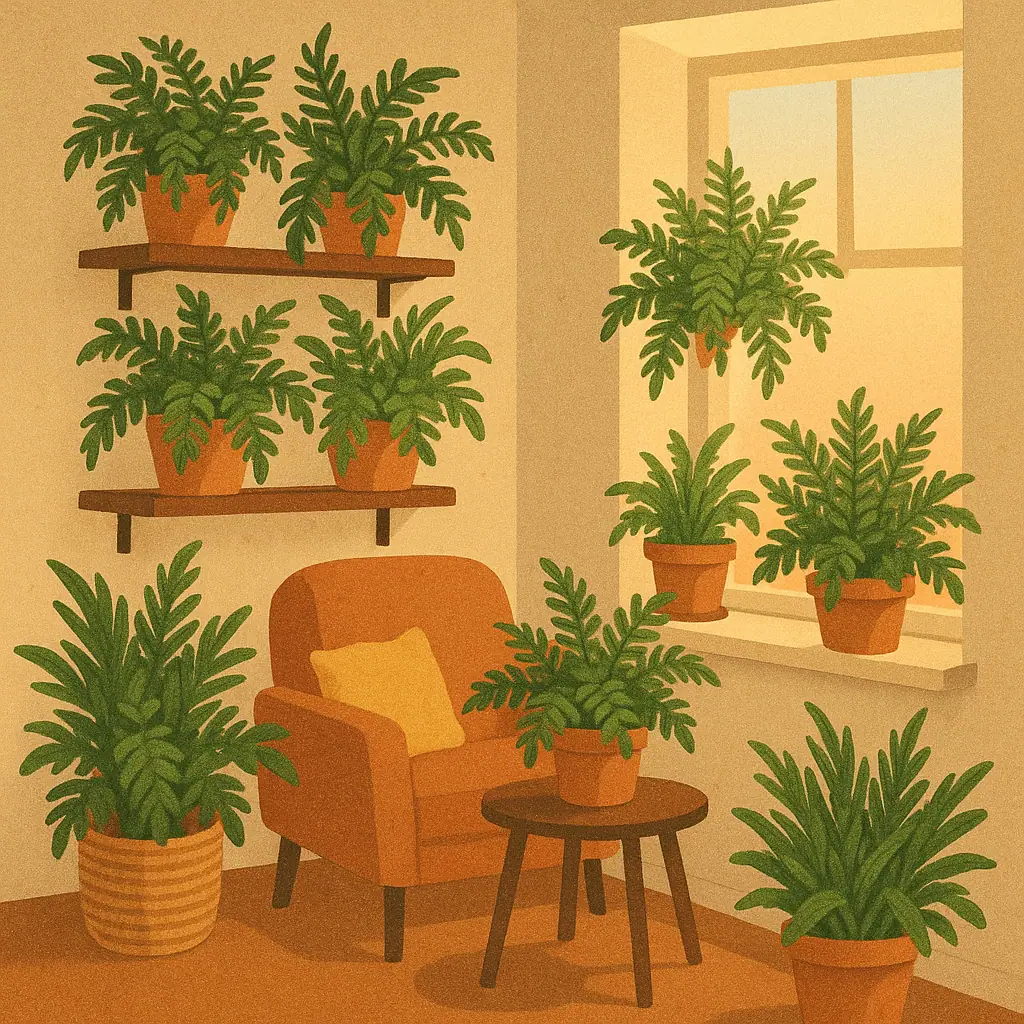
In a small home, walls and ceiling height are your greatest assets. A series of wall-mounted plant shelves — arranged at different heights — can hold five or six compact ferns without using a single square foot of floor space. Floating shelves installed near a window, with plants arranged from tallest at the bottom to smallest at the top, create a living wall effect that looks intentional and beautiful.
Tiered Plant Stands
A three-tier plant stand placed in a corner takes up about two square feet of floor space but can hold eight to ten small ferns at varying heights. This approach works especially well for a curated collection of different compact varieties — each tier showing off a different leaf texture and color.
Window Ledge Arrangements
A deep window ledge is prime real estate for compact ferns. Line up three small ferns in pots of slightly different sizes for an effortless, layered look. The key is to use a waterproof liner underneath so drips do not reach the wall or floor. East or north-facing windows are ideal — south-facing windows may require sheer curtains to filter intense afternoon light.
The Bathroom Shelf
If your bathroom has any shelf space at all, it deserves a fern. The steam from showers creates natural humidity that reduces how often you need to mist or humidify. Even a small Lemon Button fern or Button fern on a bathroom shelf will thrive with minimal attention, turning a purely functional room into something a little more pleasant.
Pros and Cons of a Small-Space Fern Garden
Compact varieties stay manageable
Many small ferns grow slowly and rarely need repotting, reducing maintenance without sacrificing greenery.
Transforms the feel of a small room
A few well-placed ferns make a small apartment feel more alive and welcoming without taking up meaningful space.
No outdoor access required
Ferns thrive entirely indoors. Apartment dwellers without a balcony or yard can enjoy a lush plant collection all year.
Humidity can be harder to maintain
Small apartments with central heating or air conditioning may run dry. Pebble trays and occasional misting help, but require consistency.
Light limitations require careful variety selection
Not every fern will tolerate a low-light apartment. Choosing the wrong variety will lead to slow decline rather than growth.
Frequently Asked Questions
How many ferns can I realistically grow in a small apartment?
With compact varieties and vertical display strategies, most small apartments can comfortably support five to ten ferns. Start with two or three to understand your light and humidity conditions, then add gradually.
Do I need a humidifier for apartment ferns?
Not necessarily. Grouping ferns together, placing pots on pebble trays with water, and keeping them away from heating vents can provide enough ambient moisture for most compact varieties. If your apartment is very dry in winter, a small humidifier nearby helps considerably.
Which is the most low-maintenance small fern for an apartment?
The Button fern is one of the most forgiving compact ferns available. It tolerates slightly drier conditions than most ferns, which means missed waterings are less catastrophic. Pair it with a Bird's Nest fern for variety without extra effort.
Can I grow ferns under artificial lighting in a windowless room?
Yes, with the right light. A simple grow bulb — even one that fits a standard lamp socket — placed 12 to 18 inches from a compact fern and left on for 10 to 12 hours daily provides enough light for most low-light varieties like Bird's Nest or Button ferns.
Final Thoughts
A small home is not a limitation when it comes to growing ferns — it is simply an invitation to be more thoughtful. Choose compact varieties that match your light and care capacity, use vertical space creatively, and group plants together to create a shared microclimate. Before long, your apartment will feel like the green sanctuary you always imagined it could be.
Start small and simple. One good fern in the right spot will tell you everything you need to know about what comes next.