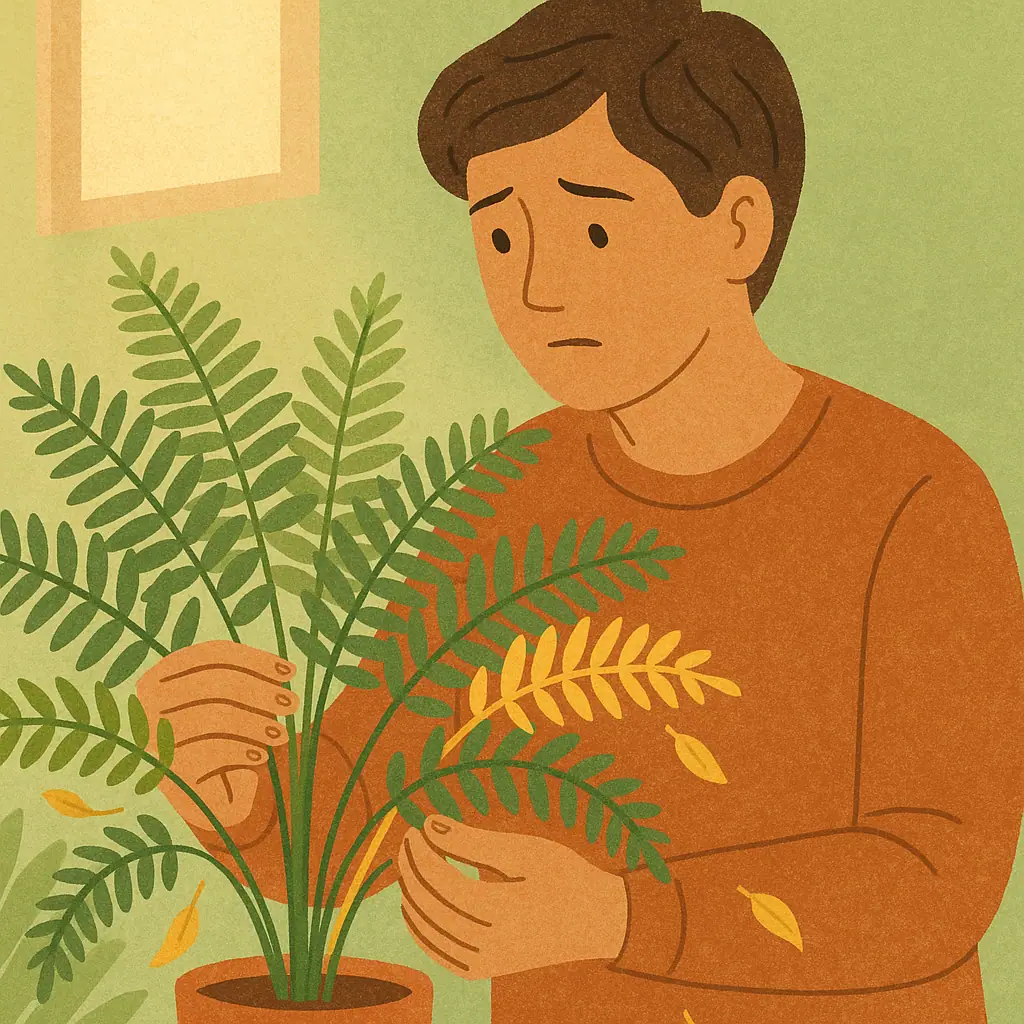
Brown spots on fern leaves can feel alarming the first time you notice them. A fern that looked soft and green last week may suddenly have speckles, dry patches, or one tired-looking frond that makes you wonder if the whole plant is in trouble.
The calming truth is that brown spots have several possible causes, and not all of them mean disaster. Some are normal aging. Some point to dry air, uneven watering, light stress, or pests. The useful skill is learning how to read the pattern before you start changing everything at once.
Think of the spots as notes from the plant, not a final verdict. A careful look at where the spots appear, how fast they spread, and what changed recently usually gives you a safer next step.
Why Brown Spots on Fern Leaves Matter
Brown spots on fern leaves matter because they can be an early clue. A small spot on one older frond may only mean that frond is finishing its life. Spots that spread across new growth, appear with webbing, or arrive after a sunny window move deserve more attention.
The University of Minnesota Extension guide to growing tropical ferns indoors notes that ferns have modest fertilizer needs and can develop browning or drying when overfertilized. That is a helpful reminder: more care is not always better care with ferns.
Start With the Spot Pattern
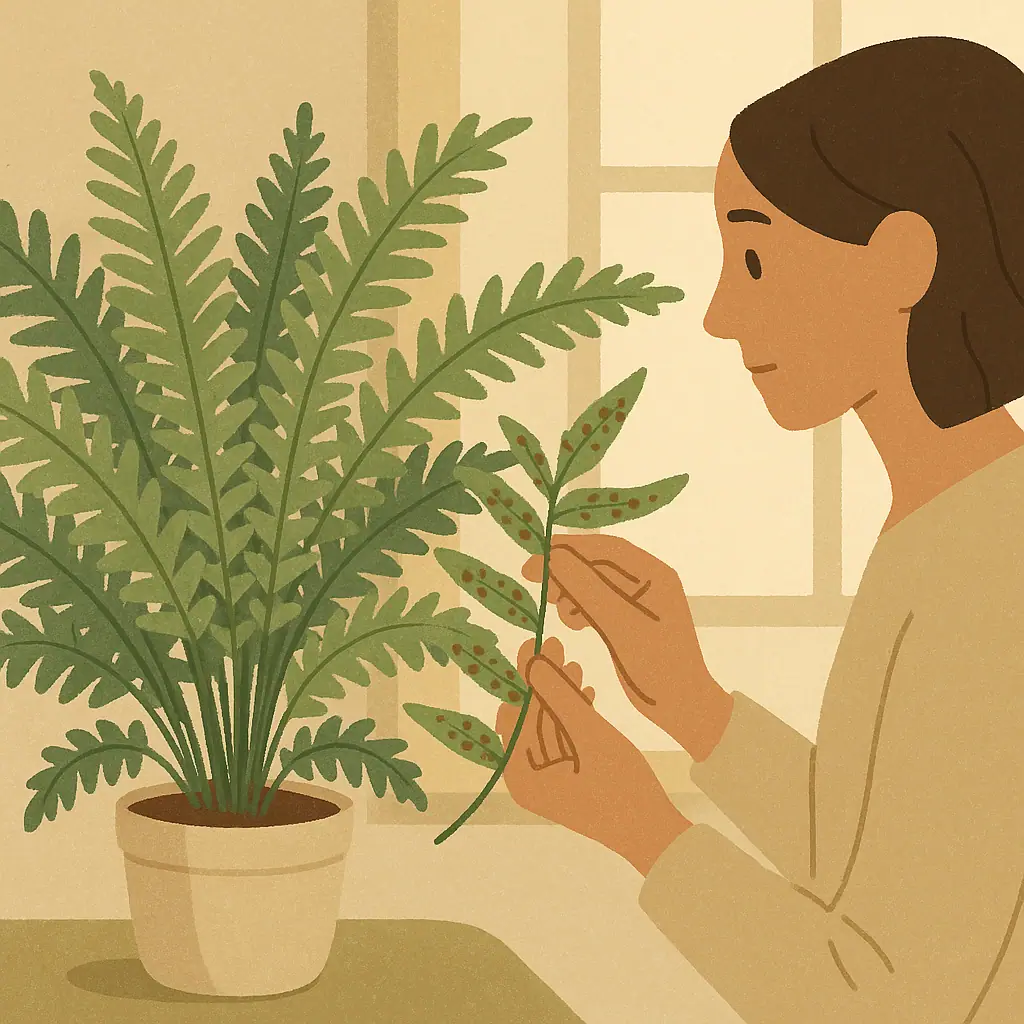
Begin by looking at the whole fern, not just the worst leaf. A single old frond at the bottom tells a different story than fresh spots across the newest growth. Use good light and turn the pot slowly so you can compare the window side, room side, top, and lower fronds.
Older fronds versus new fronds
If brown spots are mostly on older, lower fronds while new growth still looks green, the plant may simply be shedding old tissue. Trim those fronds only when they are mostly brown or clearly finished. If new fronds are spotting too, keep looking for a care issue.
Dry tips versus round spots
Crispy tips and edges often point toward dry air, uneven watering, too much fertilizer, or harsh light. Round spots, especially if they have yellow halos or spread from leaf to leaf, can point more toward disease or moisture sitting on foliage. Penn State Extension describes leaf spot problems on indoor plants as spots that may be brown or black and sometimes show a colored halo.
Common Causes of Brown Spots on Fern Leaves
Most indoor fern spotting comes back to a few ordinary causes. You do not need to diagnose like a scientist. You only need to connect the symptom with the most likely home condition.
- Normal aging: One or two older fronds brown gradually while the rest of the plant stays healthy.
- Low humidity: Tips, edges, or delicate leaflets dry in winter heat or near vents.
- Watering swings: Soil gets too dry, then too wet, creating stress that shows as patches or browning.
- Too much direct light: Spots appear on the window-facing side, especially after hot afternoon sun.
- Pests: Speckling, sticky residue, fine webbing, or tiny moving dots suggest closer inspection.
- Leaf spot disease: Spots spread, look water-soaked, or appear after leaves stay wet with poor airflow.
- Fertilizer stress: Browning follows feeding, especially if fertilizer was strong or applied to dry soil.
If the fern sits very close to glass, compare your symptoms with FernLog's guide to how to tell if a fern is too close to a window. Light and temperature stress often show first on the side facing the window.
How to Check the Fern Step by Step
A steady check keeps you from guessing. Move through the plant in the same order each time and write down anything that changed recently.
- Check the newest growth: If new fronds are clean and green, the problem may be older damage rather than an active crisis.
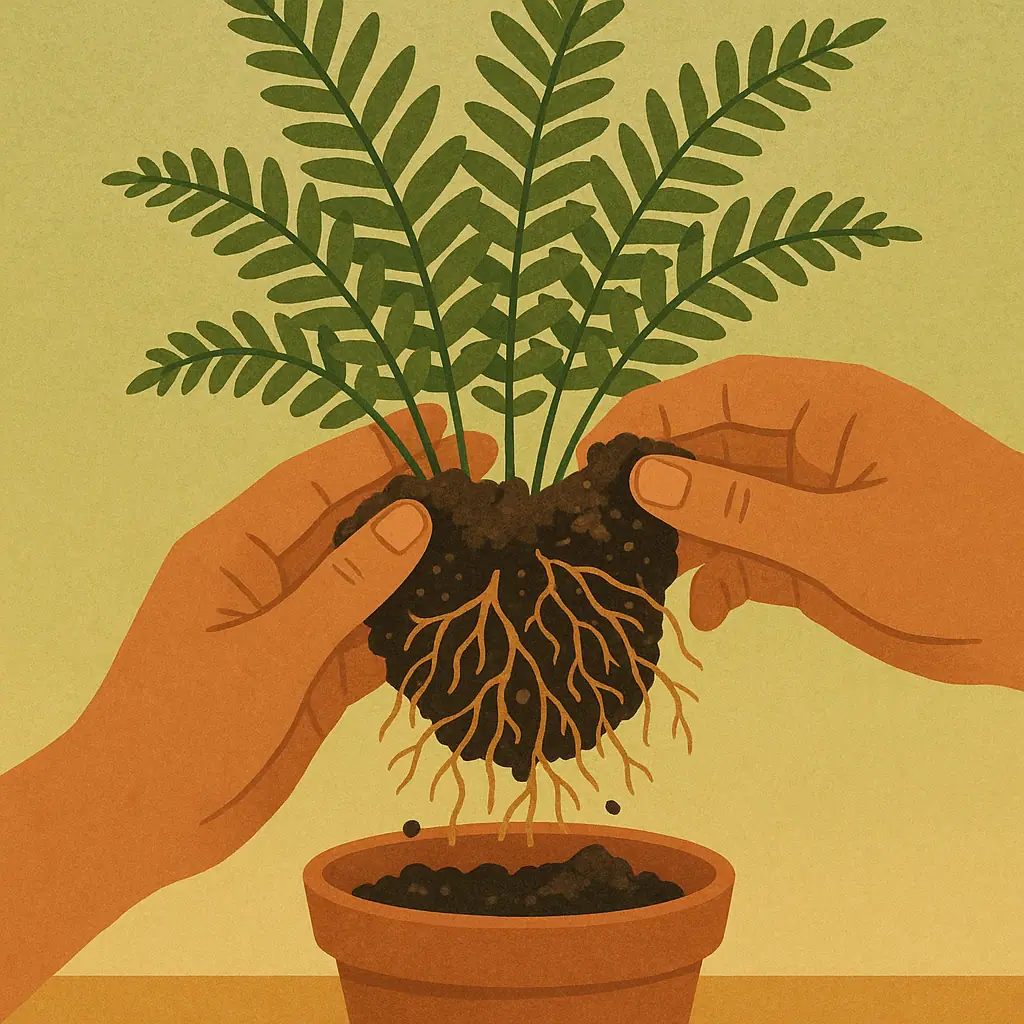
- Feel the soil: Notice whether the top inch is dry, damp, or wet. Also lift the pot if you know how it feels when watered.
- Look under fronds: Check for webbing, pale speckles, cottony bits, sticky shine, or tiny insects.
- Review the room: Ask whether a heater, fan, draft, sunny window, or recent move changed the plant's conditions.
- Check your last feeding: If browning followed fertilizer, pause feeding and water normally with good drainage.
- Remove only finished fronds: Use clean scissors for dead or badly damaged fronds, but avoid stripping every imperfect leaf.
- Change one thing: Adjust the most likely cause first, then observe for one to two weeks before making another change.
Moisture, Airflow, and Leaf Spot Concerns
Ferns like moisture around their roots and humidity in the air, but leaves that stay wet for long periods can make spotting worse. This is one reason misting is not a perfect cure. It may feel helpful, but in a cool room with poor airflow it can leave fronds damp without solving the real humidity problem.
Water the soil rather than soaking the foliage. Let the pot drain fully, empty the saucer, and keep the fern where air can move gently around it. If you suspect leaf spot, isolate the plant from nearby houseplants while you watch it.
When brown patches arrive with major leaf drop, FernLog's guide to normal versus concerning fern leaf drop can help you separate ordinary shedding from a broader decline.
Pros and Cons of Common Responses
Observation protects the plant
Checking the pattern first helps you avoid overwatering, overfeeding, or moving the fern too often.
Small adjustments are usually enough
Better drainage, steadier moisture, gentler light, or improved humidity often solves the care issue without drama.
Old damage is easy to manage
Brown spots do not turn green again, but finished fronds can be trimmed once new growth looks healthy.
Spots can have several causes
The same brown mark can come from light, water, age, pests, or disease, so rushing can lead to the wrong fix.
Damaged tissue stays damaged
Even after care improves, old brown patches remain until the frond is trimmed or replaced by new growth.
A Simple Brown Spot Checklist
Use this checklist once a week until the fern seems stable again.
- New growth: Are the newest fronds clean, green, and unfolding normally?
- Spread: Are spots appearing on more leaves, or staying limited to old fronds?
- Soil: Is the mix drying slightly between waterings without becoming bone dry?
- Saucer: Is water sitting under the pot after watering?
- Light: Is one side getting direct hot sun through glass?
- Air: Is a vent, fan, heater, or draft drying the fern?
- Pests: Do you see webbing, sticky residue, cottony patches, or moving dots?
- Recent changes: Did you move, feed, repot, or prune the fern shortly before the spots appeared?
When to Get Extra Help
Ask a local nursery, cooperative extension office, or experienced plant friend for help if spots spread quickly, several plants show the same symptom, the soil smells sour, or pests are visible and multiplying. Bring photos of the whole plant, the spotted fronds, the pot, and the room where it lives.
If the fern is also drooping badly, read FernLog's guide to reviving sad and wilted ferns before making a big change. Drooping plus spots often gives a clearer picture than spots alone.
Frequently Asked Questions
Should I cut off every fern leaf with brown spots?
No. Remove fronds that are mostly brown, dead, or clearly declining. Keep partly green fronds if they are still helping the plant make energy.
Can brown spots on fern leaves turn green again?
No. Brown tissue will not heal back to green. The goal is to stop new damage and encourage healthy new fronds.
Do brown spots always mean disease?
No. Aging, dry air, watering swings, light stress, and fertilizer stress can also cause browning. Disease is more likely when spots spread, look wet, or affect many leaves.
How often should I check a fern with brown spots?
Check it once or twice a week. Daily fussing can lead to overwatering or too many changes, while a weekly photo helps you notice real progress.
Final Thoughts
Brown spots on fern leaves are a reason to observe, not panic. Start with the pattern, check the newest growth, review light and moisture, and look closely for pests before changing the routine.
Your next step is simple: take one whole-plant photo, feel the soil, and decide on just one adjustment. Ferns respond best when care becomes calmer, steadier, and easier to repeat.