There's nothing more concerning than watching your beautiful fern suddenly start drooping, its once-proud fronds hanging sadly toward the floor. If you're seeing this with your indoor fern, take a deep breath – you're not alone, and more importantly, your plant can likely be saved!
Drooping ferns are like a cry for help from your green friend. Just like when we feel unwell, plants show symptoms when something in their environment isn't quite right. The good news? Ferns are remarkably resilient once you understand what they're trying to tell you.
Think of this guide as your fern first-aid manual. We'll walk through the most common reasons your fern might be drooping and give you simple, proven solutions to help your plant bounce back to its former glory.
Understanding Why Ferns Droop
Before we jump into solutions, it helps to understand that drooping leaves are actually your fern's way of protecting itself. When a fern can't get what it needs – whether that's water, the right amount of light, or proper humidity – it conserves energy by letting its fronds go limp.
The key is reading the other signs your plant is giving you alongside the drooping. Are the leaves also turning brown? Do they feel dry and crispy, or are they soft and mushy? These clues will help us determine exactly what your fern needs.
The Most Common Culprits
In my fifteen years of helping people with their houseplants, I've found that drooping ferns usually fall into one of these categories:
- Thirsty plants: The soil has become too dry
- Overwatered plants: The roots are sitting in soggy soil
- Humidity-starved plants: The air is too dry for comfort
- Light-stressed plants: Too much direct sun or too little light overall
- Shocked plants: Recently moved or repotted
Quick Diagnosis: What Type of Drooping Do You Have?
Let's start with a simple check that will point us in the right direction. This takes less than two minutes and will save you from trying the wrong solution first.
Dry Soil = Underwatering
If the soil feels dry and pulls away from the sides of the pot, your fern is likely underwatered. The leaves might feel papery or crispy to the touch, especially at the tips. This is actually the easier problem to fix!
Wet, Mushy Soil = Overwatering
If the soil feels soggy or has a sour smell, you're dealing with overwatering. The leaves might be soft and yellow, particularly the lower fronds. This requires more careful handling but is still very fixable.
Step-by-Step Revival Solutions
Now that you know what type of drooping you're dealing with, let's get your fern back to health. I'll walk you through each solution step by step, just like I would if I were standing right there with you.
For Underwatered, Droopy Ferns
This is the most straightforward fix, but timing and technique matter:
- Give it a thorough drink: Water slowly until you see water draining from the bottom holes
- Let excess water drain: Empty the saucer after 30 minutes so roots don't sit in standing water
- Place in bright, indirect light: Avoid direct sun while the plant recovers
- Be patient: You should see improvement within 6-12 hours
For Overwatered, Droopy Ferns
This requires a gentler approach since the roots may be damaged:
- Stop watering immediately: Let the soil dry out before adding any more water
- Improve drainage: If water sits on top of the soil, gently poke a few holes with a chopstick
- Increase air circulation: A small fan nearby helps soil dry faster
- Remove damaged leaves: Cut off any yellow or mushy fronds at the base
- Consider repotting: If the soil smells sour, fresh potting mix may be needed
Humidity Solutions
Even properly watered ferns can droop in dry air. Here are simple ways to boost humidity:
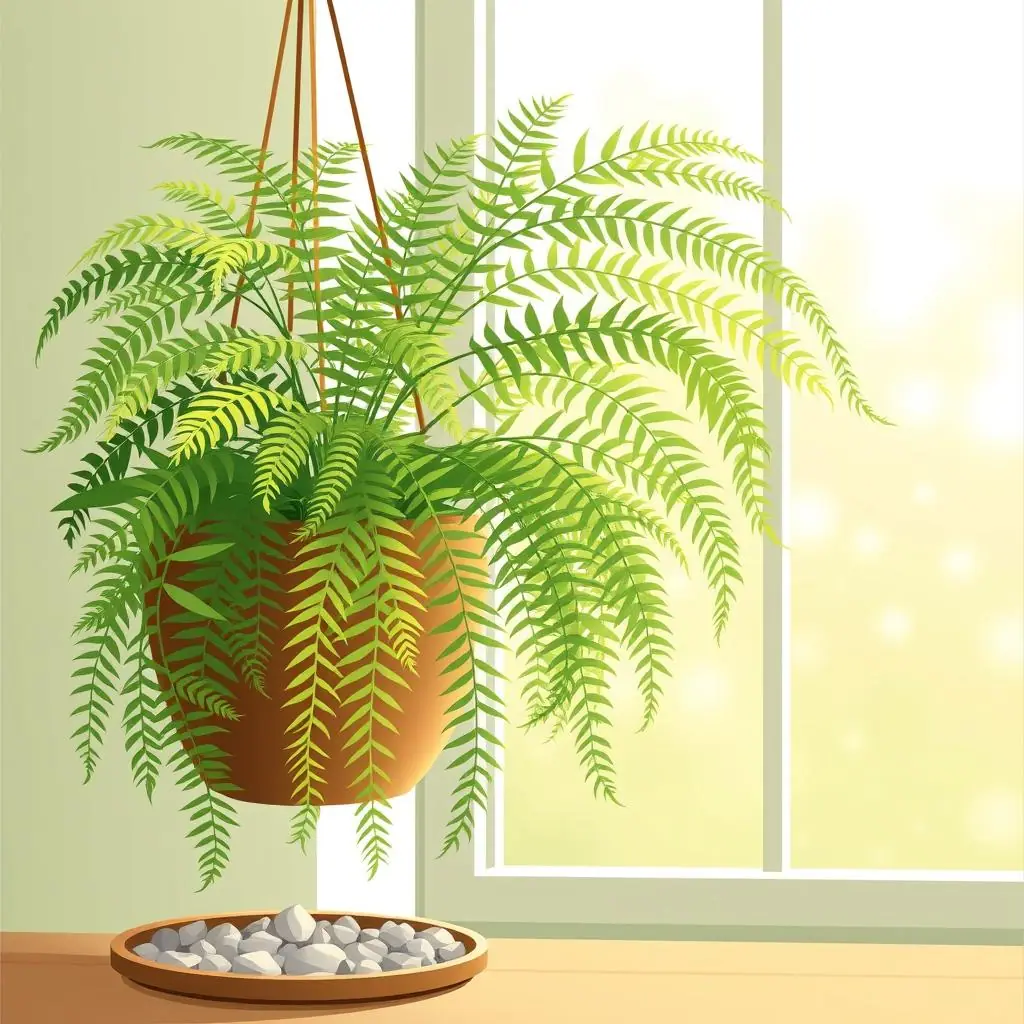
- Pebble tray method: Place your pot on a tray of wet pebbles (pot shouldn't touch water)
- Group plants together: Plants naturally create humid microclimates
- Bathroom placement: If you have a bright bathroom, ferns love the natural humidity
- Light misting: Spray the air around (not directly on) the leaves in the morning
Pros and Cons of Different Revival Methods
Bottom watering for severely dry ferns
Ensures water reaches all the roots evenly and prevents shocking the plant.
Gradual humidity increase
Prevents leaf shock while giving your fern the moisture it craves.
Pruning damaged fronds
Redirects energy to healthy growth and improves overall appearance.
Quick fixes can backfire
Rushing the process often stresses the plant more than the original problem.
Over-misting leaves
Can lead to fungal problems, especially in poorly ventilated spaces.
Prevention: Keeping Your Fern Happy Long-Term
Once you've revived your drooping fern, let's make sure it stays healthy. Prevention is always easier than treatment, and these simple habits will keep your fern thriving:
Weekly Check-Up Routine: Every week, check the soil moisture and look for early signs of stress. Catching problems early makes them much easier to fix.
Consistent Watering Schedule: Most indoor ferns need water when the top inch of soil feels dry. This usually works out to every 5-7 days, but let the soil guide you rather than the calendar.
Seasonal Adjustments: Your fern will need less water in winter and more humidity in summer when indoor air tends to be drier.
Frequently Asked Questions
How long does it take for a drooping fern to recover?
For underwatering, you'll often see improvement within hours. For overwatering issues, recovery can take 2-4 weeks as the plant needs time to grow new, healthy roots.
Should I cut off all the droopy fronds?
No! Only remove fronds that are completely brown, yellow, or mushy. Droopy green fronds can often recover once the underlying problem is fixed.
My fern keeps drooping even after I fixed the watering. What else could it be?
Check the light conditions and humidity levels. Ferns in direct sunlight or very dry air will continue to droop even with perfect watering.
Is it normal for some fronds to droop naturally as they age?
Yes, older outer fronds naturally decline and can droop before turning brown. This is normal aging, not a care problem.
Final Thoughts: Your Fern's Road to Recovery
Remember, every experienced plant parent has dealt with drooping ferns at some point. What matters most is learning to read your plant's signals and responding with patience and care.
The beautiful thing about ferns is their resilience. With the right adjustments to watering, humidity, and light, most drooping ferns bounce back beautifully. Some of my most gorgeous, full ferns today are ones that looked quite sad when I first got them!
Keep observing your plant, make gradual changes, and trust the process. Your fern wants to thrive – sometimes it just needs a little help figuring out how to do that in your particular home environment.