

How to clean fern leaves is a little different from cleaning broad, sturdy houseplant leaves. Fern fronds can be fine, feathery, and easy to bruise if you rub too hard. A careful cleaning routine should remove dust without turning a small chore into plant stress.
The goal is simple: help the fern receive light, look fresh, and stay easy to inspect. You do not need shiny sprays, strong soaps, or a complicated setup. Most of the time, gentle water, patience, and a light touch are enough.
Why This Matters
Dust on leaves is more than a cosmetic issue. It can reduce the light that reaches leaf surfaces and make it harder to notice early pests, dry tips, or damaged fronds. The University of Minnesota Extension notes in its spring houseplant guidance that dust can block light and that leaf shine products are not necessary because they may clog leaf pores. That advice fits ferns especially well because delicate fronds do better with simple care than with heavy products.
For a broader seasonal houseplant checklist, see the University of Minnesota Extension guide to spring houseplant care. Use it as a reliable reminder that cleaning is part of calm plant maintenance, not a dramatic rescue step.
Start With Basic Fern Care
Before you clean, look at the plant as a whole. A healthy fern with light dust needs a different approach from a fern that is already dry, drooping, or losing leaflets. Cleaning should support the plant, not add another stress.
If you are still learning daily plant signals, FernLog’s guide on reading your fern like a daily weather report can help you notice changes before you reach for tools.
Check the fern first
- Soil moisture: Avoid heavy rinsing if the pot is already wet and slow to drain.
- Frond texture: Crispy, brittle fronds should be handled only lightly or trimmed if they are fully dead.
- New growth: Do not brush unfurling fiddleheads or soft new tips.
- Pest signs: Look for webbing, sticky residue, cottony patches, or moving insects before cleaning.
- Plant stability: Support the pot so the fern does not tip while you work.
The Safest Way to Dust Fern Fronds
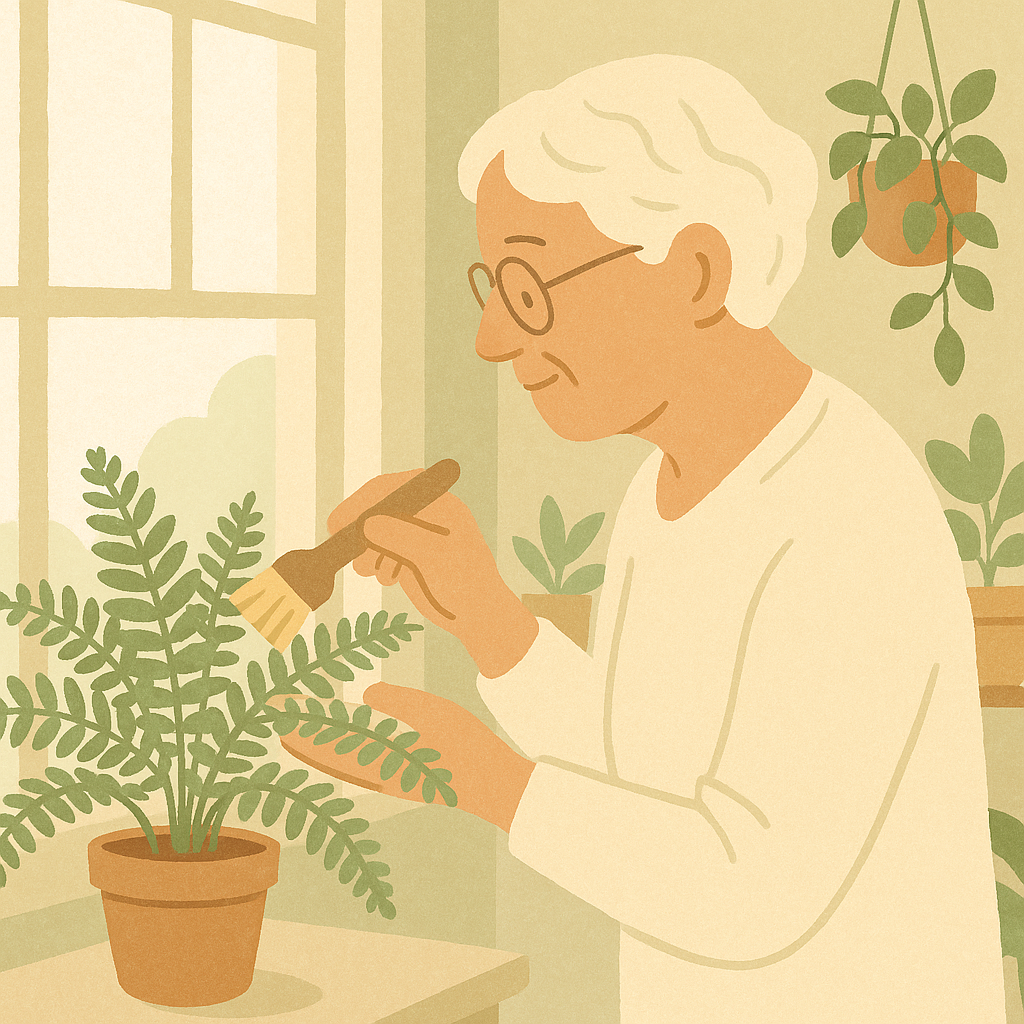
For light dust, start dry. Use a clean, soft makeup brush, small paintbrush, or feather-soft duster. Work from the base of a frond toward the tip, following the natural direction of growth. Short, patient strokes are safer than one firm swipe.
Hold the stem gently with your other hand if the frond moves too much. You are not trying to polish each leaflet. You are loosening dust so the fern can breathe visually again and so you can inspect it more clearly.
Best tools for delicate fronds
- Soft brush: Best for fine, divided fronds where a cloth would catch.
- Microfiber cloth: Useful only on broader fern leaves, such as bird’s nest fern, with almost no pressure.
- Room-temperature water: Helpful when dust is stuck, but avoid soaking the crown.
- Small towel: Place under the pot or basket to protect furniture.
When to Use Water
Water helps when dust has settled into the fronds or when the fern has been near an open window, heater, or busy room. Use room-temperature water, not cold water from the tap. Sudden cold water can shock tender growth, especially in winter.
For small ferns, you can set the pot in a sink and use a very gentle shower setting. Keep the water soft and brief. Let extra water drain fully before the plant goes back to its saucer or decorative basket.
If you have been trying to make watering less messy overall, the setup ideas in a simple fern watering station can also make occasional rinsing easier.
What Not to Do When Cleaning Fern Leaves
The most common mistake is treating a fern like a rubber plant or large philodendron. Many ferns have small leaflets that can snap, shed, or bruise. Strong wiping can leave the plant looking thinner than before.
Avoid soaps unless a trusted horticulture source gives a specific reason for a pest problem. For ordinary dust, clear water and soft tools are safer. Also avoid oil, mayonnaise, commercial shine sprays, alcohol wipes, and household cleaners.
Cleaning habits to avoid
- Scrubbing: It can tear leaflets and flatten the natural shape of the frond.
- Cleaning in direct sun: Wet fronds in strong light can stress the plant.
- Leaving the crown wet: Water sitting in the center of some ferns can encourage trouble.
- Cleaning every day: Too much handling can be worse than light dust.
- Feeding right after stress: Dusty leaves do not mean the fern needs fertilizer.
For fertilizer timing, FernLog’s guide on fertilizing indoor ferns with a less-is-more approach is a helpful next read.
Pros and Cons of Common Cleaning Methods
Soft brushing
This protects fine leaflets while removing dust from delicate fronds.
Gentle sink rinsing
A brief, soft rinse can refresh a dusty fern if the pot drains well afterward.
Light inspection afterward
Clean fronds make it easier to notice pests, dry tips, or old growth that needs trimming.
Leaf shine sprays
They are unnecessary for ferns and may interfere with natural leaf surfaces.
Firm wiping
Pressure that works on broad leaves can damage fine fern fronds.
After-Cleaning Care
Once the fern is clean, place it back in bright indirect light and let it settle. Do not move it repeatedly to admire it in different rooms. A stable spot helps you see whether the plant responded well.
Watch the newest growth over the next week. Fresh growth is a better sign than older damaged tips, which may not improve. If cleaning revealed old brown fronds, trim only the clearly dead parts with clean scissors.
For trimming decisions, review the gentle art of pruning indoor ferns before cutting healthy-looking growth.
Frequently Asked Questions
How often should I clean fern leaves?
Clean only when dust is visible or when inspection is difficult. For many homes, a light check every few weeks and a gentle cleaning every month or two is enough.
Can I wipe fern fronds with a damp cloth?
Use a damp cloth only on broader fern leaves and use very little pressure. For fine fronds, a soft brush is usually safer.
Should I shower my fern?
A brief gentle rinse can help if the pot drains well and the water is room temperature. Avoid soaking the center of the plant or leaving it sitting in water.
What if leaves fall off while I clean?
Stop and inspect the plant. The fronds may be old, dry, or brittle. Switch to lighter brushing and avoid handling stressed growth.
Final Thoughts
How to clean fern leaves safely comes down to patience. Start with observation, choose the softest method that will do the job, and avoid products that promise shine.
A clean fern should look quietly refreshed, not polished or forced. When you use a gentle hand, cleaning becomes one more small habit that helps your indoor fern stay healthy and easy to understand.