If you've been treating your ferns like your other houseplants when it comes to feeding, you might be doing more harm than good. Ferns are the gentle souls of the plant world – they whisper their needs rather than shouting for attention like a hungry pothos or monstera.
Think of fertilizing ferns like seasoning a delicate soup. A heavy hand ruins the dish, but the right touch enhances natural flavors. Your ferns don't need much food, but they do appreciate the occasional gentle boost during their growing season.
Why Ferns Need Less Fertilizer
In nature, ferns thrive on forest floors where nutrients come slowly through decomposing leaves and organic matter. They've evolved to be efficient with limited resources, making them naturally low-maintenance feeders.
Unlike flowering plants that need energy for blooms, ferns focus all their energy on producing beautiful foliage. This means they require far fewer nutrients than most houseplants.
- Slow, steady growth: Ferns don't rush their development like fast-growing vines
- Efficient nutrient use: They make the most of whatever nutrition is available
- Sensitive roots: Too much fertilizer can actually burn their delicate root system
- Natural forest conditions: They're adapted to nutrient-poor but organic-rich environments
When to Fertilize Your Ferns
Timing is everything when feeding your ferns. Like many houseplants, they have distinct growing and resting seasons that determine their nutritional needs.
Spring and Summer (Growing Season):
Feed monthly with diluted liquid fertilizer from March through August. This is when your ferns are actively producing new fronds and need gentle nutritional support.
Fall and Winter (Dormant Season):
Reduce feeding to every other month, or stop completely from October through February. Your ferns naturally slow their growth during shorter days and cooler temperatures.
Special circumstances to avoid fertilizing:
- Newly repotted ferns: Wait 4-6 weeks before feeding
- Recently divided plants: Give them 6 weeks to recover
- Stressed or unhealthy ferns: Fix the underlying problem first
- Very humid environments: High humidity can make nutrients more concentrated
Choosing the Right Fertilizer
The best fertilizers for ferns are gentle, balanced, and easy to dilute. You don't need specialty fern food – a quality liquid houseplant fertilizer will work perfectly when used correctly.
Look for these characteristics:
- Balanced NPK ratios: Something like 3-3-3, 2-2-2, or even 1-1-1
- Liquid form: Easier to dilute and control dosage than granules
- Low salt content: Reduces risk of root burn
- Contains micronutrients: Iron and magnesium prevent yellowing
🏆 Best Options — Gentle and Effective
Fish emulsion diluted to quarter strength, or any balanced liquid houseplant fertilizer cut in half. These provide steady nutrition without overwhelming delicate roots.
⭐ Organic Choice — Natural Approach
Worm casting tea or compost tea provides slow-release nutrients that mimic forest floor conditions. Perfect for ferns that prefer organic feeding.
How to Apply Fertilizer Safely
The application method matters just as much as what you feed your ferns. A gentle approach prevents shock and ensures even nutrient distribution.
Step-by-step safe application:
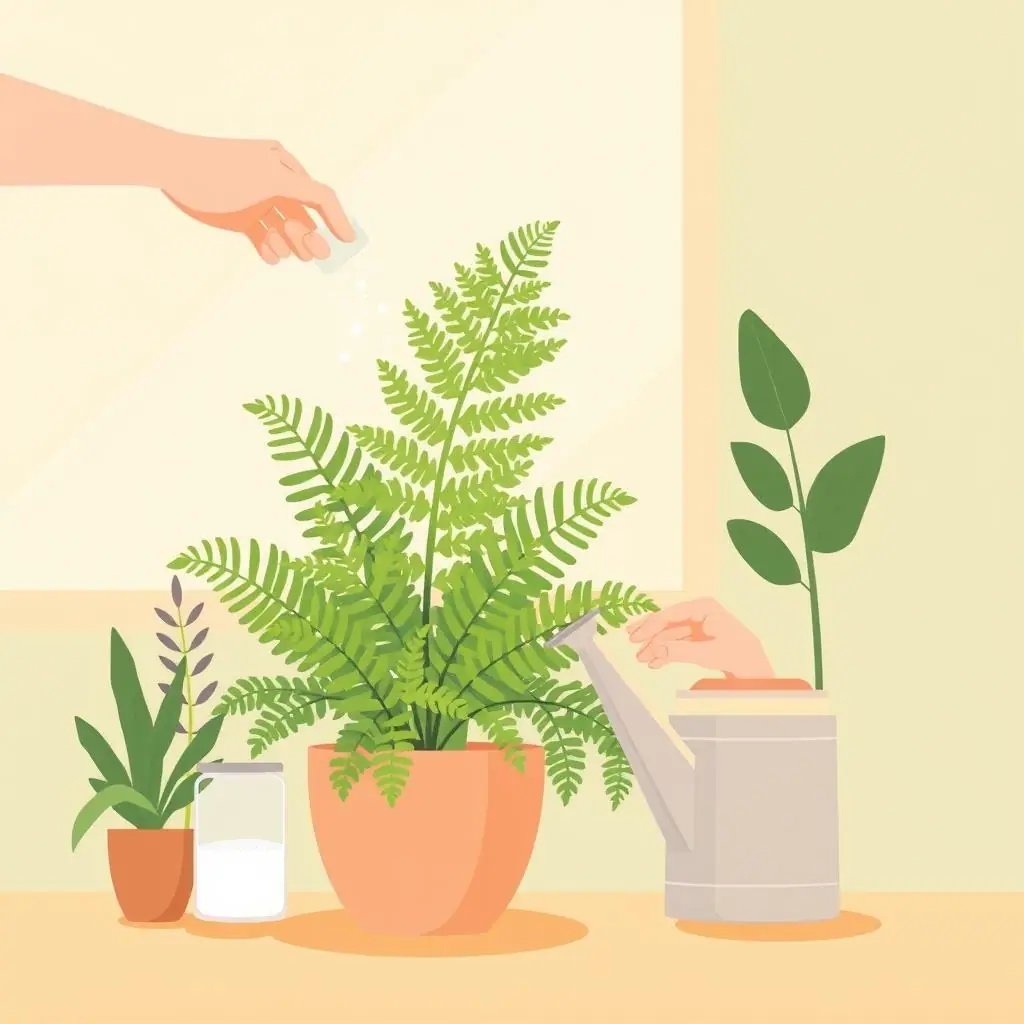
- Water first: Never apply fertilizer to dry soil – it concentrates the nutrients
- Mix properly: Dilute to half strength in a watering can or container
- Apply evenly: Pour slowly around the entire root zone, not just one spot
- Water lightly after: A gentle rinse helps distribute nutrients and prevents buildup
- Morning feeding: Apply in early morning so plants can process nutrients during daylight
Remember, it's better to under-fertilize than over-fertilize. Your fern will tell you if it needs more food through its growth rate and frond color.
Signs of Over-fertilization
Even gentle ferns will let you know when you've been too generous with the plant food. Learning to read these signs helps you adjust your feeding schedule before any permanent damage occurs.
- Brown, crispy frond tips: Classic sign of fertilizer burn
- Yellowing from the tips inward: Too much nitrogen causing salt buildup
- Stunted new growth: Paradoxically, over-feeding can slow growth
- White crusty buildup on soil: Visible salt accumulation from excess fertilizer
- Dropping healthy-looking fronds: Plant shedding leaves to cope with stress
If you notice these signs, flush the soil with plain water and skip fertilizer for the next 2-3 months while your fern recovers.
Natural vs Chemical: Pros and Cons
Gentle Release
Nutrients become available slowly, reducing burn risk.
Soil Health
Improves soil structure and beneficial microorganisms.
Natural Balance
Mimics forest floor nutrition that ferns evolved with.
Higher Burn Risk
More concentrated nutrients can damage sensitive roots.
Salt Buildup
Can accumulate in soil over time, creating problems.
Quick Depletion
Nutrients wash away faster, requiring more frequent feeding.
Frequently Asked Questions
Can I use the same fertilizer for all my houseplants?
Yes, but dilute it to half strength for ferns. Most liquid houseplant fertilizers work fine when properly diluted for these gentle plants.
My fern hasn't grown much. Should I fertilize more often?
No – ferns are naturally slow growers. Over-fertilizing stunts growth more than under-fertilizing. Stick to the monthly schedule during growing season.
What's the best time of day to fertilize ferns?
Early morning is ideal. This gives your fern all day to process the nutrients, and morning light helps with nutrient uptake.
Should I fertilize if my fern looks healthy?
If your fern is producing new fronds regularly and has good color, you might not need to fertilize at all. Healthy ferns often thrive on good soil alone.
Final Thoughts
Remember, with fern fertilization, restraint is your best tool. These ancient plants have thrived for millions of years with minimal nutrients, and they'll continue to grace your home with the same gentle approach.
Watch your fern's response to feeding, and adjust accordingly. A happy fern will show its gratitude with steady, healthy growth and vibrant green fronds that bring that peaceful forest feeling right into your living space.