
Pruning indoor ferns can feel a little intimidating the first time. Ferns look soft and delicate, and it is natural to wonder whether one wrong snip will harm the whole plant. The reassuring truth is that careful pruning is usually more like tidying a favorite room than giving the plant a dramatic haircut.
Most indoor fern pruning is simply removing fronds that are already brown, yellow, broken, or clearly finished. You are not trying to force the fern into a formal shape. You are helping it look cleaner, breathe a little easier, and put attention toward healthy new growth.
This guide will walk you through when to trim, what to leave alone, and how to use clean tools without overreacting. Think of it as a gentle check-in: observe first, cut second, and give the fern time to respond.
Why Pruning Indoor Ferns Matters
Pruning indoor ferns matters because old fronds can make a healthy plant look worse than it really is. A few dry stems tucked underneath the green growth may be normal aging, not a sign that the whole fern is failing.
The University of Maryland Extension explains that grooming indoor plants includes removing dying, yellowing, or dead leaves as part of regular plant care. Their indoor plant grooming guidance is a useful outside reference for understanding pruning as light maintenance rather than emergency treatment.
For ferns, that distinction is important. A fern with one old brown frond does not need a full rescue plan. It may only need a careful trim and a quick review of light, humidity, and watering habits.
Start With Basic Fern Care Before You Cut
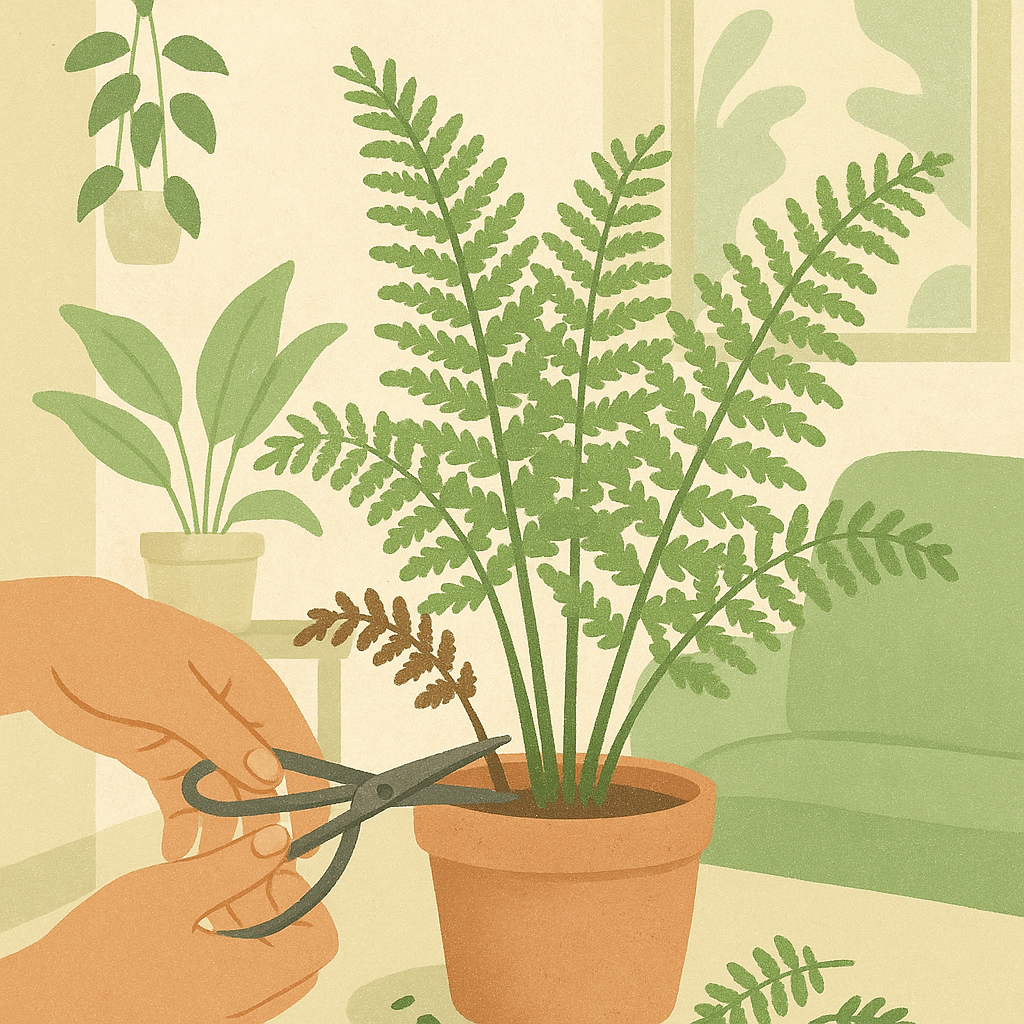
Before pruning indoor ferns, pause for a simple care check. A fern that is too dry, sitting in harsh light, or adjusting to a new room may shed older fronds faster. Pruning can tidy the plant, but it does not replace steady basic fern care.
Look at the whole plant first
Step back and notice the overall pattern. Is the fern mostly full and green with a few tired fronds underneath? That is a normal pruning moment. Is the entire plant collapsing, turning pale, or drying all at once? That calls for a broader care review before you do much cutting.
If you are still learning the daily signals, our guide to reading your fern like a daily weather report can help you separate ordinary aging from stress signs. Use that habit before reaching for scissors.
Check soil moisture and placement
Feel the top layer of soil and notice where the plant sits. Dry soil, hot glass, cold drafts, or air vents can all make fronds age faster. If the conditions are off, correct the care gently after pruning instead of cutting more and more.
It also helps to avoid pruning right after a big change, such as moving rooms or repotting. Give the fern a short recovery window unless you are removing fronds that are already completely dead.
Which Fern Fronds Should You Prune?
The easiest fronds to prune are the ones that have clearly finished their work. These are often brown, crispy, yellow all the way through, broken at the stem, or lying awkwardly against the soil. Removing them can make the whole fern look fresher without changing its natural shape.
Do not worry about making the plant perfectly symmetrical. Ferns often grow with a soft, informal habit. A little unevenness is part of their woodland charm, especially indoors where light comes from one direction.
- Remove fully brown fronds: They will not turn green again, and trimming them improves appearance.
- Remove broken fronds: A snapped stem usually keeps declining and may look messy.
- Trim yellow fronds when they are mostly spent: If only the tip is yellow, wait and observe before cutting the whole frond.
- Leave new fiddleheads alone: Fresh curled growth is tender and should not be handled or trimmed.
- Avoid cutting healthy green mass: Heavy pruning can reduce the plant’s ability to recover.
If you notice many fronds declining at once, compare your habits with our article on common fern care mistakes. Pruning will look better when the underlying care routine is steady.
How to Prune Indoor Ferns Step by Step
Pruning indoor ferns is easiest when you move slowly. Set the plant on a table, put down a towel or newspaper, and give yourself good light. You should be able to see the base of each frond before you cut.
Use clean, sharp tools
Small scissors or narrow pruning snips work well for most indoor ferns. Wipe the blades before use, especially if you have been cutting another plant. Sharp tools make a clean cut and reduce tugging on the root ball.
Cut close to the base when possible
Follow the old frond down toward the soil line and cut near its base without scraping the crown or pulling on nearby stems. If the fern is very dense, use your fingers to gently part the foliage instead of yanking the dead stem out.
Work in small rounds
Remove a few obvious dead fronds, then stop and look again. It is better to do a calm ten-minute tidy than to keep cutting until the plant looks thin. Older beginners often tell me the hardest part is knowing when to stop, so make that part of the routine.
- Gather tools: Clean scissors, a towel, and a small bag for trimmings.
- Lift gently: Support fronds with one hand instead of pulling them aside roughly.
- Snip spent growth: Cut brown, yellow, or broken fronds near the base.
- Turn the pot slowly: Check all sides so you do not over-prune one area.
- Clean the surface: Remove fallen leaflets from the soil so you can monitor moisture more easily.
What Not to Prune on an Indoor Fern
Some parts of a fern are better left alone. New curled growth, healthy green fronds, fuzzy rhizomes on rabbit’s foot ferns, and firm crowns should not be trimmed just because they look unusual. Many ferns have natural textures that are part of the plant, not clutter.
Do not cut a fern down to the soil unless you have a specific reason and understand the variety. Some outdoor ferns tolerate seasonal cutbacks, but indoor ferns are often best handled with selective grooming. When in doubt, remove only what is clearly dead.
Also avoid pruning as a way to solve every problem. If fronds are browning because the air is too dry, the plant needs better humidity and steadier watering checks. If the fern is pale from poor light, trimming will not create stronger growth by itself.
Aftercare Once the Pruning Is Done
After pruning, keep the fern’s routine calm. Water only if the soil check says it is time. Return the plant to bright indirect light, away from harsh sun and strong vents. Avoid fertilizing immediately after a stressful trim unless it is already part of your normal growing-season schedule.
A light prune can make the plant look better right away, but the real sign of success is new growth over time. Watch for fresh green fronds, a steadier shape, and less debris collecting near the soil.
If you have recently fertilized, remember that more feeding is not the answer to every slow-growth concern. Our guide to fertilizing indoor ferns gently explains why less is often safer for houseplant ferns.
Pros and Cons of Pruning Indoor Ferns
Cleaner appearance
Removing dead fronds helps the fern look cared for without changing its natural shape.
Easier observation
Once old debris is gone, it is simpler to see soil moisture, new growth, and fresh stress signs.
Gentle maintenance habit
A small monthly tidy can prevent a beginner from feeling surprised by a messy plant later.
Easy to overdo
Cutting too many green fronds can leave the fern thin and slower to recover.
Does not fix care problems
Pruning improves appearance, but light, humidity, and watering still need to be right.
Frequently Asked Questions
How often should I prune an indoor fern?
Trim only as needed. For many indoor ferns, a light check every few weeks is enough, with bigger tidying only when several fronds are clearly brown or broken.
Should I cut brown fern tips or the whole frond?
If only the very tip is brown, you can leave it or trim the tip for appearance. If most of the frond is brown or yellow, cut the whole frond near the base.
Can pruning help a fern grow fuller?
Pruning removes tired growth and may make new growth easier to see, but fullness mainly comes from steady light, moisture, humidity, and time.
Is it okay to prune a stressed fern?
Remove fully dead or broken fronds, but avoid heavy pruning. First correct the stress, then wait for new growth before doing more shaping.
Final Thoughts
Pruning indoor ferns is not about perfection. It is about listening to the plant, removing what has clearly finished, and leaving enough healthy green growth to keep the fern strong. A few careful snips can make the plant easier to enjoy and easier to read.
Start small today. Remove one or two fully dead fronds, clean fallen bits from the soil, and then step back. If the fern looks calmer and still full, you have done enough.