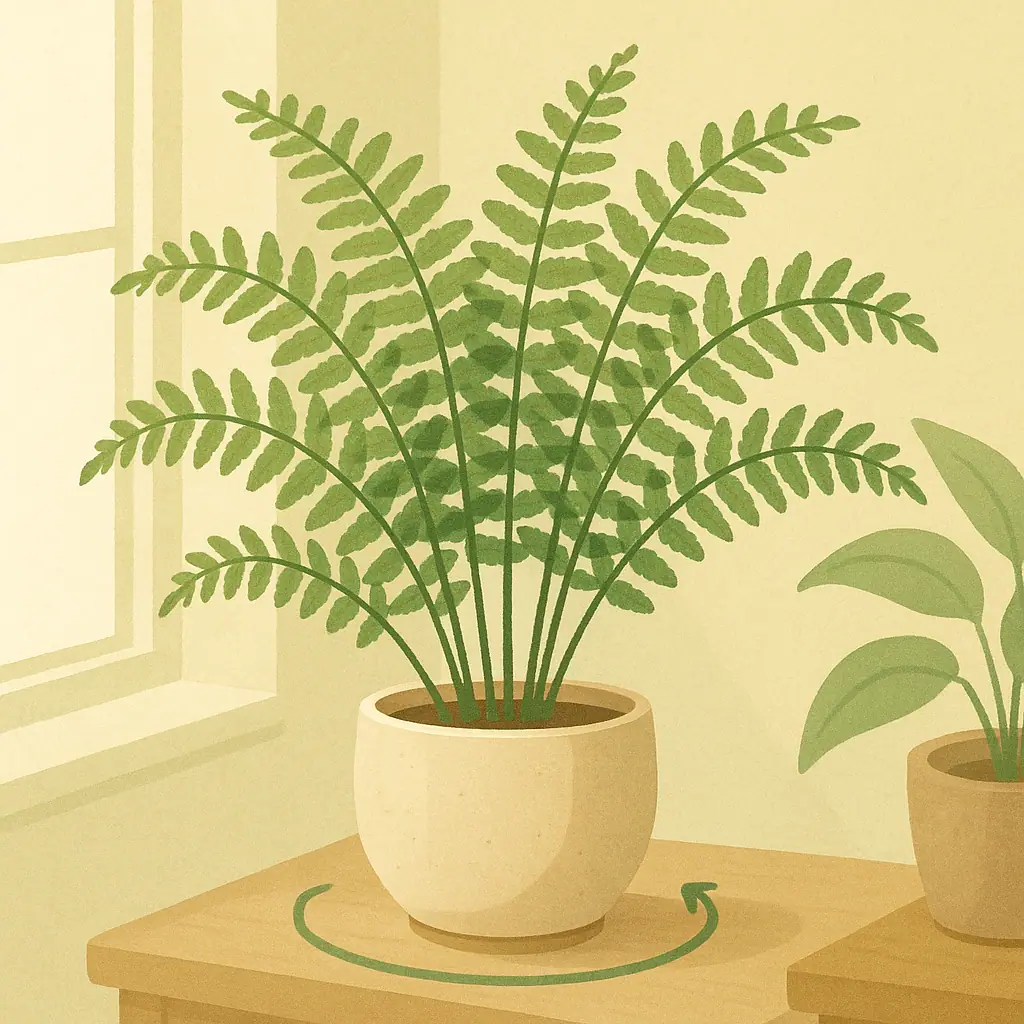
A fern that leans toward the window is not usually being dramatic. It is simply following the best light it can find. For many indoor ferns, one side of the plant receives brighter light than the other, especially on a sill, plant stand, or table near a single window.
Rotating indoor ferns is a small habit that helps the whole plant share that light more evenly. You do not need a strict schedule, special tools, or a perfect memory. You only need to notice the plant, turn it gently, and avoid changing too many things at once.
This guide explains when to rotate, how far to turn the pot, and what signs tell you the fern may need more than rotation.
Why Rotation Matters for Indoor Ferns
Ferns grow toward available light. When the same side faces a window every day, that side may become fuller while the back stays thinner. Over time, the pot can look unbalanced, with fronds reaching in one direction.
University of Minnesota Extension advises rotating houseplants regularly for even growth, especially when light comes mainly from one direction. That advice fits fern care well because many indoor fern problems begin with small, repeated environmental differences. That advice fits fern care well because many indoor fern problems begin with small, repeated environmental differences.
You can read the seasonal houseplant guidance from University of Minnesota Extension for a broader look at keeping houseplants balanced as light conditions change.
Start With Basic Fern Care
Before you turn the pot, look at the whole care setup. A fern that is dry, recently repotted, or already stressed may not respond well to several changes at once. Rotation should feel like part of ordinary basic fern care, not a big correction.
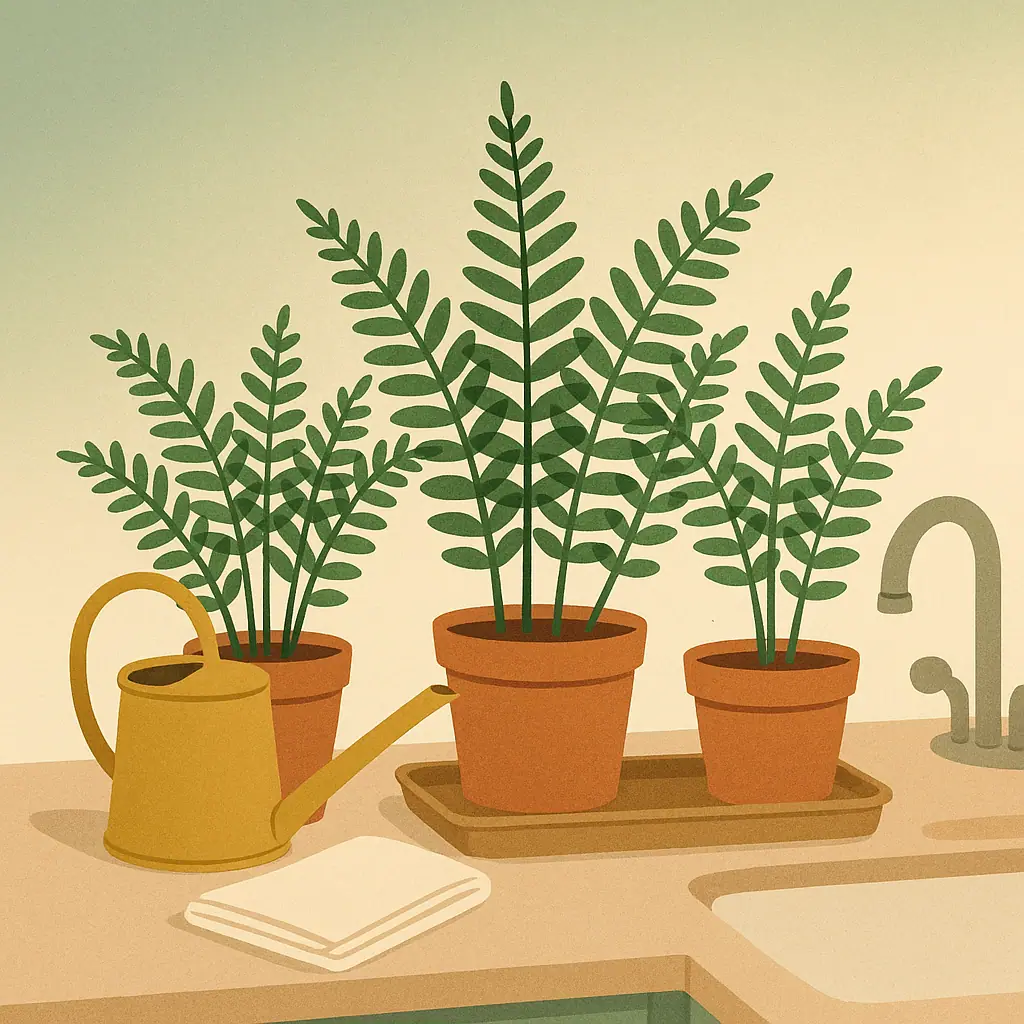
First, check the soil moisture. If you are still building a steady watering rhythm, the guide on creating a simple fern watering station can help you keep supplies and notes in one calm place.
Next, look at the light. Most indoor ferns prefer bright indirect light rather than harsh direct afternoon sun. If one side of the plant is pressed close to glass, warm air, or a drafty window, rotation alone will not solve that stress.
What to Check Before You Turn the Pot
A quick inspection keeps rotation useful and prevents overreacting. Stand in front of the fern and ask three simple questions.
- Is one side fuller? More fronds on the window side usually means the plant is following the light.
- Is the lean gentle or severe? A slight tilt is normal. A heavy lean may mean the pot, soil, or light location needs attention.
- Are fronds healthy? Green, flexible fronds suggest ordinary light response. Crispy tips, yellowing, or limp growth point to a care issue beyond rotation.
It also helps to cleanly remove dead or damaged growth before judging the shape. For that task, use the careful approach in The Gentle Art of Pruning Indoor Ferns so you do not trim healthy fronds by accident.
How to Rotate Ferns Step by Step
Start small. A quarter turn is enough for most beginner routines. Turn the pot so a different side faces the brightest part of the room, then leave the fern alone long enough to respond.
- Choose a regular moment. Many people rotate when they check water, because the plant is already in front of them.
- Make a quarter turn. Turn the pot about 90 degrees rather than spinning it completely around.
- Keep the location steady. Do not move the fern to a different window at the same time unless the current spot is clearly wrong.
- Watch for two weeks. Look for steadier posture, fuller new growth, and fewer fronds reaching hard toward one side.
- Repeat gently. If the fern still leans, rotate again during the next care check.
Common Basic Fern Care Mistakes to Avoid
The biggest mistake is treating rotation as an emergency fix. If a fern looks lopsided, it may simply need time and steadier light. Turning it every day, moving it repeatedly, or changing watering at the same time can make it harder to know what helped.
More balanced growth
Each side gets a chance to face the brighter part of the room.
Easy to remember
You can connect rotation to watering, dusting, or a weekly plant check.
No equipment needed
A careful quarter turn uses the pot you already have and keeps the routine simple.
It cannot fix poor placement
A fern in light that is too dim or too harsh still needs a better spot.
Too many changes confuse the picture
If you rotate, repot, fertilize, and move the plant at once, you will not know what caused improvement or stress.
A Simple Rotation Checklist
Use this short checklist every week or two. It keeps the habit easy and avoids turning the fern just because you feel you should.
- Light: Is the fern still in bright indirect light?
- Moisture: Is the soil evenly moist but not soggy?
- Shape: Is one side reaching much more than the other?
- Stress: Are there new yellow, crispy, or limp fronds?
- Turn: If the plant looks healthy but uneven, give it a quarter turn.
For a broader observation habit, the daily reading method in How to Read Your Fern Like a Daily Weather Report pairs nicely with rotation because it teaches you to notice small changes before they become problems.
When Rotation Is Not Enough
If the fern keeps leaning strongly after several gentle turns, review the environment. A dark corner, a hot window, dry air, or an uneven watering pattern may be the real cause. Rotation helps share light, but it does not create enough light where there is too little.
Also pause rotation for a short time after repotting, division, or a stressful dry spell. Let the fern settle first. Once new growth looks steady again, return to your normal quarter-turn habit.
Frequently Asked Questions
How often should I rotate an indoor fern?
Every one to two weeks is a comfortable starting point. If the fern looks balanced, you can simply check it during normal watering.
Should I turn the pot all the way around?
A quarter turn is usually gentler. Full turns are not usually necessary for a beginner routine.
Can rotation stop brown tips?
Not by itself. Brown tips are often related to moisture, humidity, minerals, or stress. Rotation mainly helps shape and light balance.
What if I forget for a month?
Do not worry. Start again with one small turn and observe. Fern care is built from steady habits, not perfect records.
Final Thoughts
Rotating indoor ferns is one of the simplest ways to support even growth near a window. The best routine is gentle: check the plant, make a small turn, and leave the rest of the care setup steady.
If your fern is healthy but a little one-sided, a quarter turn every week or two can help it grow into a fuller, calmer shape. If it still struggles, treat rotation as a clue to review light, water, and placement more carefully.