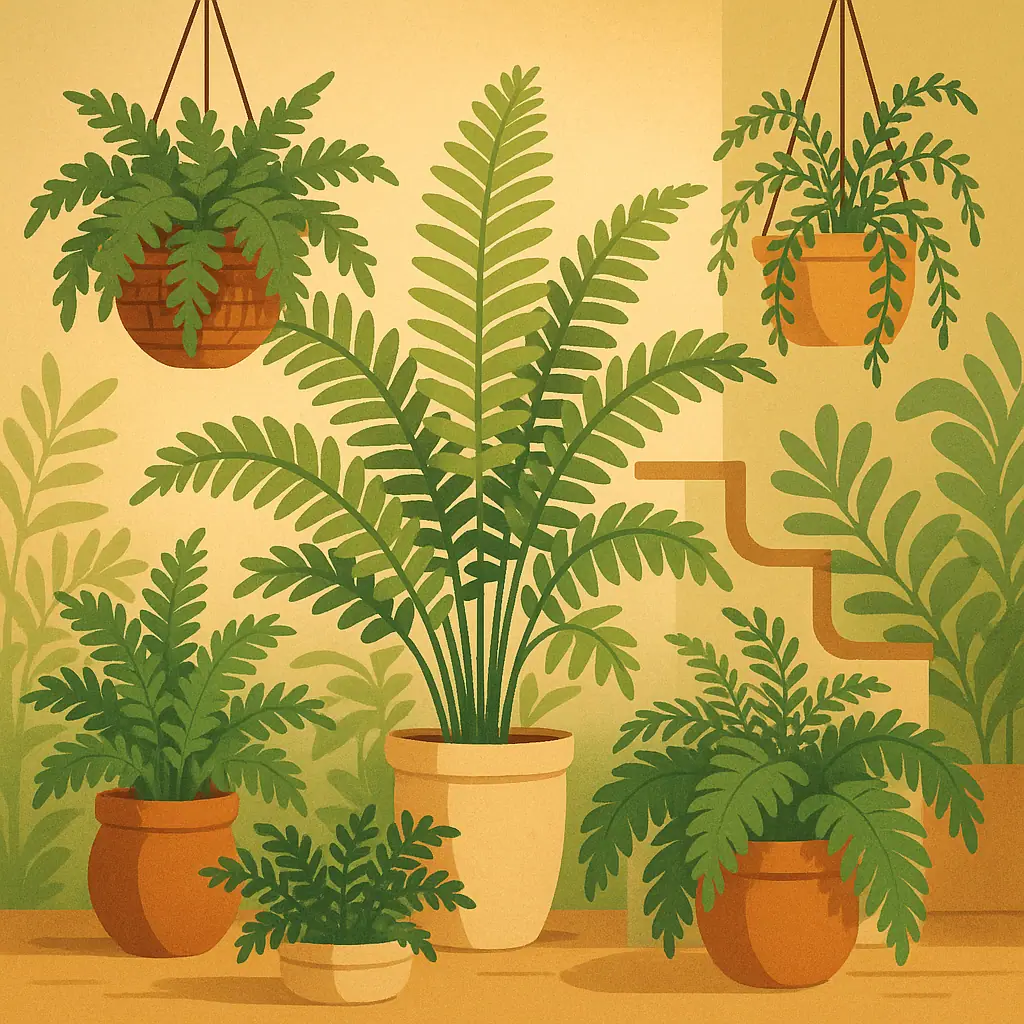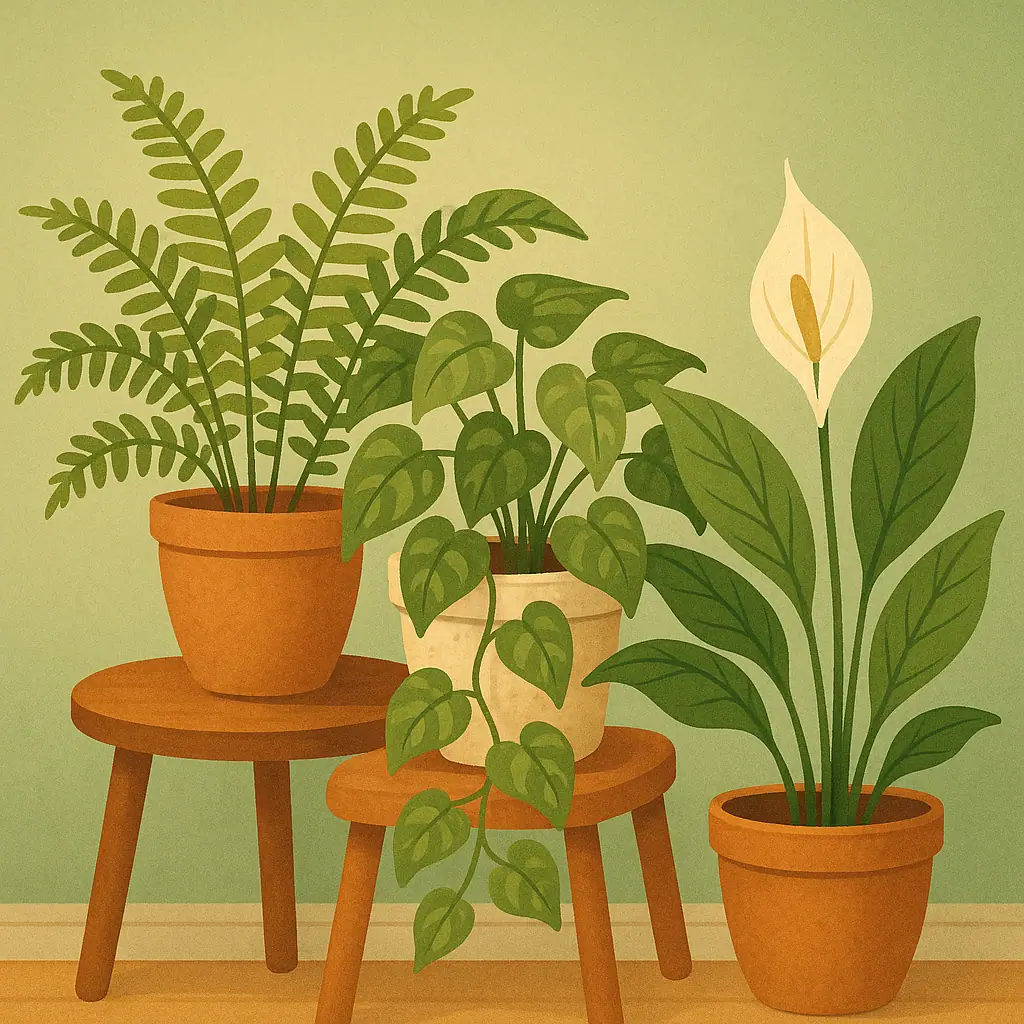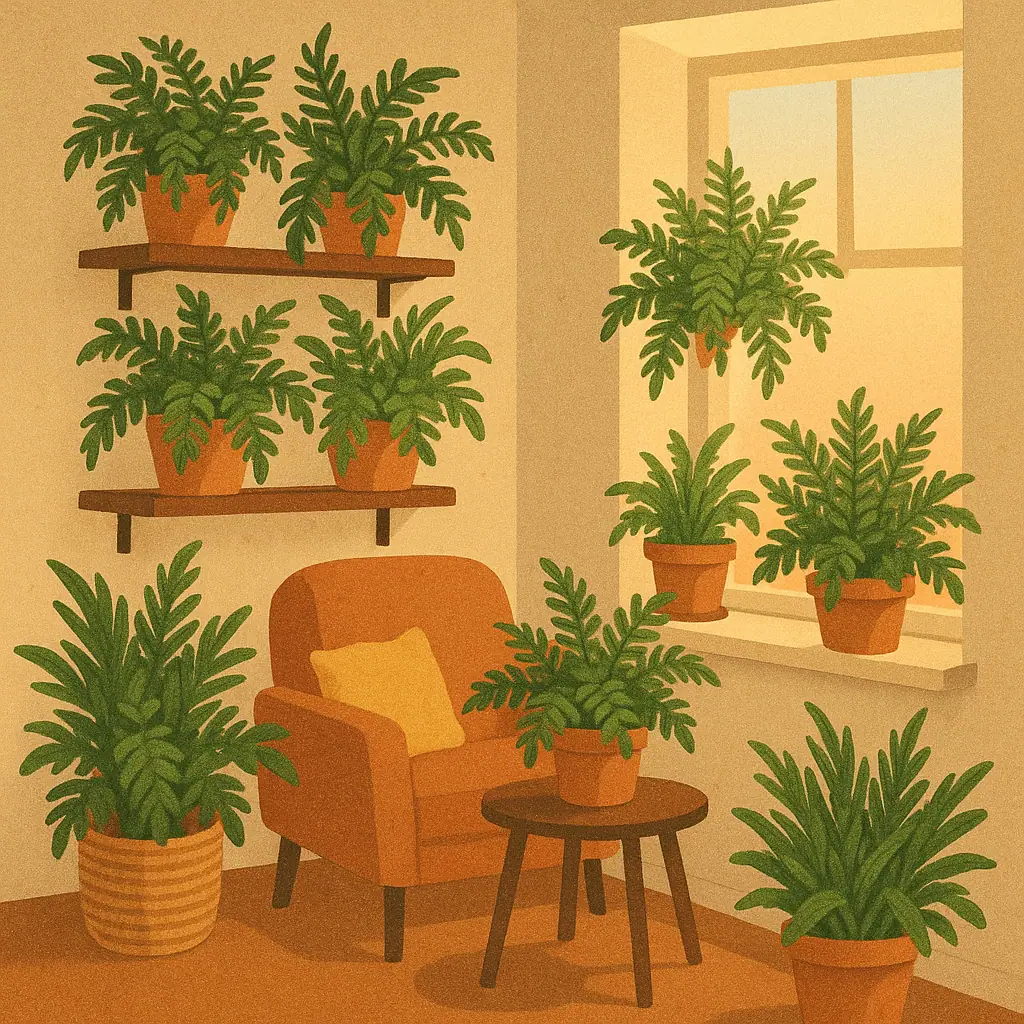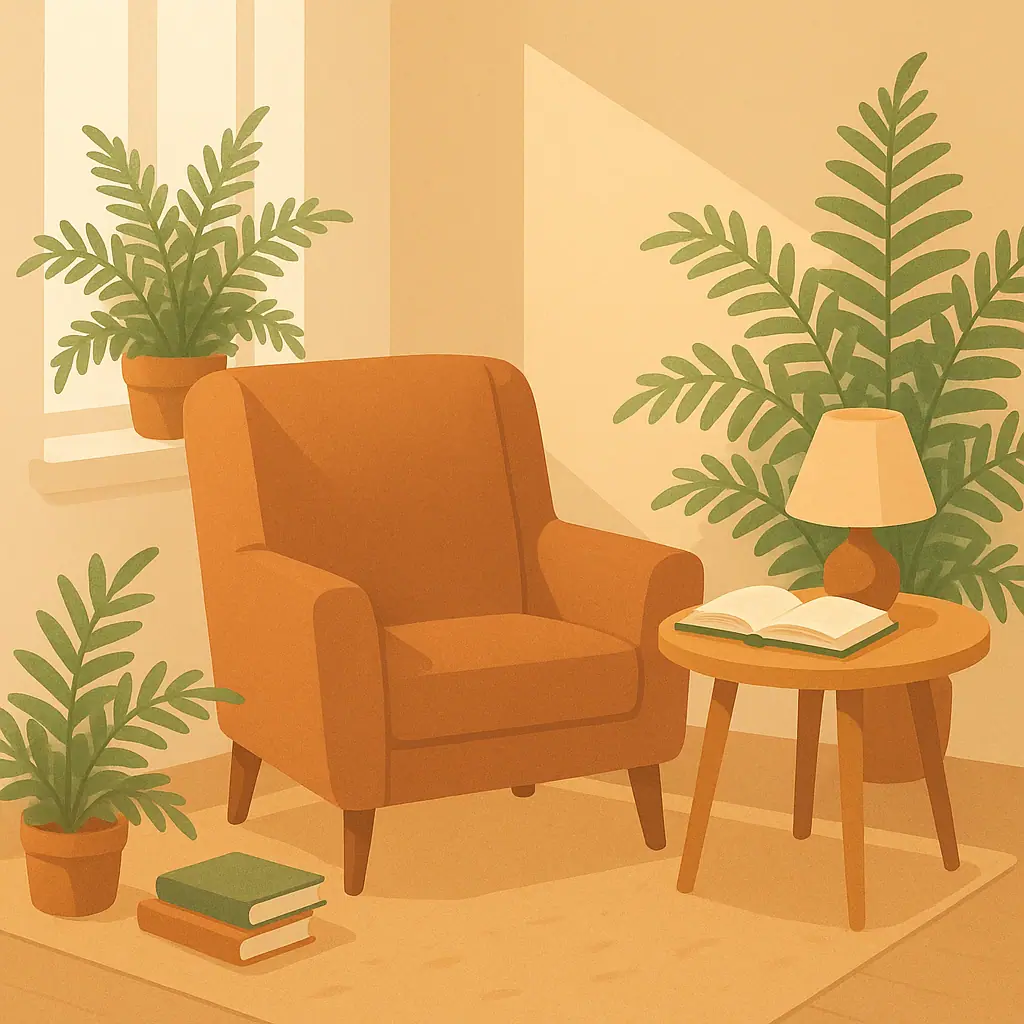
Reading nook plants can make a quiet corner feel softer, greener, and more settled. Ferns are especially good for this because their fronds add movement without making the space feel busy. The goal is not to turn a chair into a jungle. It is to choose one or two healthy ferns, place them where they can live comfortably, and keep the nook easy to use.
A good reading nook still needs room for a lamp, a cup of tea, eyeglasses, books, and safe walking space. The best fern arrangement supports that comfort instead of competing with it.
Why This Matters
Many people decorate a reading corner by choosing the prettiest plant first and thinking about care later. With ferns, that can lead to crispy tips, drooping fronds, or a plant that constantly needs moving. A calmer approach starts with the room: light, airflow, reach, and daily use.
The University of Minnesota Extension guide to growing tropical ferns indoors notes that many indoor ferns need filtered light, careful watering, and attention to humidity. That makes a reading nook a good place to pause and check conditions before you decorate.
Start With Indoor Garden Design
Indoor garden design begins with how the space is used. A reading nook should feel open enough to sit down, stand up, reach the lamp, and move a book without brushing fronds every time. If the plant is always in the way, you will eventually move it or neglect it.
Start with the chair and light source. Then place the fern nearby rather than directly in the traffic path. A small fern on a side table, a medium fern on a plant stand, or a hanging fern slightly to the side can all work if the plant gets enough bright, indirect light.
Choose the calmest plant position
- Beside the chair: Best for compact ferns that can sit on a small table or low stand.
- Behind the chair: Works if there is space to water without leaning over upholstery.
- Near the window: Helpful for light, but avoid harsh sun touching delicate fronds.
- Above the nook: A hanging fern can soften the corner, but only if watering is practical.
What to Check First for Decorating a Reading Nook With Ferns
Before buying anything new, spend a day watching the corner. Notice where morning or afternoon sun lands, whether a heating or cooling vent blows nearby, and whether the floor stays clear. This simple observation prevents most decorating mistakes.
If you already enjoy changing plant displays with the seasons, the FernLog guide to seasonal fern decorating can help you think about color, texture, and small room changes without moving every plant at once.
Make a one-minute nook check
- Light: Is the spot bright enough to read during the day, but not hot with direct sun?
- Reach: Can you water the fern without dripping on books, cords, or fabric?
- Air: Is the plant away from strong drafts, vents, and frequently opened doors?
- Safety: Can you walk through the nook without catching a foot on a stand or saucer?
- Scale: Does the fern fit the corner without swallowing the chair?
How to Handle Decorating a Reading Nook With Ferns Step by Step
Once the corner passes the first check, decorate slowly. Ferns have a soft presence, so small changes often look better than a crowded display.
- Pick one main fern. Choose a fern that suits the light and size of the corner. A compact table fern is easier than a large hanging basket if the nook is small.
- Set the plant before adding extras. Place the fern, sit in the chair, and make sure fronds do not block your lamp, book, or side table.
- Use a stable saucer or cachepot. Protect wood floors and bookshelves from moisture. Empty standing water after watering.
- Add one supporting texture. A woven basket, ceramic pot, or simple plant stand is enough. Let the fronds be the main detail.
- Watch the fern for a week. Look for leaning, pale color, crisping, or soil that stays too wet. Adjust before adding more plants.
Common Indoor Garden Design Mistakes to Avoid
The most common mistake is placing a fern where it looks lovely but cannot be watered easily. If watering requires moving books, unplugging a lamp, or reaching behind a chair, the routine will become frustrating.
Another mistake is using a fern to hide a dark corner. Ferns often tolerate gentle shade better than many flowering plants, but most indoor ferns still need enough light to keep producing healthy fronds. A nook that feels dim even at midday may need a brighter plant position nearby.
If you are working with tight corners, the article on creating lush green fern corners offers more ideas for using vertical space and keeping the area pleasant instead of crowded.
Signs the nook setup needs adjusting
- Fronds brush your shoulder: Move the plant farther from the chair or choose a smaller fern.
- Soil stays wet for days: The spot may be too cool, too dim, or poorly drained.
- Tips turn crisp quickly: Check for direct sun, dry air, or a nearby vent.
- You avoid watering: Simplify the placement so care is easy to reach.
A Simple Checklist
Use this checklist before you settle on the final arrangement. It keeps the decorating decision practical and repeatable.
- Can I sit down without touching the fern? If not, move it.
- Can I water without moving half the nook? If not, simplify the setup.
- Does the fern get bright, indirect light? If not, test a brighter nearby spot.
- Is the saucer easy to empty? If not, choose a different pot or stand.
- Does the corner still feel restful? If not, remove one decorative item.
Pros and Cons of Ferns in a Reading Nook
Softens hard corners
Fern fronds add gentle shape around shelves, lamps, and chair legs without needing bright flowers.
Encourages a quiet routine
A small weekly plant check can become part of the same calm rhythm as reading.
Works with simple decor
One healthy fern in a plain pot can make a nook feel finished without adding clutter.
Needs reachable care
A beautiful placement can fail if watering, turning, and saucer checks are awkward.
May dislike vents or hot windows
Reading corners near windows, fireplaces, or air vents need extra attention before placing ferns.
When to Get Extra Help
If a fern declines after you decorate the nook, do not guess your way through several changes at once. Check the basics first: light, moisture, drainage, temperature, and airflow. Then adjust one thing and watch for a week.
For rooms where ferns share space with other houseplants, review mixing ferns with other plants. Pairing plants with similar light and watering needs makes the nook easier to maintain.
Frequently Asked Questions
What should I check first before adding reading nook plants?
Check light and reach first. The fern should sit in bright, indirect light and be easy to water without moving books, cords, or furniture.
How often should I review the fern placement?
Review it weekly for the first month. After that, a quick check every week or two is usually enough unless the season or room conditions change.
What should I do if I am not sure the nook has enough light?
Try the fern nearby for a week and watch for leaning, pale growth, or slow drying soil. If the plant looks weaker, move it closer to bright indirect light.
Can I change the arrangement later?
Yes. In fact, it is wise to adjust the nook as the fern grows, the seasons shift, or your reading habits change.
Final Thoughts
Decorating a reading nook with ferns works best when beauty and care agree with each other. Choose a fern that fits the light, keep watering reachable, leave room to sit comfortably, and let the plant soften the corner instead of overwhelming it.
Start with one fern, one stable pot, and one week of observation. If the corner feels calmer and the plant stays healthy, you have found the right beginning.