

Refresh fern soil can sound like a bigger job than it really is. Sometimes a fern does not need a new pot, a dramatic root check, or a full afternoon of repotting. It may simply need the tired, crusty, or sunken top layer of soil removed and replaced with fresh, suitable potting mix.
This is a gentle middle step. It can tidy the pot, improve the surface texture, and make watering easier to read without disturbing the roots more than necessary.
The key is knowing when a top-layer refresh is enough and when the fern is asking for deeper help.
Why Refreshing Fern Soil Matters
Refreshing fern soil matters because the soil surface is where many small clues show up first. You may notice a hard crust, old fertilizer residue, a low soil line, little bits of dead frond material, or water running strangely across the surface instead of soaking in gently.
Those signs do not always mean the whole plant is in trouble. They do mean the pot deserves a closer look. A careful top-layer refresh can help you correct small issues while leaving healthy roots mostly undisturbed.
Start With the Pot Before You Touch the Soil
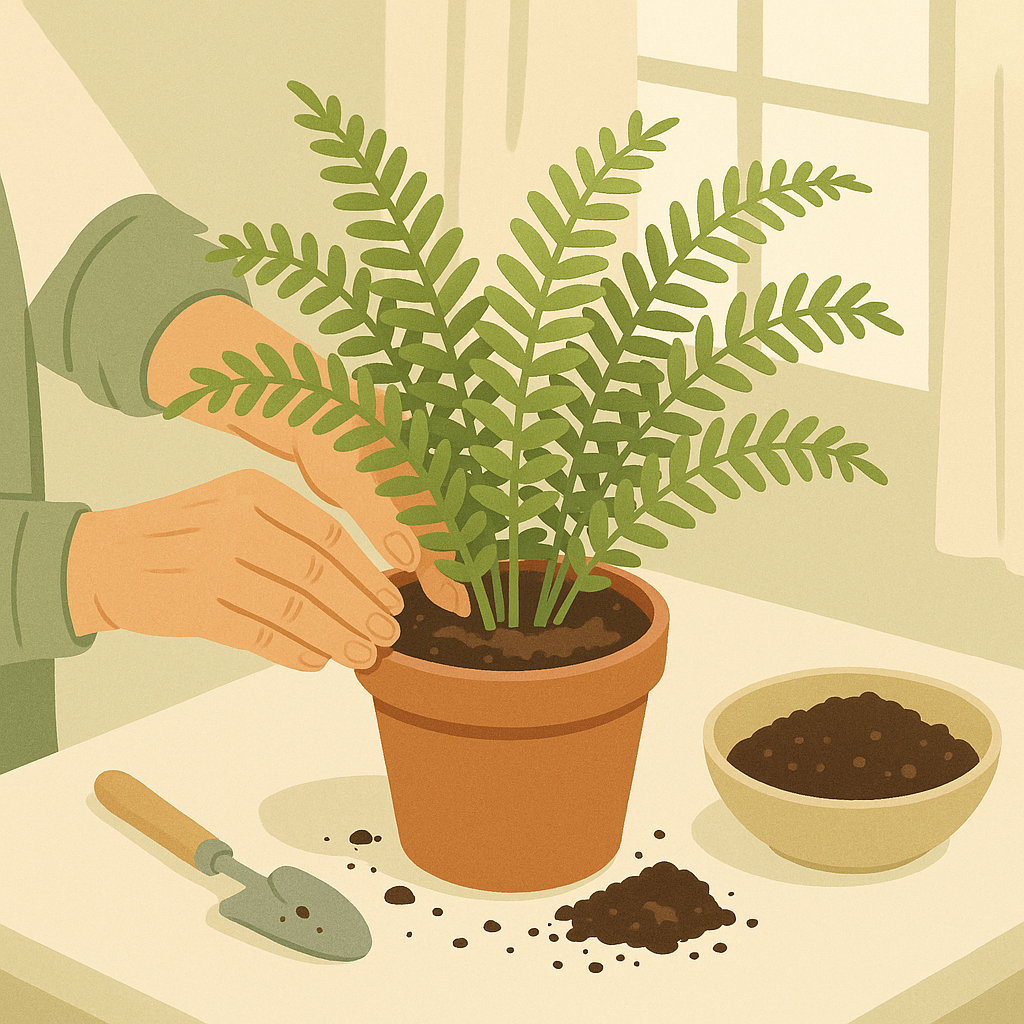
Before you remove anything, look at the whole pot. Is the fern growing reasonably well? Are roots pushing out of the drainage holes? Does the pot stay wet for many days, or does it dry out almost immediately? These clues tell you whether the plant needs a simple surface refresh or a full repotting conversation.
Penn State Extension’s guide to repotting houseplants notes the importance of drainage holes and avoiding waterlogged potting mix. That is useful context here: if poor drainage is the real problem, changing only the top layer will not fix it.
After that check, pause for a moment. If the fern seems crowded, unstable, sour-smelling, or root-bound, a full repot may be kinder than repeated small fixes. FernLog’s guide to repotting an old fern without losing its character can help you think through that bigger step calmly.
What to Check First for a Top-Layer Soil Refresh
A top-layer refresh works best when the fern is generally healthy but the surface has become unattractive or less useful. You are not trying to dig deeply. You are simply replacing the upper layer that has worn out, compacted, or collected debris.
Good reasons to refresh the surface
- The soil line has dropped: Watering and settling can leave the pot looking half-empty near the rim.
- The surface is crusty: Mineral residue or compacted mix can make watering less even.
- Old debris has collected: Dead frond bits and stale material can make the pot look neglected.
- The fern is otherwise steady: New growth, firm fronds, and normal watering response are reassuring signs.
Reasons to stop and repot instead
Do not rely on surface refreshing if the pot smells sour, roots are circling tightly, water sits on top for a long time, or the fern keeps wilting even when the soil is moist. Those signs point to problems below the surface.
If you are unsure whether the plant is ready for division or deeper root work, FernLog’s article on dividing a fern for the first time without fear explains how to approach root disturbance with patience.
How to Refresh Fern Soil Step by Step
Choose a quiet time when you are not rushing. Work over newspaper, a tray, or a small tarp so cleanup is easy.
- Water lightly the day before if the soil is dusty: Slightly moist soil is often easier to handle than bone-dry mix.
- Remove loose debris: Pick off fallen frond pieces, old stems, and any dry leaves resting on the surface.
- Loosen only the top inch or so: Use your fingers, a spoon, or a small hand tool. Stay gentle near visible roots.
- Lift away tired soil: Remove the crusty or compacted surface layer, but stop if you meet a mat of roots.
- Add fresh potting mix: Use a light indoor mix suitable for moisture-loving houseplants, not heavy garden soil.
- Keep the crown clear: Do not mound soil against the center of the fern or bury stems deeper than before.
- Leave watering space: Keep the final soil level a little below the rim so water does not spill over.
- Water gently: Let the new layer settle, then add a little more mix only if it sinks too much.
Common Soil Refresh Mistakes to Avoid
The most common mistake is treating a light refresh like a hidden repot. Once you start digging deeply, tugging roots, or changing the plant’s planting depth, you have moved into a different job.
Less root disturbance
A careful surface refresh can improve the pot without pulling the fern completely apart.
Cleaner watering surface
Fresh mix can make it easier to see when the surface begins to dry and needs attention.
Useful between repots
For a steady fern in the right pot, refreshing the top layer can be a calm maintenance step.
Does not fix root-bound plants
If roots have filled the pot, fresh surface soil will not create real growing room.
Can hide drainage problems
A pretty new top layer may distract from soggy soil, poor drainage, or a pot without proper holes.
A Simple Refresh Fern Soil Checklist
Use this short checklist before you begin, especially if you are caring for an older fern you value.
- Healthy enough: The fern has some firm fronds or signs of steady growth.
- No sour smell: The pot does not smell rotten or swampy.
- Drainage works: Water can leave the pot through drainage holes.
- Surface only: You plan to remove only the top layer, not dig through the root ball.
- Fresh mix ready: You have clean, light potting mix on hand.
- Crown protected: You will not bury the center of the fern or pile soil against stems.
- Watering space left: The pot will still have room at the top for gentle watering.
When to Get Extra Help
Ask for extra help if the fern is large, sentimental, very heavy, or showing several warning signs at once. A local extension office, experienced nursery worker, or trusted plant friend can help you decide whether surface refreshing is enough.
Do not guess if the pot has a bad smell, mushy roots, severe wilting, or insects in the soil. In those cases, slowing down is kinder than doing a neat-looking refresh that leaves the real problem untouched.
Frequently Asked Questions
What should I check first before I refresh fern soil?
Check drainage and overall plant health first. If the pot stays soggy, smells sour, or has crowded roots, the fern may need more than a surface refresh.
How often should I refresh the top layer?
For many indoor ferns, once or twice a year is plenty. Do it when the surface is crusty, low, or messy, not just because the calendar changed.
Can I use garden soil for the new top layer?
It is better to use a clean indoor potting mix. Garden soil can be heavy in containers and may hold water differently than a fern prefers.
Can I undo the refresh later?
Yes. If the new mix settles badly or seems too heavy, you can gently remove some of it and replace it with a lighter mix. Keep changes small.
Final Thoughts
Refreshing the top layer of fern soil is a quiet, useful skill. It helps you tidy the pot, improve the surface, and observe the plant without turning every concern into a full repot.
Your next step is simple: look at one fern today and check the surface, drainage, and soil level. If the plant is steady and the problem is only near the top, a careful refresh may be all it needs.