

Moving indoor ferns outside can sound like a lovely idea on a mild morning. A shaded porch, a little fresh air, and natural humidity may seem like just what a tired fern needs after weeks or months indoors.
The gentle truth is that outdoor time can help some ferns, but only when the move is slow and protected. A fern that has lived in steady indoor light can be startled by brighter outdoor shade, stronger wind, cooler nights, and faster-drying soil.
Think of this as a short supervised visit, not a sudden vacation. The goal is to give the fern fresh air without asking it to handle full outdoor life all at once.
Why Moving Indoor Ferns Outside Matters
Moving indoor ferns outside matters because the outdoor world is stronger than it looks. Even a shady patio can be brighter than a bright indoor room. Wind can dry a pot quickly, rain can soak soil that already felt damp, and nighttime temperatures can drop more than expected.
The University of Minnesota Extension notes in its guide to moving houseplants outdoors that houseplants should start in a protected place away from wind and direct sun. It also points out that leafy houseplants such as ferns often prefer half sun to full shade outdoors.
Start With Basic Fern Care
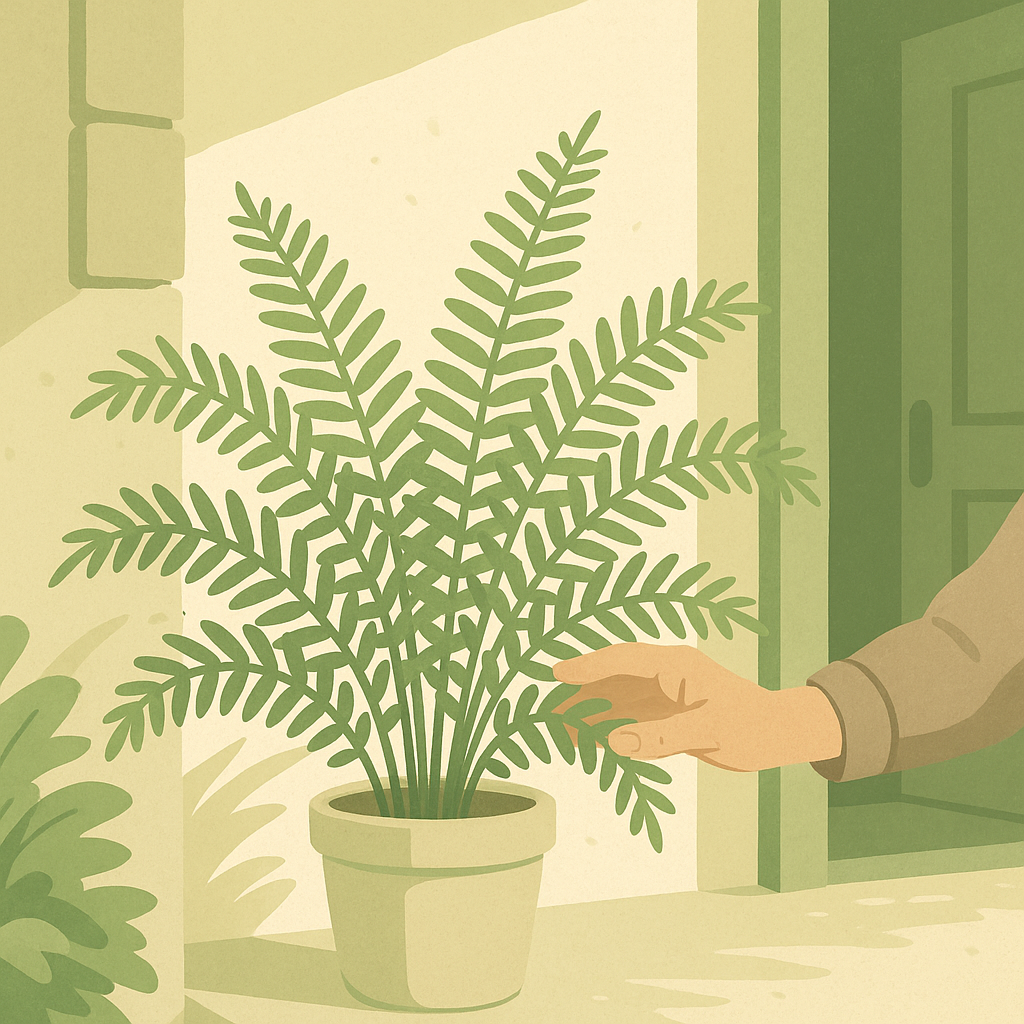
Before you move a fern outside, make sure the ordinary indoor basics are reasonably steady. Outdoor air will not fix a fern that is sitting in soggy soil, scorched by a window, or stressed from several recent changes.
Check the pot first. It should have drainage holes, a soil mix that is moist but not sour-smelling, and fronds that are stable enough to handle a small change. If the plant is already dropping many fronds, has mushy roots, or smells bad at the soil surface, solve that problem before adding outdoor conditions.
Choose the right kind of day
Pick a mild day with no storm, harsh sun, or strong wind in the forecast. A covered porch, shaded patio, or bright but protected entry area is usually better than a garden bed or open deck. If you feel a sharp wind on your face, your fern will feel it too.
Keep the first visit short
For the first few outings, try one to two hours in full shade or deep dappled shade. Bring the fern back indoors before the day becomes hot, windy, or chilly. A short good visit teaches you more than a long stressful one.
Why Ferns Look Tired After Moving
A fern may look a little tired after a move because the conditions changed faster than the plant can adjust. Drooping fronds do not always mean the move failed. They may simply mean the plant is reacting to brighter light, drier air movement, or a watering rhythm that needs to be checked.
If your fern has struggled after being moved indoors before, FernLog’s guide to why a fern looks tired after you move it can help you compare relocation stress with other care problems. Use that kind of observation before you decide the plant needs a major rescue.
After a move outside, avoid the temptation to water, prune, fertilize, and relocate the plant all in the same afternoon. Choose the most likely cause, make one small adjustment, and watch for a few days.
Read Drooping Fronds Before You Change Care
Drooping fronds are a message, but they are not a complete diagnosis. A fern can droop because it is thirsty, because the outdoor air is moving too much, because the light is stronger than expected, or because the roots are already too wet and unable to breathe well.
Start by feeling the soil. If the top inch is dry and the pot feels light, water thoroughly and let the pot drain. If the soil is already damp or heavy, do not add more water just because the fronds look low.
- Soft droop with dry soil: The fern may need a careful watering and a shorter outdoor visit next time.
- Droop with wet soil: Move the fern back to a calm indoor spot and let the pot drain well.
- Crispy tips after outdoor time: Wind, sun, or dry air may have been too strong.
- Yellowing after several wet days: Rain or frequent watering may have kept the roots too damp.
- New growth still looks firm: The plant may be adjusting rather than declining.
Light and Humidity Changes to Check First
Light is usually the biggest outdoor surprise. Ferns that seem to enjoy a bright indoor window can still burn outdoors because outdoor light is much more intense. For most indoor ferns, shade is not a compromise. It is the safer starting place.
Iowa State University Extension’s article on moving indoor plants outside for the summer recommends starting houseplants in full shade and then introducing more light gradually over 10 to 14 days. For ferns, staying in shade or part shade is often the better long-term outdoor choice.
Humidity may improve outdoors, but wind can cancel that benefit quickly. A fern on a breezy railing may dry faster than it ever did indoors. Set the pot near a wall, under a covered area, or beside other plants where the air feels calm.
If watering logistics are your weak point, FernLog’s guide to creating a simple fern watering station at home can help you build a calmer routine before outdoor visits become part of the week.
Give the Fern a Recovery Window
After each outdoor visit, give the fern a quiet recovery window. Look at it later that day and again the next morning. You are checking whether the fronds lift, whether the soil dried faster than usual, and whether any leaflets look pale or scorched.
For regular outdoor time, build up slowly over one to three weeks. Keep the location consistent while the fern adjusts. Repeatedly moving it from porch to deck to yard to window can create more stress than the fresh air is worth.
- Days 1 to 3: Try one to two hours in full shade during mild weather.
- Days 4 to 7: Extend the visit if the fern looks steady and the soil rhythm is manageable.
- Week 2: Keep the fern in protected shade or very gentle dappled light.
- Week 3: Decide whether outdoor visits are helping, neutral, or too stressful for this plant.
Pruning can wait unless a frond is clearly dead or damaged. If you do need to remove finished growth, FernLog’s guide to the gentle art of pruning indoor ferns explains how to trim without stripping the plant bare.
Pros and Cons of Outdoor Time for Ferns
Fresh air can refresh the routine
A protected porch visit can give the plant a change of air while helping you notice its condition more carefully.
Natural humidity may help
On mild, humid days, outdoor air can feel kinder than a dry heated or air-conditioned room.
Observation becomes easier
Good outdoor shade can make it easier to inspect fronds, soil moisture, and pests in clear natural light.
Outdoor light can be too strong
Even a brief blast of direct sun can scorch fronds that were adapted to indoor light.
Weather changes quickly
Wind, heavy rain, cool nights, and heat can stress a potted fern faster than indoor conditions do.
A Simple Checklist
Use this checklist before every outdoor visit until the routine feels familiar.
- Temperature: Is the day mild, with no chilly night expected before you bring the fern back in?
- Shade: Is the spot protected from direct sun?
- Wind: Does the air feel calm enough for delicate fronds?
- Drainage: Can water leave the pot freely if rain or watering happens?
- Soil: Is the soil moist but not soggy before the move?
- Timing: Can you bring the fern back indoors before weather changes?
- Pests: Will you inspect the pot and fronds before returning it to the house?
- Recovery: Are you giving the plant time to settle before changing another part of care?
When to Bring the Fern Back Indoors
Bring the fern back indoors if wind picks up, sun reaches the pot, the temperature feels uncomfortable, rain becomes heavy, or the fronds start to look limp and stressed. Do not wait to prove the plant can handle it. The safest move is usually the early one.
Before returning the plant to its usual room, look under the fronds and around the pot rim. Outdoor visits can expose houseplants to insects, leaf debris, or soil splashes. A calm inspection keeps a pleasant porch routine from becoming a pest surprise.
If the fern seems generally fussy after several outdoor attempts, it may be happier staying indoors. FernLog’s guide to reading your fern like a daily weather report is a useful reminder that the plant’s small signals matter more than any ideal plan.
When to Get Extra Help
Ask a local nursery, master gardener group, or cooperative extension office for help if several ferns decline after outdoor time, if leaves show fast-spreading spots, or if pests appear after the plant comes back inside. Bring photos of the outdoor location, the pot, the soil surface, and the affected fronds.
You do not need to guess through a serious decline. A trusted local source can account for your weather, season, and porch conditions better than a general rule can.
Frequently Asked Questions
How long can a fern stay outside at first?
Start with one to two hours in protected shade on a mild day. If the fern looks steady afterward, slowly extend the visit over the next week or two.
Should I water more if the fronds droop outside?
Check the soil first. Drooping can mean thirst, but it can also come from wind, stronger light, or roots that are already too wet.
Can indoor ferns sit in direct sun outdoors?
Direct outdoor sun is usually too strong for indoor ferns. Start in full shade or deep dappled shade, and avoid hot afternoon light.
Should I repot a fern before moving it outside?
Usually no. Repotting and outdoor adjustment are both stressful changes. Repot only if there is a clear drainage or root problem, then let the fern recover before outdoor visits.
Final Thoughts
Moving indoor ferns outside works best when it feels gentle and reversible. Choose shade, avoid wind, keep visits short at first, and bring the plant back in before the weather turns.
Your next step is simple: pick one mild shaded hour, inspect the fern afterward, and let that observation guide the next visit. Fresh air should support the fern’s calm routine, not replace it.