

Dried out fern recovery can feel urgent when you come home and find limp fronds, crispy tips, or a pot that feels much lighter than usual. It is easy to blame yourself, but one missed watering does not always mean the fern is lost.
The safest response is calm and steady. A fern that dried out once usually needs careful rehydration, a quiet recovery spot, and time to show whether the roots are still able to support new growth. It does not need panic pruning, heavy fertilizer, or a dramatic repot on the first day.
This guide focuses on dried out fern recovery after a single dry spell. If your fern has been declining for weeks, the steps still help, but the recovery may be slower and less predictable.
Dried Out Fern Recovery Starts With a Gentle Check
Before watering, look at the whole plant for signs of life. Some fronds may be fully crisp, while others may still feel flexible near the base. The crown or center of the plant may look tired but not rotten. A pot that is dry and light tells you the root ball needs moisture, but it does not tell you to flood the plant without drainage.
Clemson Extension notes in its indoor fern guidance that fern water needs vary by type, but ferns should not be allowed to dry out completely and should not sit in standing water. That balance is the heart of this rescue: rehydrate thoroughly, then let extra water escape.
Why a Fern Reacts So Strongly to Dry Soil
Many indoor ferns come from environments where moisture is fairly steady. Their fronds are often thin, soft, and quick to show stress. When the root ball dries too far, the plant may not move water into the fronds smoothly, so the leaves droop, curl, or brown at the edges.
This does not mean every brown tip is a disaster. Older fronds and delicate leaflets can be sacrificed while the living crown and roots recover. Your job is to help the fern regain moisture without creating a soggy, airless pot.
If watering has been confusing in the past, our indoor fern watering guide can help you rebuild a steadier routine after this first rescue day. A recovery plan works best when it becomes a simple habit, not a one-time emergency.
The First-Day Rescue Routine
Start by moving the fern out of direct sun, hot glass, or a drafty spot. A bright room with soft indirect light is better than a dim corner or a sunny window. Set the pot where water can drain freely, such as a sink, tub, or tray you can empty.
Step 1: Water slowly from the top
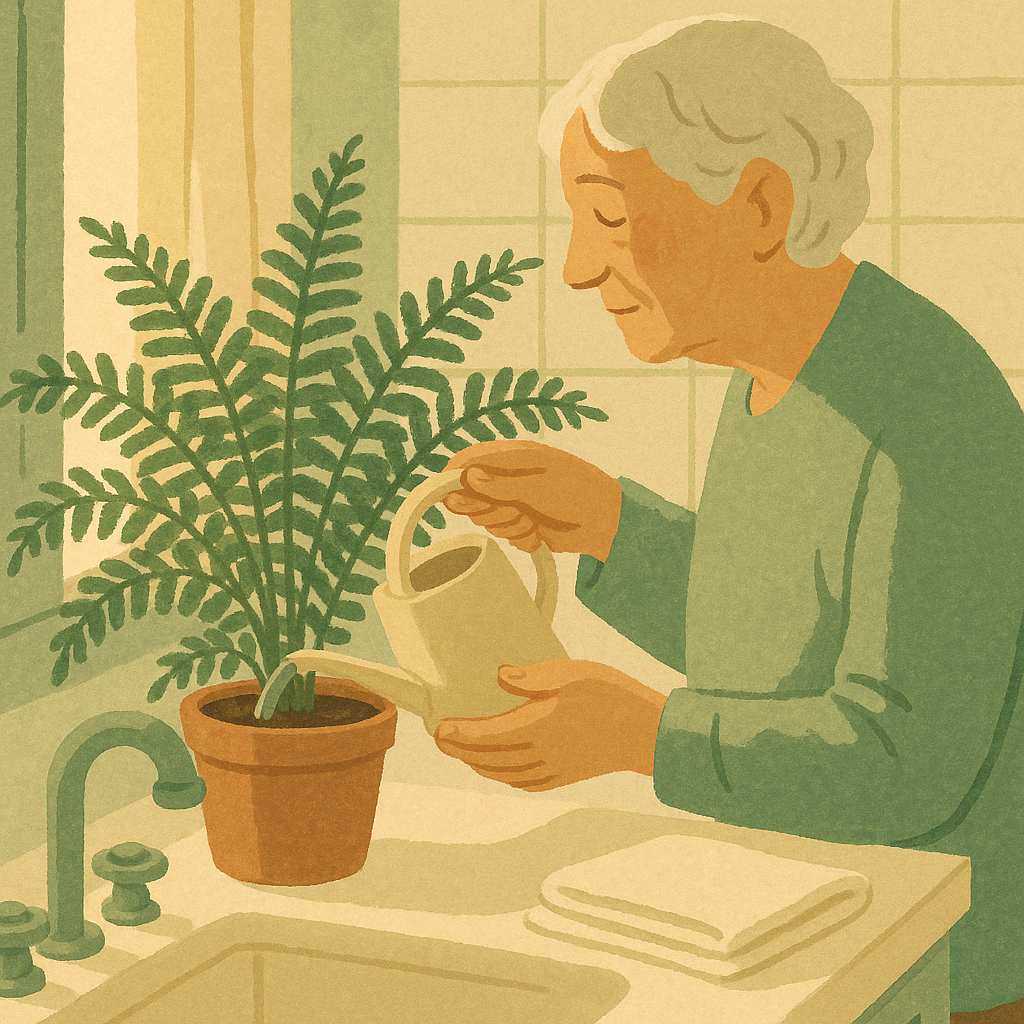
Pour room-temperature water over the soil surface in several passes. Very dry potting mix can repel water at first, so pause between pours and let the surface soften. Keep going until water begins to run from the drainage holes.
Step 2: Let it drain completely
After watering, leave the pot to drain for at least 20 to 30 minutes. Empty any saucer or cachepot. Dried out fern recovery fails when the plant swings from bone dry to standing in stale water.
Step 3: Check whether the root ball accepted water
Lift the pot again. It should feel noticeably heavier. If water ran straight down the sides and the center still feels dry, water once more slowly. For a very dry root ball, patience is safer than one hard flood.
- Use room-temperature water: Very cold water can add another small shock to a stressed plant.
- Avoid harsh handling: Dry fronds break easily, so support the pot rather than grabbing the foliage.
- Keep the saucer empty: Roots need moisture, but they also need air.
- Skip fertilizer: Feeding is not first aid for a thirsty fern.
- Wait before repotting: Repot only if the mix will not absorb water or smells sour after rehydration.
What to Trim and What to Leave Alone
Once the fern is watered and drained, resist the urge to cut everything at once. Some fronds that look tired may perk up within a day or two. Fully brown, brittle fronds can be removed with clean scissors, but flexible green or partly green fronds are still helping the plant.
Trim in small passes. Remove the obviously dead pieces first, then pause. Heavy pruning can make the fern look tidier, but it can also reduce the plant’s ability to recover if you remove too much living tissue.
If the plant looks much worse than a simple missed watering, compare it with our guide to reviving a dying fern. That broader checklist can help you decide whether pests, root rot, old soil, or long-term neglect are also involved.
The Next Two Weeks of Dried Out Fern Recovery
The first watering is only the beginning. During the next two weeks, check the pot every few days with your finger or by lifting it. Water again when the top layer begins to feel lightly dry and the pot feels less heavy, but do not water automatically every day.
Keep conditions quiet
Stable light and temperature matter during recovery. Avoid moving the fern from room to room, placing it under a vent, or putting it in strong sun to “help it bounce back.” A calm, bright, indirect spot gives the plant a better chance to settle.
Watch new growth carefully
New green tips, firming fronds, or a less droopy crown are better signs than old browned leaves. Some fern damage is permanent, but fresh growth tells you the roots are still working.
If the most noticeable symptom is crispy edging, our article on crispy fern tips explains how dry air, light, and watering habits can overlap. That can help you prevent the same stress from returning.
Common Mistakes After a Fern Dries Out
A dried fern makes people want to do everything at once. Unfortunately, too many fixes can create new problems before the plant has recovered from the first one.
- Watering every day afterward: The plant needed a thorough watering, not a permanently soaked pot.
- Fertilizing immediately: Fertilizer can scorch stressed roots and fronds.
- Cutting all fronds to the soil: Some green tissue may still be useful for recovery.
- Repotting on impulse: Repot only when there is a clear soil or root problem.
- Moving to a dark corner: Soft light is good; darkness slows recovery.
Pros and Cons of Trying to Rescue a Dried Fern
One dry spell can be survivable
If the crown and roots are still alive, a fern may recover with steady moisture and patient care.
The rescue routine is simple
Slow watering, full drainage, and gentle trimming are easy to do at home without special supplies.
It teaches better habits
A missed watering can help you build a more reliable checking routine for the future.
Old damage may remain
Brown, crispy fronds usually do not turn green again, even when the plant survives.
Recovery is not instant
The fern may need several weeks to show new growth or a fuller shape.
Frequently Asked Questions
Can a dried out fern come back?
Sometimes, yes. If the roots and crown are still alive, steady rehydration and calm conditions can encourage new growth. Fully crispy fronds may not recover, but the plant may still produce fresh ones.
Should I cut off all brown fronds right away?
Remove fully brown, brittle fronds, but leave green or partly green fronds at first. They may still support the plant while it recovers.
Is soaking the whole pot safe?
A brief soak can help some very dry root balls, but only if the pot drains completely afterward. Never leave the fern standing in water for hours or overnight.
How long until I know if the fern is recovering?
You may see slight improvement in a few days, but new growth can take several weeks. Watch the crown, soil response, and fresh fronds more than old damaged leaves.
Final Thoughts
Dried out fern recovery is a lesson in balance. Give the plant a thorough drink, drain it well, trim only what is clearly dead, and place it somewhere calm with bright indirect light. Then watch for new growth rather than demanding instant beauty from old fronds.
One missed watering can be frustrating, but it can also make your fern care routine stronger. A simple check every few days, a pot that drains well, and a steady room location often do more than any dramatic rescue trick.