Those brown, papery edges creeping across your fern's once-lush fronds can feel like a slow-motion failure unfolding leaf by leaf. But here's what might ease your worry: crispy tips are one of the most common — and most fixable — problems in indoor fern care.
Unlike diseases or pest infestations that require intensive treatment, crispy leaf tips almost always point to environmental factors you can adjust with simple changes. The key is understanding which specific condition is causing the problem, because the visible symptom looks similar whether the cause is air moisture, water quality, or something else entirely.
What Causes Crispy Fern Leaf Tips
Crispy, brown tips develop when the cells at the leaf edges die from dehydration or chemical damage. This can happen through several pathways, even when you're watering regularly and the rest of the frond looks healthy.
The most important thing to understand is that crispy tips indicate a localized problem — something affecting the leaf edges specifically rather than the whole plant. This narrows down the possible causes considerably and helps target your troubleshooting efforts.
How Tip Burn Develops
Fern fronds transport water and nutrients from roots up through the frond structure, with the tips being the farthest point from the water source. When anything disrupts this transport system — insufficient humidity, poor water uptake, or salt accumulation — the tips show damage first because they're the last to receive moisture.
Think of it like a garden hose with water pressure: the spray reaches full strength nearby but weakens at the farthest edges. Your fern's vascular system works similarly, making leaf tips the most vulnerable to moisture stress.
Low Humidity: The Primary Culprit
In my experience, low ambient humidity causes roughly 70% of crispy tip problems in indoor ferns. These plants evolved on moist forest floors where humidity often exceeds 60%, so the 30-40% humidity typical in heated or air-conditioned homes creates chronic stress.

Why Humidity Matters for Leaf Tips
When air humidity is too low, moisture evaporates from leaf surfaces faster than the roots can replace it. The thin, delicate leaf tips dry out first, turning brown and crispy while the thicker middle sections of fronds remain green.
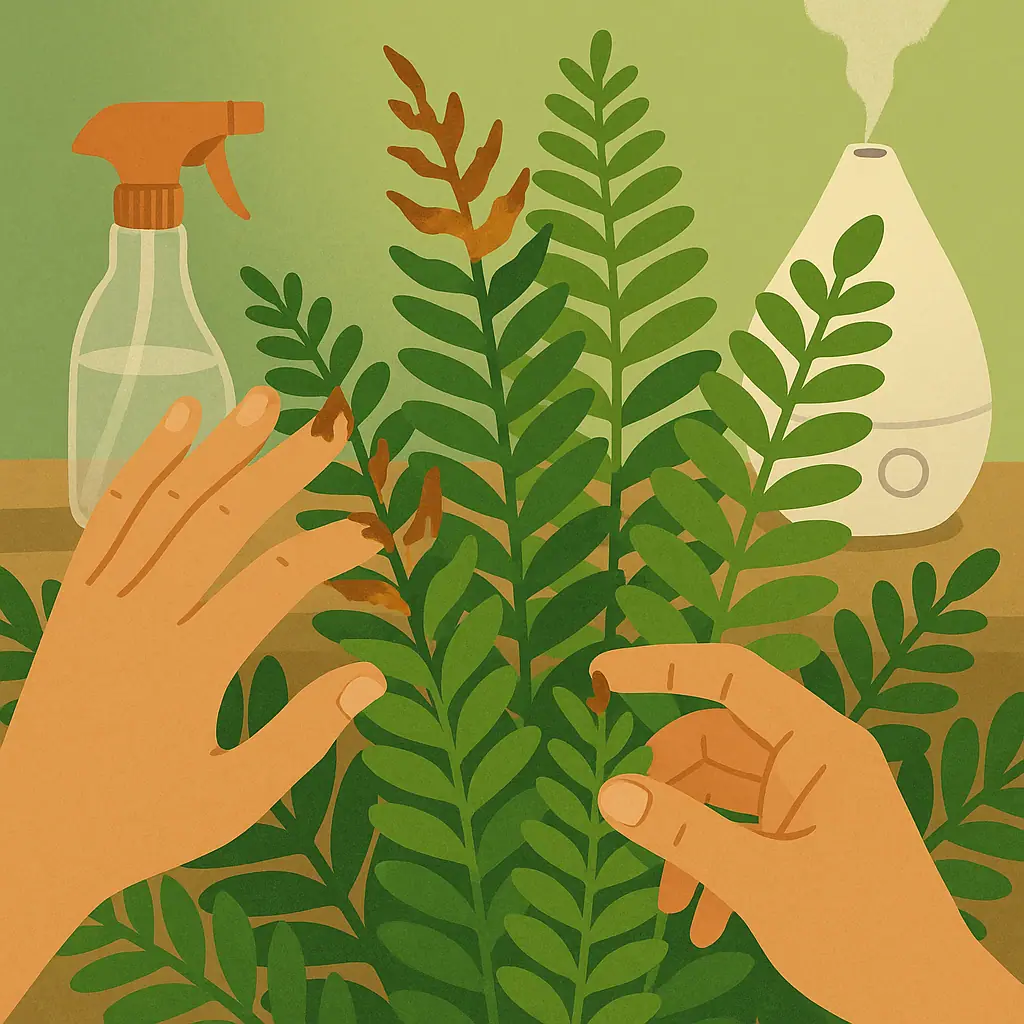
Visual diagnosis: Humidity-related tip burn typically shows as a gradual browning that starts at the very tip and slowly extends backward along the leaf edge. The brown areas feel papery and brittle, not mushy or soft.
Practical Humidity Solutions
Increasing ambient moisture around your fern doesn't require expensive equipment or major lifestyle changes.
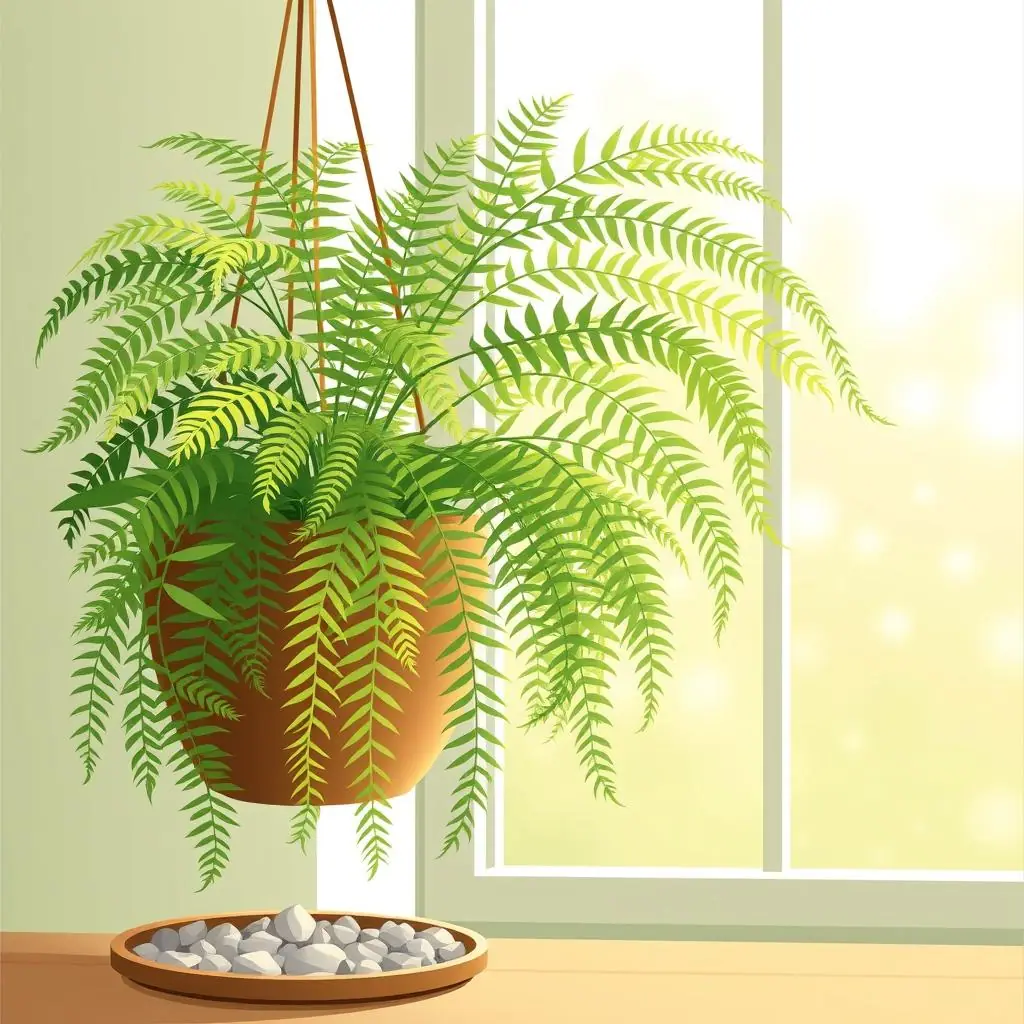
- Pebble tray method: Place your fern's pot on a wide tray filled with pebbles and water (water level below pot bottom to prevent root rot), creating constant evaporation around the plant
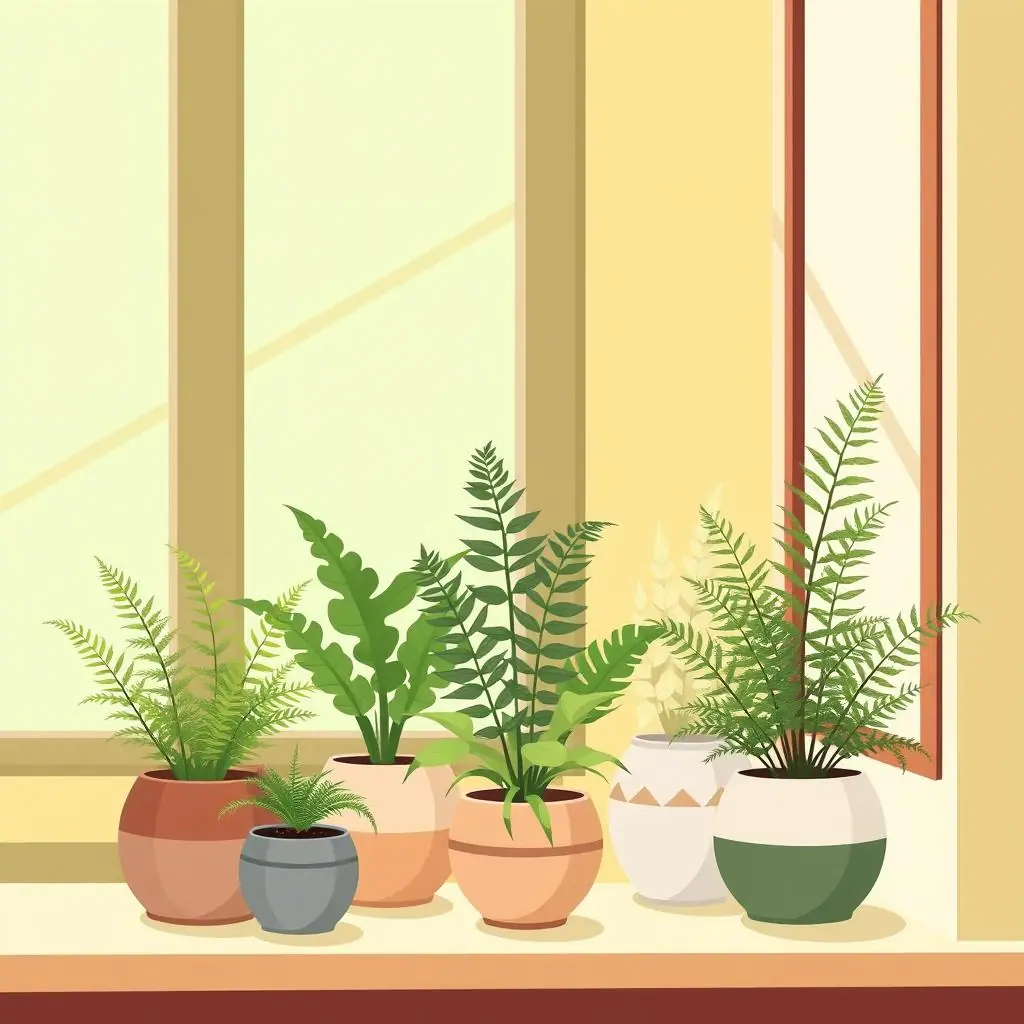
- Group plants together: Multiple plants in one area create a higher-humidity microclimate through combined transpiration
- Room humidifier: The most effective solution for severe dryness, especially beneficial during winter heating season
- Regular misting: While less effective than other methods (humidity boost lasts only 20-30 minutes), daily misting still provides some relief
Most ferns show improvement in new growth within 2-3 weeks of increased humidity, though existing crispy tips won't reverse.
Water Quality Problems
Tap water contains dissolved minerals, chlorine, and fluoride that accumulate in potting soil over time. These chemicals concentrate at leaf tips through the plant's transpiration process, eventually reaching toxic levels that burn delicate tissue.
Identifying Chemical Burn Patterns
Fluoride toxicity signs: Browning typically starts a few millimeters back from the leaf tip (rather than at the very edge), often with a yellow band between green tissue and brown damage. The brown areas may have a reddish tinge.
Salt accumulation indicators: White crusty deposits on the soil surface, crispy tips combined with overall pale foliage, and symptoms worsening after fertilization all point to mineral buildup.
Water Quality Solutions
- Switch to filtered water: Simple carbon filters remove chlorine but not fluoride or dissolved salts
- Use distilled or rainwater: The most reliable solution for sensitive ferns, though not necessary for all species
- Let tap water sit overnight: Chlorine evaporates after 24 hours, though fluoride and minerals remain
- Flush soil monthly: Pour water through until it drains freely, repeating 2-3 times to wash out accumulated salts
Emergency recovery: If you notice white salt crust on soil, repot into fresh potting mix to remove chemical buildup immediately.
Over-Fertilization Damage
Ferns are light feeders that suffer easily from too much fertilizer. Excess nutrients accumulate as salts in the soil, drawing moisture out of roots and leaf tips through osmosis — the opposite of what fertilizer is supposed to achieve.
Signs of Fertilizer Burn
- Crispy tips appearing shortly after feeding: Damage shows within days to weeks of fertilizer application
- Brown edges on newest fronds: New growth is most vulnerable to nutrient burn
- Yellowing alongside crispy tips: Over-fertilization affects overall plant health, not just tips
Safe fertilization practice: Use liquid fertilizer diluted to quarter or half the recommended strength during growing season (spring and summer only). Many successful fern growers fertilize just 4-6 times per year rather than monthly.
Environmental Stress Factors
Several environmental conditions can trigger tip burn even when humidity and water quality are adequate.
Temperature-Related Damage
Cold drafts from windows, air conditioning vents, or outdoor air cause rapid moisture loss from leaf tips. Similarly, heat from radiators or heating vents dries out nearby foliage faster than the plant can compensate.
Prevention strategy: Keep your fern at least 3-4 feet from heating/cooling sources and away from exterior doors that open frequently in winter.
Light Stress
While direct sunlight typically burns entire fronds rather than just tips, intense indirect light combined with low humidity can create crispy edges. This happens because bright light increases transpiration (water loss through leaves) without enough ambient moisture to balance it.
Adjustment approach: If humidity is hard to increase significantly, moving your fern to slightly lower light can reduce moisture demand and prevent tip burn.
When and How to Trim Crispy Tips
Brown, crispy leaf tips won't turn green again, but careful pruning keeps your fern looking attractive while you address underlying causes.
Pruning Guidelines
Timing: Wait until you've corrected the environmental problem before trimming extensively. Otherwise, new growth will develop the same crispy tips, and you'll be pruning continuously.
Technique: Use sharp, clean scissors to cut along the natural leaf shape, removing just the brown portion plus a tiny bit of green (1-2mm). This prevents new browning from starting at the cut edge.
Amount to remove: Limit pruning to no more than 20-30% of the plant's foliage at once. Removing too much puts additional stress on an already struggling fern.
Pros and Cons of Different Solutions
Humidity solutions
Addresses the most common cause and benefits overall plant health, not just leaf tips.
Water quality changes
Once implemented, switching to filtered or distilled water prevents future accumulation with no ongoing effort.
Reduced fertilization
Simple to implement immediately and saves money on fertilizer products.
Trial and error
Identifying the specific cause often requires testing multiple solutions before seeing improvement.
Existing damage permanent
Crispy tips that have already formed won't recover; only new growth will show improvement.
Frequently Asked Questions
Can I reverse crispy brown tips back to green?
No, once leaf tissue turns brown and crispy, it's dead and won't recover. However, correcting the underlying problem will ensure new growth emerges healthy. Focus on prevention for future fronds rather than reversing existing damage.
How long until I see improvement after increasing humidity?
Existing fronds with crispy tips won't change, but new fronds emerging 2-4 weeks after you raise humidity should show significant improvement. If new growth still develops brown tips after a month, investigate other causes like water quality or over-fertilization.
Is it normal for a few tips to be crispy?
Occasional light browning on the oldest fronds can be normal aging, especially at leaf tips. However, if many fronds are affected, if tips are extensively brown, or if new growth develops crispy edges, environmental correction is needed.
Will misting twice daily solve crispy tip problems?
Probably not — misting provides only a brief humidity boost that lasts 20-30 minutes. For persistent crispy tips, more effective solutions like pebble trays, grouping plants, or using a humidifier produce better results because they maintain higher humidity consistently.
Creating Long-Term Leaf Health
Once you've identified and corrected the specific cause of crispy tips in your fern, maintaining consistent environmental conditions prevents recurrence. This means monitoring humidity levels with a simple hygrometer, using filtered or distilled water consistently, and resisting the temptation to over-fertilize.
Pay special attention during seasonal transitions — winter heating and summer air conditioning both drop humidity significantly, often triggering tip burn even in ferns that looked perfect during spring and fall.
Remember that perfect fronds without any browning are rare in indoor cultivation. Even experienced plant parents accept minor tip browning on the oldest fronds as normal plant aging. The goal isn't perfection but rather keeping crispy tips minimal and confined to the oldest growth while new fronds emerge healthy and vibrant.