

Grouping indoor ferns can make a room feel softer and more settled, but it can also become confusing if every plant seems to need a different schedule. The good news is that a fern group does not have to be fancy. It only needs to make care easier, not harder.
Think of your fern collection like a few comfortable chairs in one room. They do not all have to match, but they should belong in the same kind of space. When you group ferns by light, humidity, pot size, and watering rhythm, daily care becomes a quick check instead of a guessing game.
Why Grouping Indoor Ferns Matters
Ferns often appreciate steady conditions. Many indoor ferns dislike harsh sun, dry air, and sudden changes, so grouping similar plants can help you create one calm care zone. A group also makes it easier to notice changes because you can compare plants side by side.
University extension guidance often recommends grouping humidity-loving houseplants because plants can raise the local moisture level around one another. The University of Minnesota Extension notes that low indoor humidity can affect ferns and suggests grouping houseplants as one simple way to create a small greenhouse-like effect. You can read that practical houseplant guidance here: University of Minnesota Extension winter houseplant tips.
That does not mean every fern should be packed tightly together. Air still needs to move, leaves should not stay wet, and you should be able to reach each pot without knocking over its neighbor.
Start With Indoor Garden Design, Not Plant Count
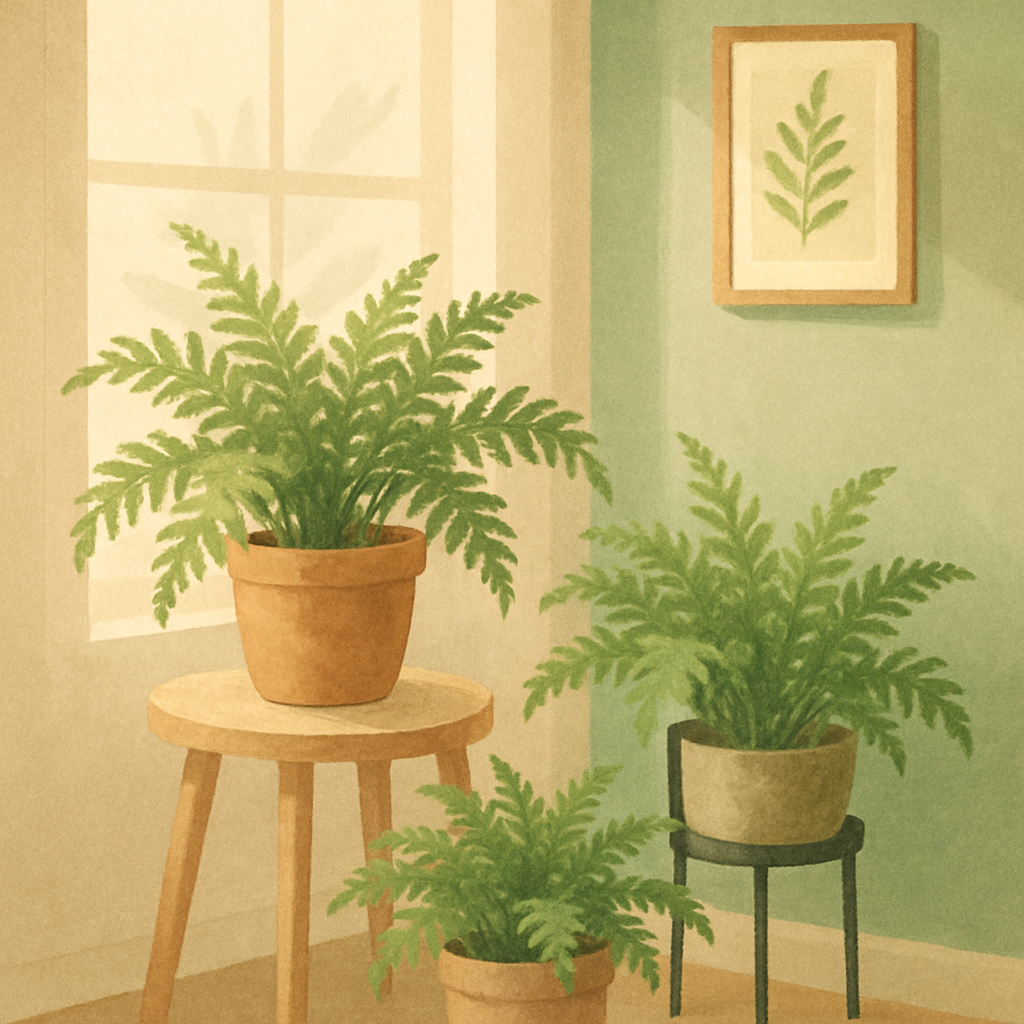
The easiest mistake is starting with the question, How many ferns can I fit here? A better question is, Can I care for this group comfortably? For most homes, a small group of three ferns is easier than a crowded shelf of seven.
Choose one main care zone
Pick a place with bright, indirect light, room to turn each pot, and a surface that can handle watering. A small table, plant stand, bathroom shelf, or bright kitchen corner can work if it stays away from heat vents, cold drafts, and direct hot sun.
If you enjoy styling plants for photos or room design, FernLog’s guide to capturing your indoor garden’s beauty can give you gentle ideas for arranging height, texture, and background without turning care into a production.
Keep the group easy to reach
A fern that looks beautiful but is difficult to water will eventually become a chore. Leave enough room to lift a pot, trim an old frond, and check the soil with your finger. If you need to move three plants just to reach one, the group is probably too crowded.
What to Check First Before You Group Ferns
Before you move plants together, look at what each fern already needs. This simple check prevents the common problem of grouping plants that look pretty together but want different care.
- Light: Put ferns with similar light needs together. Most beginner indoor ferns prefer bright, indirect light rather than direct afternoon sun.
- Watering rhythm: Group plants that dry at a similar speed. A tiny pot may dry much faster than a large glazed container.
- Humidity preference: Keep humidity-loving ferns near other moisture-loving plants, but avoid pressing leaves together.
- Health status: Do not add a fern with pests, sticky leaves, moldy soil, or unexplained decline to a healthy group.
- Pot drainage: Make sure every pot has drainage or a safe inner nursery pot that can be removed for watering.
How to Handle Grouping Indoor Ferns Step by Step
A simple step-by-step method keeps the process calm. You are not redesigning the whole room; you are making one care station that works.
Step 1: Sort by light first
Place ferns that need similar light in the same area. A bird’s nest fern, button fern, and lemon button fern may all enjoy gentle indoor light, but each home is different. Watch for pale color, scorching, leaning, or slow decline after moving.
Step 2: Match watering habits
Put fast-drying pots near other fast-drying pots, and larger moisture-holding pots near each other. This makes your weekly checks easier. You still water by feel, not by calendar, but the group will develop a rhythm you can remember.
Step 3: Leave breathing room
Give each fern a little space around its fronds. Leaves can overlap visually, but they should not be smashed together. Good spacing helps you see pests early, lets air move, and makes pruning less awkward.
Step 4: Add height gently
Use a low stand, upside-down decorative pot, or sturdy riser for one fern if the group looks flat. Keep heavier pots low and stable. A grouping should feel peaceful, not like a balancing act.
Step 5: Review after two weeks
After a move, ferns may need time to settle. Look for new brown tips, drooping, soil staying wet too long, or fronds reaching toward light. If one plant seems unhappy, move that one plant rather than rearranging everything.
Common Indoor Garden Design Mistakes to Avoid
Grouping ferns becomes complicated when beauty comes before access. A display should let you care for plants gently and consistently.
Easier care checks
Similar ferns in one area make it quicker to check soil, light, fronds, and humidity during a normal weekly routine.
Softer room design
Grouped ferns create a calm, green focal point without needing a large indoor garden or complicated setup.
Helpful humidity pocket
Plants placed near one another can create a slightly more humid local area, especially when paired with sensible watering and spacing.
Crowding hides problems
When pots are too close, pests, yellowing fronds, and soggy soil can go unnoticed until the problem spreads.
Mixed needs create confusion
Putting thirsty ferns beside drier houseplants can lead to overwatering one plant while underwatering another.
Kitchen groups deserve extra thought because warmth, grease, and appliances can change the care picture. If that is the room you are considering, start with the FernLog guide to where kitchen ferns work and where they struggle, then choose a spot away from direct heat and busy splashes.
A Simple Grouping Checklist
Use this checklist whenever you build or refresh a fern group:
- Can I reach every pot? If not, remove one plant or use a wider surface.
- Do these ferns like similar light? Keep bright-indirect ferns together and avoid mixing shade-tolerant plants with sun-stressed ones.
- Do the pots dry at similar speeds? Similar pot sizes make routines easier.
- Is there air around the fronds? A little space helps prevent damp, hidden trouble.
- Can I see the soil surface? You should be able to check dryness, mold, and fallen leaves quickly.
- Does the group still look calm? If the display feels cluttered, your care routine may feel cluttered too.
When to Get Extra Help
If a grouped fern starts declining quickly, do not guess your way through several fixes at once. First, separate the plant from the group. Then check light, soil moisture, drainage, and visible pests. Changing everything at once makes it hard to know what helped.
Ask a local garden center, extension office, or experienced plant friend if you see spreading black leaves, mushy stems, persistent pests, or soil that smells sour. A second set of eyes can prevent overcorrection.
Frequently Asked Questions
What should I check first when grouping indoor ferns?
Start with light. If the spot is too sunny, too dark, or drafty, the group will struggle no matter how nicely it is arranged.
How often should I review a fern group?
Give it a quick look once a week and a more thoughtful review once a month. Check soil, spacing, light direction, and whether any plant is harder to reach than it should be.
Can grouping ferns replace a humidifier?
Not always. Grouping can help create a small local humidity pocket, but very dry homes may still need a pebble tray, room humidifier, or a better location.
Can I undo the grouping later?
Yes. Plant displays are easy to adjust. If one fern does better elsewhere, move it gently and keep the rest of the group simple.
Final Thoughts
Grouping indoor ferns works best when it supports real care. Start small, match plants by light and moisture needs, and leave enough space to check each pot without fuss. A peaceful fern group should make the room feel calmer and your routine easier.
If you are building a larger display over time, revisit your group every few weeks. Move the plant that needs help, not the whole collection. That patient approach keeps your ferns and your home feeling settled.