Your beautiful ferns might be silently suffering from temperature stress, and you may not even notice until it's too late. Temperature plays a crucial role in fern health, yet it's one of the most overlooked aspects of indoor plant care. Understanding how temperature affects your ferns can mean the difference between thriving plants and struggling ones.
Most people assume that if they're comfortable, their plants are too. While this works for many houseplants, ferns have specific temperature preferences that mirror their natural forest floor habitat. Too hot, and they'll wilt and brown. Too cold, and growth slows to a crawl.
What Temperature Do Ferns Really Need?
Ferns are quite specific about their temperature preferences, and understanding these needs is your first step toward healthy plants. Unlike many houseplants that tolerate a wide range, ferns prefer cooler conditions that mimic their native understory environment.
The ideal temperature range for indoor ferns is 60-70°F (15-21°C) during the day. But here's what many people don't know: ferns actually prefer nighttime temperatures about 10°F cooler, around 50-60°F (10-15°C). This natural temperature drop mimics what they'd experience in nature and promotes healthy growth.
- Daytime range: 60-70°F (15-21°C) for optimal growth
- Nighttime range: 50-60°F (10-15°C) for natural cooling
- Maximum tolerance: Up to 75°F (24°C) briefly, but not sustained
- Minimum tolerance: Down to 50°F (10°C) for short periods
Why Temperature Matters So Much
Think of your fern's temperature needs like a thermostat in your home. Just as you feel uncomfortable when it's too hot or too cold, your ferns experience stress that affects their basic functions. When temperatures are wrong, several things happen that impact plant health.
Temperature affects how efficiently ferns can absorb water and nutrients. In hot conditions, water evaporates faster than roots can replace it. In cold conditions, root function slows down, making it harder for plants to take up what they need.
Recognizing Temperature Stress Signs
Learning to read your fern's temperature stress signals is like understanding a language. Once you know what to look for, you can respond quickly before permanent damage occurs.
Heat stress symptoms appear first:
- Wilting despite moist soil: The plant can't absorb water fast enough to replace what it's losing
- Crispy, brown leaf edges: The classic sign of too much heat and rapid moisture loss
- Pale or yellowing fronds: Heat damages chlorophyll, causing color changes
- Stunted new growth: The plant diverts energy to survival rather than growing
Cold stress develops more slowly:
- Slow or stopped growth: Metabolism slows dramatically in cool temperatures
- Soft, droopy fronds: Cell walls lose rigidity when too cold
- Dark spots on leaves: Cellular damage from prolonged cold exposure
- Leaf drop: The plant sheds fronds to conserve energy
Common Temperature Traps in Your Home
Your home has microclimates that can stress your ferns without you realizing it. Identifying these problem areas helps you choose better locations or take protective action.
Hot spots to avoid: Windows with direct sun, areas near heating vents, tops of refrigerators, and spaces above electronics. Even a cozy spot by the fireplace can become too warm for your ferns.
Cold danger zones: Near exterior doors, uninsulated windows during winter, air conditioning vents, and basements or rooms that aren't heated consistently.
Interior rooms
Away from exterior walls and consistent temperatures
Bathrooms
Natural humidity and stable temperatures
North-facing rooms
Cooler naturally and avoid afternoon heat
Near heating/cooling vents
Sudden temperature changes stress plants
Sun-facing windows
Intense afternoon heat can quickly overwhelm ferns
Drafty areas
Temperature fluctuations prevent stable growing conditions
Creating the Perfect Temperature Environment
You don't need expensive equipment to maintain good temperatures for your ferns. A few simple strategies can create ideal conditions using what you already have in your home.
Use thermal mass to stabilize temperature: Place your ferns near large pieces of furniture, books, or even a fish tank. These objects absorb and release heat slowly, creating more stable conditions.
Group plants together: Multiple plants create their own microclimate through transpiration, naturally cooling the air around them while maintaining humidity.
Utilize ceiling fans: Gentle air circulation prevents hot spots and helps maintain even temperatures throughout the room.
Seasonal Temperature Adjustments
Your ferns' temperature needs change with the seasons, just like yours do. Understanding these shifts helps you adjust care throughout the year for healthier plants.
Summer protection: Move ferns away from windows that get afternoon sun. Use sheer curtains to filter light while maintaining visibility. Consider running ceiling fans to create gentle air movement.
Winter precautions: Keep ferns away from heating vents and radiators. If your home gets cold at night, move them away from windows where temperatures drop most dramatically.
Emergency Temperature Recovery
When temperature stress has already occurred, quick action can often save your ferns. The key is gentle recovery rather than dramatic changes that could cause additional shock.
For heat-stressed ferns, move them to a cooler location gradually and increase humidity around the plant. Remove any severely damaged fronds to redirect energy to healthy growth.
For cold-stressed plants, slowly warm them by moving closer to a heat source over several days. Avoid the temptation to place them directly in warm spots, which can cause shock.
Frequently Asked Questions
Can I use a space heater near my ferns in winter?
Use heaters carefully - place ferns at least 3 feet away from direct heat sources. Better options include ceramic heaters with thermostats that maintain consistent temperatures without creating hot spots.
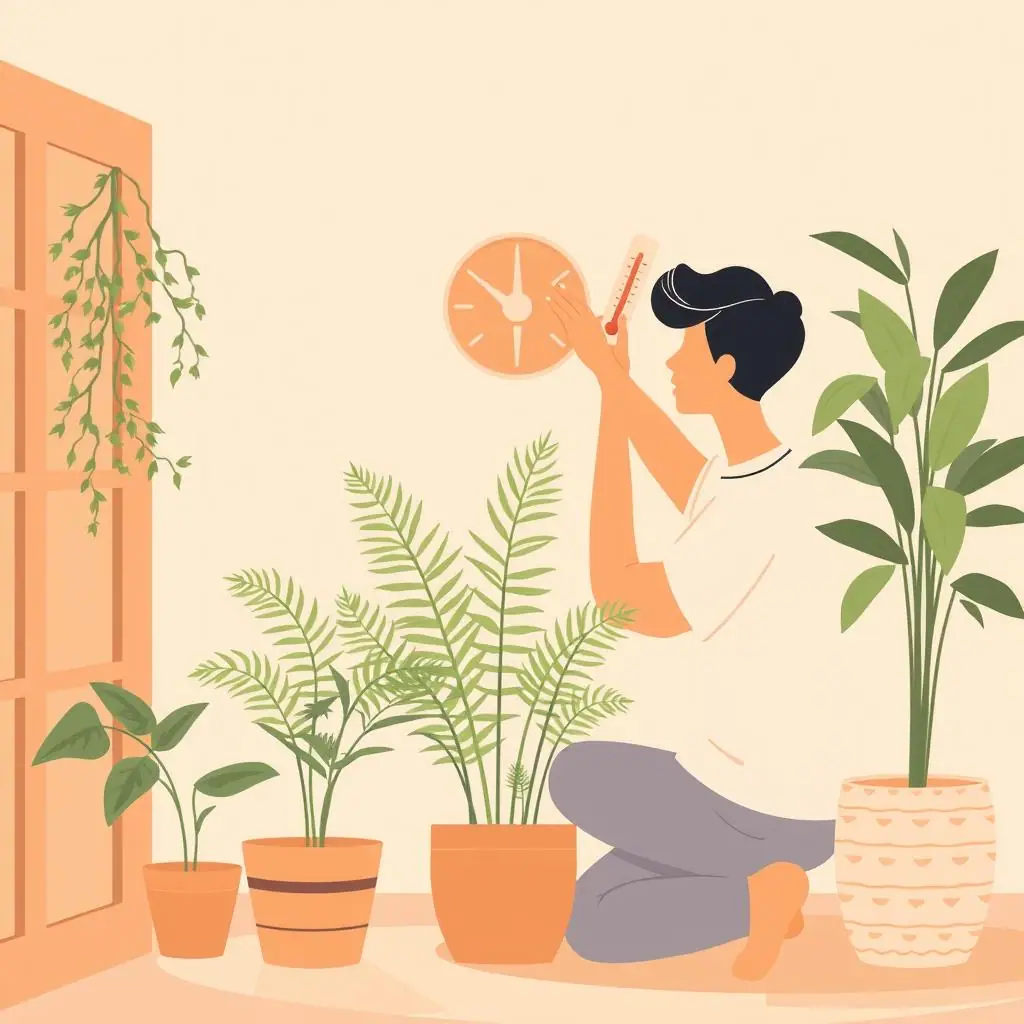
How do I know if my room temperature is right for ferns?
A simple thermometer placed near your plants will tell you actual temperatures. If you feel cool but comfortable in light clothing, your ferns are probably happy with the temperature.
Do all fern varieties have the same temperature needs?
Most common indoor ferns prefer similar cool conditions, but tropical varieties like Boston ferns can handle slightly warmer temperatures than temperate species like maidenhair ferns.
Why do my ferns look worse after moving them to a "better" spot?
Even moves to better conditions can cause temporary stress. Give plants 1-2 weeks to adjust to new temperatures and light conditions before judging whether the location works.
Final Thoughts
Temperature control doesn't have to be complicated or expensive. The key is understanding that ferns prefer cooler conditions than many houseplants and being mindful of the hot and cold spots in your home. By choosing appropriate locations and making simple adjustments for seasonal changes, you can create an environment where your ferns thrive year-round.
Remember, consistency matters more than perfection. A stable temperature in the 60-65°F range will make your ferns happier than fluctuations between "perfect" and problematic conditions. Start by observing your plants and adjusting gradually - your ferns will show their appreciation with lush, healthy growth.