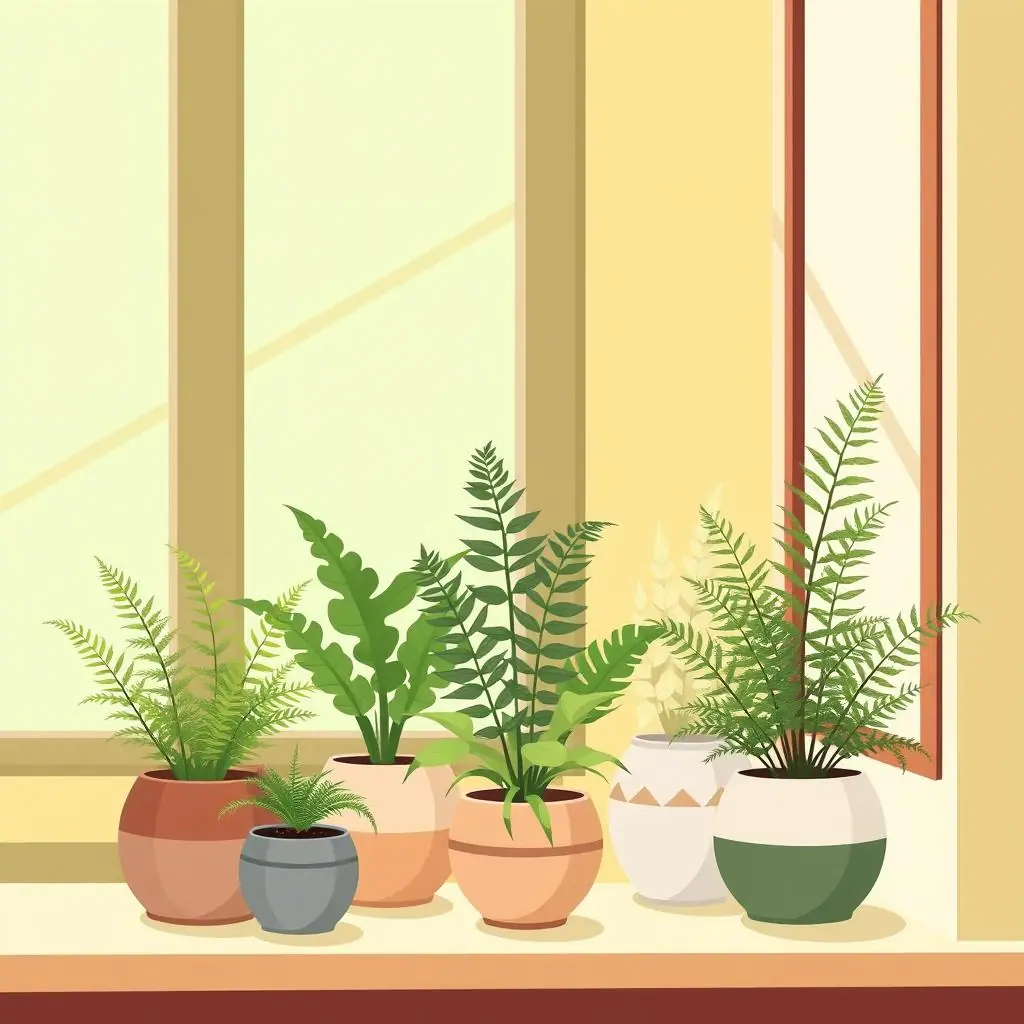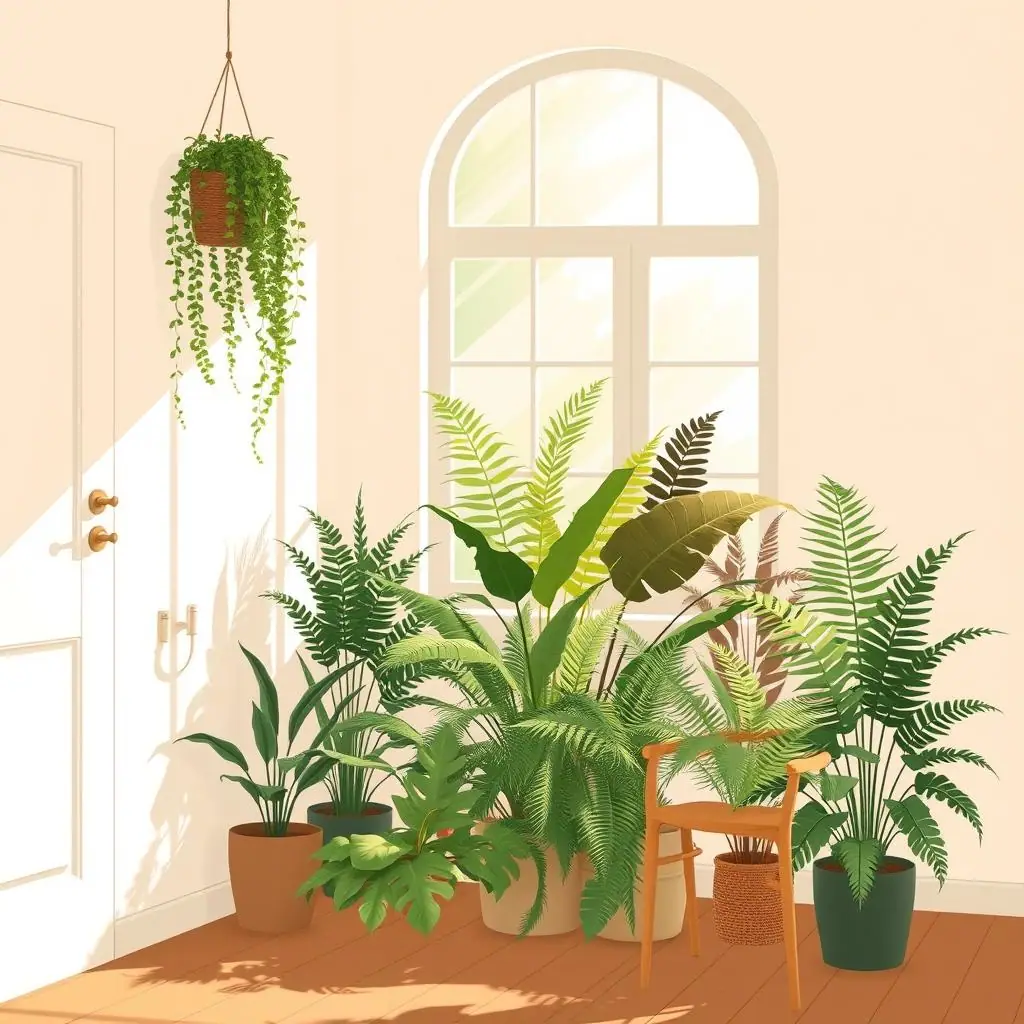
Walk into any thriving indoor garden, and you'll notice something magical: the ferns always seem perfectly placed, their fronds full and vibrant. The secret isn't luck – it's understanding exactly what kind of light these forest dwellers crave in your home.
Getting the light right for your ferns is like finding the sweet spot on a dimmer switch. Too bright, and those delicate fronds crisp up like autumn leaves. Too dim, and growth slows to a crawl. Let's find that perfect spot where your ferns will absolutely flourish.
Understanding Bright Indirect Light
When plant care guides mention "bright indirect light," they're describing the dappled sunlight you'd find on a forest floor. It's bright enough to read a book comfortably, but the sun's rays never hit your plant directly.
Think of it this way: if you can see your shadow clearly in the spot where you want to place your fern, it's probably too bright. If you need to turn on lights to see clearly during the day, it's likely too dark.
The Best Indoor Spots for Your Ferns
Finding the right location is easier than you might think. Here are the prime real estate spots in your home:
North-Facing Windows
These are fern heaven. North-facing windows provide consistent, gentle light throughout the day without the harsh intensity of direct sun. Place your ferns within 3-4 feet of these windows for optimal growth.
East-Facing Windows
Morning sun through east-facing windows is usually perfect for ferns. The gentle morning rays energize your plants without the scorching heat of afternoon sun.
Making South and West Windows Work
Don't write off your bright windows just yet. South and west-facing windows can work beautifully for ferns with a few adjustments:
- Distance is your friend: Place ferns 4-6 feet away from the window where light is still bright but indirect.
- Use window treatments: Sheer curtains, blinds, or even a tall plant can filter harsh afternoon sun.
- Create a light shelf: Position ferns on a shelf or plant stand slightly to the side of the window path.
Reading Your Fern's Light Signals
Your fern will tell you exactly what it thinks about its current lighting situation. Here's how to decode the messages:
Yellow or brown fronds
Leaves turn yellow, then brown, starting from the edges when getting too much direct sun.
Crispy, brittle texture
Overexposed fronds feel papery and break easily when touched.
Bleached appearance
Healthy green color fades to pale yellow-green when light is too intense.
Slow growth
New fronds emerge slowly or stop appearing altogether in insufficient light.
Thin, sparse foliage
Fronds grow smaller and further apart when reaching for more light.
Leggy appearance
Stems stretch unnaturally long as the plant searches for better lighting.
Seasonal Light Adjustments
Just like you might move to catch the warmest spot in winter, your ferns benefit from seasonal repositioning. In winter, when the sun sits lower in the sky, you can move plants closer to windows. During bright summer months, pull them back a bit or add filtering.
Winter Positioning
When daylight hours shorten, even your north-facing windows might not provide enough brightness. This is when you can safely move ferns closer to south or west windows, as the winter sun is much gentler.
Summer Adjustments
Summer's intense sun can overwhelm even well-placed ferns. Watch for those crispy edges and don't hesitate to move plants further from windows or add light filtering during the hottest months.
Different Ferns, Different Needs
While most ferns love bright indirect light, some are more flexible than others:
🌟 Light-Loving Champions: Boston ferns, asparagus ferns, and holly ferns thrive in brighter conditions and can handle a bit more direct light than their delicate cousins.
🌿 Low-Light Tolerant: Bird's nest ferns, maidenhair ferns, and staghorn ferns can handle dimmer conditions, making them perfect for bathrooms or interior rooms with limited natural light.
🏆 The Goldilocks Group: Most common houseplant ferns fall into this "just right" category, preferring consistent bright indirect light year-round.
Artificial Light Solutions
No perfect natural light spot? No problem. Modern LED grow lights can give your ferns exactly what they need:
- Full-spectrum LEDs: Position 12-18 inches above your ferns for 10-12 hours daily.
- Light intensity: Aim for 1,000-3,000 lux – bright enough to encourage growth without burning.
- Timer convenience: Set lights on timers to maintain consistent daily cycles.
Common Lighting Mistakes to Avoid
Even with the best intentions, it's easy to make mistakes that stress your ferns. Here are the big ones to watch for:
🚫 Assuming all houseplants need the same light – Unlike succulents or rubber plants, ferns can't handle intense direct sun.
🚫 Ignoring seasonal changes – What works in winter might be too intense come summer.
🚫 Forgetting about light quality – It's not just about brightness; ferns need the right spectrum of light to photosynthesize effectively.
Creating Microclimates with Light
Smart fern parents create multiple lighting zones in their homes. You might have a bright spot for light-hungry varieties, a medium-light area for your Boston ferns, and a gentler corner for delicate maidenhairs.
This approach lets you collect different fern varieties and give each exactly what it needs to thrive. Plus, it creates visual interest as you move from bright, bold specimens to the subtle elegance of low-light lovers.
Frequently Asked Questions
Can ferns survive in rooms with no windows?
With quality grow lights, yes! Many fern enthusiasts successfully grow beautiful specimens in windowless bathrooms and interior offices using full-spectrum LED lights.
How far from a window should I place my fern?
For north/east windows: 2-4 feet. For south/west windows: 4-6 feet or filtered with curtains. If you can comfortably read without straining in that spot, it's probably good for ferns too.
Do ferns need light at night?
No, ferns need darkness for proper rest cycles. If using grow lights, run them for 10-12 hours during the day, then turn off for nighttime.
Why are my fern's new fronds pale?
New growth that's very pale often indicates too little light. The plant is making an effort to grow but doesn't have enough energy from photosynthesis to produce rich green color.
Your Perfect Fern Lighting Setup
Creating the ideal lighting environment for your ferns is about observation and adjustment. Start with the guidelines here, then watch how your plants respond. A thriving fern with rich green color and steady new growth tells you you've got the balance just right.
Remember, the goal isn't to replicate blazing sunshine – it's to create that gentle, filtered forest light that makes ferns feel at home. With the right spot and a little attention to seasonal changes, your ferns will reward you with lush, vibrant growth year after year.