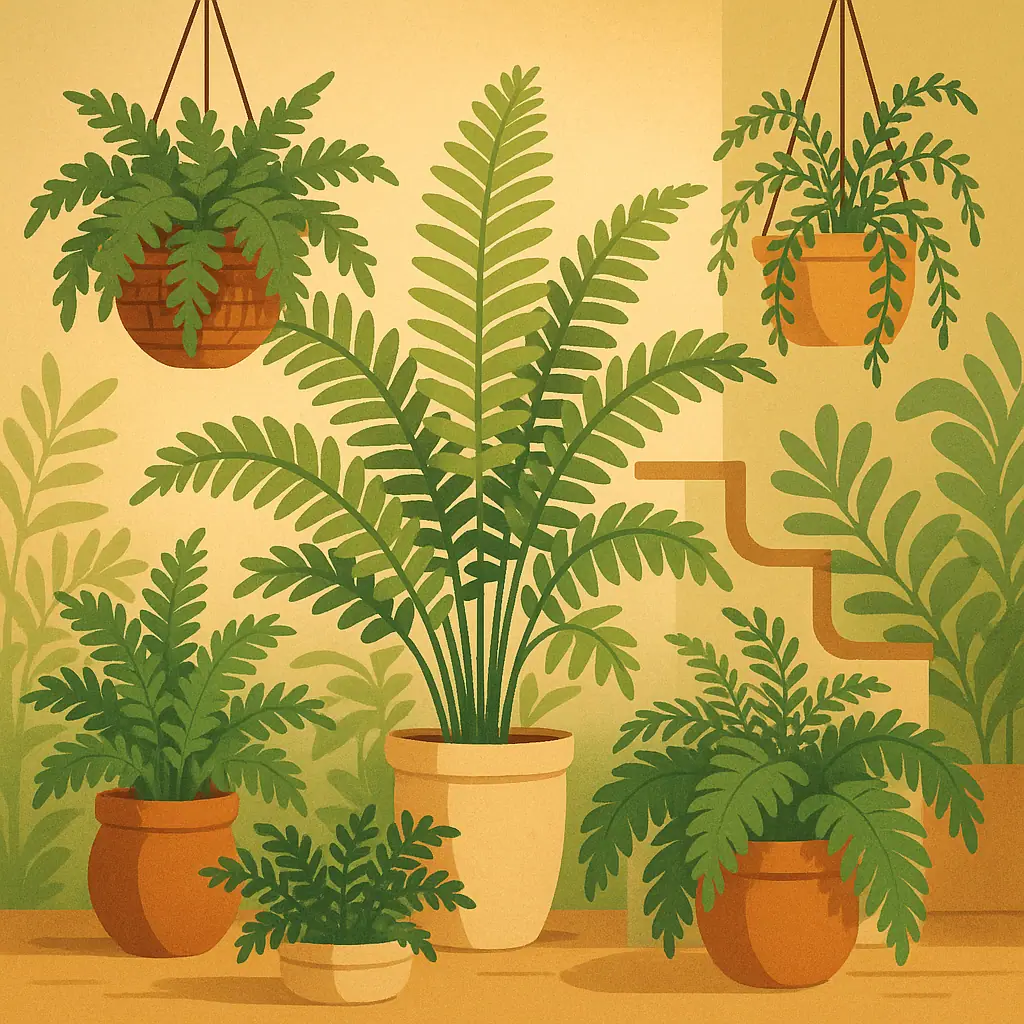
There's a particular kind of quiet joy that comes from walking into a room filled with living greenery. Not just one or two plants on a windowsill, but a genuine collection — different shapes, different textures, different heights — all growing together in a space that feels genuinely alive. A fern collection, done thoughtfully, can give you exactly that feeling.
The good news is you don't need a greenhouse, a large home, or even a particularly green thumb to build a meaningful fern collection. What you need is a starting point, a little patience, and a plan that grows alongside your confidence. This guide gives you exactly that.
What Makes a Fern Collection?
A collection is more than a random assortment of plants. What distinguishes a real collection from just "a bunch of ferns" is intentionality — choosing varieties that complement each other visually, that have compatible care needs, and that tell a coherent story about the kinds of plants you find beautiful.
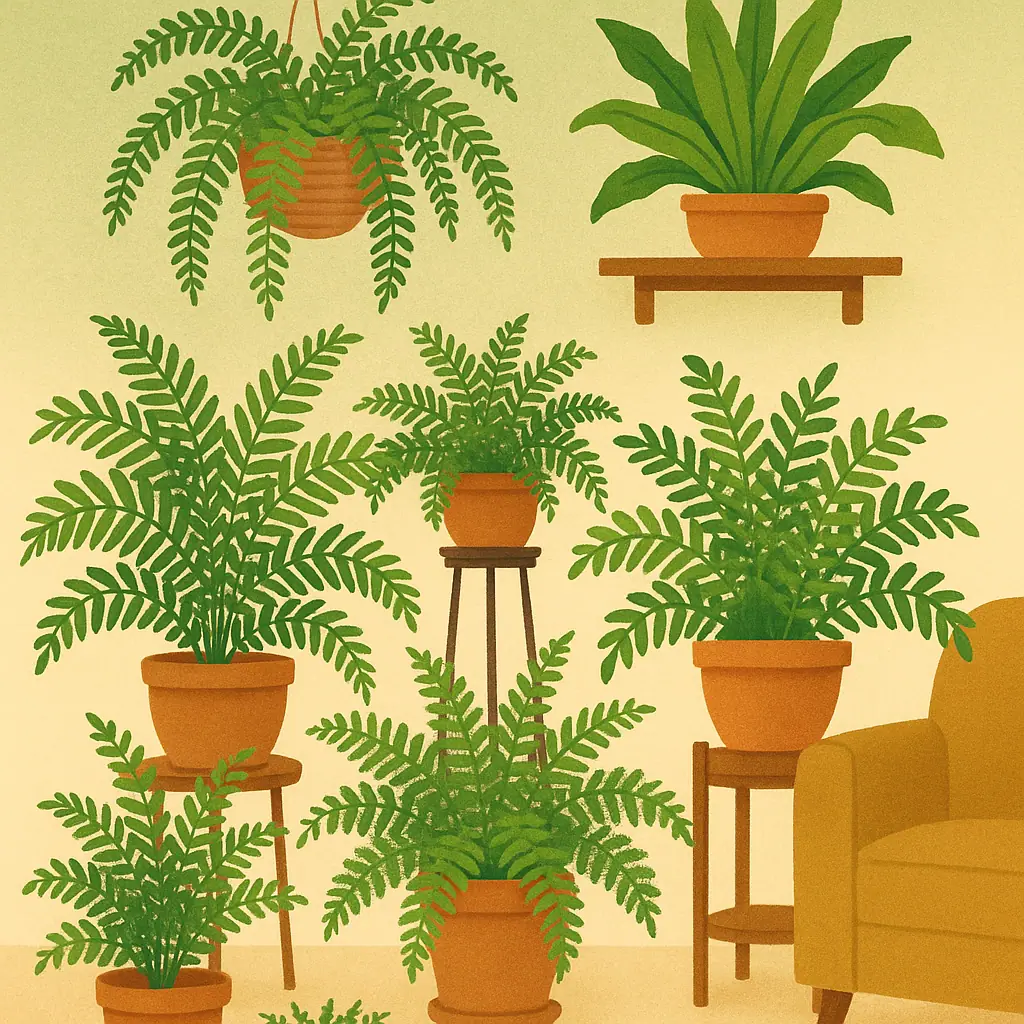
In practice, this means thinking about a few key dimensions when you choose each new fern: its size, its texture, its shape, and its light requirements. A collection where every plant is roughly the same size and texture looks flat and undifferentiated. A collection with deliberate variety — one large architectural plant, one delicate trailing variety, one bold upright specimen — creates visual depth and interest that makes the whole greater than the sum of its parts.
It also means being realistic about care. A collection you can sustain is better than an ambitious one that exhausts you. Start with varieties that share similar care needs, so you can build a watering and care rhythm that serves all of them at once.
Where to Begin: Your First Three Ferns
Every collection starts somewhere, and the first three plants you choose will set the tone for everything that follows. Here's a tried-and-true starting combination that works well for most homes and most skill levels:
The Boston fern is your statement plant — large, arching fronds, ideal for a pedestal or hanging basket. It brings drama and the lush, overflowing quality that signals "real plant person" to any visitor. The Bird's Nest fern provides an architectural counterpoint — its wide, paddle-shaped fronds forming a tidy rosette that looks completely different from the Boston's wild cascade. And the Lemon Button fern is your compact companion — small, cheerful, with button-like leaflets and a faint lemony scent that makes it genuinely pleasant to be near. It fits anywhere.
Begin with this trio, get to know them, and resist the urge to add more until you feel comfortable with their care rhythms. That patience will pay off when you're ready to expand.
Expanding the Collection
Once your first three plants are thriving, you're ready to think about growth. But expanding a collection wisely means more than just buying whatever looks good at the garden center. Consider these two dimensions as you add plants:
Choosing for Visual Variety
The most visually satisfying collections include deliberate contrasts. When you're ready to add your fourth and fifth plants, look for varieties that fill gaps in your existing display:
- Add a wall element: A Staghorn fern mounted on a wooden board introduces a completely different spatial dimension — vertical, wall-based, sculptural — that no floor or tabletop plant can provide.
- Add a delicate contrast: A Maidenhair fern, with its feathery, paper-thin leaflets, provides a delicate visual counterpoint to the bold, structured shapes of a Bird's Nest or Holly fern.
- Add color variation: The Blue Star fern (Phlebodium aureum) offers silvery blue-green fronds that are genuinely unusual and immediately distinctive among a sea of standard green ferns.
- Add a trailing element: The Rabbit Foot fern, with its rhizomes creeping over the pot edge, adds an element of quirky, organic movement that brings the collection to life.
Managing Care Across Multiple Ferns
As your collection grows, care management becomes the practical priority. The temptation is to check and water each plant individually, but that approach quickly becomes time-consuming and inconsistent. Instead, develop a simple weekly care ritual that covers the whole collection at once.
Group your ferns by their watering needs — most indoor ferns share similar requirements, which is one of the advantages of a fern-focused collection. Water all of them on the same day, check all of them for early signs of pests or stress, and rotate each one slightly to ensure even light exposure. Making care a ritual rather than a chore transforms it from a duty into a genuinely enjoyable weekly practice.
Space Planning and Vertical Display
One of the most common mistakes in building an indoor plant collection is thinking only horizontally — more floor plants, more shelf plants, more table plants — until the space feels crowded rather than lush. The solution is to think vertically from the beginning.
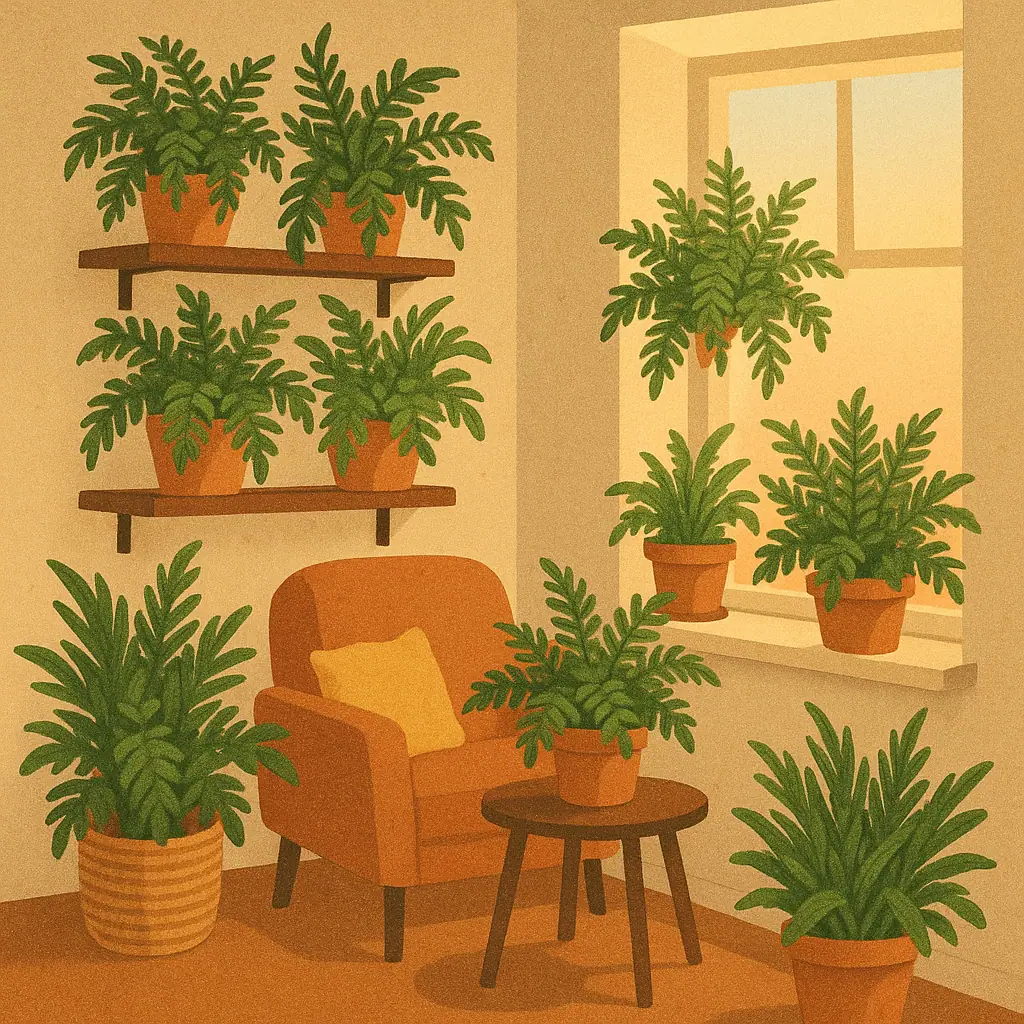
A successful fern jungle uses all three layers of vertical space in any room. Low-growing varieties or small ferns in decorative pots occupy the "forest floor" — the lower level around the base of furniture and on lower shelves. Medium-height ferns on stands or window ledges fill the mid-level. And hanging ferns or mounted staghorn ferns occupy the upper level, creating that canopy feel that makes a room feel truly immersive.
- Use plant stands at different heights: A set of stands ranging from 12 to 36 inches creates immediate visual layering without requiring more floor space.
- Install one floating shelf: A single shelf at mid-height on a wall allows you to display smaller ferns at eye-level, which is where many ferns are best appreciated.
- Try one hanging basket: A Boston fern overhead changes the entire character of a room corner and uses space that would otherwise be empty.
- Cluster near natural light: Group the collection near your best window and arrange by light sensitivity — most light-tolerant ferns closest to the window, shade-lovers further back.
Pros and Cons of Building a Fern Collection
Consistent Care Rhythms
Because most ferns share similar water, light, and humidity needs, a fern-focused collection is easier to care for than a diverse mixed collection with conflicting requirements.
Year-Round Lushness
Ferns are evergreen, which means your collection looks full and beautiful in every season — no bare or dormant plants to manage during winter months.
Natural Humidity Sharing
Grouped ferns create a local micro-climate of higher humidity that benefits all the plants. The collection cares for itself in this small but meaningful way.
Humidity Demands
Ferns as a group require higher humidity than most homes naturally provide, especially in winter. A larger collection amplifies this challenge and may require a humidifier to manage comfortably.
Space Requirements Grow
A thriving collection takes up real space. Planning your vertical display from the beginning helps, but it's worth being honest about how much room you realistically have before expanding too quickly.
Frequently Asked Questions
How many ferns should I start with?
Three is the ideal starting number. It's enough to create a visual grouping that feels like a genuine collection, without overwhelming you with care responsibilities before you've established your routines. Once those three are thriving comfortably, add one or two more.
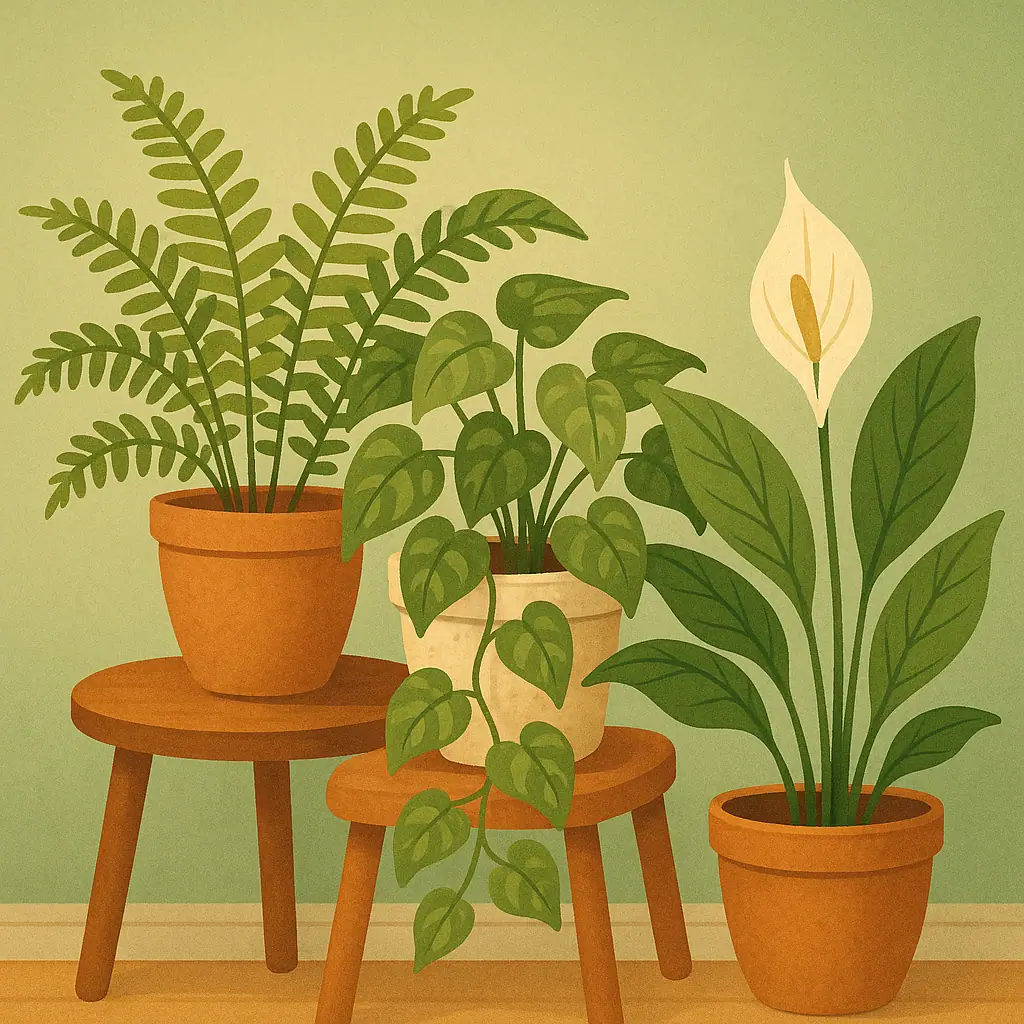
Can I mix ferns with other houseplants in my collection?
Absolutely. Ferns pair beautifully with other humidity-loving tropical plants like pothos, peace lily, Calathea, and Philodendron. These companions have compatible care needs and provide different leaf shapes and colors that enhance the visual variety of a mixed collection.
What is the biggest mistake people make when building a plant collection?
Expanding too fast. It's tempting to add plant after plant, but a collection of five thriving, well-cared-for ferns is far more satisfying — and far more beautiful — than a collection of fifteen struggling ones. Give each new plant time to adjust and prove it's happy before buying another.
How do I prevent pests from spreading through a group of ferns?
Quarantine any new plant for 1–2 weeks before placing it near your existing collection. Inspect the undersides of fronds and the soil surface before introducing new plants. Check all ferns weekly as part of your care routine, and address any pest signs early — a contained issue on one plant is far easier to manage than an infestation that has spread through a group.
Final Thoughts
A fern collection is one of those things that grows with you — literally and figuratively. The collection you have in six months will be richer, more varied, and more carefully arranged than the one you start with today, because you'll have learned what works in your particular space, with your particular light, and within your particular care habits.
Start with three good plants. Learn them well. Then add one more. There's no rush, and patience is always rewarded in a fern collection.