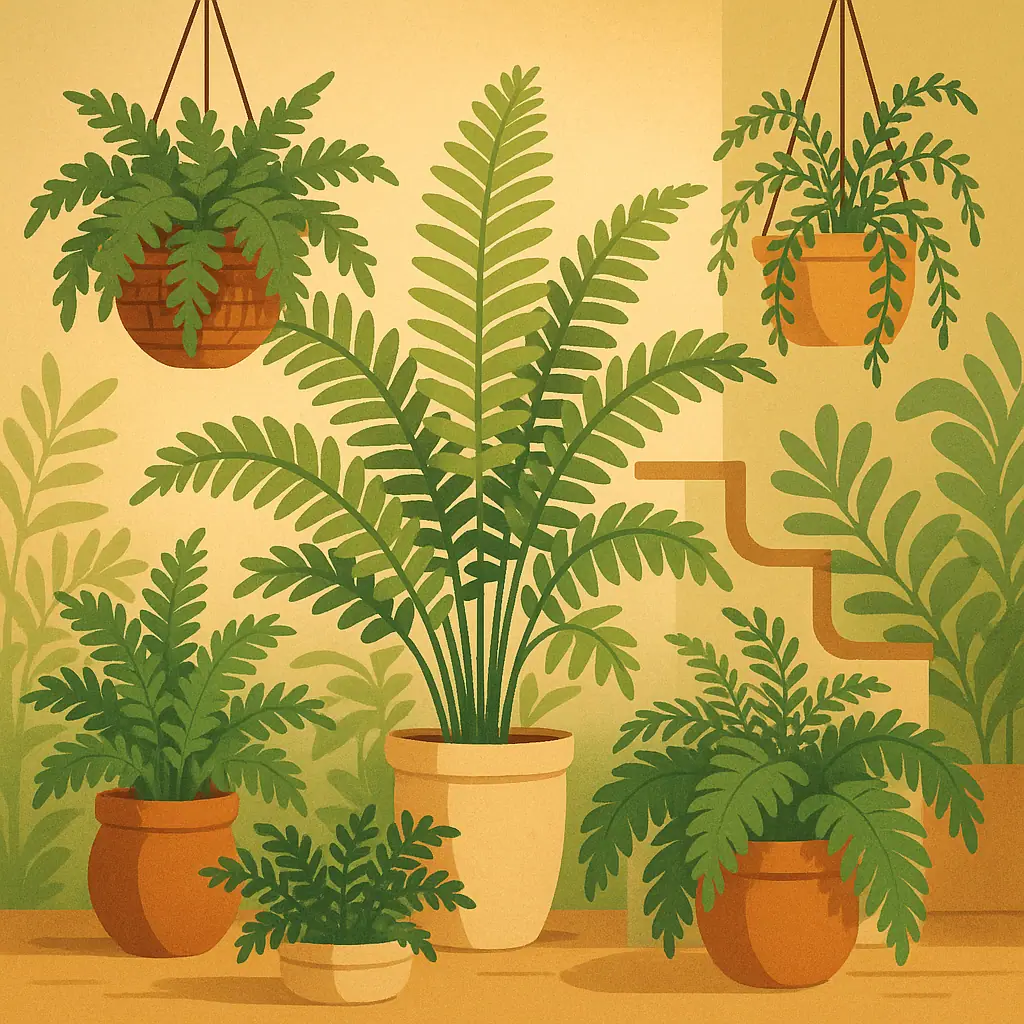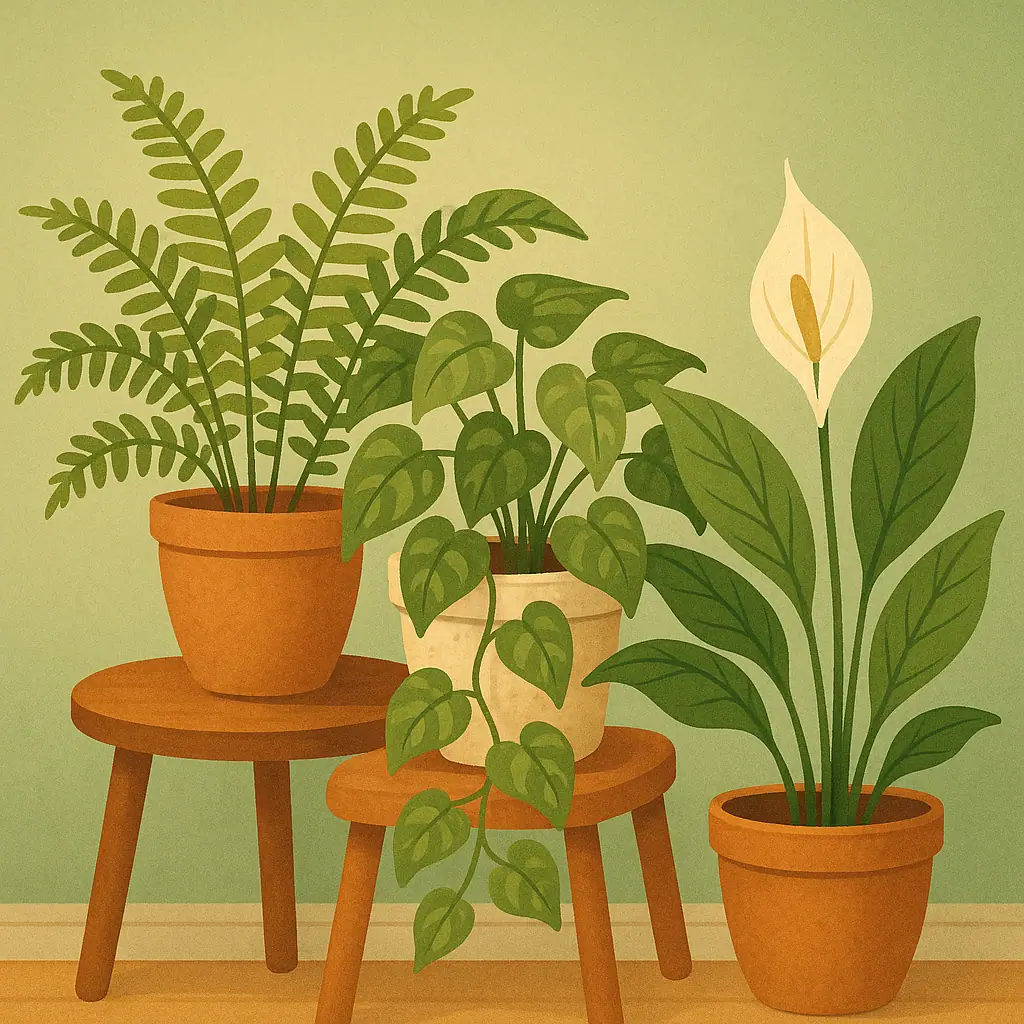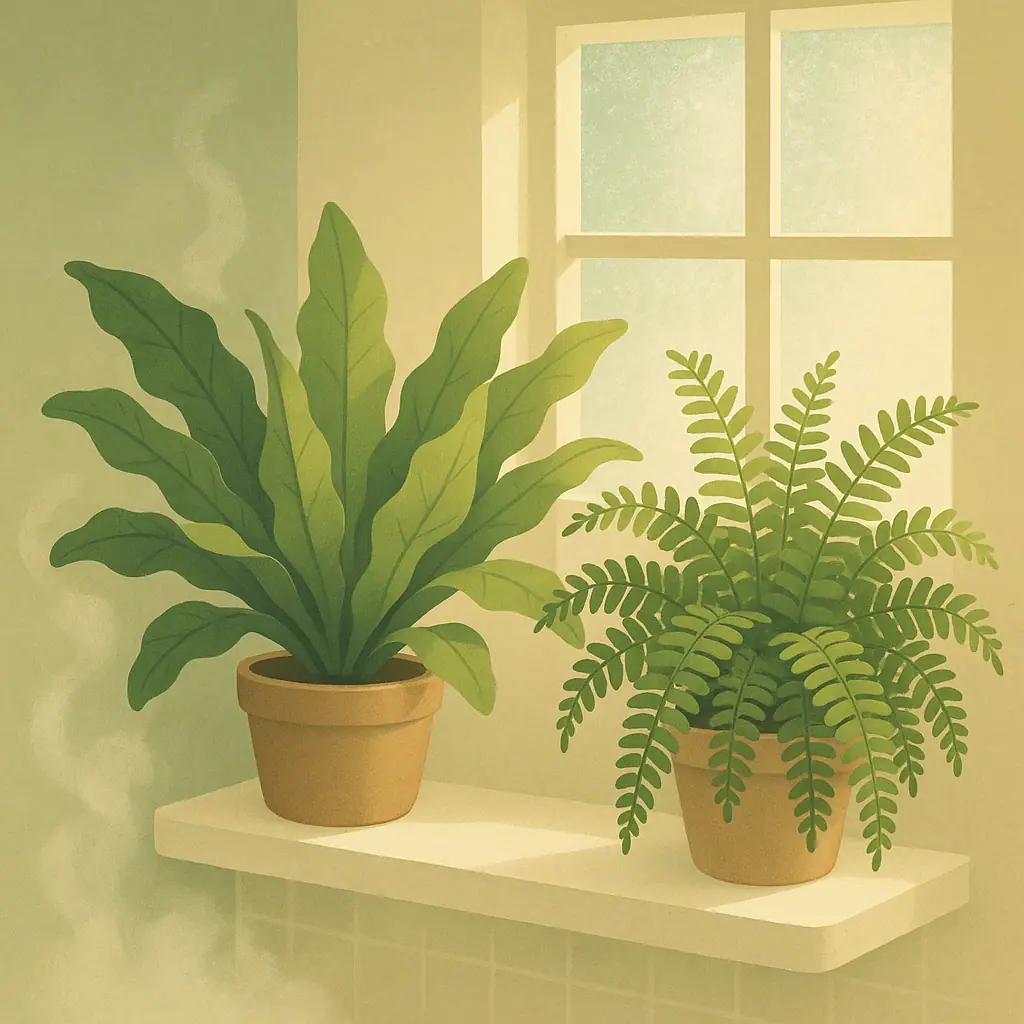
Most indoor plants demand a bright windowsill or a spot with reliable sunlight. Ferns are different. Their natural habitat is the shaded forest floor — filtered light, moist air, and cool temperatures. This is exactly why the bathroom, often the most overlooked room for plants, is actually one of the best places in your home to grow them.
If your bathroom has even a small frosted window, a skylight, or proximity to a hallway with natural light, there is likely enough light to keep at least one fern happy. And the humidity that builds up during daily showers does the work of a humidifier for free.
Why Bathrooms Are Naturally Perfect for Ferns
The bathroom solves two of the biggest challenges of growing ferns indoors: humidity and temperature. Most indoor environments run between 30 and 50 percent relative humidity — far too dry for moisture-loving ferns. A bathroom that gets regular shower use can reach 70 to 80 percent humidity after a shower, which is close to the tropical forest conditions where most ferns originate.
The temperature in most bathrooms stays fairly consistent — neither too hot in summer nor too cold in winter — which ferns also prefer. They do not like sudden temperature swings, drafts from air conditioners, or the dry heat that radiators produce. A bathroom that stays between 60 and 80°F (15 to 27°C) is an ideal environment year-round.
Best Fern Varieties for the Bathroom
Some ferns tolerate lower light better than others. These varieties have the best track record in typical bathroom conditions.
- Bird's Nest Fern (Asplenium nidus): Glossy, wide fronds that tolerate lower light unusually well. Dust the fronds occasionally with a damp cloth to keep them clear and healthy. One of the most forgiving ferns for bathroom placement.
- Boston Fern (Nephrolepis exaltata): A humidity lover that thrives near a shower. Needs more light than the Bird's Nest, so position it close to a frosted window if possible.
- Blue Star Fern (Phlebodium aureum): Striking blue-green fronds that are happy in bright indirect light and high humidity. Tolerates lower humidity than most ferns, making it a reliable choice if your bathroom dries out quickly between uses.
- Button Fern (Pellaea rotundifolia): Small, round leaflets and a compact size make it ideal for bathroom shelves and counters. Handles slightly less humidity than Boston ferns.
- Maidenhair Fern (Adiantum spp.): Delicate and beautiful, the maidenhair genuinely thrives in a humid bathroom — it is one of the few places indoors where its humidity demands are naturally met without extra effort.
How to Set Up a Fern in Your Bathroom
Placement matters. A few practical steps will make the difference between a fern that thrives and one that struggles.
- Choose a spot near the shower, not in it: A shelf 3 to 5 feet from the shower area gets the benefit of steam without the risk of direct water splashing onto the soil and causing waterlogging.
- Elevate the pot: Place the fern on a small saucer with pebbles and water underneath. This keeps the roots above standing water and raises local humidity right around the plant.
- Avoid the back of the toilet tank: The vibration and temperature fluctuations when flushing can stress plants over time. A small corner shelf or wall-mounted planter is a better choice.
- Check ventilation: Good air circulation prevents mold. If your bathroom has a fan, run it briefly after showers so air moves — this benefits both you and your fern.
Watering and Feeding Bathroom Ferns
One of the nice surprises about bathroom ferns is that they need less supplemental watering than ferns elsewhere in the house. The ambient humidity keeps the soil from drying out as quickly.
Check the soil every three to four days. Press your finger about one inch into the soil — water when that depth feels dry. Most bathroom ferns need watering roughly twice a week in summer and once a week in winter. Overwatering is still the main risk: make sure the pot has drainage holes and never leave the fern sitting in standing water.
Fertilize lightly once a month during spring and summer using a balanced liquid fertilizer diluted to half strength. Ferns in bathrooms grow more slowly than those in bright rooms, so they need less feeding. Skip fertilizing entirely during winter when growth naturally slows down.
Pros and Cons of Bathroom Ferns
Free humidity from showers
The bathroom naturally provides the high humidity ferns need, reducing the effort of misting or running a separate humidifier.
Less frequent watering needed
Ambient moisture slows soil drying, so you water less often than you would in a living room or kitchen.
Transforms the space
Even a single small fern on a bathroom shelf creates a calm, spa-like feeling that towels and candles alone cannot match.
Light can be limited
Bathrooms without windows require grow lights to support fern growth long-term.
Space is often tight
Bathroom counters and shelves are limited. Compact varieties or wall-mounted planters work best.
Humidity drops when bathroom is unused
In smaller households where the shower is used only once a day, the room dries out between uses and may need supplemental misting.
Frequently Asked Questions
Can a fern survive in a bathroom without a window?
Not without help. Ferns need some light to carry out photosynthesis. In a windowless bathroom, a small full-spectrum LED grow light placed 8 to 12 inches above the plant for 12 to 14 hours a day will provide what natural light cannot. A timer plug makes this effortless.
Will the steam from a hot shower hurt the fern?
Brief exposure to steam is beneficial, not harmful. However, direct contact with scalding water or prolonged soaking can damage fronds. A shelf a few feet from the shower gives the fern the humidity benefit without the risk of water splash or excessive heat.
Which fern is easiest for a small bathroom?
The Bird's Nest fern is consistently the most forgiving choice for typical bathroom conditions. It tolerates lower light, is not as fussy about humidity consistency as the maidenhair, and its compact upright shape fits easily on a shelf or counter without taking over the space.
How do I keep the soil from getting soggy in a humid bathroom?
Always use a pot with drainage holes and a well-draining soil mix. Elevate the pot on a saucer with pebbles so it never sits in pooled water. The ambient humidity does not wet the soil directly — it only affects the air around the fronds, so proper drainage remains just as important as in any other room.
Final Thoughts
The bathroom is the room you visit every single day, and a healthy fern on the shelf transforms an ordinary routine into something a little quieter and greener. Start with a Bird's Nest fern or a compact Blue Star fern, find a spot near a window or add a small grow light, and let the shower's steam do much of the maintenance work for you. It is one of the easiest ways to start growing ferns indoors — and one of the most rewarding places to succeed.