

Your ferns don’t know it’s January or July, but they certainly feel the difference. While your home might seem to have steady conditions year-round, seasonal changes create subtle shifts that dramatically affect your ferns’ health. Understanding these patterns and adjusting your care routine accordingly can transform struggling plants into thriving green beauties.
Many plant parents wonder why their ferns look amazing in spring but struggle through summer heat or winter dryness. The secret isn’t just better care—it’s seasonal care. Just as you adjust your wardrobe for the weather, your ferns need different attention as conditions change throughout the year.
How Seasons Affect Indoor Ferns
Even inside your climate-controlled home, seasonal changes create very real shifts in light intensity, air humidity, and temperature stability. Your ferns, evolved to thrive in consistent forest conditions, feel every one of these changes.
Summer challenges: Increased light intensity, higher temperatures, and air conditioning can stress ferns. The bright summer sun that feels wonderful to you can scorch delicate fern fronds in minutes.
Winter challenges: Lower light levels, dry heated air, and temperature fluctuations near windows create a completely different environment. Your heating system, while keeping you comfortable, can drop humidity to desert-like levels.
Summer Fern Care Strategy
Summer might seem like the perfect time for plant growth, but it actually presents unique challenges for indoor ferns. The key is protecting them from too much of a good thing while taking advantage of the longer, brighter days.
Watering adjustments for summer:
- Increase frequency gradually: Check soil moisture every 2-3 days instead of weekly
- Water early morning: This gives plants time to absorb moisture before the day’s heat
- Watch for rapid drying: Air conditioning and fans can dry soil faster than you expect
- Maintain consistency: Avoid the wet-dry-wet cycle that stresses plants
Light management in summer: More light doesn’t always mean better for ferns. Intense summer sun can quickly damage their delicate fronds.
Move ferns away from south and west-facing windows during peak summer months. If you notice any browning or bleaching of fronds, they’re getting too much direct light. A sheer curtain can help filter intense rays while still providing the bright, indirect light ferns love.
Cooling strategies that work: Your ferns will appreciate gentle air circulation but not direct blasts from air conditioning. Position fans to move air around plants without creating cold drafts.
Winter Fern Care Essentials
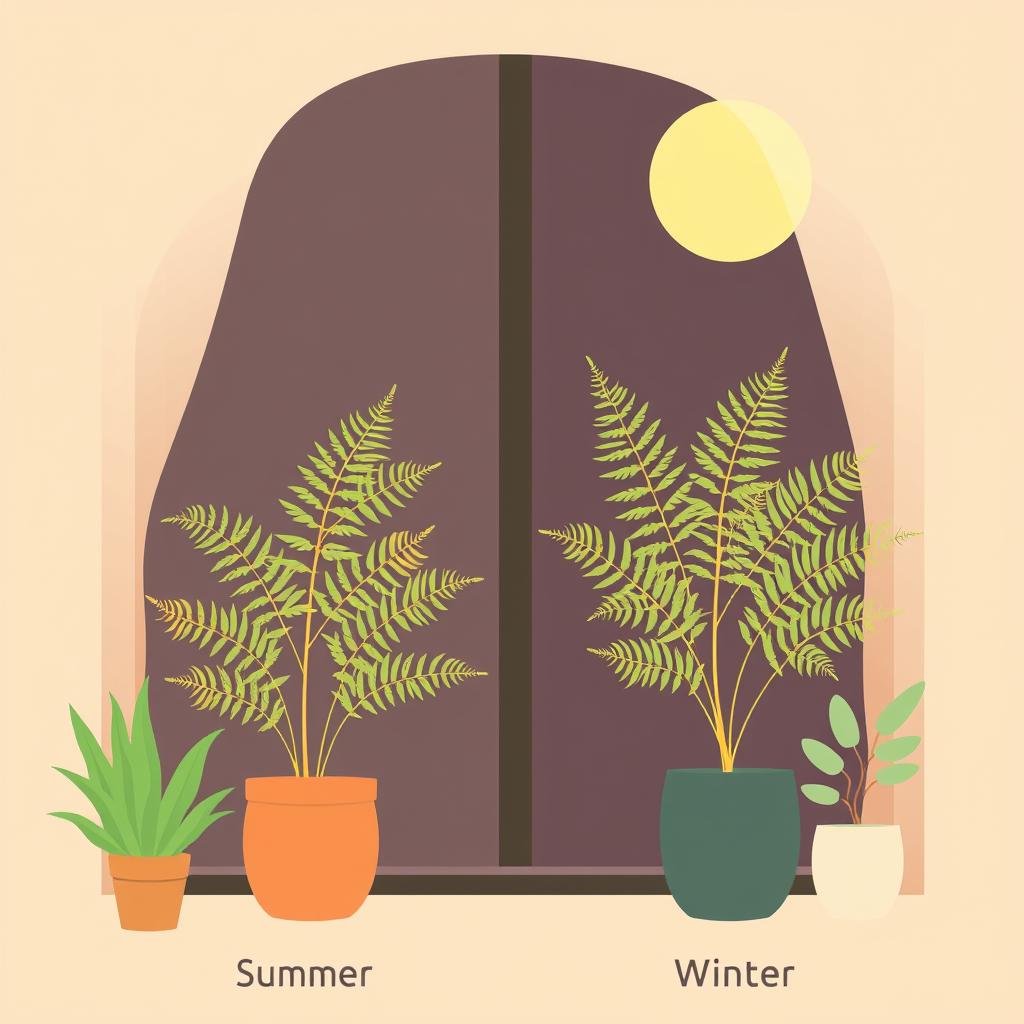
Winter is when most indoor ferns face their greatest challenges. Lower light, dry air, and temperature fluctuations can stress even the hardiest varieties. But with the right adjustments, your ferns can thrive through the coldest months.
Lighting solutions for dark months:
- Relocate to brightest windows: Move plants to south or east-facing windows for maximum winter light
- Clean windows regularly: Dust and grime can block up to 40% of available light
- Consider grow lights: LED plant lights can supplement natural light during the shortest days
- Reflect available light: Place a mirror or white surface opposite windows to bounce more light to plants
Watering changes for winter: This is where many plant parents make mistakes. Cooler temperatures and lower light mean slower growth and reduced water needs.
Water only when the top inch of soil feels dry to the touch. This might mean watering every 7-10 days instead of every 3-4 days. The goal is keeping soil consistently moist but never soggy, which becomes more challenging when plants aren’t actively growing.
Fighting dry winter air: Your heating system is your ferns’ biggest enemy during winter. Here’s how to create humidity oases:
Room humidifiers
Cool-mist humidifiers can raise ambient humidity significantly
Pebble trays
Shallow dishes with pebbles and water create localized humidity
Plant grouping
Multiple plants transpire together, raising humidity around them
Frequent misting
Can promote fungal issues in cool winter conditions
Wet towels near heaters
Fire hazard and inconsistent humidity levels
Spring and Fall Transitions
The transition seasons are perfect times to reassess your fern care routine and make gradual adjustments. These periods of moderate temperatures and changing light conditions offer opportunities to prepare your plants for the extremes ahead.
Spring awakening (March-May): As days lengthen and temperatures warm, your ferns will show new growth. This is the perfect time to repot if needed, increase watering gradually, and start feeding with a diluted fertilizer monthly.
Fall preparation (September-November): Begin reducing watering frequency and stop fertilizing as growth slows. This is also an ideal time to relocate plants to their winter positions near brighter windows.
Year-Round Monitoring Strategies
Successful seasonal care isn’t just about changing your routine—it’s about becoming more observant of your plants’ needs throughout the year.
Weekly check routine: Spend a few minutes each week examining your ferns for signs they need seasonal adjustments. Look for browning tips (too dry), yellowing fronds (overwatering or low light), or pale new growth (insufficient light).
Environmental monitoring: A simple thermometer and humidity meter near your plants helps you understand their actual conditions, not just what your thermostat reads.
Common Seasonal Mistakes
Even experienced plant parents fall into seasonal care traps. Avoiding these common mistakes can save your ferns from unnecessary stress.
Summer mistake: Overwatering because “it’s hot.” Ferns need consistent moisture, not flood-and-dry cycles. Check soil, don’t assume.
Winter mistake: Assuming plants don’t need water because growth slows. Even dormant ferns need consistent moisture, just less frequently.
Year-round mistake: Making dramatic changes all at once. Gradual transitions help plants adapt without shock.
Creating Seasonal Care Schedules
The most successful fern parents create simple seasonal routines that become second nature. You don’t need complex charts, just awareness of what changes when.
Summer routine: Check soil every 2-3 days, ensure adequate humidity, protect from intense light, maintain air circulation without cold drafts.
Winter routine: Check soil weekly, monitor humidity levels, maximize available light, keep away from heat sources.
Transition seasons: Gradually adjust watering frequency, relocate plants as needed, assess overall plant health.
Frequently Asked Questions
Should I move my ferns outdoors during summer?
Most indoor ferns are too delicate for outdoor conditions. If you do move them outside, choose a shaded, protected area and bring them in before temperatures drop below 50°F in fall.
How do I know if my winter humidity efforts are working?
Look for green, flexible fronds without brown tips. If you see crispy edges or yellowing despite proper watering, humidity is likely still too low.
Can I use the same fertilizer schedule year-round?
No – feed ferns monthly during spring and summer growing season, but stop fertilizing in fall and winter when growth naturally slows.
Why do my ferns look worse right after I make seasonal adjustments?
Plants need 2-3 weeks to adjust to changes in location, watering, or light. Make gradual transitions and be patient with results.
Final Thoughts
Seasonal fern care isn’t about following rigid schedules—it’s about understanding how your plants respond to changing conditions and adjusting accordingly. The most important tool you have is observation. Your ferns will tell you what they need if you learn to read their signals.
Start with small seasonal adjustments and build your routine gradually. You don’t need to change everything at once. Focus on the basics: adjust watering frequency, manage light exposure, and maintain humidity. These simple seasonal tweaks can transform your fern care from frustrating to rewarding, giving you healthy plants that thrive year-round.