
Your beautiful fern sitting in that gorgeous decorative pot might be slowly drowning. The container you choose for your fern isn’t just about looks – it’s literally the foundation of your plant’s health and happiness.
Think of a pot like a house for your fern’s roots. Just as you wouldn’t want to live in a basement that floods every time it rains, your fern’s roots need a home that provides shelter while allowing proper air circulation and water flow.
Why Drainage Makes or Breaks Fern Health
If there’s one non-negotiable rule for fern containers, it’s drainage. Ferns have delicate, shallow root systems that need the perfect balance of moisture and oxygen. Without proper drainage, even the most beautiful fern will suffer.
In nature, ferns grow on forest floors where water flows through organic matter and never pools. Your container needs to mimic this natural drainage pattern.
- Oxygen access: Roots need to breathe between waterings
- Root rot prevention: Standing water kills fern roots within days
- Salt buildup prevention: Good drainage flushes out accumulated minerals
- Healthy soil ecosystem: Proper water flow prevents harmful bacteria growth
Choosing the Right Material
The material of your fern’s container affects how quickly water evaporates and how much air reaches the roots. Each material has its place, depending on your home’s conditions and watering habits.
Terracotta (Unglazed Clay):
The porous nature of terracotta allows air to reach roots and wicks away excess moisture. Perfect if you tend to overwater or live in a humid environment. However, they dry out quickly and may need more frequent watering.
Plastic or Glazed Ceramic:
These materials hold moisture longer, making them ideal for ferns that prefer consistently moist soil like Boston ferns. They’re also lighter and less likely to break, but require more careful watering to avoid soggy conditions.
Wood:
Excellent for epiphytic ferns like staghorn ferns. Wooden baskets or planks provide natural air circulation and mimic the tree bark these ferns would naturally grow on.
Your choice should match your plant care style and environmental conditions. Careful waterers can handle plastic pots, while frequent waterers benefit from terracotta’s natural drainage assistance.
Size Matters: Getting the Proportions Right
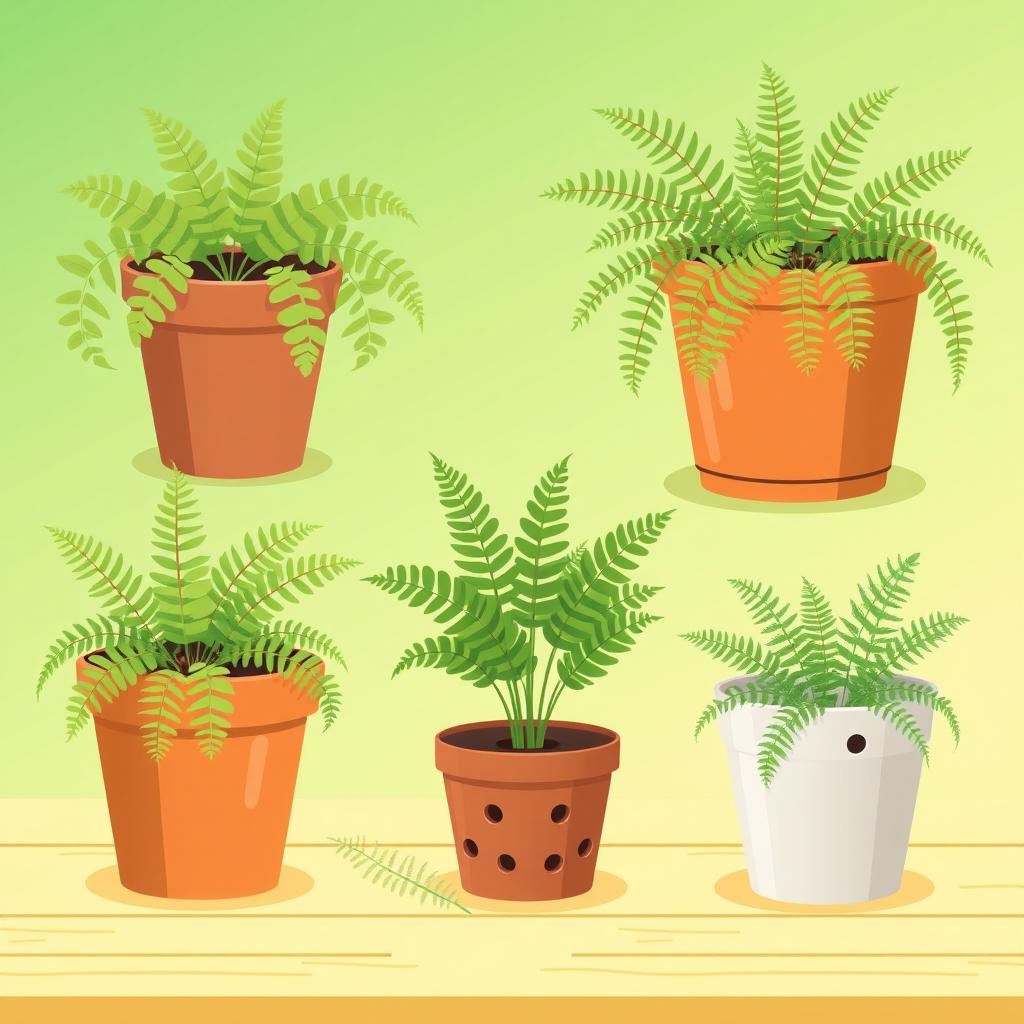
Bigger isn’t always better when it comes to fern containers. Most ferns have relatively shallow root systems and can actually suffer in oversized pots where soil stays wet too long.
The perfect size formula:
- Width: 1-2 inches wider than the current root ball
- Depth: 1-3 inches deeper than the current pot
- Space around roots: 1-2 inches on all sides for healthy growth
- Minimum depth: At least 6 inches for proper soil volume
Remember, you can always repot into a larger container as your fern grows. Starting with the right size prevents water-logging issues that plague overpotted plants.
Smart Pot Features for Fern Success
Beyond basic drainage and size, certain container features can make your fern care routine easier and more effective.
🏆 Multiple drainage holes — Better Than One
Several small holes distribute drainage more evenly than one large hole. This prevents soil from washing out while ensuring water doesn’t pool in corners.
⭐ Saucer with lift — Protect Your Furniture
A saucer catches excess water but shouldn’t let your pot sit in standing water. Use pot feet or pebbles to lift the container above the water level.
🌿 Coffee filter trick — Prevent Soil Loss
Place a coffee filter over drainage holes before adding soil. This prevents your potting mix from washing away while still allowing excellent water flow.
Common Container Mistakes to Avoid
Even experienced plant parents make container choices that can harm their ferns. Avoiding these mistakes will set your plants up for long-term success.
- Adding gravel to the bottom: This creates a water-logged layer that actually worsens drainage
- Choosing pots without saucers: Water damage to furniture leads to restricted watering
- Ignoring pot proportions: Overly deep or wide pots hold too much soil and moisture
- Using decorative pots without drainage: No matter how beautiful, these will eventually kill your fern
- Forgetting about weight: Large ceramic pots become very heavy when filled with moist soil
Trust function over form when choosing containers. A healthy fern in a simple pot always looks better than a dying plant in a gorgeous container.
Plastic vs Clay: Pros and Cons
Moisture Retention
Holds water longer, perfect for moisture-loving ferns.
Lightweight
Easy to move and won’t break if accidentally knocked over.
Affordable
Budget-friendly option that comes in many sizes and colors.
Quick Drying
Requires more frequent watering, especially in dry climates.
Heavy Weight
Becomes very heavy when filled with moist soil and plant.
Fragile
Can crack or break if dropped or subjected to temperature changes.
Frequently Asked Questions
Can I use a decorative pot without drainage holes?
Only as a cachepot. Place your fern in a smaller pot with drainage holes inside the decorative container, ensuring the inner pot doesn’t sit in standing water.
How do I know if my pot is too big?
If soil stays wet for more than a week after watering, or if there’s more than 2 inches of space around the root ball, your pot is likely too large.
Should I put rocks in the bottom for drainage?
No – this actually creates worse drainage by forming a waterlogged layer. Instead, ensure your pot has adequate drainage holes and use appropriate soil mix.
What’s the best pot material for beginners?
Plastic or glazed ceramic pots are most forgiving for beginners because they hold moisture longer, giving you more margin for error with watering.
Final Thoughts
The right container is like giving your fern a perfect home – not too big, not too small, with excellent ventilation and drainage. Take time to choose wisely, and your fern will reward you with healthy growth and vibrant fronds.
Remember, you can always upgrade containers as your fern grows, but starting with proper drainage and appropriate size sets the foundation for years of successful fern growing. Your plant’s roots will thank you for the thoughtful choice.