

Walking through a forest, you’ll notice ferns thriving in rich, dark soil that’s soft and springy underfoot. This forest floor holds the secret to happy indoor ferns – it’s all about creating the perfect balance of moisture retention and drainage in your potting mix.
Your fern’s roots need to drink when they’re thirsty, but they also need to breathe. Too much moisture leads to root rot, while too little leaves your plant stressed and brown. The right soil mix solves both problems.
What Makes Good Fern Soil
Think of fern soil like a sponge that can squeeze out excess water. In their natural habitat, ferns grow in loose, organic-rich forest floors with perfect drainage. Your indoor mix needs to mimic this environment.
Good fern soil has three key qualities:
- Moisture retention: Holds enough water for steady hydration
- Excellent drainage: Excess water flows out quickly
- Rich organic matter: Provides gentle, slow-release nutrients
Essential Components for Fern Success
Creating the perfect fern soil is like following a recipe. Each ingredient serves a specific purpose, and you can adjust the ratios based on your home’s humidity and your watering habits.
Moisture-retaining ingredients:
- Coco coir: Sustainable alternative to peat moss, holds water beautifully
- Sphagnum peat moss: Classic choice that acidifies soil slightly (ferns love this)
- Quality compost: Adds organic nutrients and water retention
Drainage-improving ingredients:
- Perlite: Those white puffy bits that create air pockets
- Orchid bark: Chunky pieces that mimic forest floor debris
- Coarse sand: Helps water flow through without clogging
DIY Soil Mix Recipes
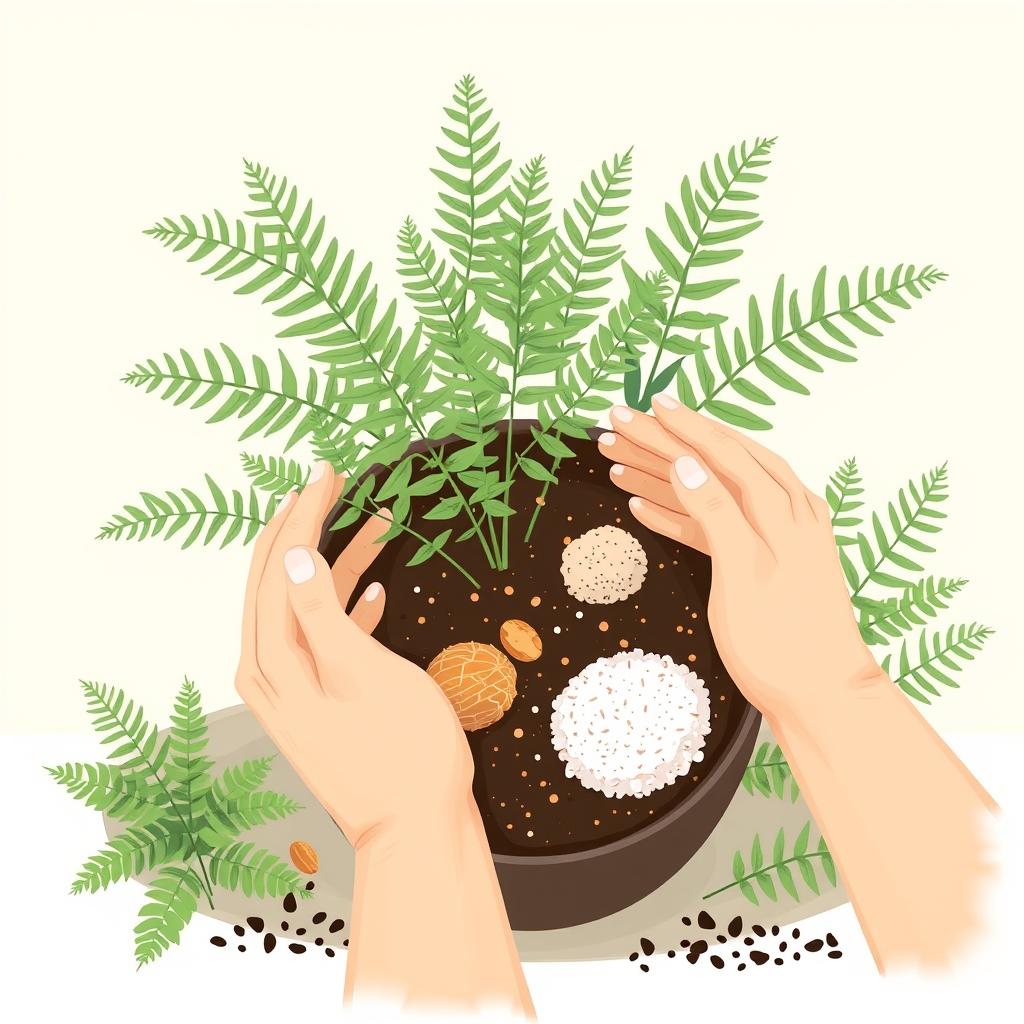
Here are three tried-and-tested recipes that work beautifully for most indoor ferns. Choose based on your experience level and available materials.
🏆 Beginner’s Mix — Simple and Reliable
50% high-quality potting soil + 25% perlite + 25% coco coir. This forgiving mix works for most ferns and is easy to find at any garden center.
⭐ Advanced Mix — Maximum Control
40% coco coir + 30% perlite + 20% worm castings + 10% orchid bark. This professional-grade mix gives you complete control over moisture and nutrients.
🌿 Organic Mix — Natural Approach
30% leaf mold + 30% sphagnum moss + 25% perlite + 15% aged compost. Mimics natural forest conditions with all organic components.
Always mix your ingredients thoroughly before potting. The soil should feel light and springy, not dense or heavy.
Common Soil Mistakes to Avoid
Even experienced plant parents make these soil mistakes that can harm their ferns. Avoiding these pitfalls will save you frustration and help your plants thrive.
- Using miracle-gro or heavy potting soils: These retain too much water and lack proper drainage
- Adding too much organic matter: While ferns love nutrients, too much compost creates soggy conditions
- Forgetting to test drainage: Good fern soil should drain within 30 seconds of watering
- Using fine materials only: Sand or fine peat alone creates mud-like consistency
- Ignoring pH levels: Ferns prefer slightly acidic soil (6.0-7.0 pH)
Remember, you can always adjust your mix. If water sits on top after watering, add more perlite or bark. If it drains too quickly, increase the coco coir or peat moss.
Store-Bought vs Homemade: Pros and Cons
Complete Control
Adjust ingredients for your specific ferns and environment.
Cost Effective
Bulk ingredients last longer and cost less per pot.
Quality Assurance
You know exactly what goes into your soil.
Time Investment
Requires research, shopping, and mixing time.
Storage Needs
Multiple ingredients require storage space.
Trial and Error
May need adjustments to get the perfect mix.
Frequently Asked Questions
Can I use regular potting soil for ferns?
Regular potting soil is usually too heavy and retains too much moisture for ferns. It’s better to create a custom mix or look for specialty fern/houseplant soils with excellent drainage.
How often should I change my fern’s soil?
Replace fern soil every 12-18 months or when you notice it staying soggy longer after watering. Fresh soil prevents compaction and nutrient depletion.
Is expensive orchid bark really necessary?
Orchid bark is excellent but not essential. You can substitute with other chunky organic matter like coconut husk chips or even small pine bark pieces from garden centers.
My fern soil dries out too quickly. What should I add?
Add more moisture-retaining ingredients like coco coir, sphagnum moss, or vermiculite. Start with small amounts and test how long moisture lasts after watering.
Final Thoughts
The right soil mix is like giving your ferns a comfortable home where they can truly thrive. Take time to create or choose a well-draining, nutrient-rich mix, and you’ll notice the difference in your fern’s health and growth.
Remember, soil is the foundation of plant care. Get this right, and everything else – watering, fertilizing, and general maintenance – becomes much easier. Your ferns will reward you with lush, green fronds that bring that peaceful forest feeling right into your home.