

Picture this: it’s mid-winter, your heater is running constantly, and you notice your once-lush fern looking a bit crispy around the edges. Sound familiar? You’re witnessing the silent struggle between your fern’s tropical soul and your home’s desert-dry air.
Most homes hover around 10-15% humidity in winter – imagine trying to thrive in conditions drier than some actual deserts! Your ferns, on the other hand, dream of the 40-60% humidity they’d enjoy on their native forest floor. The good news? Creating that humidity doesn’t require turning your house into a greenhouse.
Why Humidity Matters So Much to Ferns
Ferns evolved in environments where moisture hangs in the air like a gentle, invisible blanket. Their delicate fronds are designed to absorb moisture from the atmosphere, not just through their roots. When the air gets too dry, they literally can’t function properly.
Think of it like trying to breathe through a dry mouth all day – uncomfortable and exhausting. That’s your fern in low humidity, working overtime just to survive instead of growing those beautiful new fronds you’re hoping for.
Reading the Warning Signs
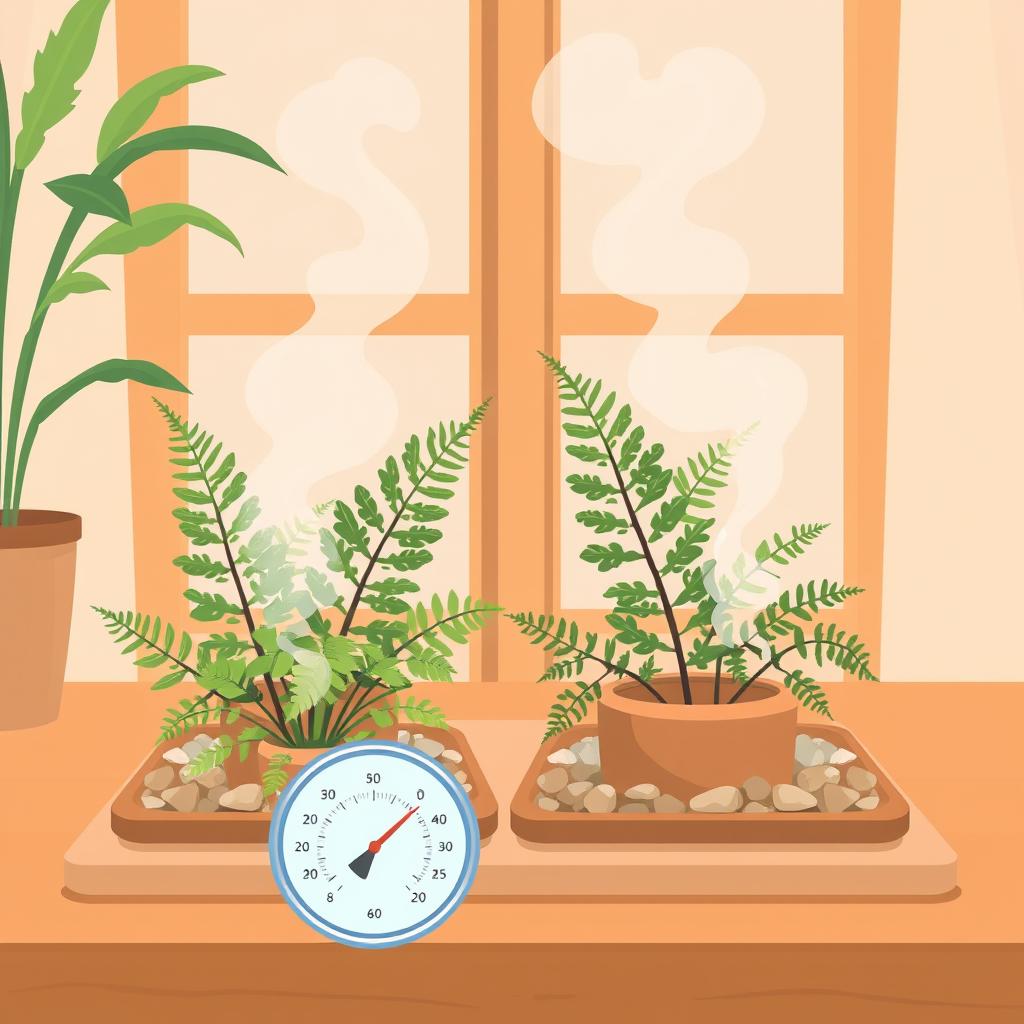
Your fern will signal humidity problems long before serious damage occurs. Here’s what to watch for:
- Brown, crispy tips: The classic calling card of dry air – frond edges turn brown and brittle.
- Yellowing older fronds: Lower, older leaves yellow and drop when humidity is consistently too low.
- Slow growth: New fronds emerge smaller or stop appearing altogether.
- Overall wilted appearance: Even well-watered ferns can look droopy in very dry conditions.
The Pebble Tray Method: Your Best Friend
This is the most reliable, low-maintenance way to boost humidity around your ferns. It’s like creating a tiny personal weather system for each plant.
Setting Up Your Pebble Tray
Here’s how to create this humidity powerhouse:
- Choose a shallow tray: Use a waterproof saucer or tray at least 2 inches wider than your pot.
- Add pebbles or stones: Fill with clean pebbles, decorative stones, or even marbles about 1 inch deep.
- Add water carefully: Pour water until it reaches just below the top of the pebbles. The pot should sit ON the stones, never IN the water.
- Maintain regularly: Refill as water evaporates, usually every 3-4 days.
As water slowly evaporates from the tray, it creates a humid microclimate that can boost local humidity by 8-12% – exactly what your ferns crave.
Pro Tips for Pebble Tray Success
Make your pebble trays work even better:
- Use distilled water: Prevents mineral buildup and keeps pebbles looking clean longer.
- Clean monthly: Rinse pebbles and scrub the tray to prevent algae growth.
- Group multiple trays: Create humidity zones by clustering several pebble trays together.
The Truth About Misting
Let’s address the elephant in the room: misting. You’ve probably heard it recommended everywhere, but here’s the honest truth about this popular method.
Instant gratification
Provides immediate, temporary humidity boost that ferns appreciate.
Cleans fronds
Removes dust buildup that can interfere with photosynthesis.
No setup required
Just grab a spray bottle and go – perfect for quick relief.
Very temporary effect
Humidity boost lasts only minutes before evaporating completely.
Fungal risk
Constantly wet fronds can develop mold, rot, or bacterial problems.
High maintenance
Needs to be done multiple times daily to have any real impact.
Smart Placement Strategies
Sometimes the solution is as simple as moving your ferns to naturally more humid spots in your home.
The Bathroom Solution
Bathrooms are fern paradise – if they have the right light. The regular steam from showers creates perfect humidity levels. Just make sure your bathroom gets decent indirect light or consider a small grow light.
Kitchen Considerations
Kitchens generate natural humidity from cooking and dishwashing. Place ferns near (but not directly next to) the sink area, away from heat sources like stoves and ovens.
Creating Plant Communities
Group your ferns with other plants to create a natural humidity bubble. Plants release moisture through transpiration, so a cluster of greenery creates its own favorable microclimate.
Advanced Humidity Solutions
Ready to take humidity control to the next level? These methods offer more consistent results:
Room Humidifiers
A small tabletop humidifier can transform your plant corner into a tropical oasis. Look for ultrasonic models that produce fine mist without heating the water.
- Placement: Position 3-4 feet away from plants to distribute moisture evenly.
- Maintenance: Clean weekly and use distilled water to prevent mineral deposits.
- Size guide: A 1-gallon tank covers about 200 square feet effectively.
Double-Potting Method
This technique creates a personal humidity chamber for each fern:
- Place your potted fern inside a larger decorative container
- Fill the space between pots with moist sphagnum moss or perlite
- Keep the filler material damp but not soggy
- The slow moisture release creates consistent local humidity
Humidity Don’ts: Avoiding Common Mistakes
Even well-meaning fern parents can make humidity mistakes that cause more harm than good:
🚫 Overdoing the misting – Multiple daily misting sessions keep fronds too wet, inviting disease problems.
🚫 Ignoring air circulation – High humidity without airflow creates stagnant, disease-prone conditions.
🚫 Using hard water – Mineral-heavy tap water leaves white deposits on leaves and clogs spray bottles.
🚫 Misting in the evening – Wet fronds going into cool nighttime temperatures are prone to fungal issues.
Seasonal Humidity Management
Your humidity strategy needs to change with the seasons, just like your clothing choices.
Winter: Heating systems create bone-dry air. This is when pebble trays and humidifiers become essential. You might need to refill pebble trays daily during peak heating season.
Summer: Air conditioning can also dry out the air, though usually not as severely as winter heating. Focus on maintaining consistent moisture levels rather than boosting them dramatically.
Spring/Fall: These transitional seasons often provide naturally ideal humidity levels, requiring minimal intervention.
Measuring Your Success
A simple digital hygrometer takes the guesswork out of humidity management. These inexpensive devices show you exactly what your ferns are experiencing.
Target ranges:
- Most ferns: 40-50% relative humidity
- Tropical varieties: 50-60% for optimal growth
- Hardy ferns: Can tolerate 35-45% but prefer higher
Frequently Asked Questions
How often should I refill pebble trays?
Check every 2-3 days and refill when water level drops below halfway. In winter with heating running, you might need daily refills.
Can I use a regular humidifier for the whole room?
Absolutely! Room humidifiers are actually more efficient than individual pebble trays if you have multiple plants in one area.
Is it possible to have too much humidity?
Yes, consistently over 70% humidity can promote fungal problems. Good air circulation helps prevent issues even with high humidity.
Why do my fern’s tips still brown even with a pebble tray?
Check your water quality (use distilled if tap is very hard), ensure the pot isn’t sitting IN water, and consider adding a second humidity source like a small humidifier.
Your Humidity Success Story
Creating the right humidity for your ferns isn’t about expensive equipment or complex systems – it’s about understanding what they need and providing consistent, gentle moisture in the air.
Start with a simple pebble tray and observe how your ferns respond. Within a few weeks, you should see healthier fronds, better color, and new growth that tells you you’ve cracked the code.
Remember, the goal is to recreate that gentle forest morning feeling – not the inside of a steam room. With a little attention to humidity, your ferns will transform from surviving houseplants into the lush, vibrant specimens they’re meant to be.