

If you’ve ever watched a beautiful fern slowly decline despite your best efforts, chances are watering was the culprit. Don’t worry – you’re not alone. Watering indoor ferns correctly is like learning to ride a bicycle: once you get the rhythm right, it becomes second nature.
The key is understanding that ferns want consistent moisture without soggy feet, just like their natural forest floor habitat. Today, we’ll walk through everything you need to know to keep your green friends happy and healthy.
Understanding Your Fern’s Natural Watering Needs
In nature, ferns grow on forest floors where they receive gentle, filtered moisture from rain and morning dew. The soil stays consistently moist but drains well thanks to layers of decomposing leaves and good air circulation.
Your indoor fern craves this same environment – steady moisture that never turns into a swamp. Think of it like a wrung-out sponge: damp throughout, but not dripping water when you squeeze it.
The Finger Test: Your Most Reliable Watering Guide
Here’s the simple test that will save your ferns: stick your index finger about 1-2 inches deep into the soil. If it feels dry at that depth, it’s time to water. If there’s still moisture, wait another day or two and test again.
This method works because fern roots typically live in that 1-2 inch zone. Surface soil can look dry while deeper soil still holds moisture – and that’s exactly what your fern needs.
Step-by-Step Watering Technique
The Right Water Temperature and Quality
Once your finger test says it’s time to water, start with the right foundation:
- Use room temperature water: Cold water shocks the roots, while hot water can damage them. Fill your watering can and let it sit for an hour to reach room temperature.
- Consider water quality: If your tap water is very hard or chlorinated, let it sit overnight or use distilled water.
Proper Watering Technique
Follow these simple steps for the perfect watering:
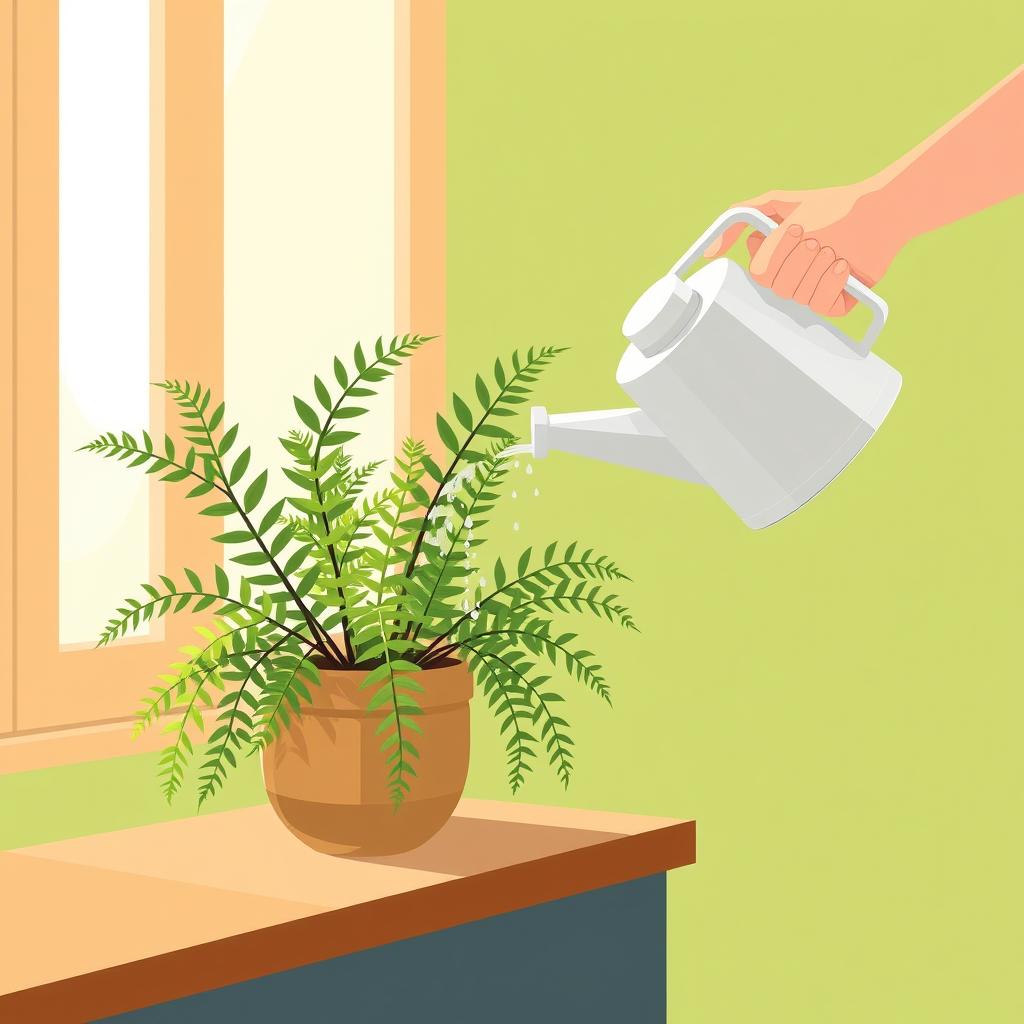
- Water slowly and evenly: Pour water gently around the base of the plant, not on the fronds. Wet leaves can develop fungal problems.
- Water until it drains: Continue until water flows out the drainage holes. This ensures the entire root system gets hydrated.
- Empty the saucer: After 30 minutes, pour out any water sitting in the plant saucer. Standing water leads to root rot.
Recognizing Overwatering vs Underwatering
Learning to read your fern’s signals makes all the difference. Here’s how to tell if you’re watering too much or too little:
Yellow fronds from bottom up
Older, lower fronds turn yellow and mushy when roots stay too wet.
Musty smell from soil
Root rot creates an unpleasant, earthy odor that’s hard to miss.
Soft, drooping fronds
Overwatered fronds feel heavy and limp, unlike the crispy texture of dry plants.
Crispy, brown leaf tips
Frond edges turn brown and brittle when the plant gets too thirsty.
Fronds curling inward
Leaves fold up to conserve moisture when water is scarce.
Lighter soil color
Dry soil appears much lighter than when it’s properly moist.
Seasonal Watering Adjustments
Your fern’s water needs change with the seasons, just like your own comfort preferences. In spring and summer, when growth is active and your home tends to be warmer, you’ll water more frequently – often 2-3 times per week.
During fall and winter, growth slows down and indoor heating can create very dry air. You might water less frequently (every 4-5 days) but need to focus more on humidity through misting or pebble trays.
The Humidity Connection
Why Humidity Matters
Here’s something many people miss: proper watering isn’t just about soil moisture. Ferns also need humid air around their fronds. Dry indoor air can make even well-watered ferns look stressed.
Easy Humidity Solutions
Boost the moisture in the air around your ferns with these simple methods:
- Morning misting: Lightly spray fronds in the morning so they dry before evening. This prevents fungal problems.
- Pebble tray: Place your pot on a tray filled with pebbles and water. As water evaporates, it creates a humid microclimate.
- Group plants together: Plants naturally create humidity around each other through transpiration.
Common Watering Mistakes to Avoid
Even with good intentions, it’s easy to make mistakes that harm your ferns. Here are the big ones to watch out for:
🚫 Watering on a strict schedule instead of checking soil moisture. Plants don’t follow our calendars – they need water when they need it.
🚫 Using cold tap water straight from the faucet. The temperature shock can stress roots and slow growth.
🚫 Letting water sit in saucers for days. This is the fastest way to develop root rot problems.
🚫 Watering the fronds instead of the soil. Wet leaves are invitations for fungal diseases.
Quick Recovery Tips
If you catch watering problems early, ferns are surprisingly resilient. For overwatered plants, stop watering immediately and improve drainage. Remove any yellow or mushy fronds to prevent spread of problems.
For underwatered ferns, give them a thorough drink and increase humidity. Crispy fronds won’t recover, but new growth will be healthy if you maintain proper moisture from then on.
Frequently Asked Questions
How often should I water my indoor fern?
There’s no universal schedule – it depends on your home’s temperature, humidity, and pot size. Use the finger test every 2-3 days instead of following a calendar.
Can I use distilled water for my ferns?
Distilled water is actually ideal for ferns, especially if you have hard tap water. It prevents mineral buildup that can interfere with root function.
Should I water from the top or bottom?
Top watering is easier and more natural, but bottom watering (placing the pot in a water tray) can be helpful for very dry soil that repels water.
My fern’s soil stays wet for over a week – is this normal?
No, this suggests poor drainage. Your fern needs better potting mix with perlite or bark, and possibly a pot with more drainage holes.
Your Fern Watering Success
Mastering fern watering is really about developing a feel for your plant’s rhythms. Start with the finger test, observe how your fern responds, and adjust based on what you see. Remember, it’s better to water thoroughly less often than to give frequent shallow drinks.
With practice, you’ll develop an intuitive sense for when your ferns are thirsty. Most importantly, don’t be discouraged if it takes a few tries to get it right – even experienced gardeners had to learn these rhythms.