

Decorating with ferns is one of those rare pleasures that never really goes out of season. Unlike flowers that bloom and fade, ferns hold their lush, green presence throughout the year, making them one of the most versatile plants you can bring into your home. The secret is knowing how to work with them, not against them, as the seasons change.
If you have a few ferns and want to make the most of them beyond just setting them in a corner, this guide is for you. We’ll walk through simple, practical ways to style your ferns for each season — keeping both the plants happy and your home looking its best.
What Is Seasonal Fern Decorating?
Seasonal fern decorating is the practice of intentionally adjusting how you display and style your indoor ferns throughout the year to complement the changing moods of each season. It doesn’t mean changing the plants themselves — ferns stay green year-round — but rather shifting their placement, pairings, and visual context to match the season’s atmosphere.
Think of it the way you might swap out a throw pillow or a table runner. The fern is the constant; everything around it changes. A Boston fern on a sunny porch table in July feels summery and expansive. That same plant in a wicker basket beside a warm lamp in December feels cozy and festive. Same plant, very different effect.
This approach works especially well for people who already love their ferns and want to get more enjoyment from them without buying new plants every season.
Why Ferns Work All Year Long
Unlike most flowering plants, ferns don’t have a “peak” season followed by a dormant period that makes them visually dull. Their evergreen nature — that persistent, reliable green — is exactly what makes them so useful as decorative anchors in any room.
According to the Old Farmer’s Almanac, indoor ferns prefer bright, indirect light and consistently moist soil. These conditions are easy to maintain year-round with small seasonal adjustments, which means your ferns can look their best in January just as naturally as they do in June.
They also respond to seasonal changes in a gentle, manageable way. In spring, you’ll notice faster new growth. In winter, growth slows but the plant stays full. Working with these natural rhythms — rather than fighting them — is what makes seasonal fern styling feel effortless.
How to Style Ferns Through Every Season
Each season offers a different opportunity to highlight your ferns in a new way. Here’s a simple framework you can follow:
Spring: Fresh Starts and New Growth
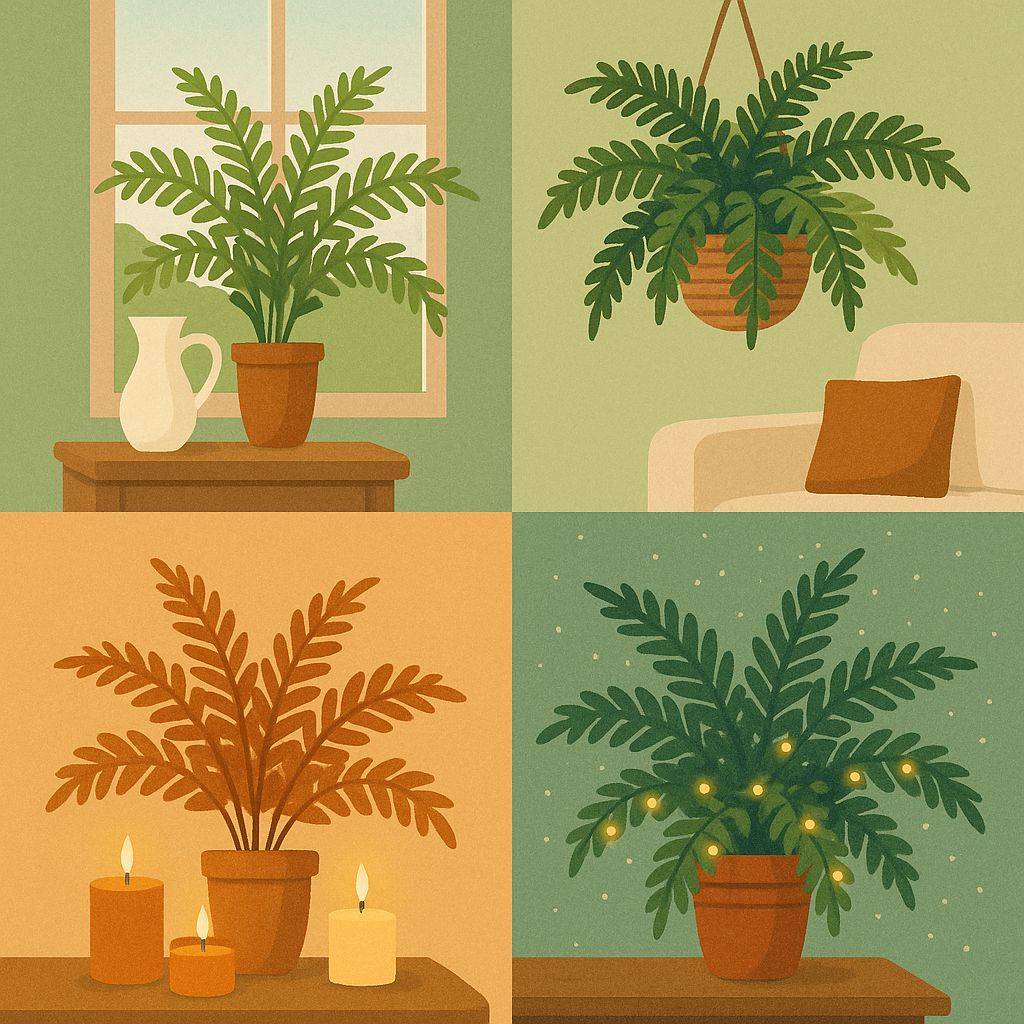
Spring is when ferns come alive with new fronds uncurling in spirals called fiddleheads. This is their most visually dynamic moment of the year. Lean into it by placing your ferns in a well-lit spot near a window where the new growth can be seen clearly. Pair them with light-colored ceramic pots and fresh white or cream textiles nearby. The contrast between vivid green and soft neutrals creates a clean, hopeful feel that is perfectly spring.
Move smaller ferns to dining tables as a centerpiece during this season. A Bird’s Nest fern in a simple clay pot, surrounded by a few smooth river stones, makes a beautiful and understated centerpiece that brings the season inside without any fuss.
Summer: Bold and Expansive
Summer is the season of growth and abundance, and your ferns should reflect that. If you have a shaded porch or a covered outdoor space, this is the season to give your ferns a temporary outdoor home — the natural humidity and filtered outdoor light will make them thrive. Indoors, lean into layering: group several ferns of different heights together in a corner or on a plant stand to create that lush, abundant effect.
Summer is also the season to try hanging ferns. A Boston fern in a hanging basket near a window, with its fronds cascading down, captures the easy, relaxed feeling of the season beautifully.
Autumn: Warmth and Texture
As the light outside turns golden and the air cools, ferns become natural companions to the warm textures of autumn decor. Try grouping a tall fern beside a basket of dried gourds or a cluster of candles in amber glass. The contrast between cool green fronds and warm orange and amber tones creates a rich, layered look that feels intentional and inviting.
The Autumn fern (Dryopteris erythrosora) is worth special mention here. Its new fronds emerge with a copper-bronze tint, creating a natural seasonal color story that pairs beautifully with autumn accents around the home.
Winter: Cozy and Festive
Winter is when ferns quietly prove their worth. When everything outside is bare and grey, an indoor fern provides a lush, living presence that is genuinely comforting. Move your ferns closer to your warmest, best-lit window — winter light is softer and shorter, so they’ll appreciate the proximity.
For holiday styling, a simple string of warm white fairy lights draped loosely around a large Boston fern or a staged arrangement of three ferns at different heights creates a festive, natural display that doesn’t feel forced. The deep green of the fronds pairs beautifully with the warm glow of holiday lights.
Practical Styling Tips to Keep in Mind
- Match the pot to the season: Terracotta for spring, rattan or wicker for summer, dark ceramic or stone for autumn, warm cream tones for winter.
- Adjust placement with light changes: In winter, move ferns 1–2 feet closer to windows to compensate for shorter days. In summer, step them back from south-facing windows to avoid direct afternoon sun.
- Use seasonal accessories alongside the plants: A few pinecones at the base of a fern in December, or a small nest tucked near fronds in April — small touches create big seasonal impact.
- Group ferns for natural humidity: Clustering ferns together creates a micro-environment of higher humidity that benefits all the plants, not just the display.
- Rotate quarterly: Turn your fern 90 degrees each season so all sides receive equal light and the plant grows evenly in every direction.
Pros and Cons of Seasonal Fern Decorating
Low-Cost Home Refresh
Seasonal styling costs very little — a few accessories and some repositioning can transform the look of a space without buying new plants.
Year-Round Visual Beauty
Unlike flowering plants that fade after their season, ferns stay consistently full and green, giving you a reliable, lush base to work with every month of the year.
Better Plant Health
Adjusting placement seasonally also serves the plant’s care needs — more light in winter, more shade in summer — so good styling and good care naturally go hand in hand.
Requires Some Attention
Getting the seasonal look right requires noticing small changes — in light, temperature, and growth — that some plant owners may find takes more thought than they expected.
Ferns Stay One Color
Most ferns remain a consistent green year-round, so the seasonal story relies on what you pair them with rather than any dramatic change in the plant itself.
Frequently Asked Questions
Can I move my fern outdoors in summer?
Yes, most indoor ferns thrive outdoors in summer as long as they are placed in a shaded or dappled light location. Avoid direct afternoon sun, which can scorch the fronds quickly. Move them back inside when temperatures drop below 55°F (13°C) at night.
Do ferns need extra humidity in winter?
Yes. Indoor heating in winter significantly reduces humidity levels, which is one of the hardest conditions for ferns. A small humidifier nearby or a pebble tray with water under the pot can make a noticeable difference during the cold months.
How do I decorate with ferns during the holidays without stressing them?
Keep decorations light and non-invasive. Fairy lights are fine if kept loose — avoid tight wrapping that traps heat. Don’t spray artificial snow or other aerosol products near ferns, and keep them away from drafty doorways that see heavy holiday foot traffic.
Which fern variety works best for seasonal decorating?
Boston ferns are the most versatile — their size, shape, and tolerance for different conditions make them excellent for year-round styling. Bird’s Nest ferns work beautifully as tabletop accents in any season, while Staghorn ferns mounted on a wall create a statement piece that changes character with the shifting light throughout the year.
Final Thoughts
Seasonal fern decorating is one of the simplest and most satisfying ways to keep your home feeling fresh and connected to the natural rhythms of the year. Your ferns are already doing the hard work of staying green and beautiful — all you need to do is adjust the context around them to tell a different seasonal story.
Start with one small change this season. Move a fern to a new spot, swap its pot, or pair it with a seasonal accessory. Notice how much it shifts the feeling of the room. Once you see it, you won’t be able to stop.