

A single plant on a windowsill is nice. A thoughtfully arranged corner full of ferns is something else entirely — a destination within your own home, a small patch of living green that changes the way a room feels. Creating a dedicated fern corner does not require a large space or a large budget. It requires some attention to light, a few well-chosen plants at different heights, and the patience to let things settle in.
If you have an unused corner in your living room, bedroom, hallway, or near a staircase, you may already have the perfect spot. Ferns are particularly well-suited to corner arrangements because their arching fronds spread outward naturally, filling space in a way that flat-fronted plants cannot.
Why Corners Work So Well for Ferns
Corners offer two things plants love: shelter from drafts and the ability to receive light from multiple directions if windows are nearby. A corner near an east-facing window, for example, gets gentle morning light from one side and reflected ambient light from the room on the other. This creates the kind of bright, indirect light that most ferns prefer without the harsh intensity of direct afternoon sun.
From a design standpoint, corners are also rooms’ visual anchors. A well-composed fern corner creates a sense of depth and life that flat walls cannot achieve. It draws the eye without competing with furniture or artwork.
Planning Your Fern Corner: Heights and Layers
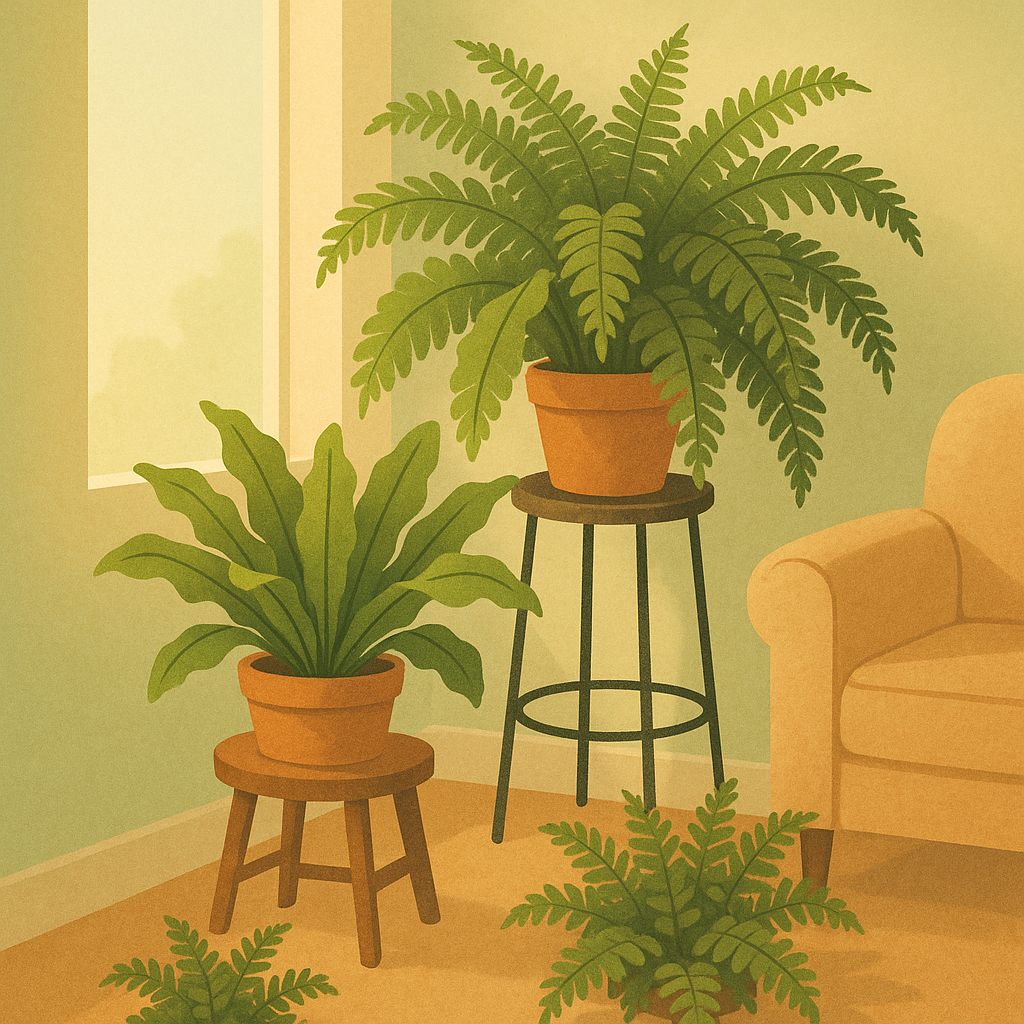
The most effective fern corners use three distinct height levels: tall, mid-level, and low.
- Tall level (4 to 6 feet): A large Boston fern on a plant stand or floor pedestal provides the canopy. This creates a sense of enclosure and drama that anchors the entire arrangement.
- Mid level (2 to 3 feet): A Bird’s Nest fern or a Blue Star fern on a low table, stool, or tiered shelf fills the visual middle ground. This is often where the most striking fronds go — at eye level when seated.
- Low level (floor or low shelf): Compact varieties like the Lemon Button fern or a small Rabbit’s Foot fern work here. Their smaller scale creates a grounding effect and keeps the arrangement from looking top-heavy.
If space allows, a small hanging fern above the corner ties the arrangement together vertically and fills the space between mid-level plants and the ceiling.
Choosing the Right Container Mix
The pots you choose matter nearly as much as the plants. A mix of container styles prevents the corner from looking like a store display and makes it feel like something that was built over time — which is, in fact, the most natural way a plant collection grows.
- Terracotta pots: Warm, earthy tones that suit the botanical mood of a fern corner. Note that terracotta dries out faster than glazed ceramic, so you will water more often.
- Woven baskets with liners: Excellent for adding texture and warmth. Use a plastic inner pot with drainage holes so the basket itself does not rot over time.
- Glazed ceramic: Holds moisture longer and comes in colors that complement green fronds beautifully. Earth tones, matte white, and sage green all work well.
- Matching stands: Rattan or bamboo stands add height without visual clutter and complement the botanical theme of a fern corner naturally.
Managing Light, Humidity, and Watering in a Multi-Plant Corner
When you group plants together, a few things change compared to caring for a single fern.
- Grouped plants raise their own humidity: Plants release moisture through their leaves — a process called transpiration — and when several are grouped together, the air around them stays measurably more humid. This is a natural benefit of corner arrangements that requires no extra effort.
- Watering needs vary by position: Plants closer to a heat source or window will dry out faster. Check each one individually rather than watering all plants on the same schedule. Finger-test the soil of each pot separately.
- Rotate pots regularly: Give each plant a quarter turn every one to two weeks so all sides receive even light and growth stays balanced rather than leaning toward the window.
- Watch for pests: Grouped plants can transfer pests between each other more easily. Check the undersides of fronds weekly, especially in warm seasons. Catching spider mites or fungus gnats early prevents them from spreading through the group.
Pros and Cons of Creating a Fern Corner
Plants thrive better grouped
Shared transpiration naturally raises local humidity, which benefits all ferns in the arrangement without any extra work.
Transforms dead space into a feature
An empty corner becomes a visual anchor and a daily source of calm and natural beauty in your home.
Easier to care for together
Grouping plants means your watering and misting routine covers multiple plants in one trip to the corner.
Pests can spread between plants
A grouping requires more vigilant checking for insects, since proximity makes plant-to-plant transmission easier than with isolated pots.
Plants at the back get less light
Taller plants can block light from reaching lower or inner plants. Rotating positions occasionally compensates for this.
Requires occasional rearranging
As plants grow, you may need to move them around to maintain the layered look and prevent crowding over time.
Frequently Asked Questions
How many ferns do I need for a corner arrangement?
Three to five plants is the sweet spot for most corners. One tall, two medium, and one small creates a natural layered look without overcrowding. You can always add to the arrangement over time as your confidence and collection grow.
Can I mix ferns with other types of plants in the corner?
Absolutely. Ferns pair beautifully with pothos, peace lilies, and snake plants. Just make sure all plants in the grouping have similar light and water needs. Avoid combining ferns with succulents or cacti, which prefer dry conditions that are the opposite of what ferns need.
What if my corner does not get much natural light?
A corner with limited natural light can still work with the addition of a grow light on a timer. Choose a full-spectrum LED grow light mounted or suspended above the arrangement and set it to 12 to 14 hours per day. Pair this with shade-tolerant ferns like the Bird’s Nest fern or Japanese Holly fern.
How do I prevent the floor beneath the corner from getting water stains?
Use a large decorative tray or waterproof mat beneath the entire arrangement. This catches drips from watering and protects hardwood or carpeted floors. A tray with pebbles and water serves double duty — protecting the floor and adding humidity to the air around your plants.
Final Thoughts
A fern corner grows naturally over time — a plant added here, a stand rearranged there, one variety replaced when something better catches your eye. Do not feel you need to build the perfect arrangement all at once. Start with two or three plants at different heights, group them in a corner with adequate indirect light, and give them a month to settle in. You will be surprised how quickly it begins to feel like the most alive corner of your home.