

There is something quietly magical about a fern hanging at eye level, fronds cascading in gentle arcs as you pass by. Unlike a pot sitting on a shelf or windowsill, a suspended fern transforms empty vertical space into something alive and beautiful. For anyone looking to add greenery without giving up precious floor or table space, hanging ferns are a practical and elegant solution.
The good news for beginners: most ferns that do well in hanging baskets are also among the easiest varieties to grow indoors. With the right choice of plant, the right spot, and a few adjustments to your watering routine, a hanging fern can thrive for years with surprisingly little effort.
What Makes Hanging Ferns Different from Potted Ones
When you hang a plant, it changes how you interact with it and how it grows. Hanging baskets typically have better air circulation around all sides of the pot, which ferns genuinely appreciate. The fronds grow outward and downward, which is their natural direction — especially for varieties like the Boston fern, which produces arching fronds naturally designed to drape.
The main difference you will notice is in watering. A suspended pot dries out faster than one sitting on a table because air circulates around all sides and heat rises. This means hanging ferns usually need water more frequently than their potted counterparts, especially during warm months or when the heating is on.
Best Ferns for Hanging Baskets
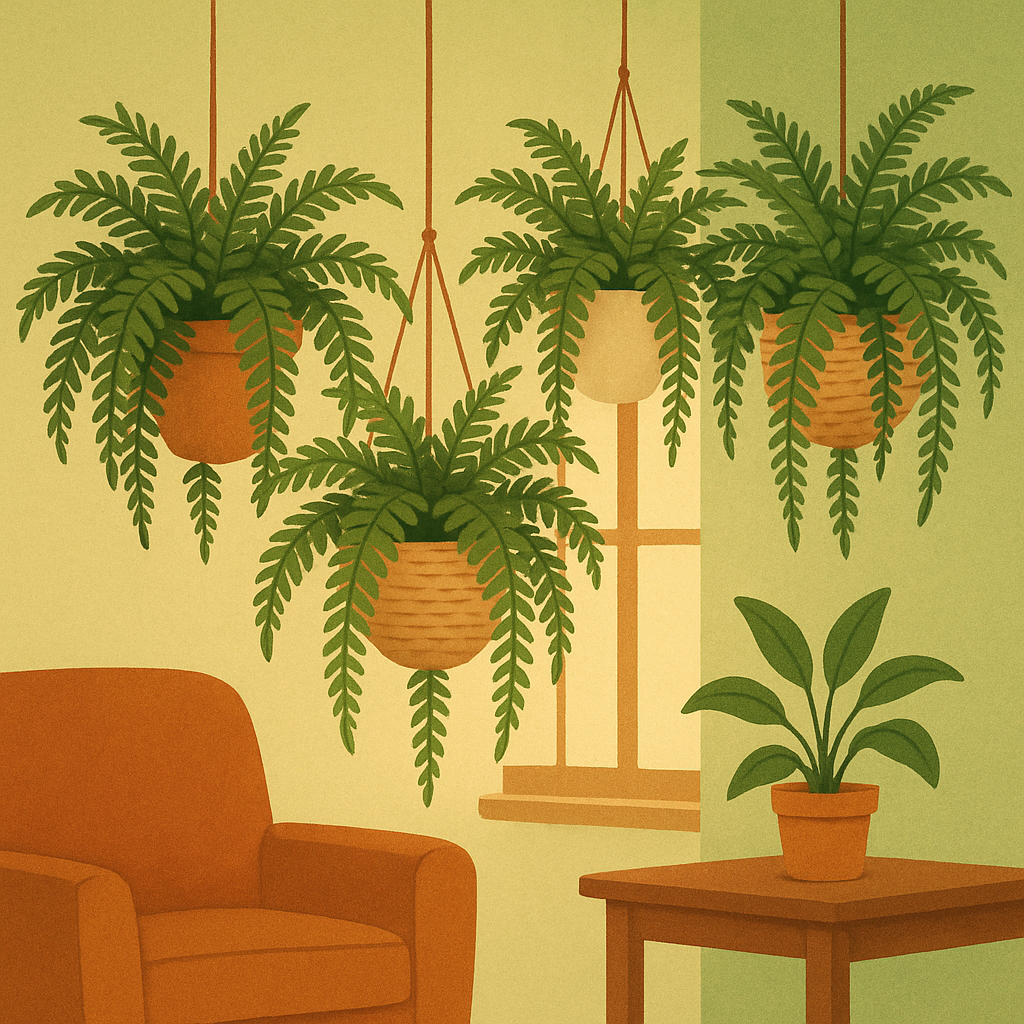
Not every fern suits a hanging basket. The best choices have naturally cascading or arching fronds that look intentional and lush when suspended.
- Boston Fern (Nephrolepis exaltata): The classic choice. Full, feathery fronds arch gracefully outward and downward. Tolerates indoor conditions well and is widely available.
- Lemon Button Fern (Nephrolepis cordifolia ‘Duffii’): Compact and cheerful with button-shaped leaflets and a faint lemony scent. Excellent for smaller spaces and more forgiving about occasional dry spells.
- Rabbit’s Foot Fern (Davallia spp.): A crowd favorite for its fuzzy rhizomes that creep over the pot edge. The fuzzy "feet" add a charming textural element and the plant is quite hardy.
- Bird’s Nest Fern (Asplenium nidus): Upright, glossy fronds with a rosette center. Works beautifully in a hanging pot at eye level where you can appreciate the layered center.
Where to Hang Your Fern and How to Do It Safely
Choosing the right spot is just as important as choosing the right fern. Most hanging ferns need bright, indirect light — think the kind of light that comes through a sheer curtain, not direct sun through clear glass. East-facing windows often provide this naturally.
When it comes to hardware, use a ceiling hook rated for at least twice the weight of your fully-watered pot. A soaked Boston fern in a large basket can easily weigh 5 to 8 pounds. A hook that holds 15 to 20 pounds gives you a safe margin. Anchor into a ceiling joist when possible, or use a heavy-duty drywall anchor rated for the weight.
Hang the pot so the bottom of the basket sits around eye level — roughly 5.5 to 6.5 feet from the floor. This makes watering and maintenance easier and puts the cascading fronds right where you can enjoy them.
Caring for Your Hanging Fern Day-to-Day
Once your fern is up, a simple routine keeps it thriving.
- Water from above until it drains: Make sure the pot has drainage holes so excess water can escape. Take the basket down occasionally to give it a thorough soak rather than light surface waterings.
- Mist the fronds: A quick spray with room-temperature water two to three times a week adds the humidity ferns love. Do this in the morning so fronds dry before evening.
- Trim brown fronds promptly: Yellowing or browning fronds at the base are normal as older growth matures. Snip them cleanly with scissors and the plant will redirect energy into fresh growth.
- Rotate occasionally: Give the basket a quarter turn every week or two so all sides get even light exposure and the plant grows evenly.
Pros and Cons of Growing Hanging Ferns Indoors
Saves surface space
Perfect for small homes or apartments where shelf and table space is limited.
Visual drama at eye level
Cascading fronds create a lush, natural canopy effect that floor pots simply cannot achieve.
Better air circulation
Air flows around the entire pot, which helps prevent fungal issues that can develop in stagnant corners.
Dries out faster
More frequent watering is needed, especially in heated or air-conditioned rooms.
Watering can drip
Always use a drip tray or take the basket down to a sink or outdoor area for deep watering.
Requires safe hardware
Heavier pots need ceiling joists or properly rated anchors — drywall alone is not enough for large baskets.
Frequently Asked Questions
Can I hang a fern in a room with no windows?
Not easily. Ferns need some natural light to thrive. A north-facing window that gets indirect light, or a room with a skylight, can work. Supplemental grow lights placed 6 to 12 inches above the fern for 12 to 14 hours a day can compensate for very low light rooms.
How heavy does a hanging fern get when watered?
A medium Boston fern in a 10-inch basket typically weighs 4 to 6 pounds dry and 7 to 10 pounds when thoroughly watered. A large 14-inch basket can exceed 15 pounds wet. Always use hardware rated for at least double the expected weight.
Why are the tips of my hanging fern turning brown?
Crispy frond tips on hanging ferns are usually caused by low humidity, not underwatering. The elevated position exposes ferns to drier, warmer air near the ceiling. Misting more frequently or placing a small humidifier nearby usually resolves this within a few weeks.
Can I leave a hanging fern outside in summer?
Yes, with care. Move it to a shaded porch or patio where it gets bright indirect light. Outdoor air provides natural humidity that indoor environments lack. Bring it back inside before temperatures drop below 55°F (13°C) in the evening.
Final Thoughts
Hanging ferns reward a small amount of attention with year-round beauty that transforms a room. Once you find the right spot and get the watering rhythm down, they become one of the most low-stress plants in your home. Start with a Boston fern or a Lemon Button fern — both are forgiving and beautifully suited to life in a hanging basket. Give it three weeks to settle into its new position, and you will likely wonder why you waited so long to try one.