

There is something quietly wonderful about a fern placed just right. The way those arching fronds catch the light, the gentle movement when someone walks by — a well-displayed fern does more than fill a corner. It brings a room to life. If you have been growing ferns for a while and want to start thinking about how to show them off, you have come to exactly the right place.
Display does not require expensive furniture or design expertise. It is mostly about understanding what your ferns need, then finding the spots in your home that offer those conditions in a beautiful way. Let us explore some tried-and-true ideas that work even in modest spaces.
What Makes Fern Displays So Special
Unlike flowering plants that have their moment and then fade, ferns offer year-round green. Their textures — from the bold arching fronds of a Boston fern to the compact rosette of a Bird’s Nest — create visual depth and contrast that few other houseplants can match. Grouping different ferns together creates a layered, garden-like feeling indoors.
Another advantage is that ferns are relatively forgiving when it comes to styling. They look at home in traditional settings with ceramic pots, in modern spaces with clean-line planters, and in cozy rooms surrounded by wicker baskets. The plant itself does the decorative work — you simply need to position it thoughtfully.
Five Great Ways to Display Ferns Indoors
Corner Statement Pieces
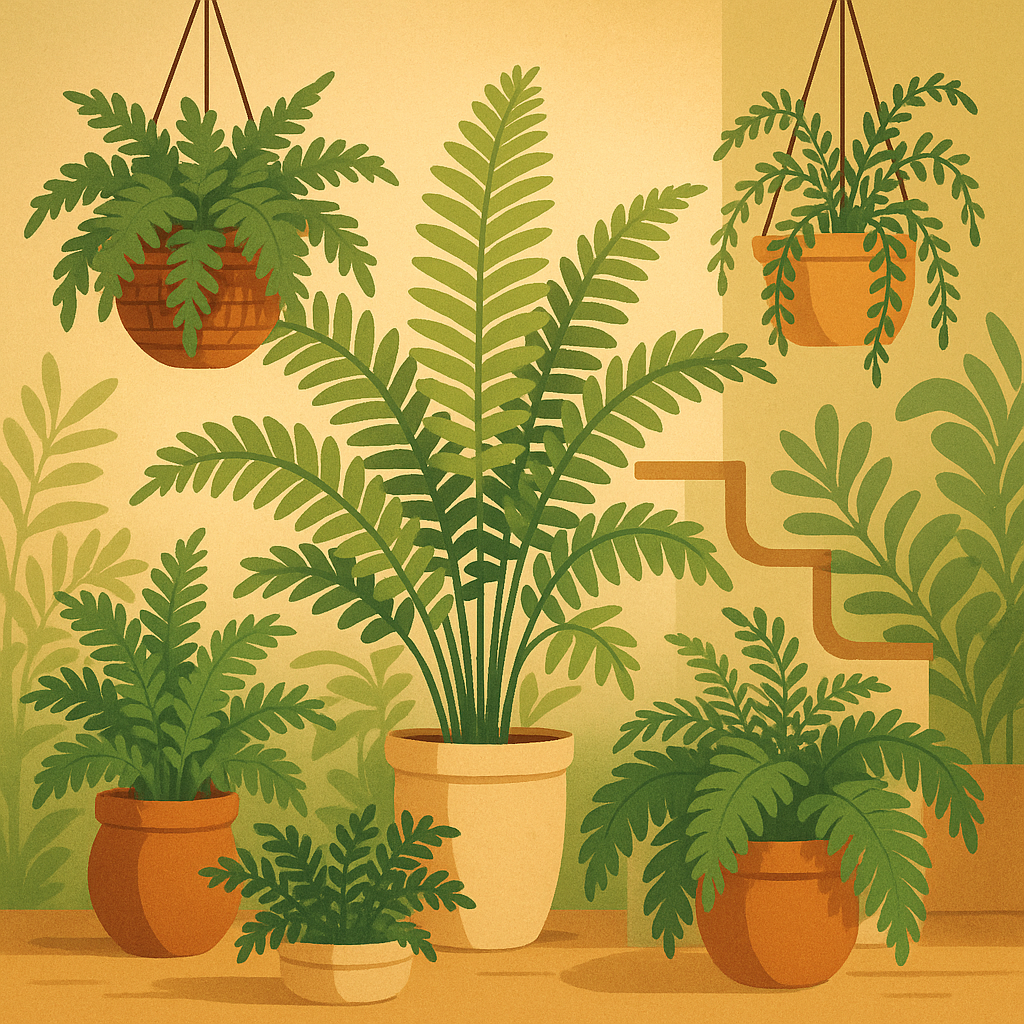
Large Boston ferns or Silver Brake ferns placed in a floor-standing pot can anchor a room beautifully. A plain corner becomes a focal point. Use a pot that complements your floor and furniture — terracotta for a warm earthy look, white ceramic for a clean modern feel. Give the plant enough room for its fronds to arch naturally without hitting the wall.
Hanging Baskets
Hanging is one of the most flattering ways to display a fern. When suspended, fronds cascade naturally and you can appreciate the full shape of the plant. Boston ferns, Rabbit Foot ferns, and Asparagus ferns all thrive in hanging baskets near a bright window. Choose sturdy hooks rated for the weight of a watered plant — they can be heavier than you expect.
Tabletop Groupings
Smaller ferns like Button ferns, Maidenhair ferns, or compact Bird’s Nest varieties make charming tabletop displays. Grouping three plants of slightly different heights creates a miniature garden feel. Use a tray underneath to collect drainage water and to keep the arrangement tidy. This works particularly well on dining tables, console tables, or a dedicated plant shelf.
Bathroom Displays
The bathroom is genuinely one of the best spots in the house for ferns. Warm showers create natural humidity that ferns love, and the soft light through frosted or privacy glass is ideal. Even a single medium-sized fern on a bathroom shelf can make the space feel like a peaceful retreat.
Mounted Wall Ferns
For something truly memorable, consider mounting a Staghorn fern on a piece of cedar board or bark. These epiphytic ferns do not need soil and attach beautifully to wood. Hung as a group, they become a living wall display that is always a conversation starter. Water by soaking the board in the sink every week or two.
Creative Container and Pot Ideas
The container you choose is as much part of the display as the plant itself. A few approaches that consistently work well:
- Terracotta pots: Classic, breathable, and excellent for drainage. They develop a lovely aged patina over time that looks particularly good with lush greenery.
- Woven baskets: Place a plastic nursery pot inside a wicker or seagrass basket for a relaxed, natural look. Easy to move around and very forgiving of imperfect conditions.
- Double potting for humidity: Plant your fern in a smaller terracotta pot, then nest that inside a larger decorative pot with damp sphagnum moss packed in between. The moss stays moist and releases humidity steadily around the roots.
- Vintage ceramics: Old crockery, glazed bowls, or antique planters give a fern arrangement a timeless, collected feel. Make sure to add drainage or use a liner.
When choosing pot size, resist the urge to go too large. Ferns prefer snug roots. A pot one inch wider than the root ball is usually ideal for both health and visual balance.
Pros and Cons of Different Display Approaches
Hanging displays maximize space
Suspending ferns brings greenery to eye level without taking up floor or surface area, ideal for smaller rooms.
Groupings increase humidity naturally
Plants transpire moisture, so grouping several ferns together creates a micro-environment that benefits all of them.
Flexible styling options
Ferns suit almost any interior style, from farmhouse to minimalist, making them easy to incorporate into existing decor.
Hanging baskets need regular watering
Suspended plants dry out faster than floor pots, often needing water every two to three days in warm months.
Large floor arrangements need stable conditions
A big fern in a corner that has dry heat or cold drafts will struggle. Light and humidity must be right before committing to a major display.
Frequently Asked Questions
Can I display ferns in a room without natural light?
Ferns need some light to survive. In very low-light rooms, choose a Bird’s Nest fern or Holly fern — they tolerate shade better than most. You can also supplement with a grow light placed nearby for a few hours each day.
How do I prevent my hanging fern from dripping water?
Use a hanging basket with a built-in drip tray, or hang it only in places where dripping is acceptable, like a covered porch or bathroom. Watering outside and letting it drain before rehanging also works well.
Do ferns really look good in a bathroom with no window?
Without any natural light, even the hardiest ferns will eventually decline. A small grow bulb in a standard lamp socket provides enough supplemental light to keep a fern healthy in a window-free bathroom.
What is the easiest fern to use in an indoor display?
The Bird’s Nest fern is one of the most display-friendly options. It tolerates a range of light levels, looks tidy even when small, and doesn’t shed fronds dramatically the way a Boston fern can when stressed.
Final Thoughts
Displaying ferns well is really about giving them the conditions they love while letting their natural beauty do the work. A good spot, a pot that suits the plant and the room, and a little thought about grouping and height — that is all it takes to create something genuinely lovely.
Start with one plant and one good spot. Notice how it looks at different times of day, in different seasons. Then, when you are ready, add another. Over time your home fills up with green in the most natural, satisfying way.