
You just divided your fern — congratulations. Now the real work begins. A freshly divided fern looks fine on the outside but it’s managing real stress underneath the soil. The roots were disturbed, the connection between fronds and roots is temporarily weakened, and your plant needs gentle, consistent support to recover and thrive.
The good news: fern divisions are surprisingly resilient when given the right environment. Most beginner growers lose divisions not from doing something dramatically wrong, but from small missteps in the first few weeks — overwatering, too much sun, or ignoring humidity. This guide covers exactly what your new divisions need from day one.
What Happens Right After Division
When you separate a fern from its parent, you’re asking it to restart its root system. Even if the division looks healthy, the reduced root mass can’t absorb moisture as efficiently as it used to. This is why new divisions can droop or look a little sad in the first few days — it’s normal, not a sign of failure.
The priority in the first 48 hours is to settle the division in fresh, moist potting mix. Use a well-draining blend with peat moss or coco coir mixed with perlite. Water thoroughly right after potting, until water drains from the bottom. Then check the top inch of soil before watering again.
If some fronds look yellow or damaged after dividing, trim them off cleanly. Removing stressed fronds lets the plant direct all its energy toward new root development and fresh growth instead of trying to sustain leaves it can’t support yet.
Watering New Divisions Without Overwatering
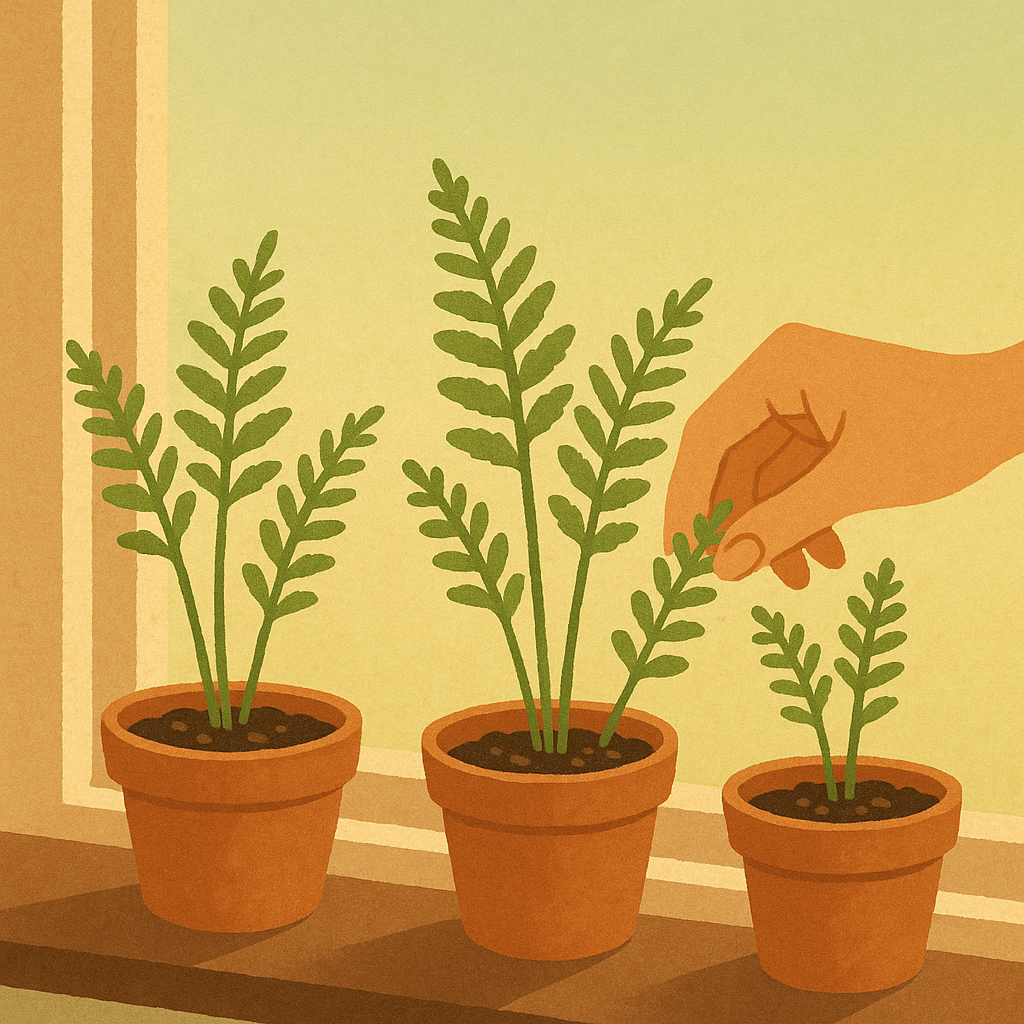
Overwatering is the number one reason fern divisions fail. The roots are small and can’t process excess moisture. Soggy soil quickly leads to root rot, which is very difficult to reverse in a newly divided plant.
- Water at the base: Pour water slowly at soil level, not over the fronds.
- Use room temperature water: Cold water can shock stressed roots.
- Check soil before watering: Stick your finger about 1 inch deep — water only when it feels dry at that depth.
- Drain excess: Never let the pot sit in standing water. Empty the saucer after 30 minutes.
Light and Humidity: The Recovery Environment
New fern divisions need bright, indirect light — similar to what a healthy fern prefers, but slightly less intense while recovering. Direct sun exposure can scorch fronds that are already stressed from division. An east-facing window is ideal, providing gentle morning light without harsh afternoon rays.
Humidity matters even more than usual during recovery. The compromised root system struggles to move moisture up to the fronds, so higher ambient humidity helps compensate. Aim for 50–70% relative humidity around your new divisions.
Simple ways to boost humidity for recovering divisions:
- Mist the foliage daily: A light mist in the morning helps, especially in dry climates.
- Use a pebble tray: Fill a shallow tray with pebbles and water, then set the pot on top. As water evaporates, it humidifies the air around the plant.
- Group plants together: Plants naturally release humidity through their leaves. Clustering your divisions with other plants creates a more humid microclimate.
Temperature and Fertilizer: Less Is More
Maintain temperatures between 65–75°F (18–24°C) for recovering divisions. Keep them away from air conditioning vents, heating ducts, and cold drafts near windows in winter. Temperature fluctuations add stress to a plant that’s already working hard to re-establish roots.
Hold off on fertilizer for at least four weeks after division. The roots are too fragile to process nutrients efficiently, and fertilizer salts can burn small root tips. After that initial period, introduce a diluted liquid fertilizer — about half the recommended strength — once every three to four weeks during the growing season.
Pros and Cons of Division Aftercare
Free new plants
Division lets you multiply your collection without spending money on new plants.
Rejuvenates the parent
Dividing also refreshes the original plant, encouraging new, vigorous growth.
Genetic copy
Your new division is identical to the parent — same variety, same beautiful characteristics.
Slow to re-establish
Divisions can look sad for weeks before showing new growth — patience is essential.
Higher initial care demands
The first month requires more consistent attention than caring for an established fern.
Frequently Asked Questions
My division is drooping — is it dying?
Probably not. Drooping in the first week is completely normal as the division adjusts. As long as the soil isn’t soggy and the roots look healthy (white or light tan), give it time and maintain humidity.
Should I trim damaged fronds after dividing?
Yes. Removing yellowing or damaged fronds lets the plant direct energy toward new growth rather than trying to sustain leaves it can no longer support.
How long until my division looks like a full plant?
Typically 2–4 months, depending on the variety and season. Spring divisions recover fastest because they’re entering the active growing season.
Can I divide the plant again after it recovers?
Yes, but wait until the plant has been growing vigorously for at least one full season before dividing again.
Final Thoughts
Caring for new fern divisions is really about consistent attention during a short recovery window. The first four weeks matter most — moderate light, correct moisture, and good humidity will carry your divisions through the most vulnerable phase. After that, they become progressively more self-sufficient.
Think of it like helping someone settle into a new home. They’re perfectly capable and healthy — they just need a stable environment, regular care, and a little patience. Your fern division is no different. Give it those first few weeks, and you’ll have a thriving new plant to enjoy for years to come.