

You repot your fern with the best intentions, give it fresh soil, water it carefully, and the next day it looks worse instead of better. The fronds droop. A few tips turn brown. The whole plant seems to be sulking. That uncomfortable moment is often transplant shock, and it is far more common than most beginners realize.
Repotting disturbs the roots, even when you work gently. University extension guidance for houseplants consistently points to root disturbance, sudden environmental changes, and watering mistakes as the main drivers of transplant stress. The good news is that mild shock is usually temporary. A fern can recover beautifully when you understand what is happening and respond with patience instead of panic.
What Is Transplant Shock?
Transplant shock is the stress response a plant shows after its root system has been disturbed or its environment changes too quickly. Ferns are especially sensitive because they rely on fine roots and steady moisture to keep all those soft green fronds hydrated. If the roots are busy recovering, the leaves may droop before the plant can fully balance itself again.
That is why a fern can look thirsty even when the soil is moist. The issue is not always lack of water in the pot. Often, it is a temporary mismatch between what the leaves are asking for and what the recovering roots can deliver.
Common Signs After Repotting
- Wilting or drooping: The whole plant looks tired, even in moist soil.
- Yellow or brown older fronds: A few leaves may be shed while the plant redirects energy.
- Slow or paused growth: New fronds may stop unfurling for a short time.
- Leaf curl or crisp edges: Stress and dry indoor air can make symptoms more noticeable.
Why Ferns Get Transplant Shock
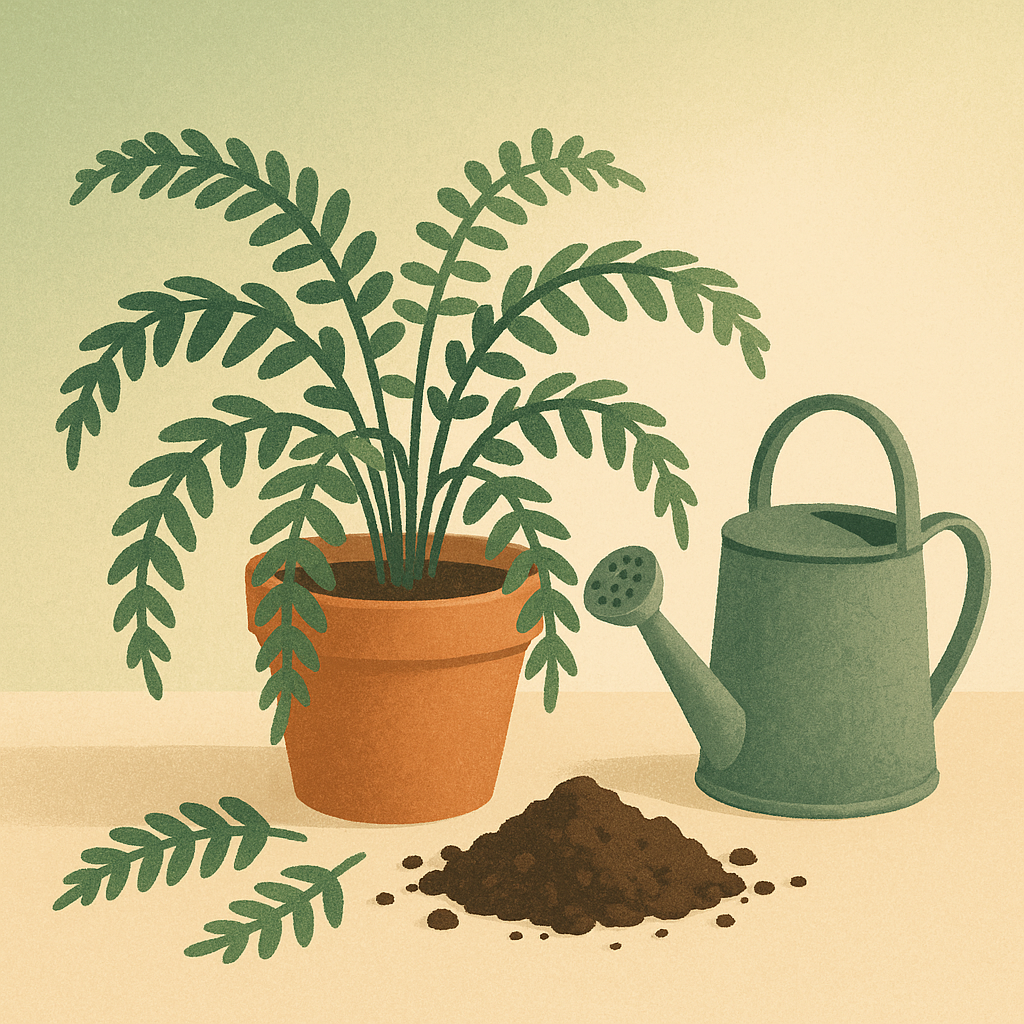
The most common cause is root disturbance. Even careful repotting can break some of the fine roots and root hairs responsible for water uptake. When that network is interrupted, the fronds continue losing moisture faster than the roots can replace it.
Another issue is environment. A freshly repotted fern placed in direct sun, cold drafts, or dry forced air has to handle two stresses at once: root recovery and a challenging room. That combination often turns a manageable adjustment into a dramatic slump.
Repotting Mistakes That Increase Stress
Oversized pot: Moving into a container far larger than necessary leaves too much wet soil around the roots. This slows oxygen flow and increases rot risk.
Heavy soil: Dense mixes stay soggy and compact. Fern roots prefer a light, airy medium that stays moist without becoming swampy.
Immediate fertilizer: Fresh roots are tender. Fertilizer too soon can feel like pouring strong coffee into a healing wound.
Too much handling: Shaking off every bit of old soil or aggressively teasing apart the roots may feel thorough, but it often creates extra trauma.
How to Prevent Transplant Shock Before It Starts
Prevention begins before the plant ever leaves its old pot. Water the fern the day before repotting so the root ball is hydrated but not dripping. Choose a new pot only one or two inches wider than the current one. Prepare a soft, well-draining mix and have everything ready so the plant spends as little time exposed as possible.
During the move, support the root ball from underneath and keep the crown at the same planting depth it had before. Once the fern is in its new home, water thoroughly to settle the soil, then place it somewhere with bright indirect light instead of harsh sun.
The Best Recovery Setup Right Away
- Bright, indirect light: Enough energy for recovery without the strain of direct sun.
- Stable warmth: Avoid cold windows, heater vents, and sudden temperature swings.
- Comfortable humidity: Ferns recover better when the air is not bone dry.
- Even moisture: Keep the soil lightly moist, never waterlogged.
How to Help a Fern Recover from Shock
If your fern is already showing symptoms, resist the urge to over-correct. Too much water, too much pruning, or too much moving around often makes recovery slower. Instead, simplify the environment. Give the plant a calm location, check the soil with your finger, and let the roots rebuild.
Trim only the fronds that are clearly dead or mostly brown. A partly tired-looking frond can still help the plant photosynthesize. Many growers cut too much too soon, which removes energy sources the fern still needs.
How Long Recovery Usually Takes
Mild transplant shock can improve in about one to three weeks. Larger repots or sensitive species may take longer. The clearest sign of recovery is not that old fronds magically become perfect again. It is the appearance of steady new growth from the crown. Once new fiddleheads begin to rise, the plant has moved from survival back into growth.
When Shock Might Actually Be a Different Problem
Sometimes what looks like transplant shock is really root rot or planting too deeply. If the soil smells sour, the crown feels soft, or the plant keeps collapsing week after week, it is time to inspect more closely. Shock should gradually improve. True root trouble usually gets worse without intervention.
Likewise, if the fern is sitting in very low light after repotting, it may remain stalled simply because it does not have enough energy to rebuild roots. Recovery care still needs balance. Protection from stress should not become deprivation.
Should You Mist the Fronds?
Misting can offer a brief sense of relief, but it is not a complete humidity solution. A pebble tray or room humidifier generally helps more because it provides a steadier environment. If you do mist, do it lightly and combine it with good airflow so water does not linger heavily on the foliage.
Pros and Cons of Repotting During Active Growth
Faster root recovery
During the growing season, a fern has more energy available to re-establish roots and start new fronds.
Better long-term growth
Fresh soil and more space can quickly support a stronger, fuller plant once the stress window passes.
Chance to fix hidden issues
Repotting lets you spot compacted soil, circling roots, or early rot before they become serious.
Short-term appearance decline
Even a successful repot may leave the fern looking temporarily worse before it looks better.
Easy to overreact
Worried growers often overwater or fertilize too early, which turns mild stress into a real problem.
Frequently Asked Questions
How do I know if my fern is in shock or just thirsty?
Check the soil first. If it is already moist and the fern is still drooping right after repotting, shock is more likely than simple thirst.
Should I fertilize a shocked fern to help it recover?
No. Wait until you see healthy new growth. Fertilizer too early can stress sensitive recovering roots.
Is some leaf loss normal after repotting?
Yes. A few older fronds may yellow or drop as the plant reallocates energy during recovery.
When should I worry that the plant is not recovering?
If symptoms keep worsening for several weeks, the crown softens, or the soil smells rotten, check for deeper problems such as rot or poor drainage.
Final Thoughts
Transplant shock feels dramatic because ferns wear stress on their sleeves. But in many cases, the plant is not failing. It is adjusting. When you understand that, your job becomes much clearer: protect the roots, steady the environment, and wait for the plant to do what it already knows how to do.
The deepest gardening lesson here may be patience. Repotting is not a performance you judge the next morning. It is a process you evaluate over the next few weeks. Give your fern that grace, and it often gives it right back in fresh green growth.