

Some ferns quietly do the hard work for you. Instead of asking you to divide a crowded root ball or experiment with spores, they send out runners or form baby plantlets that are almost like a gentle invitation: here is your next plant, whenever you are ready.
This is one reason Boston ferns and a few similar types are so rewarding for beginners. University guidance from Kansas State and Florida notes that stolons, often called runners, are a practical way to propagate Boston ferns at home. Once you know what to look for, multiplying your plant feels less like advanced gardening and more like helping nature finish a job it has already started.
What Are Fern Runners and Plantlets?
Runners are long, thin stems that stretch away from the mother plant. On Boston ferns, these arching extensions may trail over the edge of the pot or snake across the soil surface. At the tips or nodes, they can begin forming tiny new plants. These little starts are often called plantlets.
If you have ever seen a strawberry plant send out a little baby on a slender stem, the idea is similar. The parent plant stays rooted in place while the runner explores nearby space. When conditions are favorable, the new plantlet begins forming roots of its own.
Why This Method Feels So Beginner-Friendly
Plantlets and runners are comforting because they reduce the guesswork. You are not cutting apart a dense crown or trying to read tiny spores. The fern is already showing you where new growth wants to happen. That makes this one of the least intimidating propagation methods for nervous plant owners.
Which Ferns Commonly Make Plantlets?
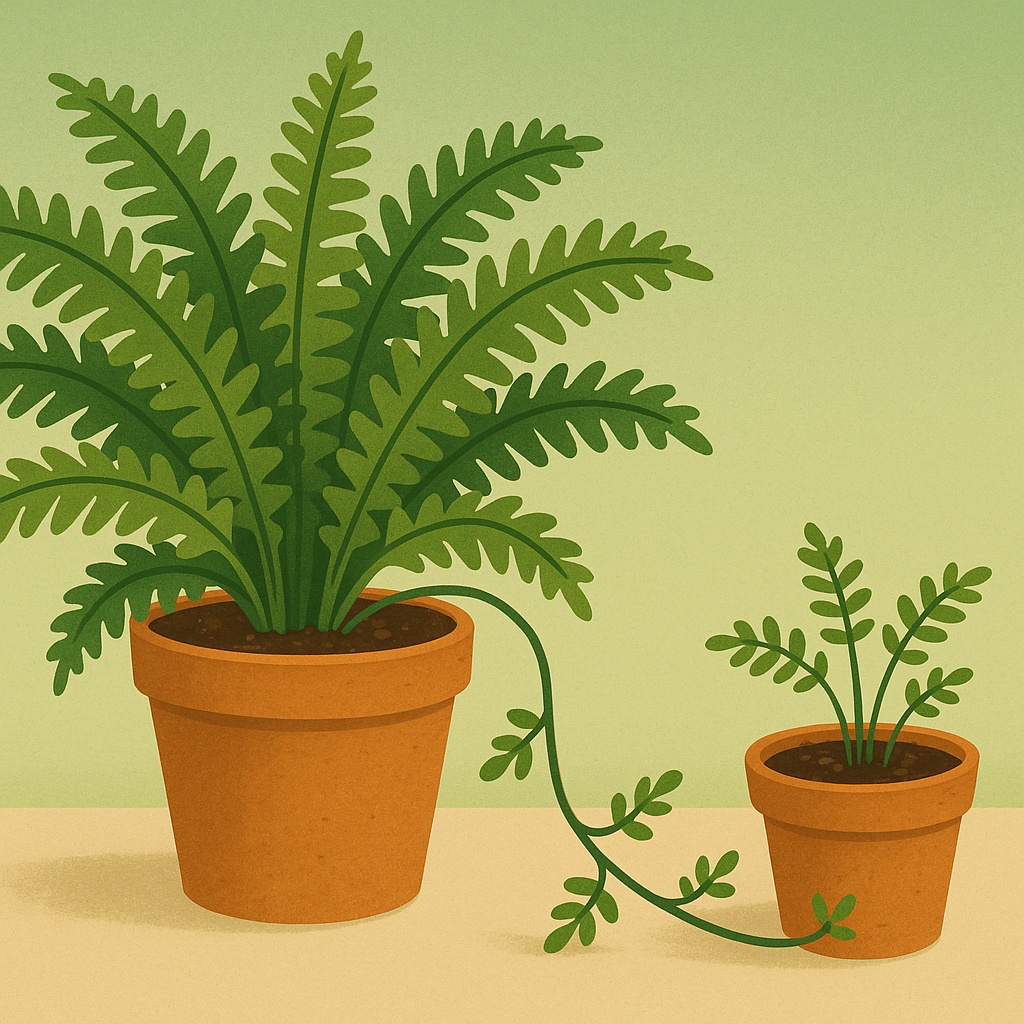
Boston ferns are the best-known example for indoor growers. They often produce slender stolons that can root when they touch soil. Some related fern types may form offsets or small rooted sections near the main plant as well. Not every fern behaves this way, which is why it helps to know your species before waiting for runners that may never appear.
If your fern grows in a tight clump and never sends out baby growth, division may still be the better approach. But when a fern does make runners, it offers a lower-stress path to propagation.
Signs a Plantlet Is Ready
- Visible baby fronds: The tip shows small but recognizable fern growth.
- Healthy runner: The connecting stem is green and firm rather than dry or damaged.
- Warm growing season: Spring and summer give the new plant the best chance to root quickly.
- Moist nearby soil: Runners respond best when they can rest on evenly moist potting mix.
How to Root a Fern Runner in Soil
The easiest method is to place a small pot of fresh potting mix next to the mother plant and guide the runner onto that soil. You do not cut it off right away. Instead, you let the baby remain attached while it develops roots. This is a wonderfully forgiving method because the parent keeps supporting the plantlet during the transition.
Step-by-Step Soil Method
Step 1: Fill a small pot with light, moist potting mix. A fern-friendly mix with potting soil, perlite, and a moisture-retentive ingredient such as coco coir works well.
Step 2: Rest the runner tip or node gently on the new soil. If needed, use a bent paper clip or a small pin to keep it in contact with the surface.
Step 3: Keep the soil lightly and consistently moist. Do not let it become dusty dry, but avoid soggy conditions too.
Step 4: Give the setup bright, indirect light and steady humidity. In many homes, a few weeks is enough to see signs that the new start is anchoring itself.
Step 5: Once the baby has formed roots and looks stable, cut the runner between the parent and the new plant. From that point on, you have an independent fern.
Can You Separate a Plantlet Right Away?
Sometimes, yes, especially if the plantlet already has roots. But for most beginners, it is safer to root first and separate later. Keeping the connection intact reduces stress and gives the new plant backup while it settles in. Think of it as letting a child learn to ride a bike with a steadying hand nearby.
If you do remove a rooted piece, plant it into a small pot rather than a large one. A tiny root system in an oversized container stays wet too long, and that creates avoidable rot risk.
How Much Aftercare Does a New Plant Need?
More gentleness than complexity. Newly rooted plantlets appreciate bright indirect light, moderate warmth, and slightly higher humidity than the average living room may provide. A pebble tray, nearby humidifier, or placement in a naturally humid room can help. Hold off on fertilizer until you see confident new growth.
Common Mistakes with Fern Plantlets
The biggest mistake is rushing. People often cut the runner too early because the plantlet looks cute and ready. But appearance alone is not enough. Without roots, the baby dries out quickly. Another common mistake is placing the new fern in harsh sunlight, which increases water loss before the roots can keep up.
Overpotting is another quiet problem. Plant growers sometimes feel generous and give a baby fern a large decorative pot from day one. It feels kind, but it usually backfires. Small starts do better in small homes first.
When Division Is Better Than Runners
If your fern has become a large, crowded clump and you want several full-size plants quickly, division may still be the better method. Runners are wonderful for steady, low-stress multiplication. Division is better when the plant is mature and you are comfortable handling the root ball. They are not competing methods so much as different tools for different stages of growth.
Pros and Cons of Using Plantlets and Runners
Low-stress propagation
The baby plant can remain attached while rooting, which makes the process more forgiving for beginners.
Little equipment needed
A small pot, light soil, and patience are usually enough to get started.
Great for Boston ferns
This method suits one of the most popular indoor ferns, making it highly practical for home growers.
Not every fern makes runners
Some species need division or other propagation methods instead, so this approach is not universal.
Can tempt you to rush
Separating too early is a common cause of failure, especially when baby plants look ready before they truly are.
Frequently Asked Questions
What is the difference between a runner and a plantlet?
The runner is the thin connecting stem. The plantlet is the baby fern that forms at the end or along that runner.
How long should I leave a runner attached?
Leave it attached until the baby has clear roots and looks stable in its own pot. A few weeks is common, but timing depends on warmth, moisture, and growing conditions.
Can I root Boston fern runners in water?
Some growers do, but soil is usually the simpler and safer option for beginners because the roots transition more naturally into potting mix.
Should I fertilize a new plantlet right away?
No. Wait until you see fresh active growth. Fertilizing too early can stress delicate new roots.
Final Thoughts
Plantlets and runners take some of the fear out of propagation. They let you practice patience, observation, and gentle handling without asking you to perform surgery on a beloved plant. For many home growers, that is exactly the kind of confidence-building success that turns fern care into a long-term pleasure.
If your Boston fern has started reaching outward with green little runners, take it as a compliment. The plant is thriving enough to imagine a bigger future. Your job is simply to give that future a small pot and a little time.