

If you have ever turned over a healthy fern frond and noticed tidy rows of brown dots, you may have worried that your plant was sick. In many cases, those dots are not a disease at all. They are part of the fern’s natural reproductive system, and they are one of the most fascinating things about growing these ancient plants indoors.
Ferns do not make flowers or seeds like most houseplants. Instead, they reproduce through spores. According to the U.S. Forest Service and the University of California Botanical Garden, these spores form inside tiny cases grouped into clusters called sori on the underside of fertile fronds. Once you understand that simple idea, those mysterious dots stop looking alarming and start looking remarkable.
What Are Fern Spores?
Fern spores are tiny reproductive cells. You can think of them as the fern’s version of a starting point for a new plant, although they are very different from seeds. A seed already contains a miniature plant embryo plus stored food. A spore is much simpler. It must land in the right moist environment and go through more than one life stage before becoming the fern plant you recognize in a pot.
This is why ferns feel a little magical. Their life cycle is older and more complex than that of many flowering plants. For indoor gardeners, the practical takeaway is simple: brown dots under the fronds usually mean your fern is mature enough to reproduce, not that it is in trouble.
Why Spores Matter to Home Growers
Even if you never plan to grow ferns from spores, understanding them helps you avoid a common mistake. Many beginners confuse sori with scale insects, fungal spots, or physical damage. That confusion can lead to unnecessary sprays, pruning, or panic. Knowing what healthy sori look like helps you respond calmly and correctly.
What Are Sori on the Underside of Fronds?
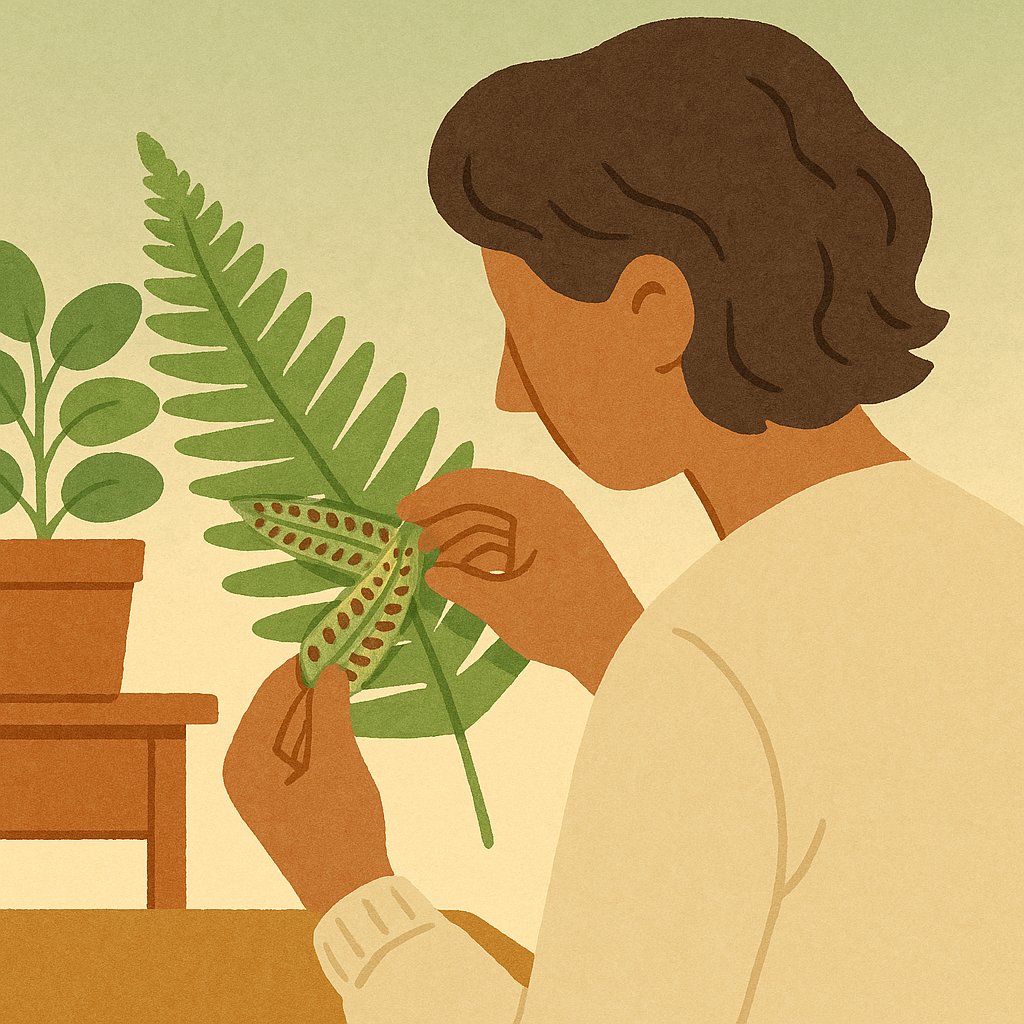
The visible clusters are called sori. A sorus is made up of many tiny spore cases called sporangia. Britannica and the USDA both describe sori as a key identifying feature of fern species because their shape and arrangement vary from one type of fern to another. Some are round, some are elongated, and some appear in neat rows close to the edges of the fronds.
The underside of the leaf offers protection while the spores mature. On some species, a thin flap of tissue called an indusium partly covers the sorus until the spores are ready. On others, the sporangia remain more exposed. This is all normal fern biology at work.
How to Tell Sori from a Problem
- Look for pattern: Sori usually appear in orderly rows or repeated shapes, not random splatters.
- Check only the underside: Reproductive structures are commonly underneath the frond, while many disease issues show on both sides.
- Notice texture: Sori are dry and tidy. Rot or infection often looks wet, fuzzy, swollen, or irregular.
- Watch the rest of the plant: A fern with healthy green growth and only patterned dots underneath is usually fine.
How the Fern Life Cycle Works
Ferns live through what botanists call an alternation of generations. That phrase sounds technical, but the concept is manageable when broken down slowly. The leafy plant in your living room is the main fern stage, called the sporophyte. It produces spores in sori. When a spore lands in a moist place, it can grow into a tiny heart-shaped stage called a gametophyte. With enough moisture, fertilization happens there, and eventually a new fern plant begins.
For everyday houseplant care, you do not need to memorize each stage. What matters is that spores are not baby ferns yet. They are the beginning of a longer process that depends on humidity, cleanliness, and patience. That is one reason fern propagation from spores is possible but slower and more delicate than dividing mature plants.
Can You Grow Ferns from Spores at Home?
Yes, but it is more like a quiet experiment than a quick gardening project. Spore propagation takes much longer than division. It also requires sterile containers, steady moisture, indirect light, and patience measured in weeks and months rather than days. If you enjoy watching natural processes unfold, it can be deeply satisfying. If you simply want another full fern by next month, root division is far easier.
What Spores Mean for Indoor Fern Care
Seeing spores does not mean you need to change your care routine dramatically. Continue focusing on the basics: bright indirect light, evenly moist soil, and comfortable humidity. Mature fronds with sori can stay on the plant unless they are old, damaged, or unattractive. There is no need to cut them off just because they are fertile.
In fact, a fern producing sori can be a quiet sign that your conditions are reasonably stable. The plant has enough energy to move through its normal life cycle. That does not guarantee perfect health, but it often suggests the plant is established and functioning as it should.
When to Be Concerned Instead
You should look closer if the underside spots are paired with yellow collapse, mushy stems, foul-smelling soil, or spreading dark lesions. Those symptoms point away from healthy reproduction and more toward a care issue like overwatering, poor airflow, or infection. In that case, inspect the roots, improve drainage, and isolate the plant if disease is suspected.
Pros and Cons of Learning About Fern Spores
Prevents unnecessary worry
Understanding sori helps you avoid mistaking normal fern reproduction for pests or disease.
Improves plant observation
You become better at noticing patterns, healthy growth, and real warning signs on your fern.
Opens the door to propagation
Once you understand spores, you can try a rewarding long-form propagation project if you want.
Can be confusing at first
The fern life cycle is less familiar than seed-based plants, so the terminology may feel abstract initially.
Spore growing requires patience
Compared with division, propagation from spores is slower and more sensitive to moisture and cleanliness.
Frequently Asked Questions
Are brown dots under fern leaves always spores?
Not always, but they often are if they appear in neat rows or repeated patterns on otherwise healthy fronds. Irregular patches, fuzzy growth, or wet black areas should be checked more carefully.
Should I cut off fronds that have sori?
No. Fertile fronds can stay unless they are damaged, unattractive, or naturally aging out. Sori alone are not a reason to prune.
Can indoor ferns really make new plants from spores?
Yes, but only under the right conditions and with patience. Most indoor growers find division easier, while spores are better for slow, experimental propagation.
Do all fern species show spores the same way?
No. The arrangement and shape of sori differ by species, which is why botanists sometimes use them to help identify ferns.
Final Thoughts
Fern spores are one of those details that turn ordinary houseplant care into genuine curiosity. What looks like a problem at first glance is often evidence that your plant is simply doing what ferns have done for millions of years. Once you know what sori are, you start seeing your fern less as a mystery and more as a living piece of natural history.
That shift matters. Calm observation is one of the best skills a plant grower can build. The more you understand what is normal, the easier it becomes to recognize what truly needs attention.