

Repotting a fern sounds like a big project, but it’s really just a quiet afternoon activity that takes about 20 minutes. The rewards are immediate: fresh soil, more root space, and a plant that suddenly has the room to grow into the lush, full fern you’ve been hoping for.
This guide walks you through the entire process — from choosing the right pot to the final watering — in simple, reassuring steps. Even if you’ve never repotted anything before, you can do this.
What You’ll Need Before You Begin
Gathering everything before you start makes the whole process calmer and cleaner. Lay it all out on a table covered with old newspaper or a plastic sheet before you bring out the plant.
- A new pot: 1-2 inches larger in diameter than the current one, with drainage holes.
- Fresh potting mix: A light, well-draining houseplant mix; adding 20-25% perlite improves drainage and aeration for ferns.
- Clean scissors or pruners: For trimming any dead or damaged roots.
- A small trowel or spoon: For filling in soil around the roots.
- A watering can: For the final, thorough watering.
- A towel or newspaper: To protect your workspace from loose soil.
Water your fern well one to two days before repotting. A well-hydrated plant handles the process far better than a dry one. The moisture helps soil cling to the roots, which keeps the root ball intact and reduces breakage during removal.
Choosing the Right Soil Mix
Ferns evolved on forest floors where the soil is rich in organic matter but drains freely. A quality indoor potting mix combined with perlite (for drainage) and a small amount of peat moss or coco coir (for moisture retention) mimics that environment well. Avoid heavy garden soil — it compacts easily in pots and can suffocate fern roots within months.
Step-by-Step Repotting Guide
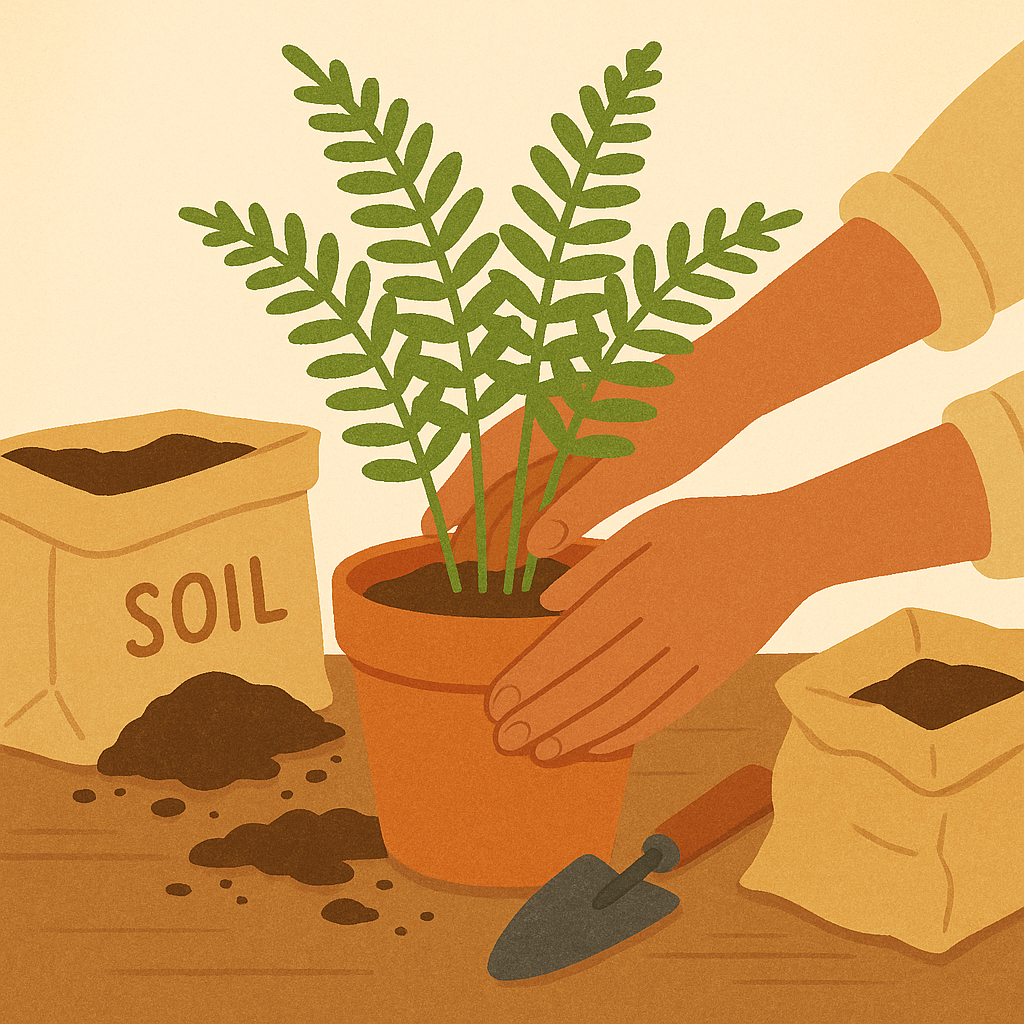

Follow these steps in order. Take your time — there’s no rush, and a slow, gentle approach leads to much better outcomes than hurrying through the process.
Steps 1 through 4: Removal and Inspection
Step 1 — Prepare the new pot: Add a small layer of fresh potting mix to the bottom of the new pot. This layer should position the fern’s crown about 1 inch below the pot’s rim once it’s placed inside. That inch of space lets water pool briefly during watering rather than running straight off the edge.
Step 2 — Remove the fern from its old pot: Lay the old pot sideways and support the base of the plant with one hand. Gently ease the fern out by pressing on the sides of a plastic pot or running a clean butter knife around the inner edge of a ceramic one. Never pull by the fronds — always grip near the base of the root ball.
Step 3 — Inspect the root ball: Once the fern is out, look at the roots. Healthy roots are white or light tan. Dark brown, mushy, or foul-smelling roots indicate rot and should be trimmed away cleanly with sterile scissors. Loosen the outer roots gently with your fingers — this encourages them to grow outward into the new soil rather than continuing to circle.
Step 4 — Position in the new pot: Place the fern in the center of the new pot. The crown — the point where the stems emerge from the roots — should sit at the same depth it was in the old pot, or very slightly above the soil line. Burying the crown too deep is a leading cause of post-repotting rot.
Steps 5 through 7: Filling and Aftercare
Step 5 — Fill in fresh soil: Add fresh potting mix around the root ball, gently pressing it down as you go to eliminate air pockets. The finished soil line should be about 1 inch below the rim of the pot. Avoid packing the soil too tightly — fern roots need air in the soil to thrive.
Step 6 — Water thoroughly: Water slowly and evenly until water drains freely from the bottom holes. This initial watering settles the soil, eliminates any remaining air pockets, and helps the roots make first contact with the fresh, moist mix around them.
Step 7 — Place in gentle light: Move your repotted fern to a spot with bright, indirect light for the first 2-3 weeks. Avoid direct sun during this recovery period — the plant’s root system is still re-establishing, and direct sun puts extra demand on fronds that the roots can’t yet fully support.
What to Expect After Repotting
Ferns almost always show some stress response in the first 1-2 weeks after repotting. This is completely normal and not a sign that something went wrong. Here’s what you’ll likely see:
- Slight wilting or drooping fronds: The root system is recovering and temporarily can’t supply full water to all leaves. Keep humidity high — mist lightly or use a pebble tray — and this passes within a week.
- Minimal new growth at first: The plant is putting its energy into root development rather than frond production. This is a good sign, not a bad one.
- Some yellowing of older fronds: A bit of lower-frond yellowing is normal after repotting. Remove yellow fronds cleanly at the base and focus on the new growth appearing from the crown.
Avoid fertilizing for 4-6 weeks after repotting. Fresh potting mix already contains nutrients, and adding fertilizer to stressed, recovering roots can cause fertilizer burn — compounding the problem rather than helping it.
Pros and Cons of Repotting
Immediate nutrient refresh
Fresh potting mix replenishes everything the old soil slowly lost over 1-2 years of regular watering.
Root health improvement
Inspecting and trimming roots during repotting prevents small problems (like early rot) from becoming serious ones.
Renewed growth flush
Most ferns respond to repotting with a visible increase in new frond production within 3-6 weeks.
Short-term stress period
Expect 1-2 weeks of wilting or slow growth while roots re-establish. Patience is the key ingredient here.
Overwatering risk increases temporarily
A larger pot with more soil takes longer to dry out. Check the soil more carefully than usual in the weeks after repotting.
Frequently Asked Questions
My fern looks completely wilted after repotting. Is it dying?
Probably not. Wilting after repotting is the plant’s normal stress response — the root system has been disturbed and can’t supply water to all the fronds yet. Keep the soil consistently moist (not waterlogged), maintain humidity around the plant, and give it 1-2 weeks. As roots re-establish, the fronds will perk up. If wilting persists beyond 3 weeks, check for root rot.
Can I repot my fern while it’s actively producing new fronds?
Yes — spring, when ferns are pushing out new growth, is actually one of the best times to repot. The plant’s natural growth energy helps new roots establish faster. The only risk is that new, uncurled fiddleheads are very fragile. Handle them carefully and try not to damage them during the repotting process.
Do I need to remove all the old soil from the roots?
No, and you shouldn’t try to. Remove loose, old soil naturally, but don’t aggressively wash or shake all the soil off — this puts excessive stress on roots and removes beneficial microorganisms living in the soil. Keeping some original soil around the root ball helps the plant transition more smoothly.
How deep should I plant my fern in the new pot?
The crown should sit at the same depth as in the old pot — or very slightly above the soil line. The crown is the central growing point where all the stems emerge. Burying it below the soil surface traps moisture against it and is a very common cause of crown rot after repotting.
Final Thoughts
Repotting is an act of trust — the plant trusts you, and you’re trusting the process. Go slowly, be gentle with the roots, and remember that what looks like stress in week one is almost always just recovery. By week three, you’ll likely see the first signs of new growth rewarding your care.
Once you’ve done it once, repotting will feel like second nature. And your ferns will reward your confidence with months of lush, renewed growth that reminds you exactly why you started growing plants in the first place.