

Seeing yellow fronds on your beautiful fern can be alarming, especially if you’re new to plant care. But here’s what might surprise you: not all yellow fern leaves mean trouble. In fact, some yellowing is a perfectly healthy sign that your plant is growing and renewing itself.
The key is learning to read the signals your fern is sending. After helping countless people distinguish between normal aging and concerning symptoms, I’ve developed a simple system for understanding when yellow fronds are natural and when they indicate a problem that needs your attention.
Understanding Natural Fern Aging
Just like trees shed their leaves in fall, ferns naturally release their oldest fronds to make room for new growth. This process happens continuously throughout the growing season, creating what botanists call “normal senescence.”
What Normal Yellowing Looks Like
Location pattern: Only the oldest fronds at the base or outer edges of the plant turn yellow. The newer growth in the center stays vibrant and green.
Gradual progression: The yellowing happens slowly over several weeks, starting with a light green fade before becoming golden yellow, then eventually brown.
Single fronds: Usually only one or two fronds yellow at a time, not multiple fronds simultaneously.
Healthy new growth: While older fronds are yellowing, you can see new fronds emerging from the crown of the plant.
This natural process is actually a good sign — it means your fern has enough energy to produce new growth and is efficiently managing its resources by shedding energy-demanding older fronds.
Red Flags: When Yellow Means Trouble
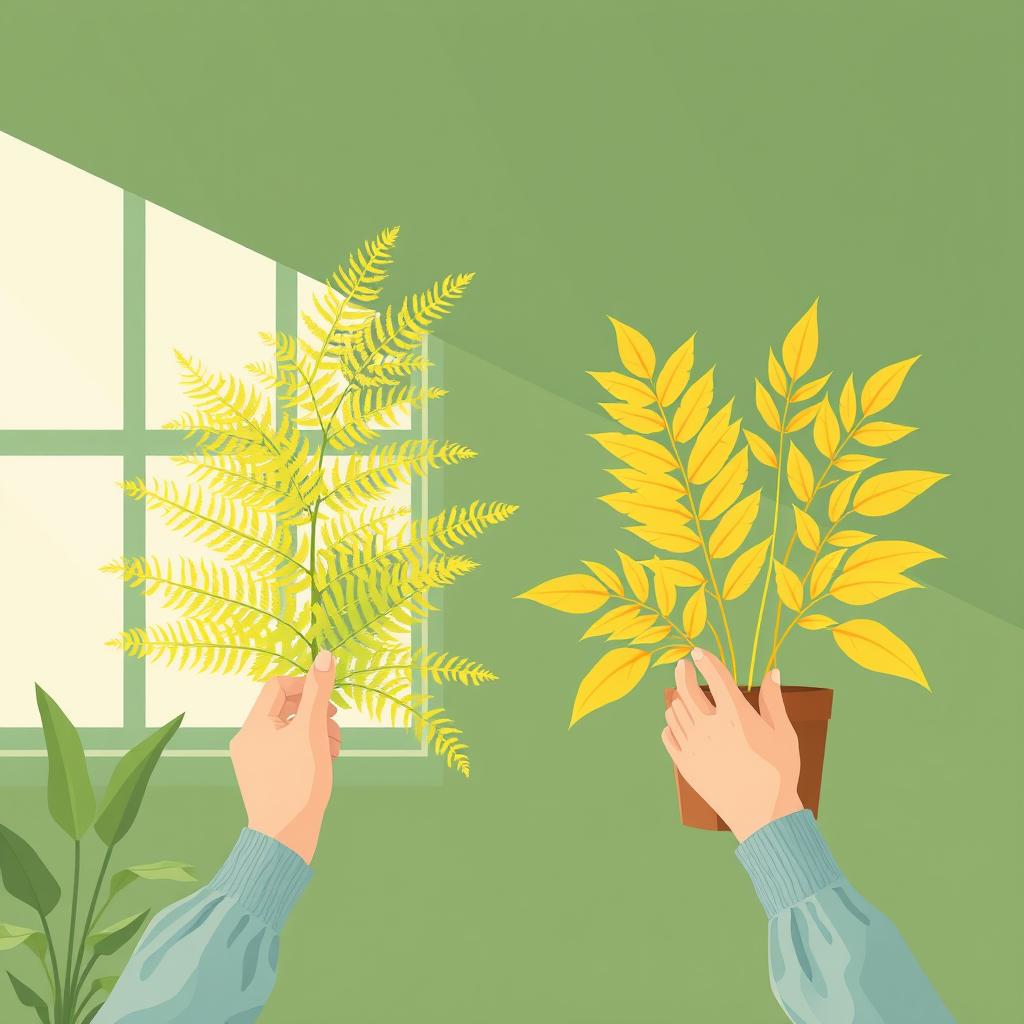
Problem yellowing looks very different from natural aging. These patterns should prompt immediate attention to your plant’s care routine.
Concerning Yellowing Patterns
Multiple fronds at once: If several fronds across different ages are yellowing simultaneously, your plant is stressed.
Yellowing from the crown: When newer, central fronds start turning yellow before older ones, this often indicates serious problems.
Rapid color change: Fronds that go from green to yellow within days rather than weeks suggest environmental stress.
Accompanied symptoms: Yellow fronds plus wilting, mushy spots, unusual odors, or pest activity all point to care issues.
The Most Common Culprit: Watering Imbalances
In my experience, about 80% of concerning yellow fronds trace back to watering problems. Both too much and too little water can trigger yellowing, but they create different patterns that help identify the issue.
Overwatering Symptoms
Overwatering typically causes yellowing to start from the bottom fronds and work upward. The yellowing often appears alongside these signs:
- Soggy soil: The potting mix stays wet for more than a few days after watering
- Musty odor: A sour or rotting smell coming from the soil
- Soft, mushy fronds: Yellow fronds feel limp and waterlogged rather than crispy
- Dark spots: Black or dark brown spots may appear on stems or frond bases
Emergency action: Stop watering immediately. Check the roots for rot (they should be white or light brown, not black and mushy). If root rot is present, trim affected roots and repot in fresh, well-draining soil.
Underwatering Indicators
Water-stressed ferns often show yellowing that progresses to brown, crispy edges. Look for these accompanying signs:
- Bone-dry soil: The potting mix pulls away from the sides of the container
- Wilted appearance: The entire plant looks droopy, even newly yellow fronds
- Crispy texture: Yellow fronds feel papery and brittle to the touch
Recovery steps: Water thoroughly until water drains from the bottom, then establish a more consistent watering schedule. Check soil moisture every few days rather than watering on a rigid schedule.
Environmental Stress Factors
Several environmental conditions can trigger problematic yellowing in otherwise healthy ferns.
Light-Related Yellowing
Too little light: Fronds become pale yellow and thin, often starting with the innermost growth. The plant may also look leggy and sparse.
Too much light: Direct sunlight can bleach fronds to a pale yellow or create yellow patches with brown, scorched edges.
Solution: Most ferns thrive in bright, indirect light. East-facing windows or spots a few feet back from south-facing windows usually provide ideal conditions.
Temperature and Humidity Issues
Sudden temperature changes or consistently low humidity can trigger stress yellowing. Ferns prefer temperatures between 60-75°F (15-24°C) and humidity levels above 50%.
Common triggers: Heating vents, air conditioning, cold drafts, or dry winter air can all cause rapid yellowing in sensitive ferns.
Nutrient Deficiencies and Over-Fertilization
Both too little and too much fertilizer can cause yellowing, but they create different patterns.
Under-Fertilization Signs
Nutrient-deficient ferns often show:
- Gradual yellowing: Starting with older fronds and slowly progressing upward
- Stunted growth: New fronds emerge smaller than usual or grow very slowly
- Overall pale appearance: The entire plant looks less vibrant than when you first got it
Solution: During growing season (spring and summer), apply a diluted liquid fertilizer monthly. Use half the recommended strength to avoid burning the delicate roots.
Over-Fertilization Warning Signs
Too much fertilizer often causes yellowing combined with brown, crispy leaf edges. You might also notice white salt deposits on the soil surface.
Recovery approach: Flush the soil thoroughly with plain water to remove excess salts, then avoid fertilizing for several months while the plant recovers.
Pest-Related Yellowing
Small insects can cause yellowing that appears as scattered yellow spots or a gradual loss of color across affected fronds.
Common fern pests: Spider mites, scale insects, and aphids all feed on plant sap, weakening fronds and causing discoloration.
Weekly inspection routine: Check the undersides of fronds and along stems for tiny moving specks, sticky residue, or fine webbing. Early detection makes treatment much more effective.
When to Remove Yellow Fronds
The timing of frond removal depends on whether you’re dealing with natural aging or problem yellowing.
Normal Aging Protocol
For naturally yellowing fronds, wait until they’re completely yellow or beginning to turn brown before removing them. The plant is still extracting nutrients from partially yellow fronds.
Cutting technique: Use clean, sharp scissors to cut at the base where the frond meets the main plant. Avoid pulling, which can damage the crown.
Problem Yellowing Response
When yellowing indicates stress or disease, remove affected fronds promptly to prevent the problem from spreading. Focus your energy on correcting the underlying cause rather than waiting for natural progression.
Pros and Cons of Different Yellowing Responses
Monitoring approach
Observing patterns before acting helps identify true causes rather than symptoms.
Natural aging acceptance
Understanding normal cycles reduces unnecessary stress and intervention.
Early intervention
Addressing problems quickly prevents minor issues from becoming major problems.
Learning curve
Distinguishing normal from problematic yellowing takes experience and observation.
Delayed response
Waiting to determine if yellowing is normal can worsen actual problems.
Frequently Asked Questions
How many yellow fronds is normal at one time?
For healthy ferns, 1-2 fronds yellowing simultaneously is normal during growing season. More than 3-4 fronds yellowing at once usually indicates environmental stress or care issues that need attention.
Can yellow fronds turn green again?
No, once a frond turns yellow, it won’t return to green. However, correcting underlying problems will ensure new growth emerges healthy and green. Focus on creating optimal conditions for future fronds.
Should I be worried if all the bottom fronds are yellowing?
If only the oldest, lowest fronds are gradually yellowing while new growth looks healthy, this is normal aging. But if many bottom fronds yellow quickly or show signs of mushiness, check for overwatering or root problems.
My fern has been yellowing for weeks despite good care. What’s wrong?
Persistent yellowing despite proper care often indicates hidden issues like root binding, pest problems, or gradual environmental stress. Check if the plant needs repotting and inspect closely for signs of insects or disease.
Building Confidence in Your Plant Parenting
Learning to distinguish between normal and concerning yellowing takes time, but each observation teaches you more about your fern’s unique rhythms and needs. Keep a simple log of when fronds yellow and what else is happening with your plant’s care.
Remember that healthy ferns naturally cycle through periods of growth, maturity, and shedding. Yellow fronds aren’t always a sign of failure — sometimes they’re evidence that your plant is thriving enough to invest energy in new growth.
Trust your growing instincts, but don’t hesitate to make adjustments when multiple warning signs appear together. With practice, you’ll develop the confidence to read your fern’s signals and respond appropriately to both natural aging and genuine care concerns.