

Rabbit foot ferns captivate everyone who sees them for the first time. Those fuzzy, creeping rhizomes that spill over the pot’s edge look remarkably like tiny rabbit feet — hence the name — creating a living sculpture that’s equal parts plant and art piece.
Beyond their novelty appearance, these ferns are surprisingly easy to care for. They forgive beginners’ mistakes while rewarding attention with lush, delicate fronds and ever-growing fuzzy rhizomes that become more impressive with age.
What Makes Rabbit Foot Ferns Unique
The rabbit foot fern (Davallia fejeensis) belongs to a group of epiphytic ferns that naturally grow on tree branches rather than in soil. The fuzzy rhizomes you see aren’t roots — they’re modified stems covered in soft, hair-like scales that help the plant attach to surfaces and absorb moisture from the air.
These rhizomes serve multiple purposes: they store water and nutrients, allowing the plant to survive short dry periods, and they creep horizontally to explore new growing areas. As your fern matures, the rhizomes cascade over the pot’s edges in increasingly dramatic displays.
The fronds themselves are delicate and finely divided, creating a soft, feathery texture that contrasts beautifully with the coarser rhizomes. This combination of textures makes rabbit foot ferns visually interesting from every angle.
Why Grow a Rabbit Foot Fern
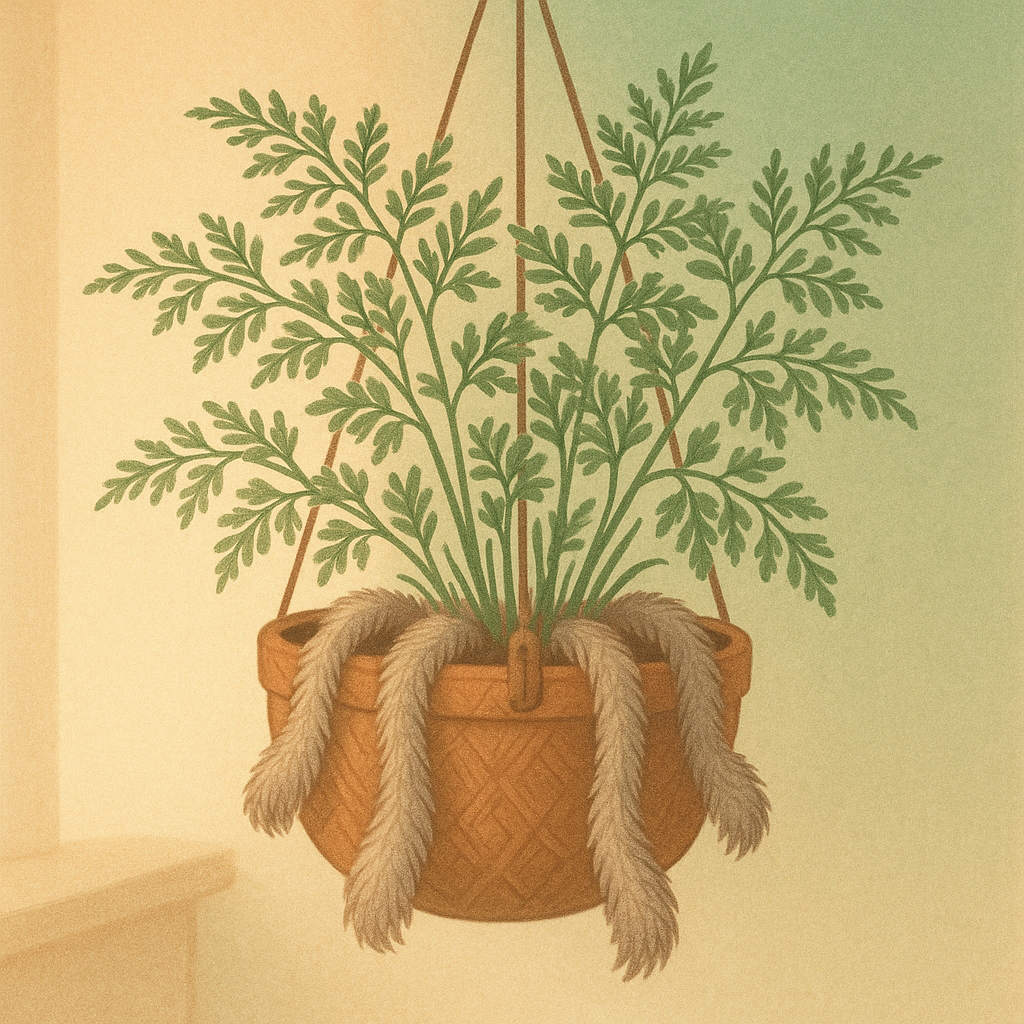
Rabbit foot ferns excel in hanging baskets where their rhizomes can cascade freely. As they grow, they develop an increasingly wild, natural appearance that brings a touch of forest magic indoors.
These ferns also propagate easily from rhizome cuttings, making them perfect for sharing with friends or expanding your own collection. A single mature plant can provide multiple cuttings while continuing to thrive.
Basic Care Instructions
Place your rabbit foot fern in bright, indirect light. They tolerate some direct morning sun but avoid harsh afternoon rays that can scorch the delicate fronds. East-facing windows provide ideal conditions.
Water when the top inch of potting mix feels dry. The fuzzy rhizomes store moisture, so these ferns tolerate occasional dryness better than soil-dwelling varieties. Reduce watering in winter when growth slows.
Average room humidity (40-60%) suits rabbit foot ferns fine, though they appreciate occasional misting. Their rhizomes absorb moisture from the air, supplementing what the roots take from soil.
Use a well-draining potting mix designed for orchids or ferns. The roots need air circulation to prevent rot, so avoid dense, heavy soils that stay constantly wet.
Growing Tips for Success
- Pot selection: Choose shallow, wide pots that let rhizomes spread and cascade over edges.
- Temperature range: 60-75°F (15-24°C) — normal room temps work perfectly.
- Fertilizing: Feed monthly during spring and summer with diluted balanced fertilizer.
- Pruning: Trim dead or damaged fronds at their base; leave healthy rhizomes to spread naturally.
Pros and Cons
Pros
- Unique appearance with fuzzy rhizomes
- More drought-tolerant than most ferns
- Easy to propagate from cuttings
- Perfect for hanging baskets
Cons
- Fronds are delicate and prone to browning
- Rhizomes can look messy to some people
- Slower growing than some fern varieties
Common Questions
Can I trim the fuzzy rhizomes?
You can trim them, but they’re the plant’s signature feature. Instead, direct them by gently positioning them where you want growth. Only cut rhizomes if you’re propagating new plants.
Why are the fronds turning yellow?
Yellow fronds usually indicate overwatering or poor drainage. Check that your pot has drainage holes and let the soil dry slightly between waterings. Trim yellowed fronds to redirect energy to healthy growth.
How do I propagate rabbit foot ferns?
Cut a 3-4 inch section of rhizome with some fronds attached. Lay it on moist potting mix in a shallow pot, securing with a bent paperclip if needed. Keep soil lightly moist until new roots develop in 3-4 weeks.
Are the fuzzy parts actually feet?
They’re modified stems called rhizomes, covered in soft scales. They resemble rabbit feet in texture and appearance, but they serve important functions — storing water, absorbing humidity, and helping the plant spread.
Final Thoughts
Rabbit foot ferns bring whimsy and wonder to indoor gardening. Their unusual growth habit and forgiving nature make them perfect for anyone wanting a plant that sparks curiosity while remaining easy to care for.
As your rabbit foot fern matures, its personality develops. The rhizomes take on increasingly wild patterns, creating a living sculpture that becomes more impressive with time. Few houseplants offer this combination of low maintenance and high visual impact.