

Staghorn ferns stand out as one of the most dramatic indoor plants you can grow. These unique epiphytes naturally grow on tree trunks in tropical forests, and they bring that same wild beauty into your home when mounted on wood plaques or hung in baskets.
Unlike typical potted ferns, staghorns thrive when attached to vertical surfaces, making them perfect for creating living wall art that’s both functional and stunning.
What Makes Staghorn Ferns Different
Staghorn ferns (Platycerium species) are epiphytes, meaning they grow on other plants without harming them. In nature, they attach to tree bark and collect water and nutrients from rain and falling debris.
These ferns have two types of fronds:
- Shield fronds: Round, flat leaves that attach to the mounting surface and collect organic matter.
- Antler fronds: The dramatic, forked leaves that look like deer antlers and give the plant its name.
The shield fronds turn brown as they age — this is completely normal and part of the plant’s natural cycle. Never remove these brown fronds; they protect the roots and help the plant collect nutrients.
Why Mount a Staghorn Fern
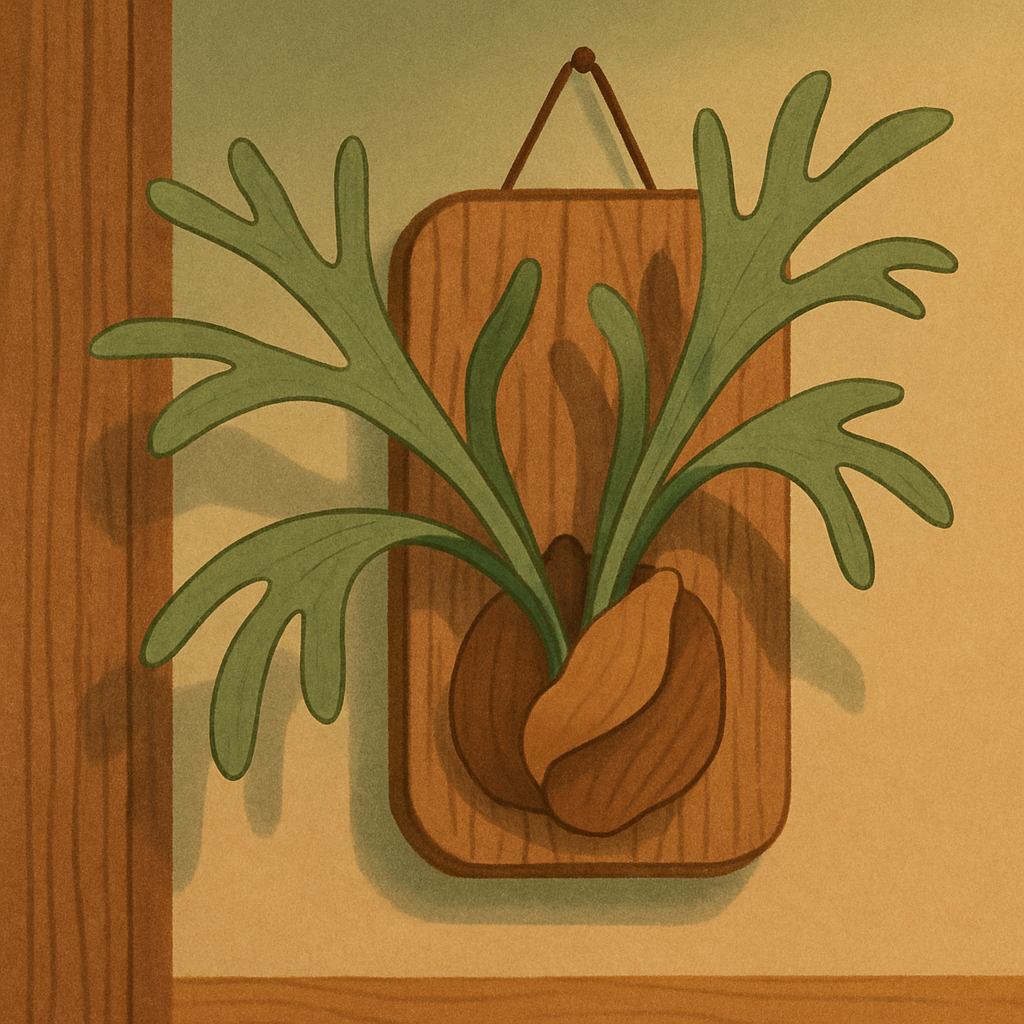
Mounting mimics how these ferns grow in nature. When properly mounted, staghorns develop stronger root systems, better air circulation around their fronds, and more dramatic growth patterns than potted specimens.
Mounted ferns also solve common drainage problems. The open structure prevents water from pooling around roots, reducing the risk of rot while maintaining the humidity these plants love.
How to Mount Your Staghorn Fern
Mounting a staghorn fern is simpler than it looks. You’ll need a wood board or plaque (cedar, oak, or cork work well), sphagnum moss, fishing line or wire, and your staghorn fern.
Start by soaking the sphagnum moss until it’s thoroughly damp but not dripping. Form a mound of moss on your board where the plant will sit — this creates a moisture reservoir for the roots.
Position your staghorn on the moss bed with its shield frond against the board. Secure it by wrapping fishing line or coated wire around the plant and board in several places. Don’t worry about being too gentle — staghorns are tougher than they look.
The plant will naturally attach itself to the board over the next few months. Once you see new shield fronds growing over the mounting material, your fern has successfully established itself.
Daily Care for Mounted Staghorns
- Watering method: Soak the entire mount in a sink or tub for 10-15 minutes weekly, or until the moss feels saturated.
- Light placement: Bright indirect light near an east or west window — direct sun can scorch the delicate antler fronds.
- Humidity boost: Mist the fronds 2-3 times per week between soakings, especially in dry climates.
- Temperature range: Keep between 60-80°F (15-27°C) — they tolerate normal room temperatures well.
Pros and Cons of Mounted Staghorn Ferns
Pros
- Creates dramatic living wall art
- Natural growth pattern prevents root rot
- Easier to water than traditional pots
- Becomes a conversation starter
Cons
- Requires dedicated wall space
- Takes time to establish on mount
- Soaking process is less convenient than watering pots
- Shield fronds can look messy as they brown
Common Questions About Mounted Staghorns
Can I keep a staghorn fern in a pot instead of mounting it?
Yes, but potted staghorns are more prone to overwatering and root rot. If you choose a pot, use a very well-draining orchid mix and ensure the pot has excellent drainage holes.
How often should I fertilize my mounted staghorn?
Feed monthly during spring and summer with a diluted balanced fertilizer (quarter-strength). You can add liquid fertilizer to the soaking water or tuck a small piece of banana peel under the shield fronds as a natural slow-release option.
Why are the antler fronds turning yellow and drooping?
This usually indicates underwatering or too much direct sun. Increase soaking frequency and move the plant away from harsh afternoon light. The fronds should perk up within a week.
How big will my staghorn fern grow?
Indoor staghorns typically reach 2-3 feet across, though mature specimens can grow much larger. Growth is slow — expect 3-6 new fronds per year under good conditions.
Final Thoughts
Mounting a staghorn fern transforms both the plant and your space. The initial setup takes effort, but the result is a living sculpture that grows more impressive each year.
These ferns reward patient care with dramatic displays that few other houseplants can match. Once you understand their simple needs — regular soaking, bright indirect light, and respect for those brown shield fronds — you’ll find them surprisingly low-maintenance for such a showstopping plant.