

Root rot is every fern parent’s worst nightmare – and for good reason. This silent destroyer can kill your beautiful plant before you even realize there’s a problem. But here’s the reassuring truth: root rot is completely preventable when you know what to look for and how to care for your fern properly.
Think of root rot like a cold that turns into pneumonia if left untreated. What starts as a small issue with watering can quickly escalate into a life-threatening condition for your plant. The good news? Just like with our health, prevention is much easier than treatment.
Whether you’re worried about a current plant or want to prevent future problems, this guide will give you the knowledge and confidence to keep your fern’s roots strong and healthy for years to come.
Understanding Root Rot: What’s Really Happening
Root rot isn’t actually a single disease – it’s the result of harmful fungi and bacteria that thrive in waterlogged soil. These microscopic troublemakers essentially “drown” your fern’s roots by blocking their ability to absorb oxygen and nutrients.
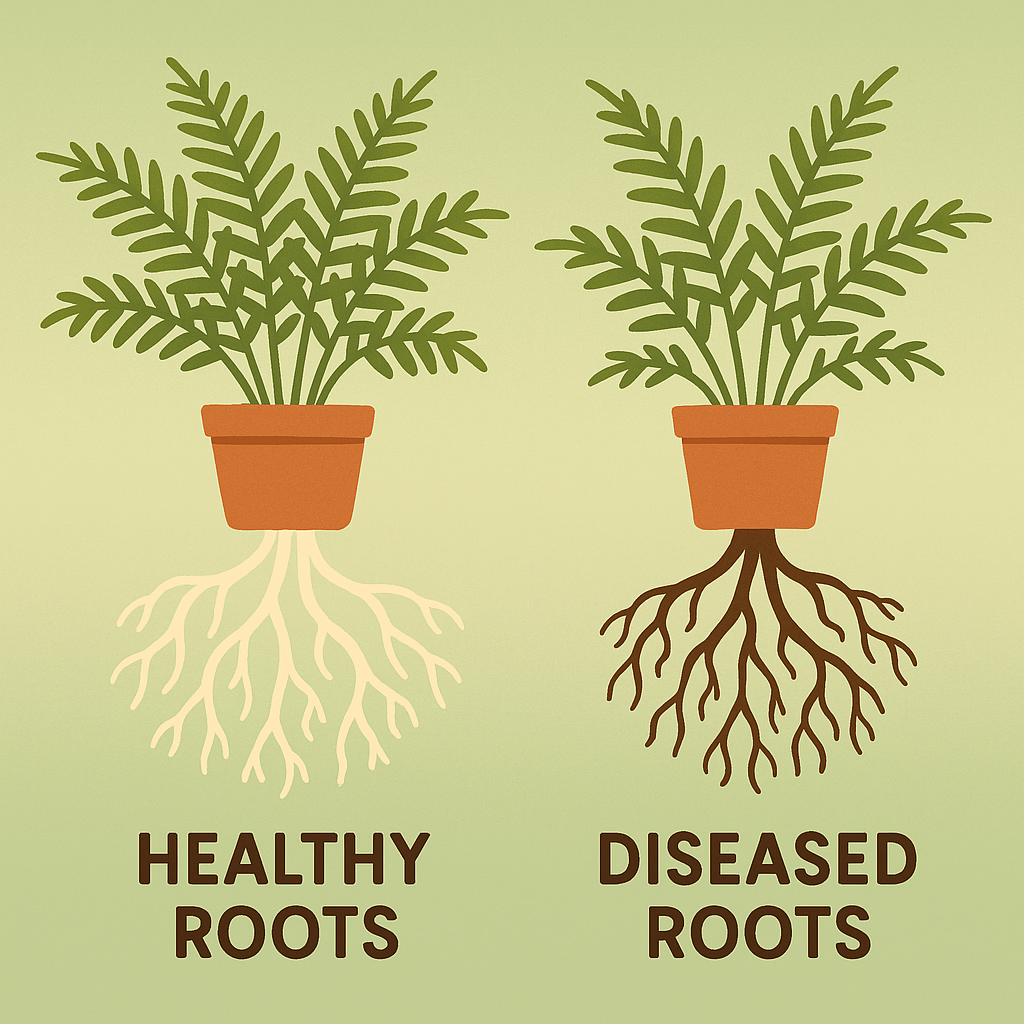
Picture your fern’s roots like tiny lungs that need to breathe. When they’re constantly sitting in wet soil, it’s like holding their breath underwater. Eventually, the healthy white roots turn brown and mushy, unable to support your plant’s needs.
Why Ferns Are Particularly Vulnerable
Ferns naturally love moisture, which can make them tricky to water correctly. Unlike succulents that clearly show when they need water, ferns prefer consistently moist (but not wet) soil. This narrow sweet spot is where many well-meaning plant parents accidentally cross the line from “moist” to “soggy.”
- Fine root system: Fern roots are delicate and respond quickly to changes in soil conditions
- High humidity needs: Can lead to over-watering as people try to increase moisture
- Dense foliage: Makes it harder to assess soil moisture without checking directly
- Pot-bound tendency: Many ferns are sold in pots that retain too much water
Early Warning Signs: Catching Root Rot Before It’s Too Late
The key to saving a fern from root rot is catching it early. Your plant will give you several warning signals before the damage becomes irreversible.
Above-Ground Symptoms
These are the signs you’ll notice just by looking at your fern:
- Yellowing from the bottom up: Lower, older fronds turn yellow first, then brown
- Wilting despite wet soil: Plant looks thirsty even though soil is moist
- Stunted new growth: New fronds emerge slowly or stay small
- General decline: Plant looks “unhappy” despite normal care
- Musty odor: Soil smells sour or rotten, especially when watering
Below-Ground Reality Check
To confirm root rot, gently remove your fern from its pot and examine the roots:
- Healthy roots: White or cream-colored, firm to the touch, with a fresh earthy smell
- Early rot: Some brown or black sections, slightly soft, mild sour smell
- Advanced rot: Mostly brown/black, mushy texture, strong foul odor
Prevention: Your Best Defense Against Root Rot
Prevention truly is worth a pound of cure when it comes to root rot. These simple practices will keep your fern’s roots healthy and strong:
Master the Watering Balance
The secret is maintaining “evenly moist” soil – think of a wrung-out sponge that’s damp but not dripping:
- Finger test method: Soil should feel slightly damp 1 inch down, never soggy
- Weight check: Lift the pot – dry soil feels much lighter than moist soil
- Seasonal adjustments: Reduce watering frequency in winter when growth slows
- Quality over quantity: Water thoroughly but less frequently rather than little and often
Ensure Proper Drainage
Good drainage is absolutely non-negotiable for healthy fern roots:
🏆 Drainage Holes – Essential
Every pot must have drainage holes. Decorative pots without drainage can be used as outer covers with a drainage pot inside.
⭐ Well-Draining Soil Mix – Critical
Use a potting mix designed for houseplants, never garden soil. Add perlite if your mix feels heavy or dense.
🌿 Proper Pot Size – Important
Pots that are too large hold excess water around the roots. Choose a pot only 1-2 inches larger than the root ball.
Early Treatment: Saving Ferns with Beginning Root Rot
If you’ve caught root rot in its early stages, there’s still hope. Quick action can save your fern and get it back on track.
Immediate Action Plan
- Stop watering completely: No more water until the problem is resolved
- Increase air circulation: Place a small fan nearby to help soil dry
- Remove from pot: Gently take the plant out to assess root damage
- Trim damaged roots: Cut away all brown, mushy roots with clean scissors
- Repot in fresh soil: Use completely new, well-draining potting mix
- Trim stressed foliage: Remove any yellow or severely drooping fronds
Recovery Care
After repotting, your fern will need special care as it recovers:
- Reduced watering: Wait until soil is dry 2 inches down before watering again
- Bright, indirect light: Avoid direct sun while the plant is stressed
- No fertilizer: Skip feeding until you see new growth appearing
- Patience: Recovery can take 4-6 weeks, be patient with slow progress
Pros and Cons of Treatment Methods
Repotting with root trimming
Removes diseased tissue and gives the plant a fresh start in healthy soil.
Improving drainage permanently
Prevents future root rot issues and creates optimal growing conditions.
Early intervention
Catching problems early dramatically increases success rates for recovery.
Transplant shock stress
Repotting sick plants can cause additional stress during recovery period.
Slow recovery process
Complete recovery can take months, requiring patience and careful monitoring.
Long-Term Root Health Maintenance
Once you’ve dealt with root rot – or better yet, prevented it entirely – maintaining healthy roots becomes part of your regular fern care routine.
Monthly Root Check: Every few months, gently lift your fern to check for root growth and ensure the soil isn’t staying too wet at the bottom.
Annual Repotting: Most ferns benefit from fresh soil yearly, even if they don’t need a larger pot. This prevents soil from becoming too compacted or depleted.
Seasonal Watering Adjustments: Your fern’s water needs change with the seasons. Less water in winter, more attention to humidity in summer.
Frequently Asked Questions
Can a fern recover from severe root rot?
If more than 70% of the roots are affected, recovery is unlikely. However, if any healthy roots remain and you act quickly, there’s still a chance with proper treatment.
How long does it take for root rot to develop?
In consistently wet conditions, root rot can start within a week. Visible symptoms usually appear 2-4 weeks after the roots begin to decline.
Should I use fungicide to treat root rot?
For houseplants, removing affected roots and repotting in fresh soil is usually more effective than fungicides. Focus on correcting the underlying moisture problem.
Why does my fern keep getting root rot even after treatment?
This usually indicates the underlying cause hasn’t been addressed – likely poor drainage, overwatering, or a pot that’s too large for the plant.
Final Thoughts: Building Strong Root Foundations
Root rot might seem like a scary threat, but remember that it’s entirely preventable with the right care. Most successful fern parents have learned these lessons through experience, and now you have the knowledge to avoid the common pitfalls.
The secret is finding that sweet spot between keeping your fern happy with enough moisture while never letting it sit in soggy conditions. With practice, you’ll develop an intuitive sense for when your particular fern needs water.
Healthy roots are the foundation of a thriving fern. When you take care of what’s happening underground, the beautiful fronds above will take care of themselves. Your fern is counting on you to be its root protector – and now you know exactly how to succeed.